


Carved Oak Tier Table
A carved oak tier table brings substantial timber and tiered utility into a room, offering multiple surfaces for display and daily use.
Carved Oak Tier Table
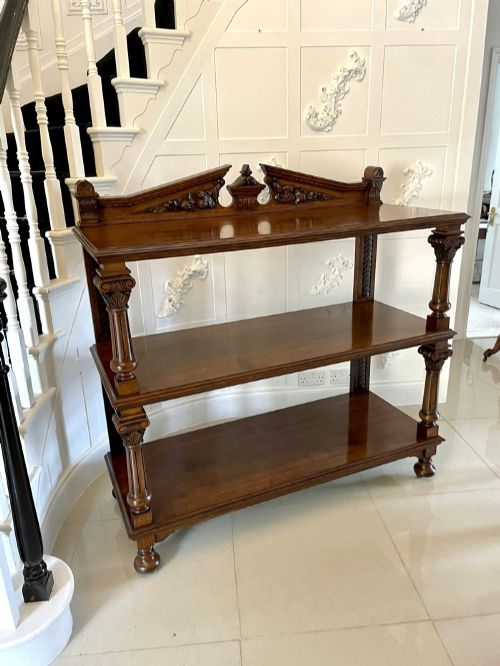
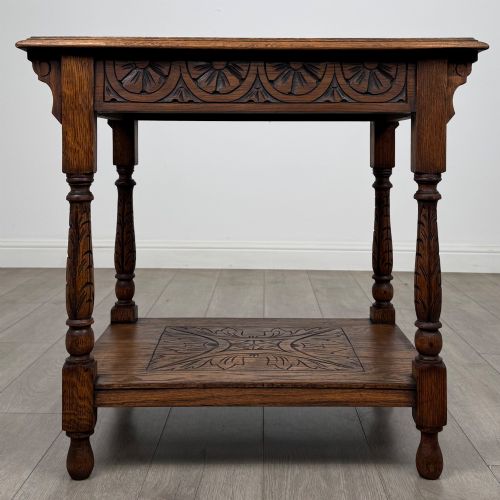
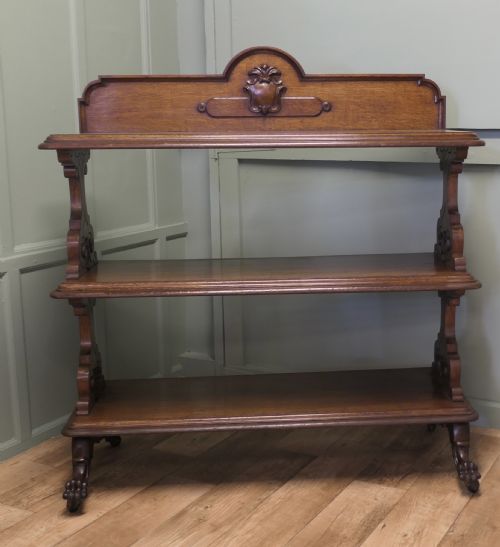
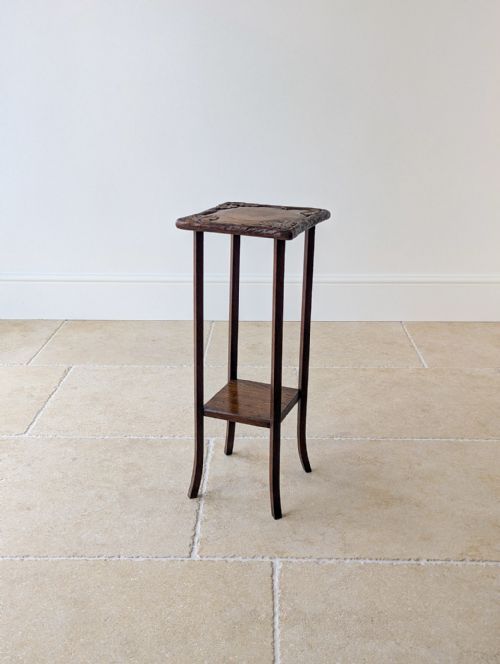
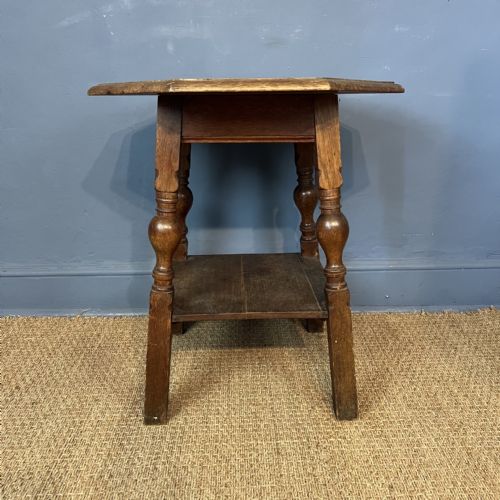
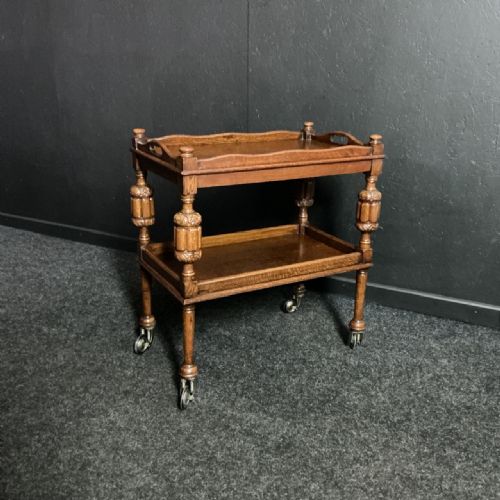
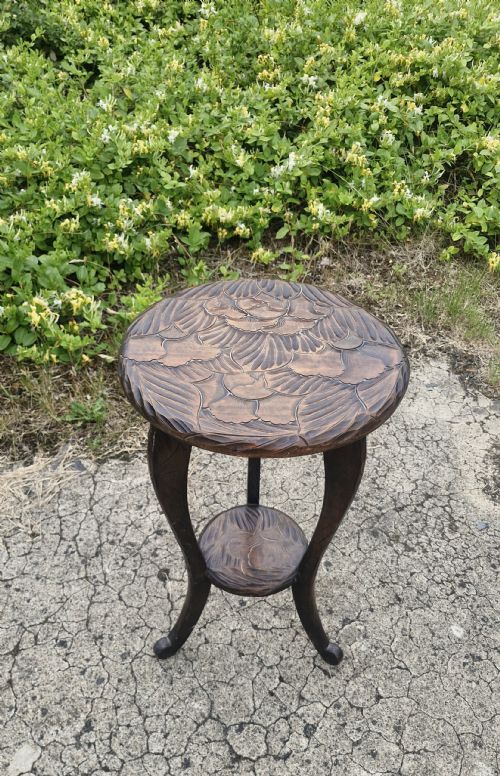
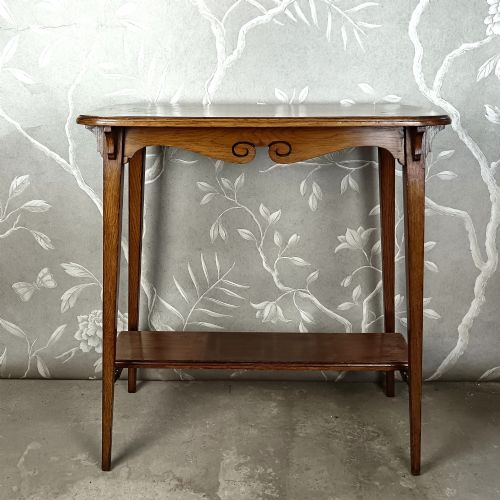
When you search for a carved oak tier table, you encounter tiered furniture designed for display and serving, appearing frequently in Victorian and Edwardian iterations. These pieces emerge in forms such as dumbwaiters, plant stands, occasional tables, and buffets across periods spanning from the nineteenth century into the 1930s. The version most commonly met on this page is the two-tier or three-tier occasional table, constructed from solid oak with carved ornamentation.
The architectural presence of these tables derives from their multi-level design, which provides graduated tiers supported by turned or carved uprights. Makers adapted the tier format for various domestic duties, resulting in serving tables, tea trolleys, and side tables that utilise vertical space efficiently. Stylistic influences range from Gothic Revival and Jacobean Revival to Arts and Crafts simplicity, reflecting the aesthetic preferences of their respective decades.
What varies in quality
The depth and execution of the carving separate standard workshop pieces from superior examples, where hand-chiselled details exhibit crisp relief and individual artistic expression. Plain machine-cut decoration lacks the nuance and depth found in pieces produced by skilled cabinet makers or notable retailers.
Timber selection and construction integrity also determine the standing of a table, with figured oak and pollard oak commanding attention for their rich grain patterns. Well-balanced proportions, secure joints between tiers, and original brass fittings contribute to the structural longevity and overall coherence of the piece.
Listings feature oak alongside alternative materials like walnut, mahogany, metal, marble, and brass across various historical periods.
Liberty and Co
The Carved Oak Tier Table Glossary
- Tier table
- A piece of furniture featuring two or more horizontal surfaces arranged vertically for display or service. These tables provide multiple levels while occupying a compact footprint on the floor.
- Dumbwaiter
- A multi-tiered serving piece utilised in dining rooms for holding dishes, beverages, or silverware. They often incorporate graduated shelves supported by a central column or corner posts.
- Pollard oak
- Timber taken from trees that have been pollarded, resulting in a dense, highly figured grain pattern with clustered knots. Cabinet makers utilised this prized material for decorative veneer and solid panels.
- Green Man
- A sculptural architectural ornament depicting a human face entwined with foliage, vines, or branches. This motif frequently appears carved into the woodwork of Victorian and revival furniture.
- Arts and Crafts
- A design movement prioritising traditional craftsmanship, visible construction, and simple forms over mass-produced ornamentation. Pieces from this tradition often feature unpretentious oak construction with subtle hand-finished details.
Carved Oak Tier Table: Frequently Asked Questions
What is a carved oak tier table used for?
These tables served various practical functions in historic interiors, acting as serving stations, plant stands, or occasional surfaces for holding books and tea wares. Their multiple levels allowed households to maximise display space in parlours and dining rooms without crowding the floor.
Today, they adapt easily to modern living spaces as bedside tables, hallway surfaces, or prominent display stands for ceramics and lamps. The tiered structure continues to offer functional vertical storage in compact rooms.
How do I identify a Victorian tier table?
Victorian examples typically display heavy timber construction with deep, profuse hand-carving, often incorporating Gothic Revival or Jacobean motifs such as barley twist supports and foliate panels. The presence of dark-finished oak, robust turnings, and substantial proportions points directly to nineteenth-century manufacture.
Later Edwardian and Arts and Crafts versions generally adopt cleaner lines and lighter oak tones, moving away from the dense ornamentation favoured by Victorian cabinet makers. Examining the joinery and the style of the carving helps distinguish between these overlapping eras.
Are these tables sturdy enough for daily use?
Solid oak construction and traditional joinery make these tables remarkably robust, capable of supporting everyday items like books, lamps, and serving trays. The multi-tiered design distributes weight effectively down through the upright supports to the floor.
Care should be taken to distribute heavy objects evenly across the shelves, particularly on pieces with slender turned columns. Regular gentle polishing preserves the timber surface against accidental moisture marks.
What is pollard oak?
Pollard oak is a decorative timber harvested from trees that were cut back near the trunk to encourage dense branch growth, producing a heavily figured grain full of small knots. Cabinet makers valued this material for its distinct visual texture and used it on prominent surfaces to catch the light.
Pieces featuring pollard oak stand out for their swirling patterns, which differ significantly from straight-grained quarter-sawn timber. This specialised wood signals a higher grade of furniture production.