
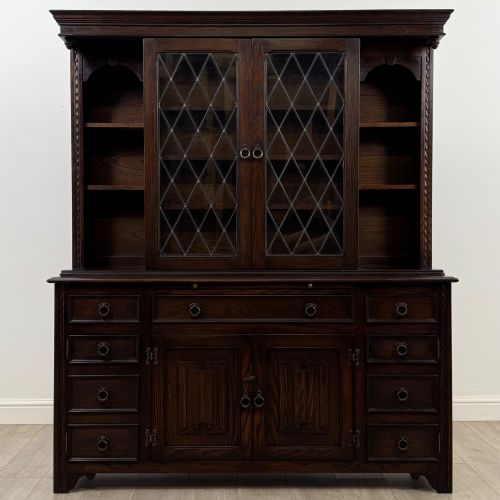
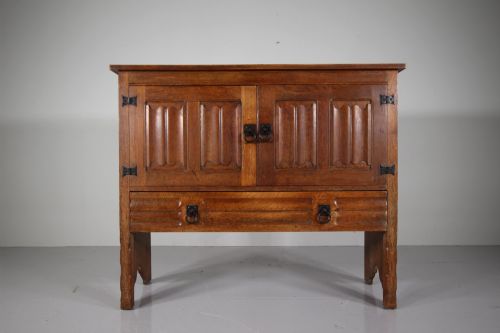
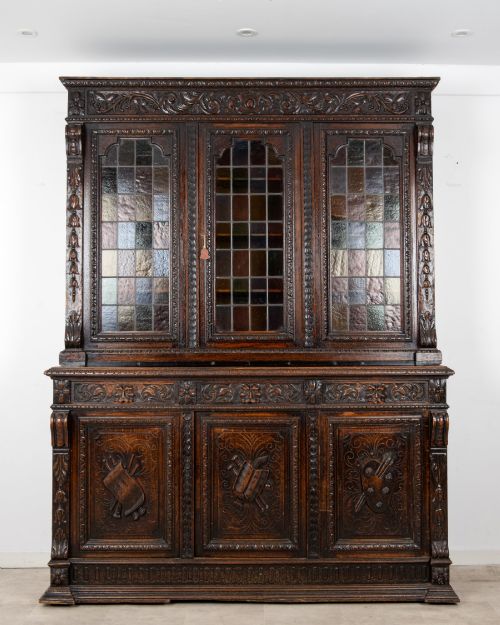
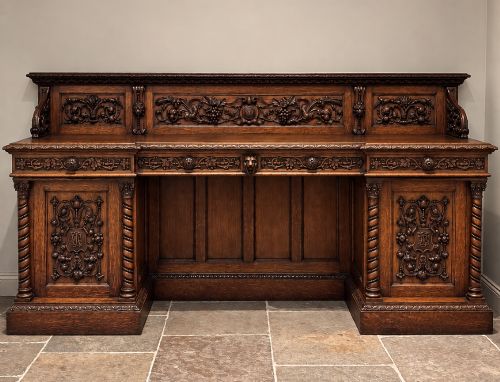
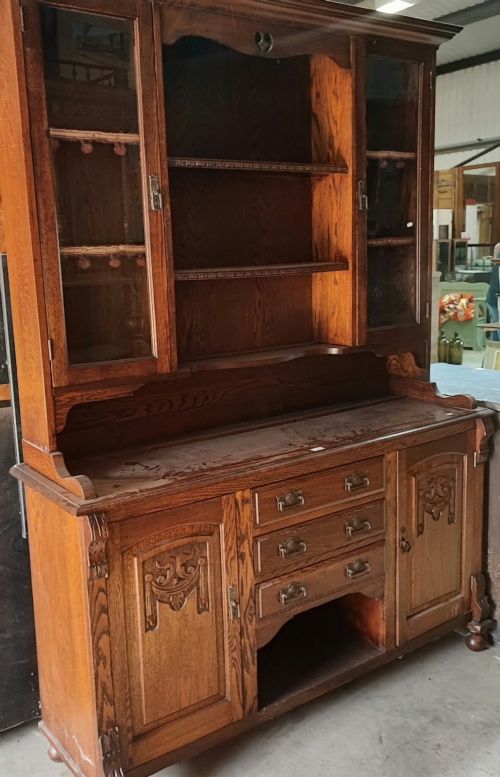
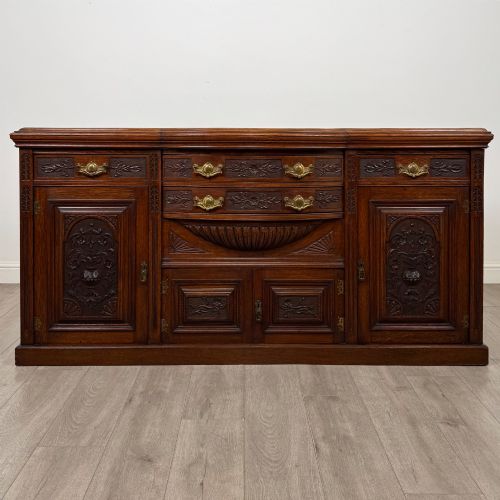
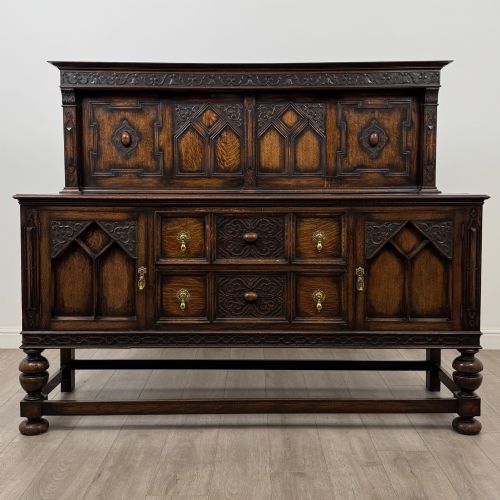
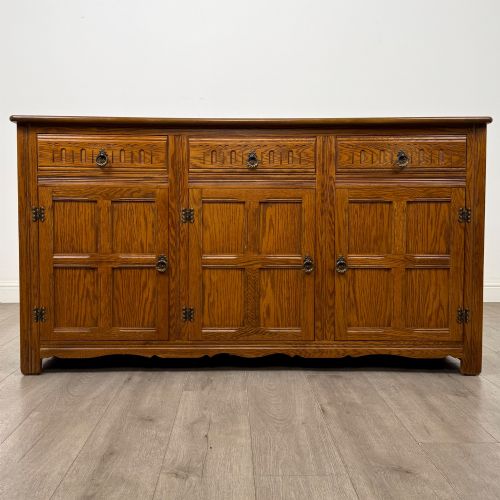
Carved Oak Sideboard Dresser
When you search for a carved oak sideboard dresser, you explore heavy timber storage furniture built to anchor a dining room or hall.
Carved Oak Sideboard Dresser
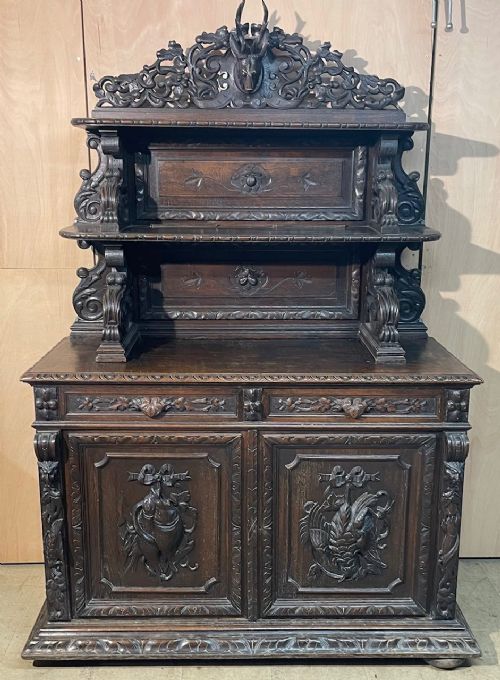
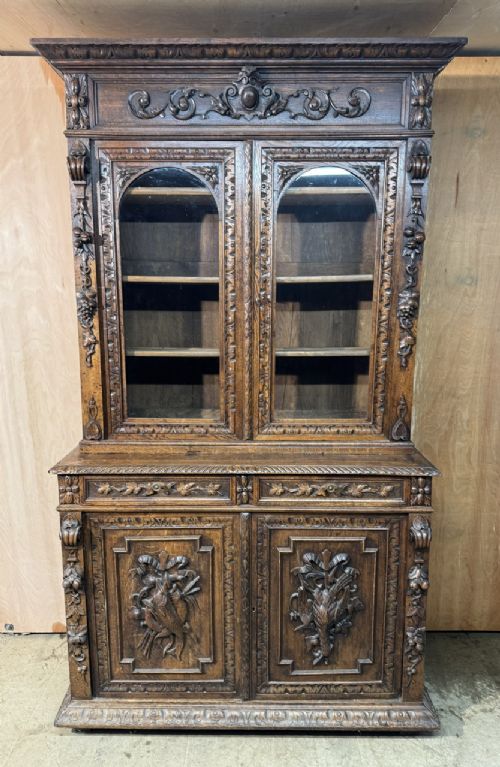
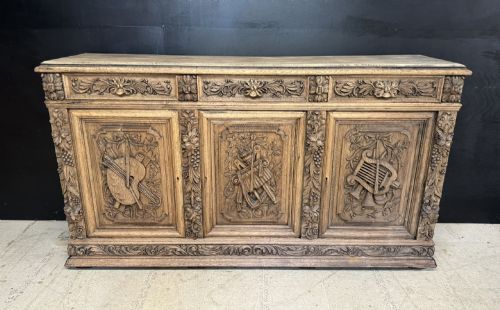
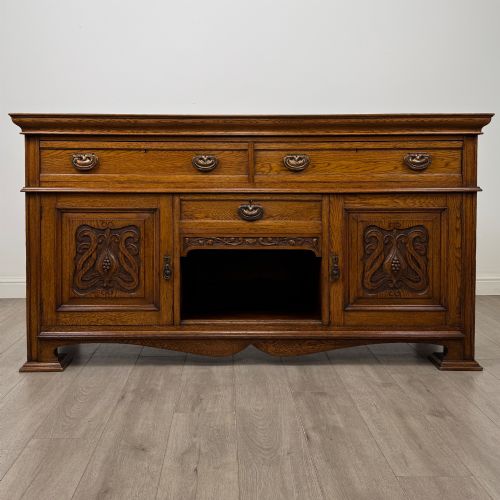
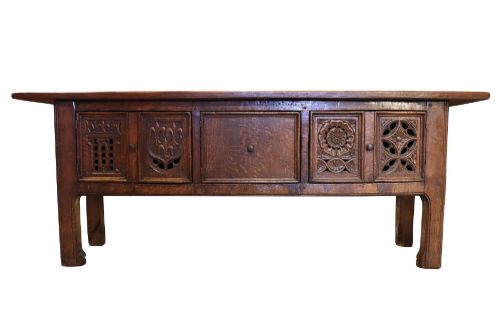
A carved oak sideboard dresser combines utilitarian storage with ornamental woodwork, functioning as a substantial base cabinet, buffet, or serving table. These forms provide deep drawers and enclosed cupboards designed originally for tableware, provisions, and household linens.
Most examples encountered here originate from the Victorian and Edwardian periods, alongside substantial Georgian and earlier country pieces. Stylistic influences span Jacobean revival, Gothic revival, and Arts and Crafts movements, which determine the depth and density of the timber carving.
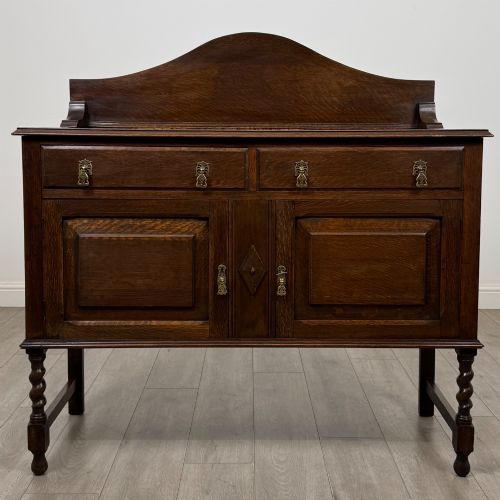
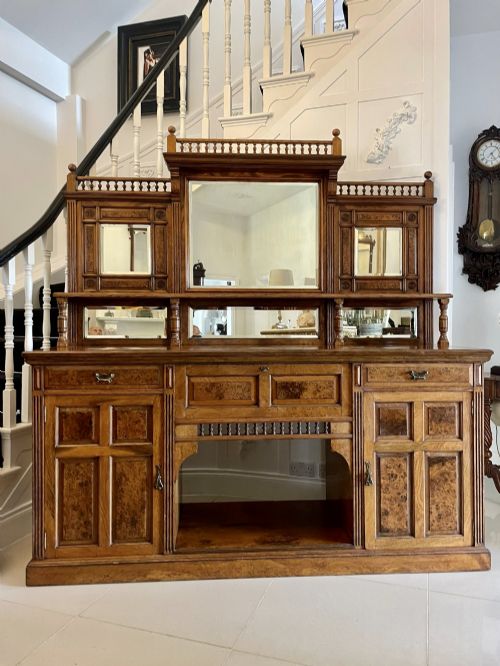
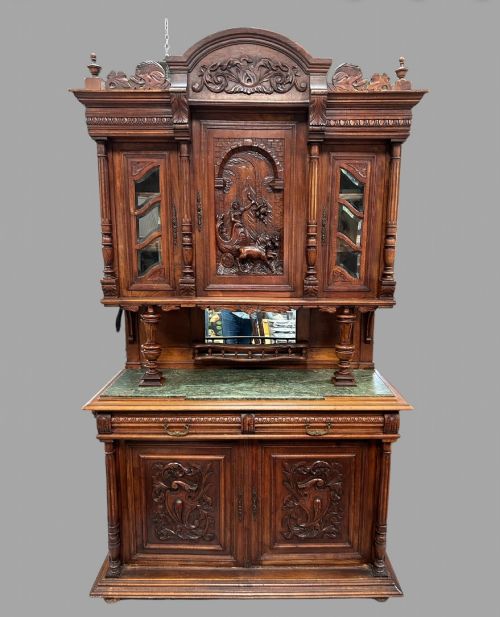
The layout typically involves a low rectangular profile with panelled doors and carved friezes, though certain formats include tall mirror backs or plate racks. Buyers select these forms to anchor a dining space with sturdy vernacular timber and visible historic craftsmanship.
How they were made
Makers constructed these cabinets predominantly from solid oak, sometimes utilising pollard oak or tiger oak variations for distinct grain patterns. Joinery relied on traditional mortise and tenon frames, panel construction, and hand-cut dovetails for drawer boxes.
Surface ornamentation involved deep relief carving, executed by hand to render foliage, strapwork, heraldic motifs, or figural masks such as the Green Man. Hardware typically incorporated cast brass drop handles, iron hinges, and occasionally leaded or stained glass panel inserts.
Listings feature oak timbers complemented by brass, iron, glass, and copper elements across pieces spanning the seventeenth to the twentieth century.
What varies in quality
Quality rests upon the selection of timber and the precision of the joinery rather than the sheer volume of ornamentation. Superior examples display dense, figured oak grain with tight joints that remain stable through seasonal humidity changes.
The execution of the carving distinguishes workshop standards, where crisp, undercut relief work demonstrates superior skill compared to shallow, mechanical stamping. Furthermore, original hardware, intact backboards, and structurally sound internal timber elevate the standing of a piece.
Ambrose Heal
The Carved Oak Sideboard Dresser Glossary
- Dresser base
- A low wooden cabinet featuring drawers and cupboards, traditionally used in dining rooms or kitchens for serving food and storing utensils. This form lacks the upper plate rack associated with a full wall dresser.
- Court cupboard
- An antique enclosed storage cabinet, typically featuring two stacked tiers with recessed upper doors supported by carved columns or balusters. These heavy timber pieces date back to earlier centuries of vernacular English furniture making.
- Enfilade
- A long sideboard or buffet cabinet designed with a sequence of three or more doors in a continuous line. Originating in French domestic architecture, these pieces served grand dining spaces for serving courses.
- Barley twist
- A decorative turning technique where timber is shaped into a helical screw pattern resembling spiralling rope. This stylistic flourish appears frequently on the upright legs and supports of late nineteenth-century furniture.
- Green Man
- A sculptural architectural motif depicting a human face emerging from or entwined with foliage and vines. This pagan symbol of rebirth appears frequently within Gothic revival and nineteenth-century carved woodwork.
Carved Oak Sideboard Dresser: Frequently Asked Questions
What is the difference between a sideboard and a dresser base?
A dresser base traditionally originates from kitchen or pantry use with deep proportions and heavy working drawers, whereas sideboards were developed primarily for formal dining rooms to display silver and serve food. Both terms frequently overlap in antique cataloguing due to shared storage formats.
Over time, makers adapted these forms interchangeably, meaning many heavy oak pieces with drawers and cupboards answer equally to either description depending on their regional origin.
How do I identify a Victorian Gothic revival piece?
Victorian Gothic revival furniture displays architectural elements inspired by medieval stone buildings, including pointed arches, linenfold panelling, heavy mouldings, and deep figural carvings. These pieces project a dark, monumental presence.
Makers utilised solid oak and contrasting brass hardware to reinforce the medieval aesthetic, frequently incorporating motifs like the Green Man or heraldic lions into the door panels.
Can I use an antique oak sideboard in a modern kitchen?
These robust timber cabinets function exceptionally well as freestanding kitchen islands, coffee stations, or larders because their original purpose was storing culinary provisions and tableware. The deep drawers and solid oak tops accommodate modern appliances and dishware.
Ensuring adequate clearance and checking internal shelf depths will help integrate these substantial historical items into contemporary domestic spaces without crowding the room.
How do I distinguish an 18th-century piece from a 19th-century revival?
Earlier eighteenth-century pieces display hand- carved joinery, pegged tenons, and distinct patination acquired through generations of domestic use, often showing simpler country construction methods. Revival pieces from the Victorian era tend to feature much heavier, machine-assisted framing alongside dense, highly dramatic relief carving.
Examining the secondary timbers inside the drawer boxes and the nature of the tool marks provides clear clues regarding the true age and period of manufacture.