
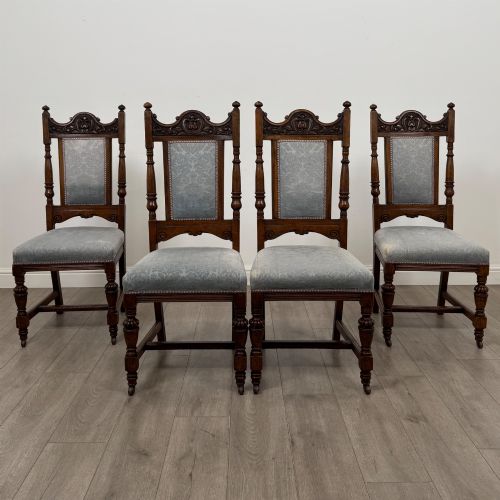
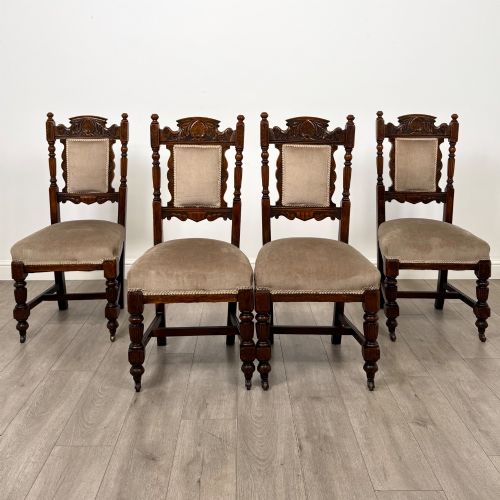
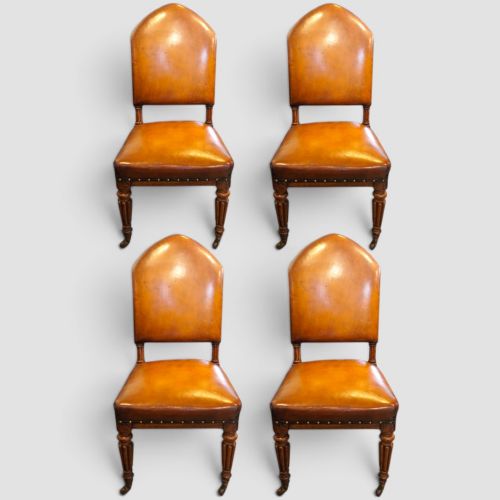
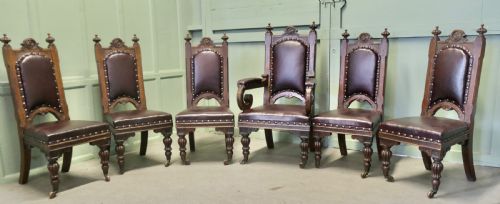
Carved Oak Seating Set
A carved oak seating set brings solid timber and centuries of revival styles straight to the dining room or parlour.
Carved Oak Seating Set
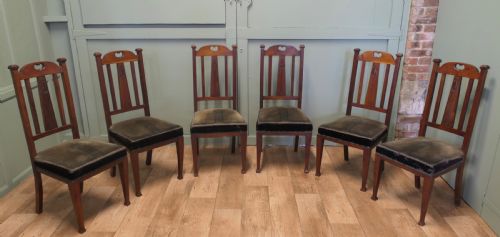
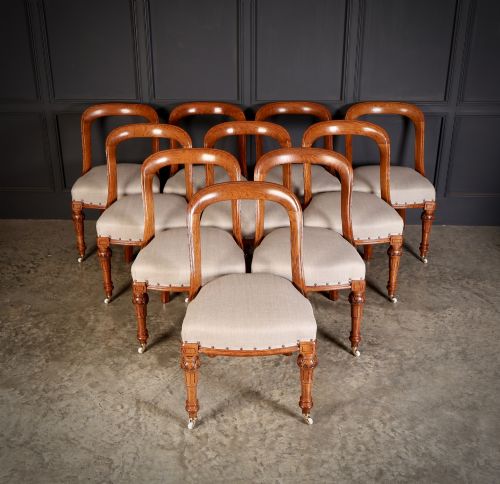
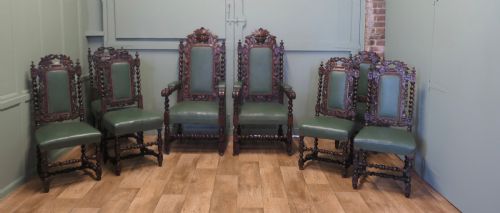
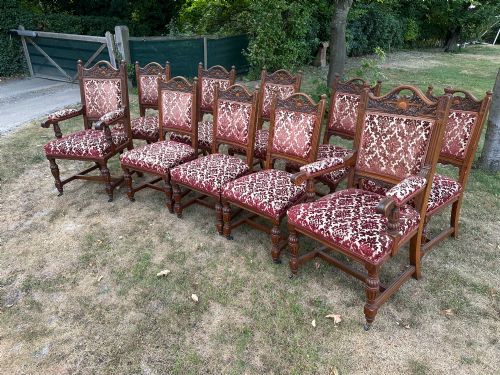
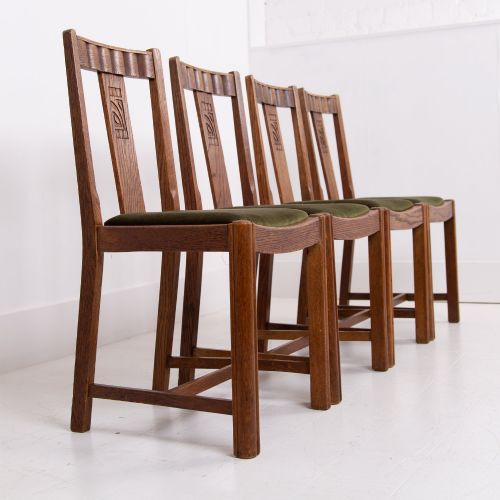
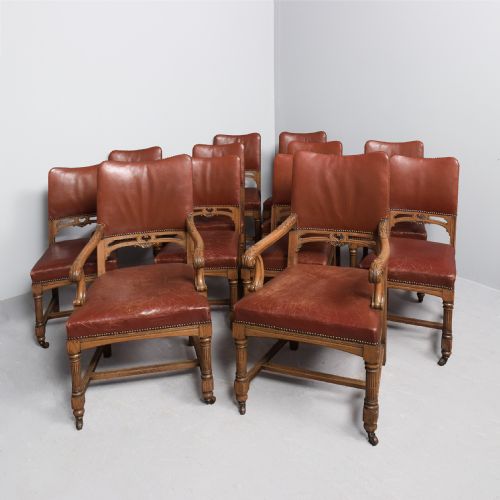
A carved oak seating set gathers multiple matched or closely related chairs, from small groups of four up to grand sets of ten or twelve, designed for dining rooms, halls, and parlours. Most examples on this page date from the nineteenth and early twentieth centuries, drawing heavily on earlier forms like Jacobean, Gothic, and Arts and Crafts designs.
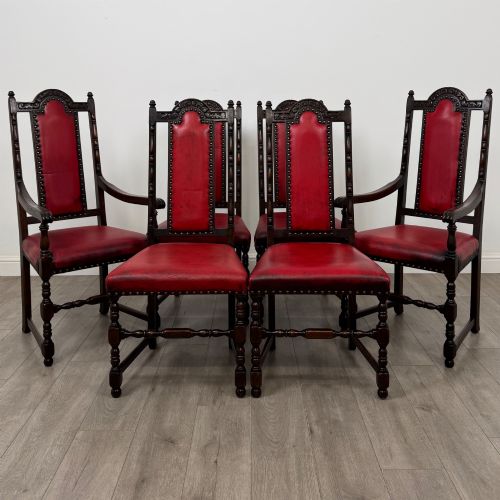
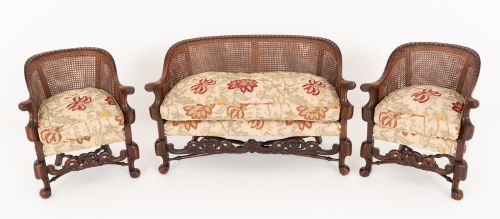
The materials paired with the timber vary to suit the function and period of the set, incorporating leather, velvet, rush, brass, and plain upholstery fabric alongside the solid oak framework. Buyers encounter everything from tall high-back dining chairs and ladder-back country forms to sturdy armchairs, bergere suites, and Windsor chairs.
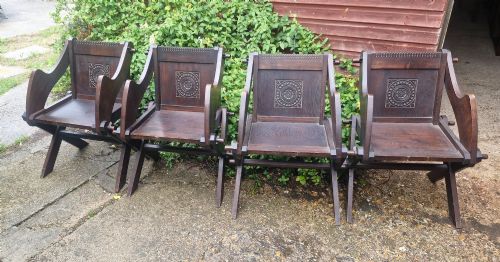
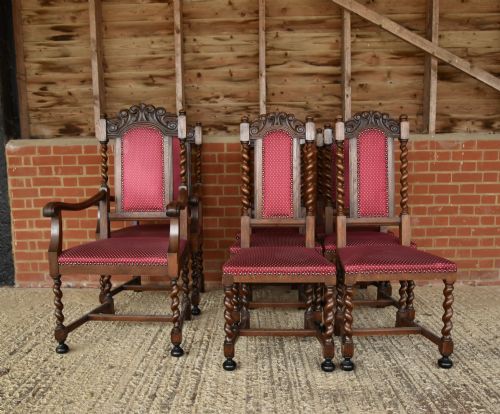
Originating across British and European workshops, these matched groups often display regional carving motifs, barley twist legs, or cross-frame supports. They range from simple farmhouse kitchen sets to elaborate Victorian Gothic revival suites intended for formal entertaining.
How they were made
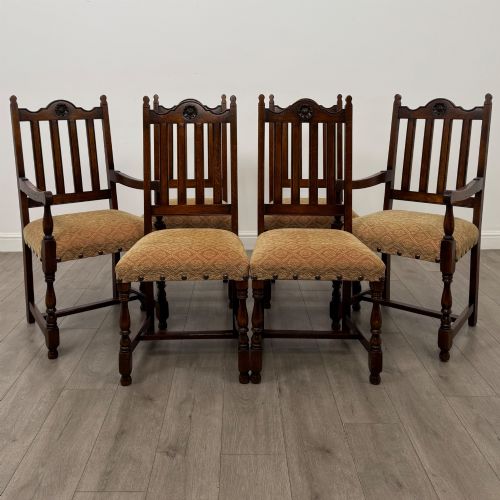
Makers built these chairs using solid oak timbers, selected for grain and strength, often employing mortise and tenon joints to withstand heavy daily use. Golden oak and dark fumed finishes appear frequently, sometimes complemented by applied mouldings and chip-carved geometric or floral panels.
Upholstered elements rely on traditional stuffing techniques secured with brass studs or decorative trim, holding leather, velvet, or woven fabric firmly to the seat and back rails. Turned components such as barley twists or spindle legs were shaped on lathes before assembly.
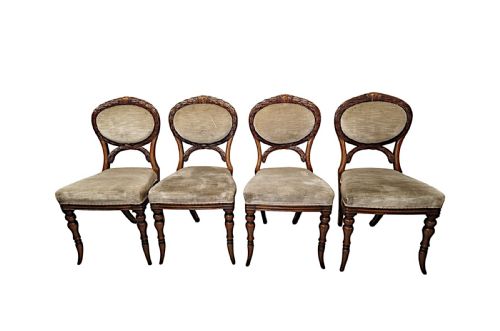
Listings feature oak combined with leather, rush, velvet, and brass across Victorian, Edwardian, and Arts and Crafts styles.
What varies in quality
The depth and crispness of the carving distinguish standard production from finer work, as hand-chiselled details hold sharper relief than mechanically stamped decoration. The choice of timber also plays a role, with quarter-sawn oak displaying prominent medullary rays that signal careful selection by the cabinetmaker.
Cohesion within the set dictates its standing, since matched proportions, uniform colour across all timber frames, and original components maintain the integrity of the grouping. Suites that retain their period leather or properly executed traditional reupholstery carry greater authenticity.
Strahan of Dublin
The Carved Oak Seating Set Glossary
- Jacobean Revival
- A nineteenth-century style imitating seventeenth-century English furniture, characterised by straight lines, panelled backs, and geometric mouldings. It draws inspiration from the reign of James I.
- Barley Twist
- A turned column resembling a rope wound around a cylinder, popular on furniture legs and stretchers during the seventeenth century and revived later.
- Bergere
- An enclosed upholstered armchair with exposed wooden framing and cane or upholstered sides, frequently found in twentieth-century suites.
- Ladder Back
- A chair back featuring horizontal slats curved to fit the spine, commonly seen on simpler country and vernacular seating.
- Derbyshire Chair
- A type of Yorkshire and Derbyshire origin from the seventeenth century featuring carved openwork backs and turned supports, later copied in revival periods.
Carved Oak Seating Set: Frequently Asked Questions
What periods do these seating sets come from?
The listings span the nineteenth and early twentieth centuries, featuring Victorian, Edwardian, and 1930s examples alongside revival styles inspired by the seventeenth century.
While the forms look back to earlier eras like Jacobean or Gothic periods, most pieces were manufactured during the height of nineteenth-century revivalism.
Are these chairs suitable for daily dining?
Most sets were originally built for dining rooms and parlours, constructed from solid oak with sturdy mortise and tenon joints meant for regular use.
Buyers should check seat heights and upholstery comfort, as older dining chairs can sit lower or firmer than modern equivalents.
How do I tell Jacobean Revival from Arts and Crafts?
Jacobean Revival pieces feature dark polished timber, heavy turned legs, and elaborate geometric or strapwork carving reminiscent of the 1600s.
Arts and Crafts sets tend to show lighter golden oak finishes, honest construction with exposed pegs, and simpler, functional lines inspired by hand-craftsmanship.
What seat materials should I expect to find?
Original seating surfaces vary from solid carved wooden boards and woven rush to leather, velvet, and patterned upholstery fabric secured with brass tacks.
Many sets have been re-covered over the decades to suit modern interiors while retaining their antique wooden frames.