

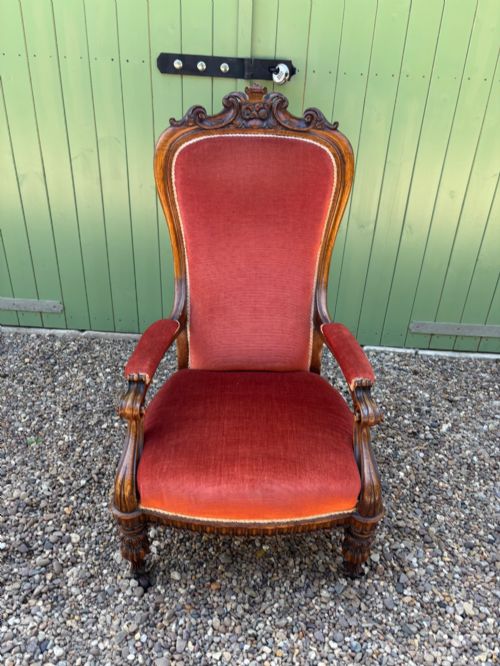


Carved Oak Reading Chair
A carved oak reading chair offers robust seating for a library or study, built from heavy timber and upholstered for comfort.
How they were made
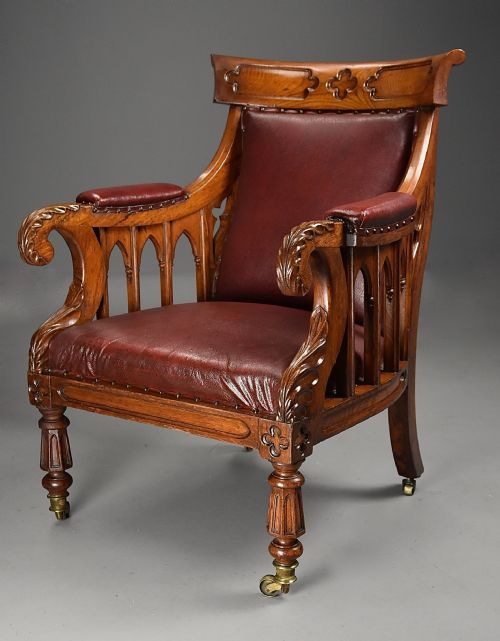
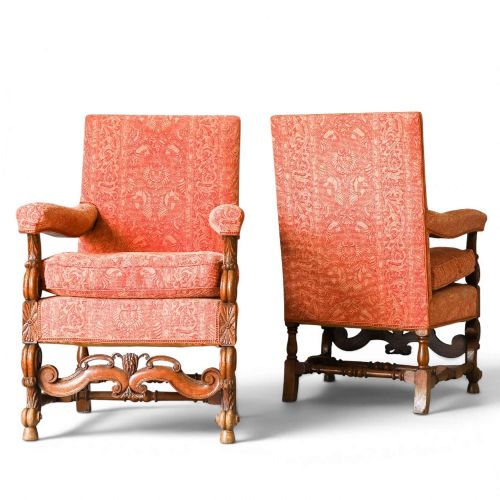
Makers constructed the primary frames of these armchairs from solid oak, shaping the timber through joinery and deep relief carving. Artisans applied carved ornamentation directly to the structural woodwork, displaying motifs characteristic of Gothic, Jacobean, and Carolean revival styles.
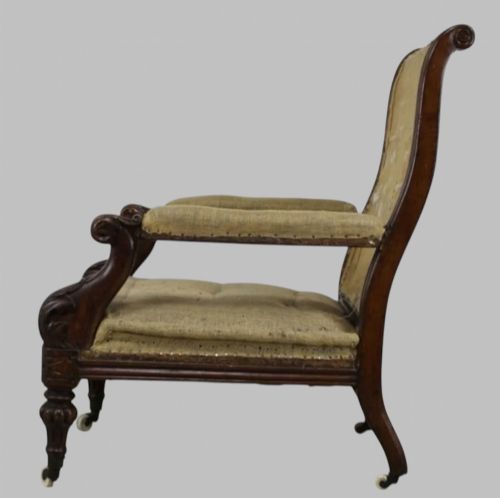
Upholstery completed the seating, with workshops fixing leather, fabric, velvet, damask, or cane to the oak frames using brass tacks or webbing. Some examples incorporated adjustable reclining mechanisms or metal components to alter the seating position.
What varies in quality
The quality of a carved oak reading chair depends on the depth and crispness of the timber carving on the frame. Master carvers produced intricate, sharp relief work on arms and crest rails, whereas lesser examples feature shallow, mechanical tooling.
The choice of secondary materials and the integrity of the joinery further distinguish the pieces. Heavy solid oak frames with original leather or period upholstery demonstrate superior craftsmanship compared to later alterations or lighter constructions.
Carved Oak Reading Chair Retail Price Guide 2026
Typical asking prices for carved oak reading chair among the pieces listed under this phrase on Sellingantiques today, from the lower quarter to the upper quarter. They describe what is for sale here now, not the wider market.
Certain Victorian library chairs included hidden makers numbers tucked into the upholstery webbing for workshop tracking.
Goodyers of London
The Carved Oak Reading Chair Glossary
- Bergere
- An enclosed armchair with cane or upholstered sides and back. This French seating form gained popularity in various nineteenth and early twentieth century revivals.
- Wingback
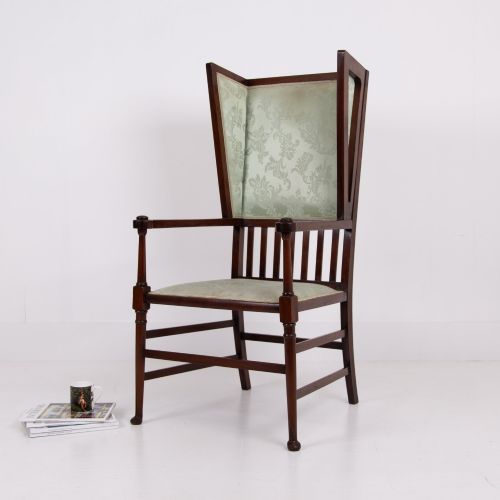
- An armchair with high side panels attached to the arms and back. These wings originally shielded the sitter from drafts in unheated rooms.
- Gothic Revival
- An architectural and decorative style drawing inspiration from medieval design. Pieces often feature pointed arches, trefoils, and heavy carved tracery.
- Barley twist
- A turned wooden furniture leg or stretcher resembling a spiral rope. This decorative turning technique appears frequently on mid-Victorian oak frames.
- Pollard oak
- Timber taken from trees that have been pollarded, producing wood with dense, decorative grain patterns. Cabinetmakers utilised this material for high-status library furniture.
Carved Oak Reading Chair: Frequently Asked Questions
How do I date an oak armchair?
Dating relies on examining the combination of structural joinery, wood finishing techniques, and stylistic revival motifs present in the piece. Victorian and Edwardian examples often display specific regional carving traits.
Comparing the upholstery webbing and internal frame construction against documented period pieces helps narrow down the exact decade of manufacture.
What is a library armchair?
A library armchair is a sturdy, generously proportioned seat designed for reading rooms and private studies. These chairs prioritised long-term comfort through deep padding and supportive armrests.
They frequently feature solid oak frames, leather upholstery, and substantive woodwork suited to heavy daily use.
Are these chairs comfortable for daily reading?
These seating pieces were originally built to provide substantial support during long hours spent reading or working in a study. The integration of upholstered backs and sprung seats contributes to their ergonomic design.
Many surviving examples retain their supportive padding, though the comfort level often depends on whether the upholstery has been recently restored.
What styles influence these oak chairs?
The designs draw heavily from historical periods, particularly Gothic Revival, Jacobean Revival, and French Renaissance Revival. Makers reinterpreted these past styles using heavy oak timber and elaborate carved ornamentation.
This historicism reflects nineteenth and early twentieth century tastes for furniture with architectural presence and narrative depth.