

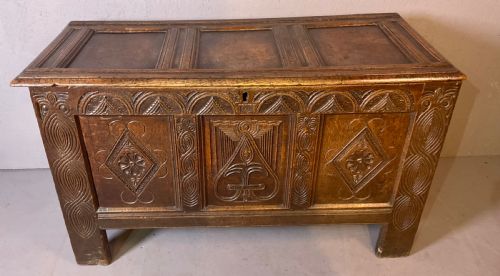
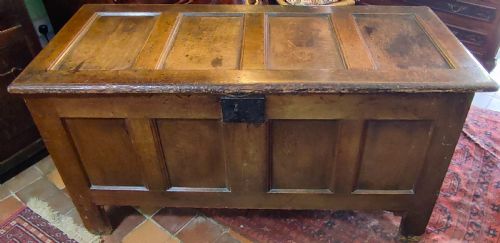


Carved Oak Linen Trunk
A carved oak linen trunk brings centuries of robust English craftsmanship into a modern interior as a practical storage piece.
Carved Oak Linen Trunk
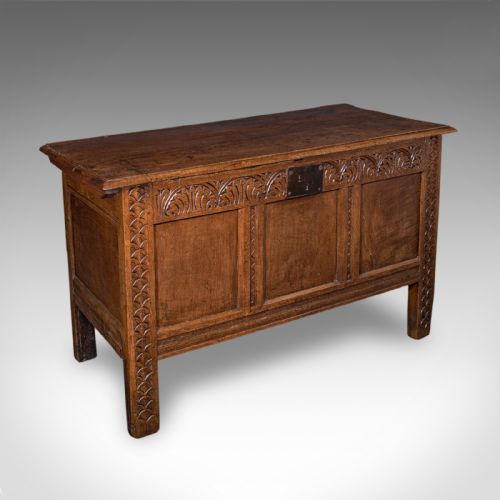
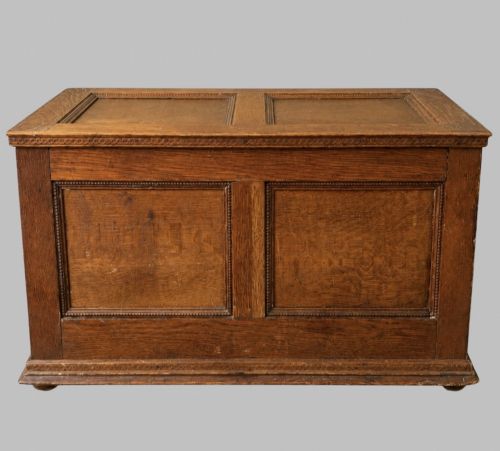
A carved oak linen trunk functions as a sturdy storage chest, frequently identified in listings as a coffer, blanket box, or panelled chest. These items originate from periods ranging from the seventeenth century through to Edwardian and later revival eras.
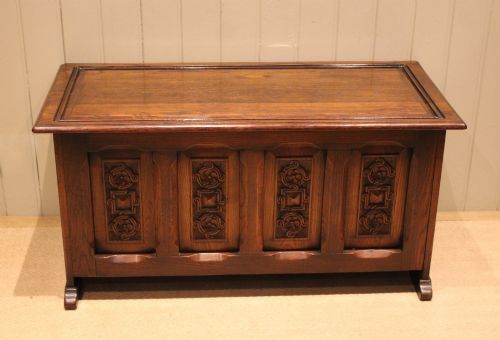
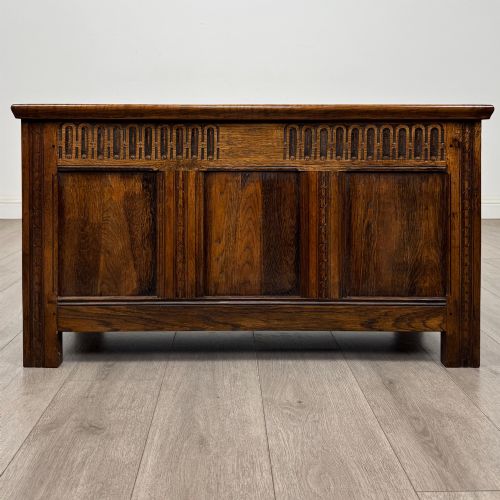
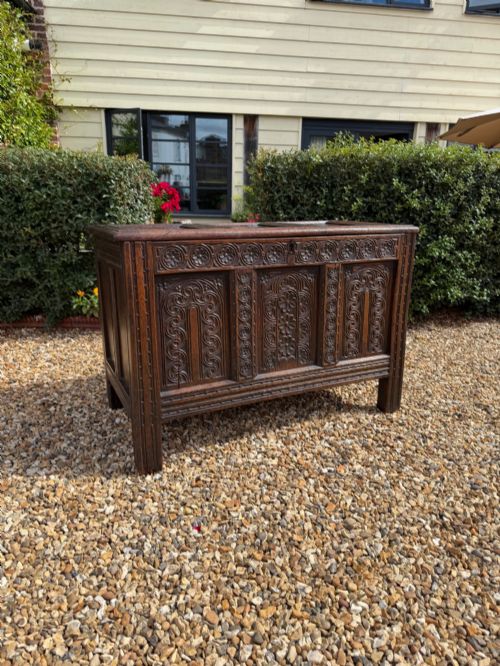
The pieces on this page primarily showcase traditional English construction in solid oak, often featuring carved panels, linen fold motifs, and historic iron hardware. Buyers encounter both authentic seventeenth-century examples and later twentieth-century revival interpretations.
Many of these trunks serve dual purposes within a home, functioning as deep storage receptacles for blankets and textiles while doubling as window seats or occasional benches.
Materials and construction methods
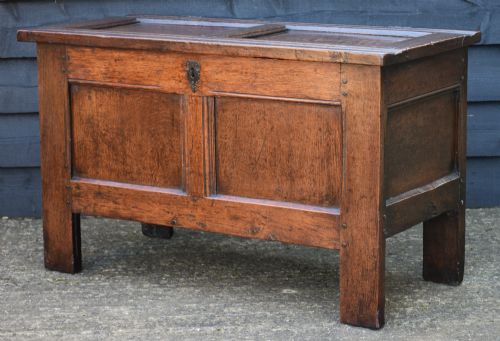
Carpenters constructed these trunks predominantly from solid English oak, utilising heavy timber boards joined with traditional methods such as framing, panelling, and occasionally simple plank construction. The natural grain of the oak provides both structural rigidity and a distinctive surface texture.
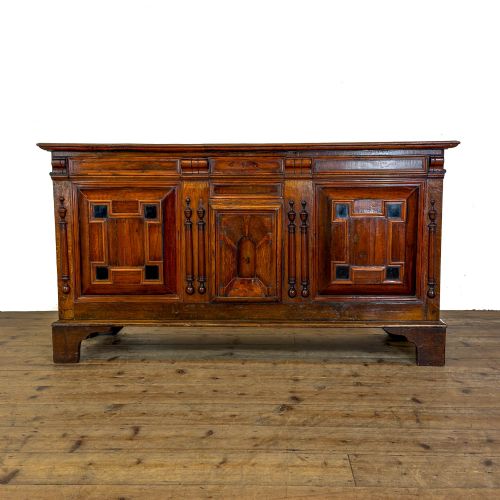
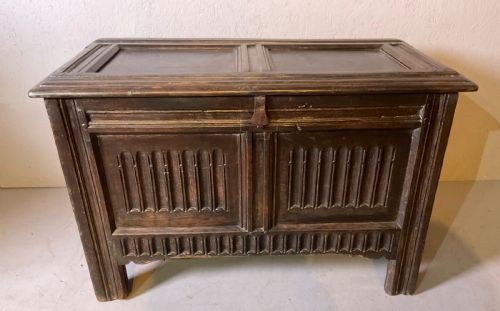
Surface decoration relies heavily on hand-carved details, including geometric patterns, stylised foliage, and linen fold panels that mimic folded cloth. Blackened ebonised wood details and forged iron hinges or latches appear across various examples to reinforce joints and secure the lids.
Listings span from pre-sixteenth century examples up through the seventeenth century, Georgian period, and Edwardian eras.
Distinctions in quality and execution
Quality in a carved oak linen trunk rests upon the depth and crispness of the hand-carved decoration, the integrity of the timber, and the proportion of the proportions. Early period pieces with undisturbed patination and original panel construction stand apart from simpler or later reproductions.
The treatment of the oak surface and the survival of original ironwork heavily influence the character of each piece. Trunks that retain structural cohesion without excessive timber replacement demonstrate superior longevity and craftsmanship.
The Carved Oak Linen Trunk Glossary
- Coffer
- A traditional heavy storage chest with a hinged lid, primarily used for valuables, documents, or textiles. This term is frequently used interchangeably with blanket chest and linen trunk.
- Linen fold
- A carved wooden panel motif popular in period furniture designed to resemble vertical folds of tightly woven cloth. It remains a hallmark of early oak cabinetmaking.
- Five plank coffer
- A primitive style of chest constructed from five distinct boards joined directly at the edges. These represent some of the earliest surviving forms of domestic storage.
- Ebonised wood
- Timber treated with a chemical stain or finish to imitate ebony. Cabinetmakers utilised this technique to create sharp visual contrast against natural oak panels.
- Jacobean style
- The decorative arts style associated with the early seventeenth century. It is characterised by stiff, geometric carving and heavy, rectilinear proportions in oak furniture.
Carved Oak Linen Trunk: Frequently Asked Questions
What were oak chests originally used for?
Historically, these heavy wooden chests stored household textiles, precious garments, linens, and documents securely away from damp stone floors. Their robust construction also allowed them to serve as impromptu seating or tables within domestic spaces.
Over centuries, their role evolved from utilitarian strongboxes into decorative furniture that anchors hallways, bedrooms, and living areas.
How do I care for antique oak furniture?
Maintaining solid oak requires stable indoor humidity levels and protection from direct heat sources that can dry out and split the timber. Applying a traditional wax polish occasionally helps nourish the grain and preserve the historic surface finish.
Avoiding harsh chemical cleaners ensures the natural patination developed over centuries remains intact and protected.
How can I tell a seventeenth century chest from a revival piece?
Examining the construction methods, tool marks, and timber shrinkage reveals the age of a trunk. Early pieces typically display hand-riven boards, irregular peg joints, and forged ironwork consistent with historic blacksmithing.
Revival pieces from the twentieth century often exhibit uniform machine sawing, standardised fixings, and cleaner internal surfaces that lack centuries of wear.
Can I use a linen chest as a window seat?
These sturdy chests function well as window seats or hallway benches due to their flat, heavy lids and low proportions. Adding a custom upholstered cushion creates a comfortable seating area while keeping the interior storage accessible.
Verifying the stability of the hinges and the flatness of the lid ensures the top can comfortably support daily seating use.