
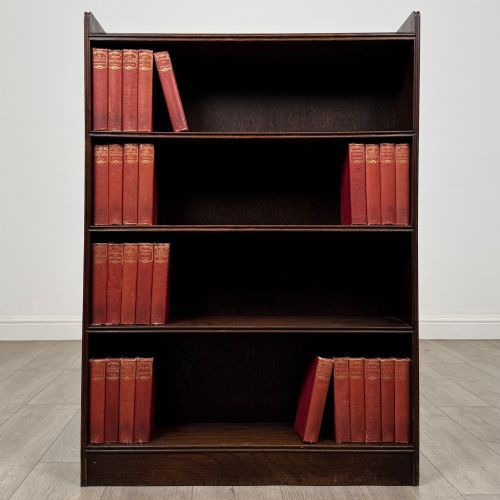
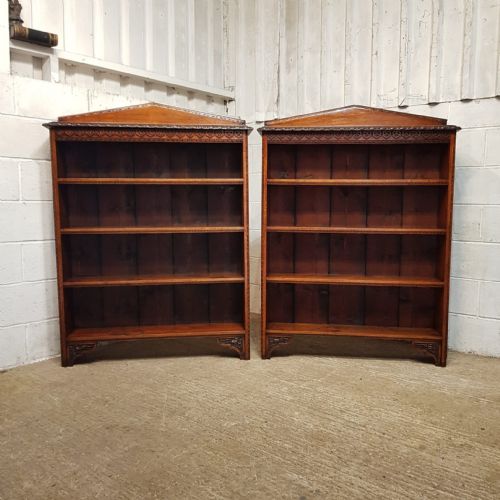


Carved Oak Library Bookcase
A carved oak library bookcase brings architectural presence and enduring utility to any room, anchoring a collection with substance and gravity.
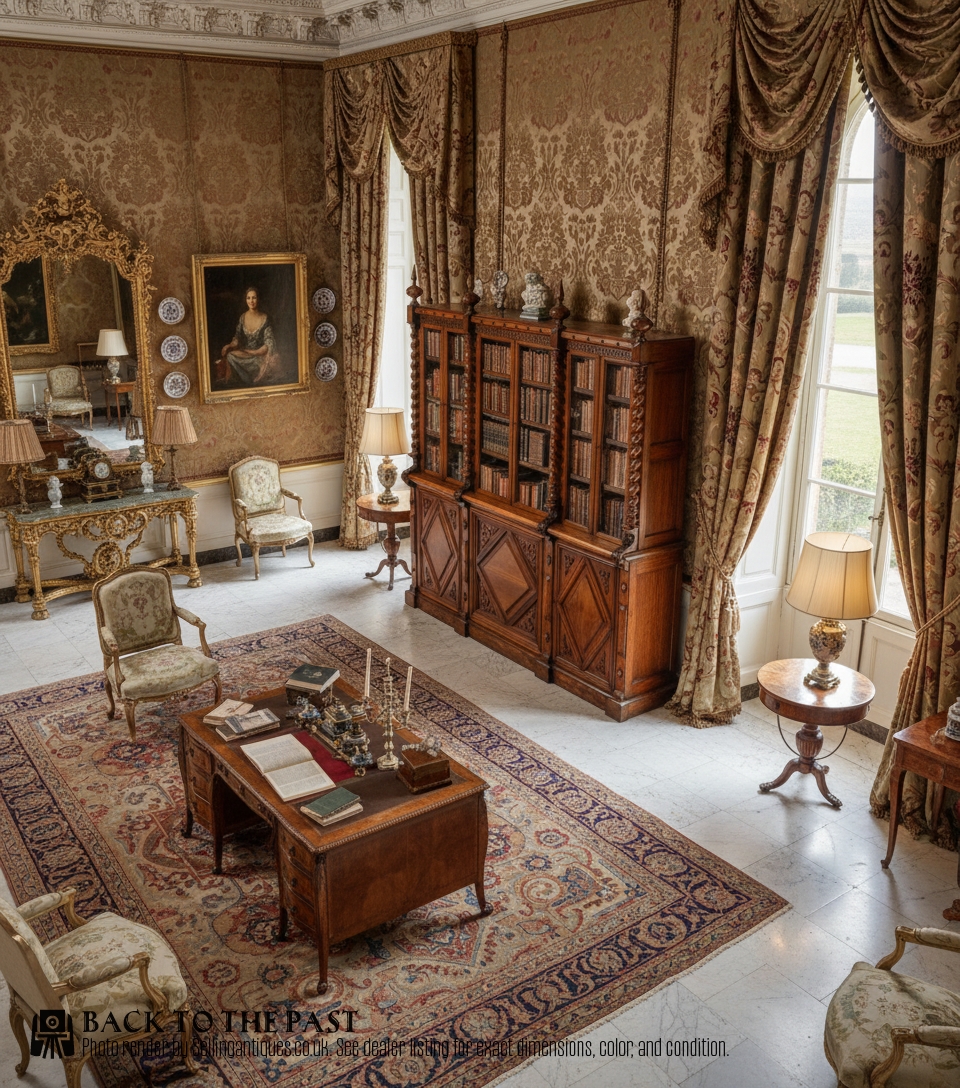
Carved Oak Library Bookcase
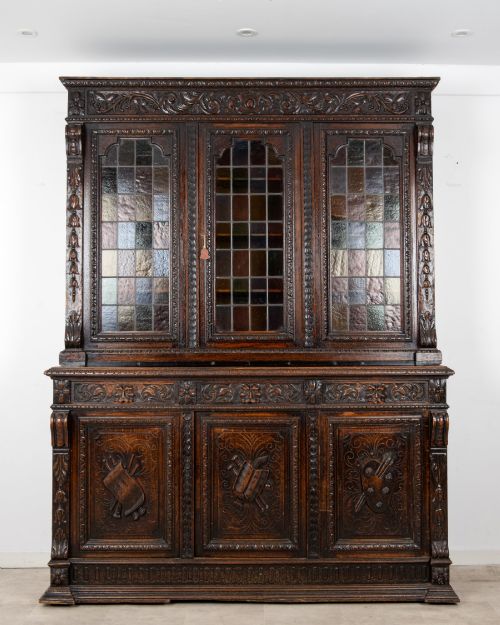
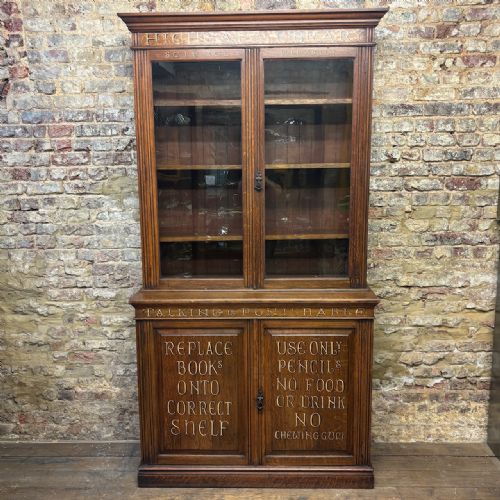
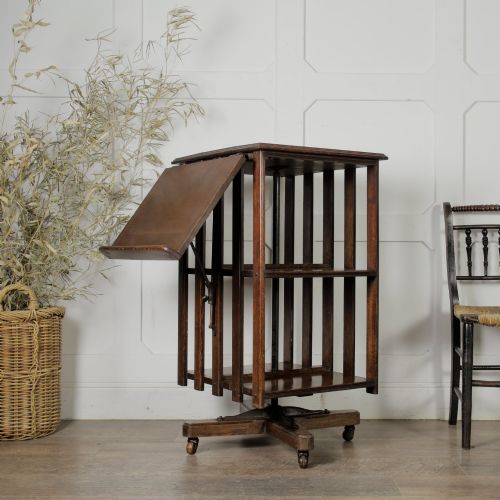
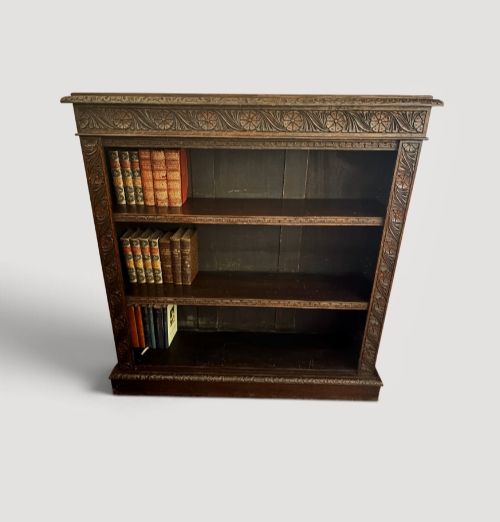
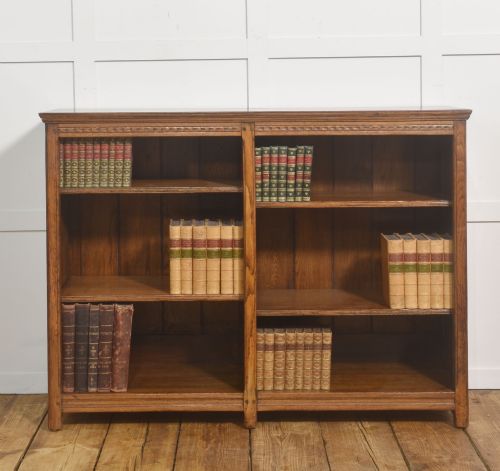
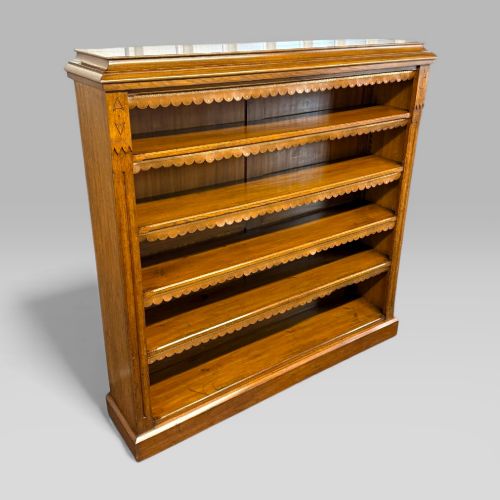
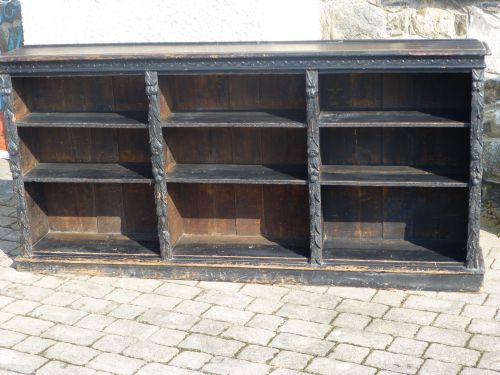
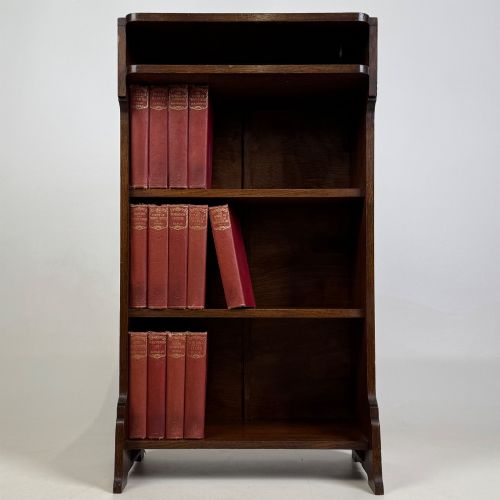
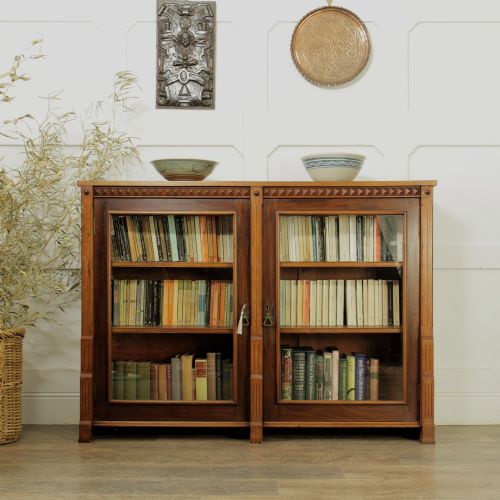
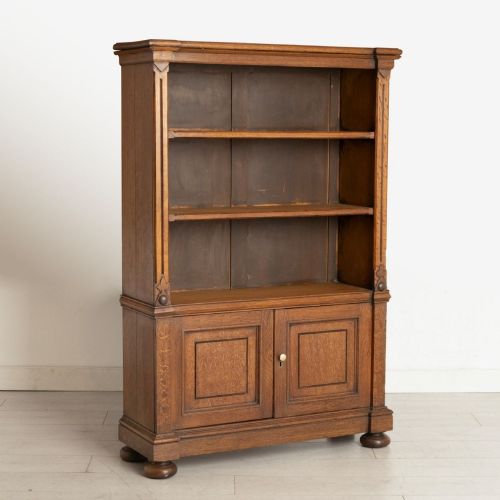
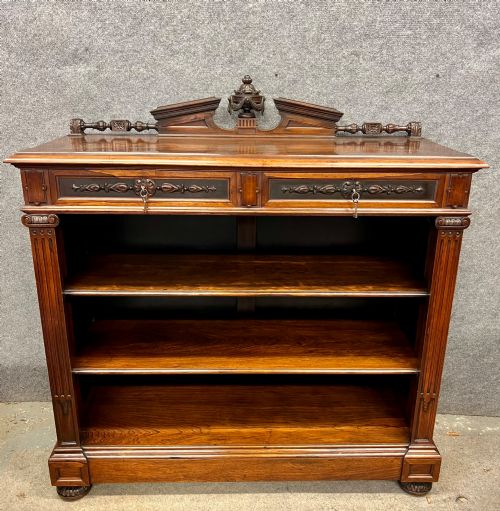
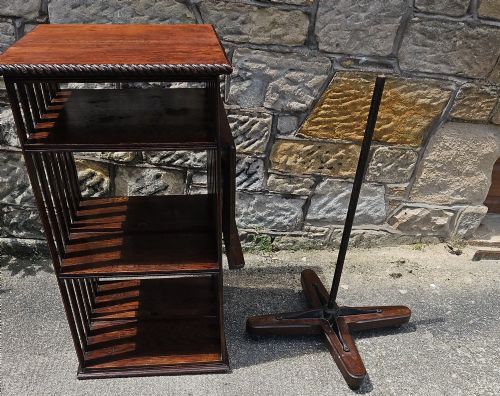
A carved oak library bookcase stands as a substantial piece of furniture designed for heavy volumes, featuring robust timber construction and decorative carving that reflects nineteenth and early twentieth-century tastes. The pieces on this page range from open front shelves to monumental glazed cabinets and revolving table models.
Victorian and Edwardian examples dominate the selection, spanning styles from Gothic Revival and Jacobean Revival to Aesthetic Movement and Renaissance Revival. Buyers encounter tall breakfront configurations alongside simpler dwarf bookcases fitted with adjustable shelving.
How they were made
Makers utilised solid oak, often selecting pollard oak for figured grain and decorative contrast, paired with brass fittings and iron hardware for structural integrity. Glazed compartments incorporated glass panes held by timber glazing bars, occasionally complemented by stained glass panels.
Joinery techniques relied on sturdy tongue and groove methods to support the significant weight of theological, literary, or scientific collections. Carving was executed by hand, displaying motifs such as foliate patterns, tracery, and figurative elements like the green man.
What varies in quality
The depth and crispness of the hand carving dictate the aesthetic distinction of a piece, separating standard workshop production from ambitious architectural commissions. Elaborate joinery such as breakfront facades and integrated pilasters denotes superior ambition.
The choice of secondary timbers and the quality of the oak figure, particularly in pollard oak selections, influence the visual richness. Intact original glazing, functioning adjustable shelf mechanisms, and harmonious hardware preserve the integrity of the design.
The Carved Oak Library Bookcase Glossary
- Breakfront
- A piece of furniture where the central section projects forward from the flanking outer sections. This configuration adds architectural depth to large library cabinets.
- Gothic Revival
- A nineteenth-century design movement inspired by medieval architecture. Pieces in this style often incorporate pointed arches, trefoils, and heavy tracery.
- Pollard Oak
- Timber taken from trees that have been pollarded, producing a highly figured and knotted grain pattern. Cabinet makers valued this wood for decorative veneering and panels.
- Revolving Bookcase
- A compact shelving unit mounted on a rotating pivot base. These pieces allowed convenient access to a concentrated selection of reference books.
- Adjustable Shelves
- Shelving supported by pegs or ratchets that can be repositioned at varying heights. This system accommodated books of differing sizes within the same cabinet.
Carved Oak Library Bookcase: Frequently Asked Questions
How do I date a carved oak bookcase?
Dating relies on stylistic clues, construction methods, and materials recorded across nineteenth and early twentieth-century examples. Gothic Revival and heavy architectural carving point toward the Victorian era, while lighter frames and simpler lines often indicate Edwardian manufacture.
Hardware, such as brass hinges and iron brackets, provides further chronological context. Examining the backboards and interior joinery helps confirm the period of production.
Are the shelves adjustable?
Many examples on this page include adjustable shelves supported by internal mechanisms. This feature allows owners to alter shelf heights for varying book sizes.
Open front models frequently record this attribute, offering flexibility for changing collections. Early pieces often relied on wooden ratchets or pin systems.
Where were revolving bookcases used?
Revolving bookcases were designed to sit beside a desk or armchair for easy access to dictionaries and reference volumes. Their rotating bases maximised storage capacity within a small footprint.
Edwardian homes frequently utilised these compact pieces in studies and libraries. They combined mobility with solid oak construction.