



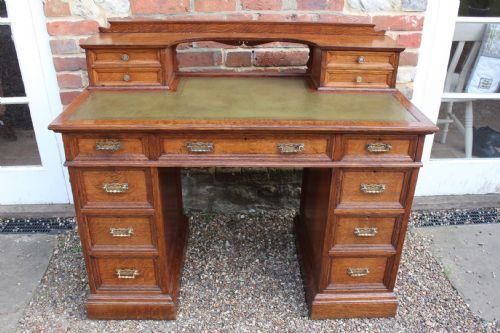


Carved Oak Kneehole Table
A carved oak kneehole table offers robust storage and a compact writing surface, making it a practical addition to any study or bedroom.
Carved Oak Kneehole Table
A carved oak kneehole table combines a recessed central space flanked by banks of drawers, designed for writing, dressing, or clerical work. These pieces span from the seventeenth century through the Victorian era and into the twentieth century, reflecting shifting domestic habits.
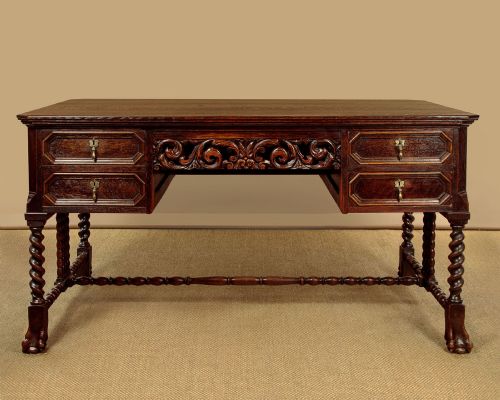
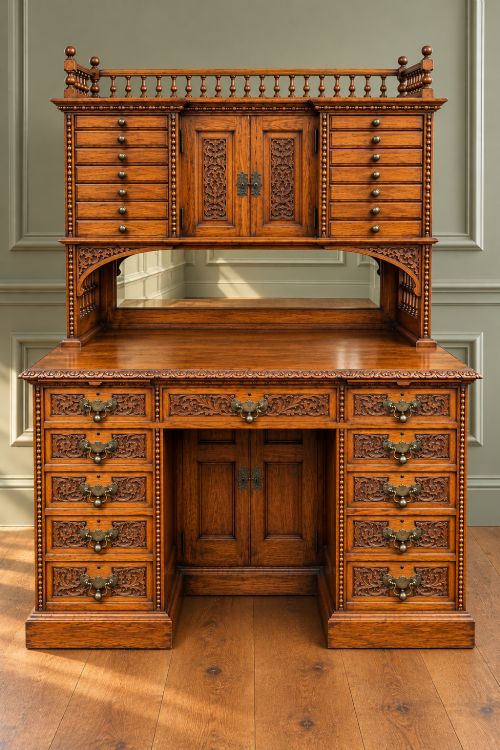
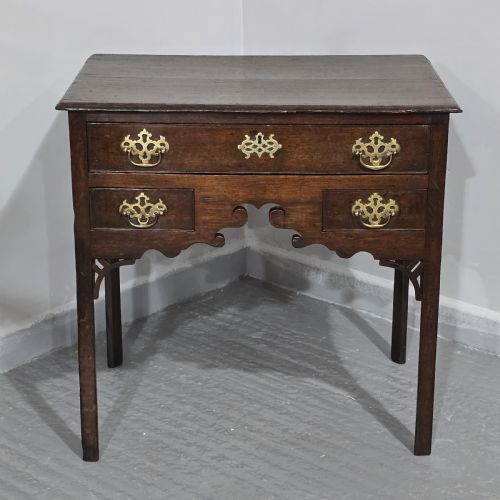
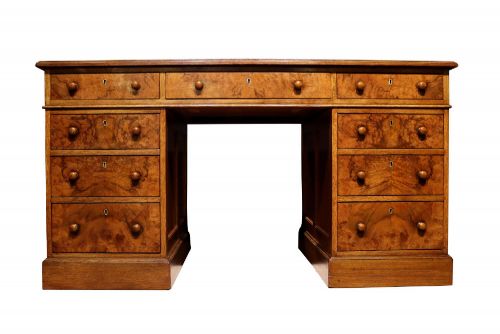
The versions most commonly met on this page include Victorian pedestal desks, eighteenth-century lowboys, and Edwardian dressing tables. They appear in styles ranging from plain English country vernacular to decorative Carolean revivals and Arts and Crafts designs.
Makers and workshops utilised solid timbers alongside figured veneers such as burr walnut and pollard oak, often paired with brass hardware and leather inserts. The forms serve equally well as writing desks, lowboys, or dressing tables depending on the layout.
Materials and construction
Makers built these pieces primarily using solid oak and specialised veneers like burr walnut or pollard oak over supportive carcases. Brass fittings, leather writing surfaces, and glass panels frequently complete the construction of pedestal desks and dressing tables.
Joinery techniques relied on traditional framing and panel methods alongside drawer dovetailing to ensure structural stability over centuries of daily use. Hand-carved details defined stylistic revivals, particularly in seventeenth-century and Carolean style pieces.
Carved Oak Kneehole Table Retail Price Guide 2026
Typical asking prices for carved oak kneehole table among the pieces listed under this phrase on Sellingantiques today, from the lower quarter to the upper quarter. They describe what is for sale here now, not the wider market.
Some eighteenth-century lowboys still retain their original working keys, saving future owners a frustrating trip to the local locksmith.
Evaluating quality and execution
The grade of timber selection and the precision of the hand-carving largely separate standard examples from finer commissions. Pieces bearing maker attributions or stamps from established cabinet makers generally command greater attention from collectors.
The retention of original brass hardware, working keys, and undisturbed surface patination distinguishes superior examples. Alterations to interior drawer linings or replaced timbers alter the standing of a piece within the broader range.
Gillow and Co·Thomas Turner·Howard and Son·Shapland and Petter·Étienne Kohlmann
The Carved Oak Kneehole Table Glossary
- Kneehole
- A recessed space beneath the central section of a desk or dressing table, designed to accommodate the user's legs. This arrangement allows for banks of drawers on either side without sacrificing seating comfort.
- Lowboy
- A small table with drawers, typically raised on four tall legs and frequently used as a dressing table or side table during the seventeenth and eighteenth centuries. They often feature shaped aprons and turned supports.
- Pedestal desk
- A heavy freestanding writing table supported by two pedestals containing banks of drawers rather than conventional legs. These forms became prevalent during the Victorian period.
- Pollard oak
- Oak timber derived from pollarded trees, exhibiting a dense, clustered knot formation prized for decorative veneering. It creates a highly textured surface figure.
- Patina
- The surface sheen and colour acquired by wood and metal through age, handling, and regular polishing. A rich patina indicates long-term care and original finish integrity.
Carved Oak Kneehole Table: Frequently Asked Questions
What is a kneehole table?
A kneehole table is a form of desk or dressing table featuring a central recessed space for the legs, flanked by vertical stacks of drawers. This layout provides generous storage while maintaining a compact footprint.
Such tables served historically for correspondence, grooming, and administrative tasks in private homes. Their versatile sizing allows them to function comfortably as modern writing desks or hall furniture.
How do I date an oak desk?
Dating an oak desk involves examining the construction methods, timber selection, hardware, and stylistic motifs present in the piece. Seventeenth and eighteenth-century examples often display hand-cut joinery and pegged frames, whereas Victorian and Edwardian pieces show machine assistance and standardised drawer linings.
Comparing the decorative carving to known stylistic revivals, such as the Carolean or Arts and Crafts movements, provides further chronological context. Maker stamps and original brasses also help pinpoint the era of manufacture.
Can I use a lowboy as a desk?
A lowboy functions adequately as a light writing surface or laptop desk, provided the knee clearance suits the user. Their original eighteenth-century purpose included dressing and small-scale paperwork.
Because lowboys typically feature a single row of drawers above the kneehole rather than full pedestals, legroom is generally more generous than in a traditional partner's desk. However, storage capacity remains limited compared to larger pedestal formats.
What is pollard oak?
Pollard oak is a decorative wood derived from trees that have been pollarded, a pruning method that encourages dense branching and produces a highly figured grain. The resulting timber displays clustered knots and swirling patterns.
Cabinet makers utilised pollard oak as a veneer on high-status Victorian furniture to create striking visual contrast against plain oak carcases. It requires careful polishing to highlight the natural depth of the grain.
How should I care for antique oak?
Maintaining antique oak involves keeping pieces away from direct heat sources and sudden humidity changes to prevent timber splitting. Regular dusting with a dry, soft cloth prevents particle buildup on carved surfaces.
Applying a traditional beeswax polish periodically nourishes the wood and preserves its historic patination without sealing the pores. Avoid modern silicone sprays that can damage older finishes.