
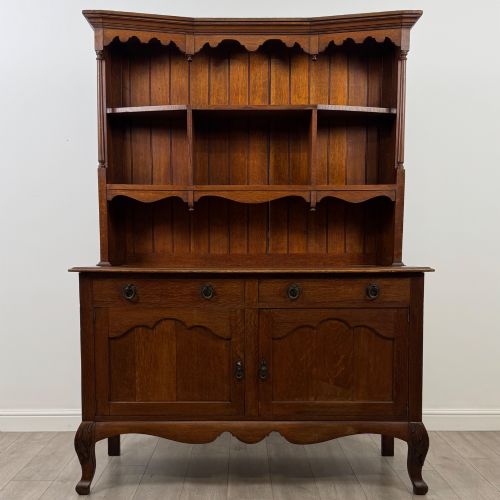
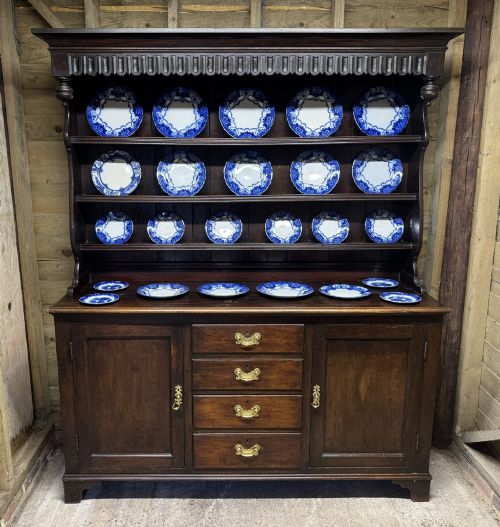
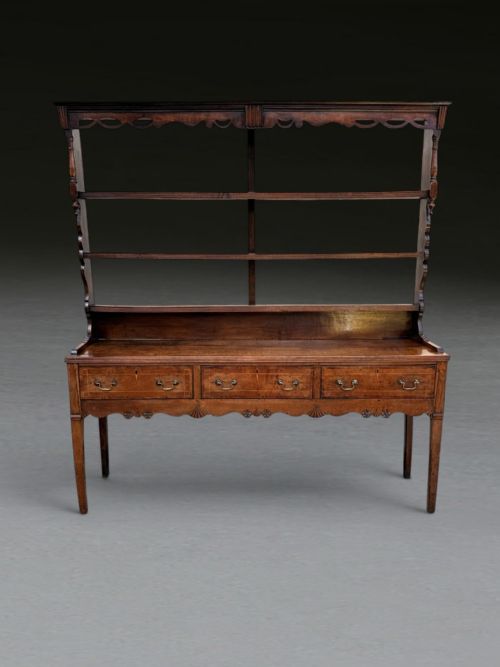
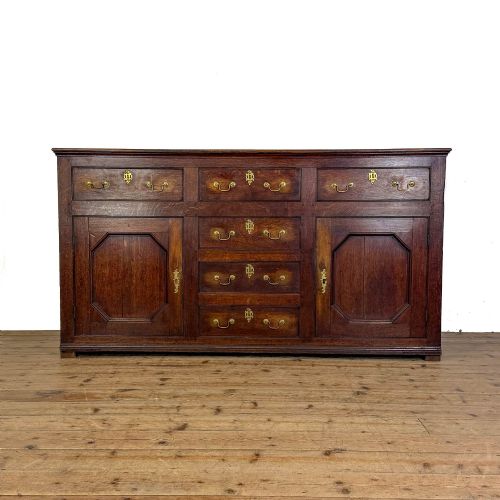


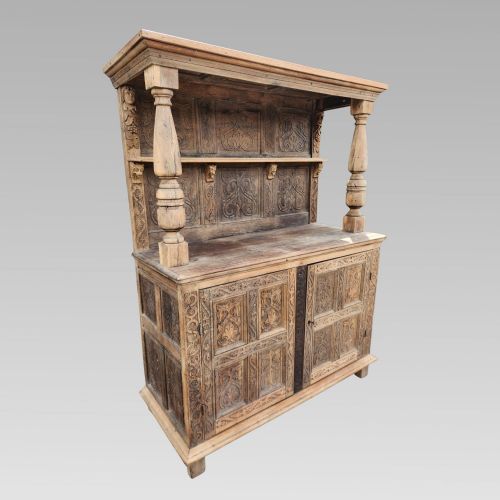

Carved Oak Kitchen Sideboard
A carved oak kitchen sideboard brings tactile warmth and enduring utility to a room through dense timber, deep panel carving and sturdy open plate racks.
Carved Oak Kitchen Sideboard
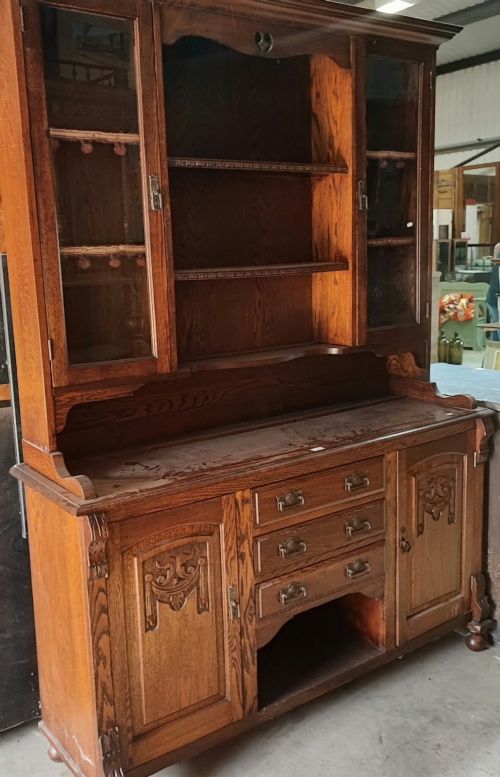
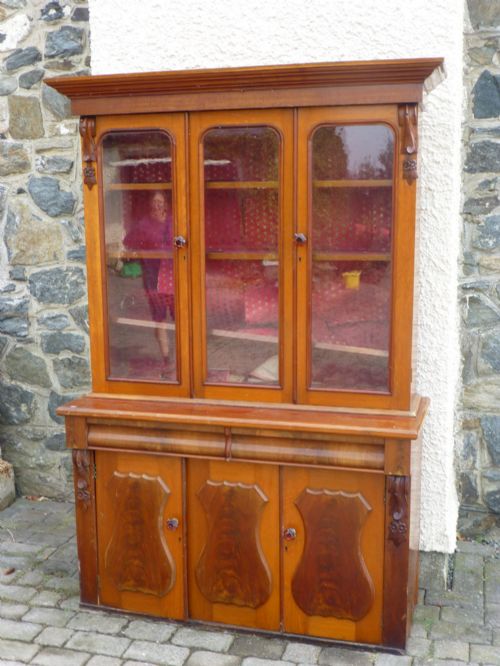
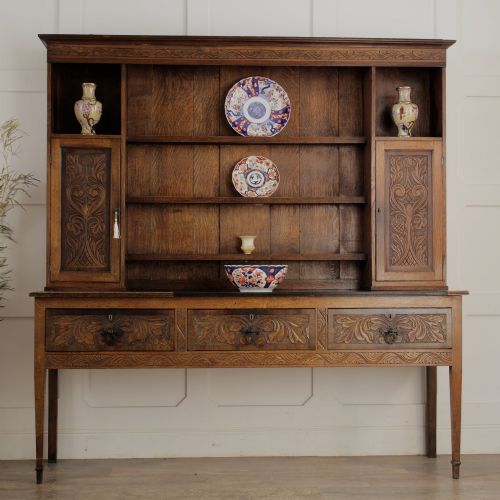
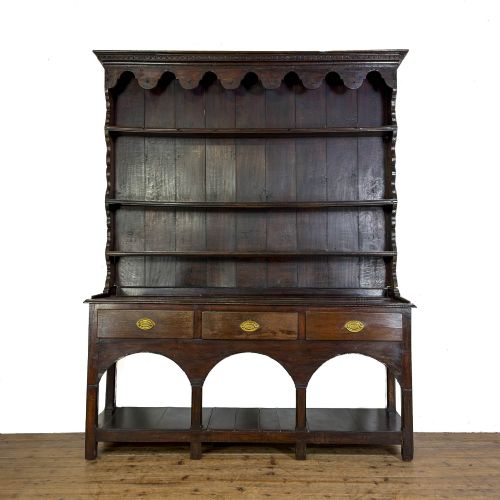
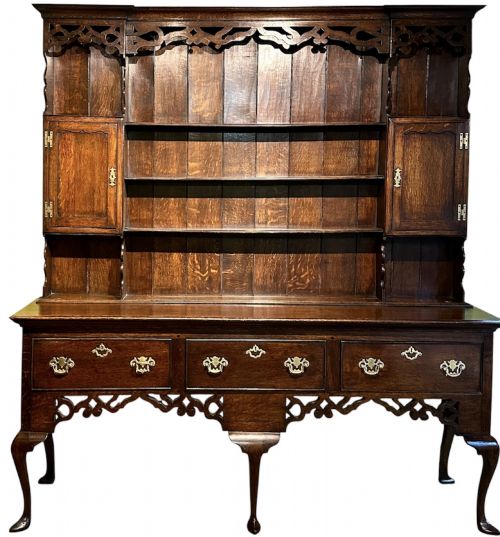
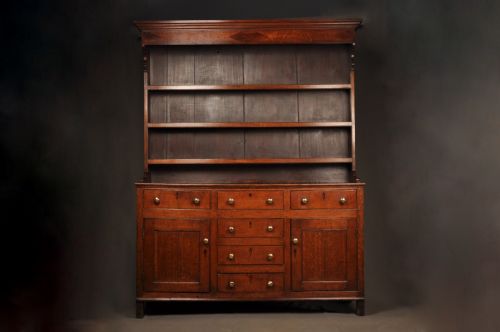
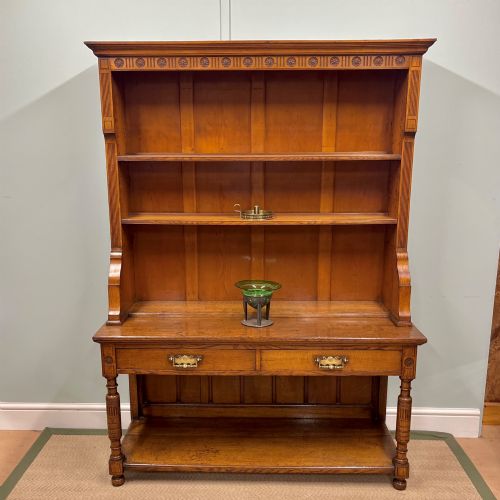
When you search for a carved oak kitchen sideboard, you are looking at substantial timber storage units originating predominantly from the eighteenth and nineteenth centuries, alongside later revival pieces. These forms include traditional Welsh dressers with plate racks, potboard bases, and combination dresser bookcases.
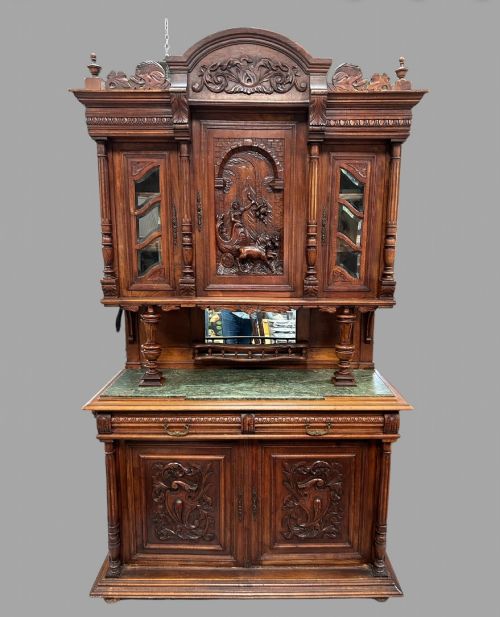
The pieces on this page lean heavily towards English and Welsh country workshops, alongside French provincial examples and specific revival movements like Arts and Crafts and Jacobean styles. You will encounter open-backed plateracks, bowfront designs, and breakfront drawer arrangements as standard architectural variations.
Originating from domestic farmhouses and country cottages, these items served as the primary storage and display units for daily tableware. Today, buyers select them to anchor contemporary or traditional kitchens with genuine period timber and practical shelving.
Assessing craftsmanship and proportion
Quality rests in the harmony of proportions between the lower base cabinet and the upper plate rack, as well as the crispness of the hand-carved detail. Superior examples display tight timber grain, substantial thickness in the potboards or top boards, and integrated structural integrity without excessive rebuilding.
The distinction between standard country utilitarian pieces and finer items lies in the depth of the mouldings, the complexity of the geometric or figural carvings, and the retention of original brass or iron hardware. Untouched patination on the oak surface separates pieces that retain their historic character from those stripped or overly restored.
Keep an eye out for Victorian Green Man carvings hiding amongst the foliage on drawer fronts, keeping a watchful wooden eye over your kitchen.
Heals of London
The Carved Oak Kitchen Sideboard Glossary
- Potboard
- A lower open shelf built into the base of a dresser, historically utilised for storing heavy pots and pans off the damp flagstone floor.
- Platerack
- The upper tier attached to the back of a dresser featuring vertical slats or grooves designed to hold plates securely on display.
- Belly rack
- A specific eighteenth-century dresser form featuring a bulging or swelling central cupboard profile beneath the main drawer line.
- Geometric carvings
- Surface decoration utilising repeating angular patterns, chevrons, or strapwork carved directly into the solid oak panels.
- Bowfront
- A convex curved cabinet front that projects outward in a smooth arc, often seen on later nineteenth-century revival bases.
Carved Oak Kitchen Sideboard: Frequently Asked Questions
What is a Welsh dresser?
A Welsh dresser is a dual-purpose timber unit combining a lower storage base of drawers and cupboards with an upper open shelving rack for displaying plates.
Traditionally positioned in the kitchen or dining quarters, it served both as a functional workspace and a showcase for domestic ceramics.
How do I date an oak dresser?
Dating relies on observing construction methods, timber selection, and stylistic decorative cues such as geometric mouldings or later revival carving. Eighteenth-century examples typically display pegged joinery and hand-planed boards, while nineteenth-century pieces often incorporate machine-sawn elements and revival motifs.
Examining the backboards, drawer linings, and hardware fixings provides further physical evidence of the period of manufacture.
How do I care for antique oak?
Antique oak benefits from stable indoor humidity levels and protection from direct, prolonged sunlight that can dry and fade the timber. Maintaining the surface requires occasional application of traditional beeswax rather than modern liquid polishes.
Gentle dusting with a soft cloth preserves the historic patination accumulated over centuries of use.