






Carved Oak Gate Leg
These carved oak gate leg tables offer sturdy drop-leaf functionality with centuries of robust timber character.
Carved Oak Gate Leg
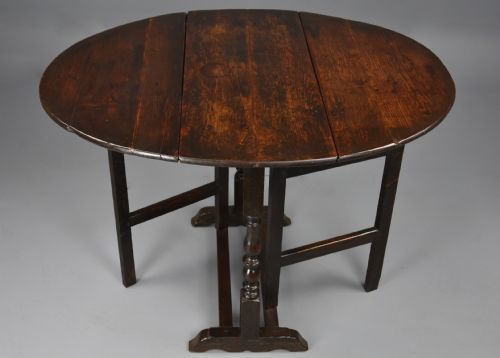
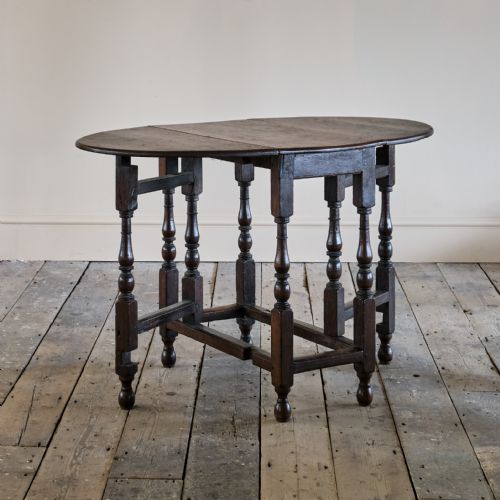
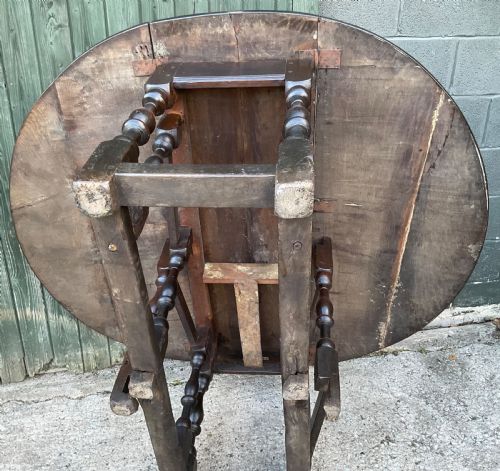
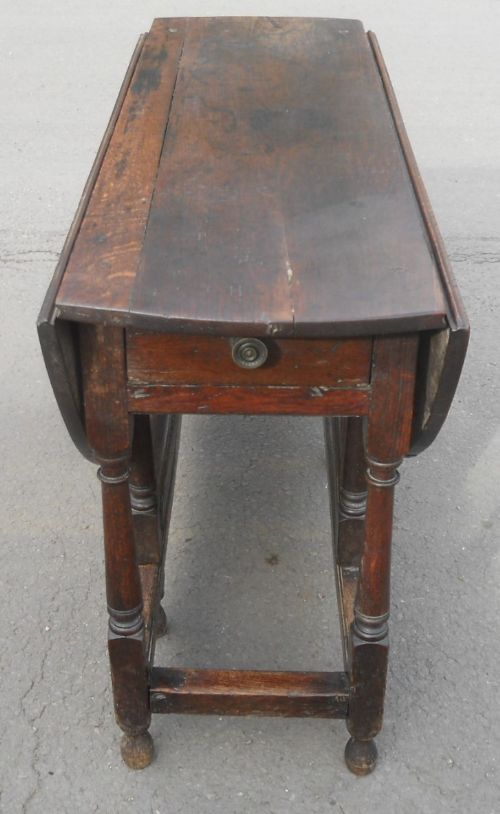
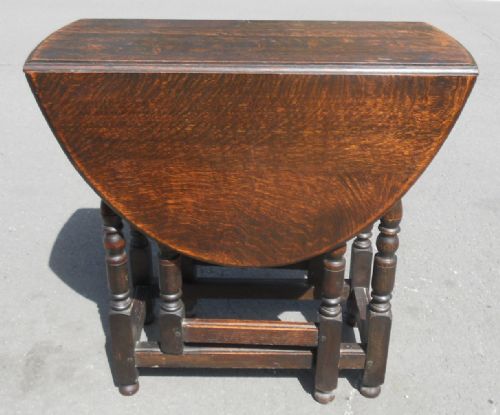
A carved oak gate leg table provides a flexible drop-leaf surface supported by hinged legs that swing outward to hold the flaps. These tables emerge primarily from the seventeenth century, alongside revival periods in the nineteenth and early twentieth centuries.
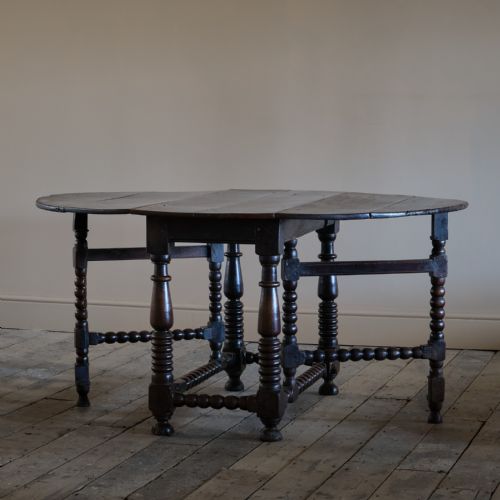
The pieces on this page span compact occasional side tables up to large dining tables intended to seat six. Most examples present an oval or round top when fully opened, resting on turned or bulbous supports.
Buyers encounter genuine seventeenth century craftsmanship as well as later Victorian, nineteen-twenties, and nineteen-thirties interpretations. Solid timber construction unites these examples across their different eras of production.
Markers of Quality and Proportion
Quality rests in the depth and crispness of the timber carving, alongside the integrity of the original gate leg mechanism. Tables retaining a rich, aged patina show superior surface character compared to stripped or heavily altered examples.
Proportion and scale distinguish fine small occasional pieces from heavy dining tables. The alignment of the drop leaves and the tightness of the timber joints determine the long-term structural success of each piece.
Listings feature solid oak and brass materials across multiple eras, including seventeenth-century, Victorian, and nineteen-thirties pieces.
The Carved Oak Gate Leg Glossary
- Gateleg
- A table with hinged flaps supported by legs that swing out like a gate. This clever design allows a large surface to fold down compactly.
- Drop-leaf
- A tabletop featuring movable side sections that drop down when unsupported. These leaves extend the surface area significantly.
- Bobbin turned
- A style of furniture leg shaped with a series of rounded wooden spheres resembling bobbins on a thread. This turning technique appears frequently on seventeenth-century joined furniture.
- Bulbous
- A heavy, swelling contour turned into table legs and supports. This robust shape anchors large dining pieces.
- Patina
- The surface sheen and colour developed by aged wood through handling and exposure over time. Collectors prize an untouched, deep patina.
Carved Oak Gate Leg: Frequently Asked Questions
How do I use a gate leg table daily?
Keep the leaves dropped against the sides for everyday space saving, then swing out the supporting legs when you need a full dining surface.
Ensure items placed on the extended leaves do not exceed the weight capacity supported by the swinging wooden gate frame.
How do I tell seventeenth century from Victorian?
Examine the construction marks, timber grain, and joinery methods underneath the tabletop and around the hinge mechanisms. Seventeenth century pieces show distinct hand tool signatures and different wear patterns compared to Victorian revivals.
Hardware styles and the crispness of the carved oak leaf and acorn motifs also offer clear clues to the exact period of manufacture.
Can I seat six people at these tables?
Larger dining versions provide ample clearance and surface area to seat six guests comfortably when fully opened. Check the dimensions of the central fixed frame and the extended drop leaves before planning seating arrangements.
Compact occasional and side variants are strictly suited for smaller spaces and do not accommodate multiple chairs.
How should I care for solid oak?
Dust the timber regularly with a dry cloth and apply natural beeswax occasionally to nourish the oak grain. Avoid placing the table near direct heat sources or in damp conditions to prevent timber movement.
Protect the surface from liquid spills and hot dishes to preserve the original finish and historical patina.