


Carved Oak Fireside Box
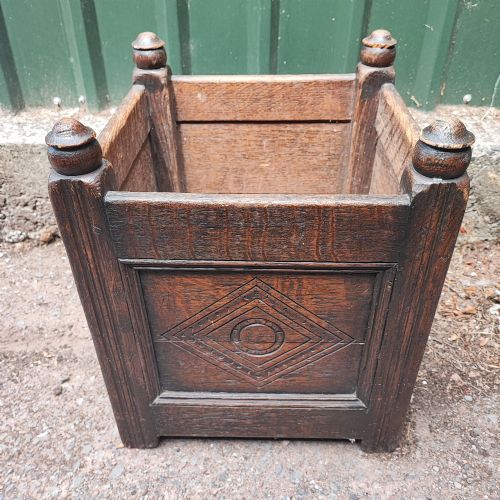
A carved oak fireside box keeps fuel close to the hearth in solid, heavily textured timber that bears the marks of country workshops and Victorian parlours.
Carved Oak Fireside Box
A carved oak fireside box is a utilitarian container designed to store coal, logs, or kindling beside the fireplace. When you search for a carved oak fireside box, you encounter sturdy lidded chests, sloping purdoniums, and scuttles rendered in heavy native timber.
The pieces on this page span the eighteenth, nineteenth, and early twentieth centuries, moving from Georgian vernacular forms to ornate Victorian and Edwardian iterations. Most examples rely on substantial oak construction, frequently embellished with carved panels, brass handles, or metal liners.
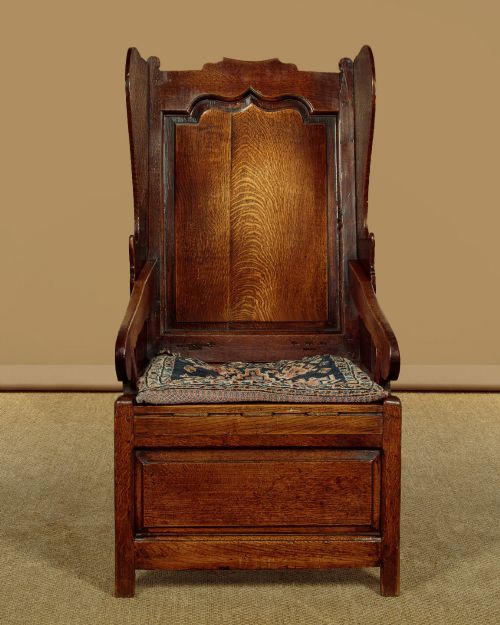
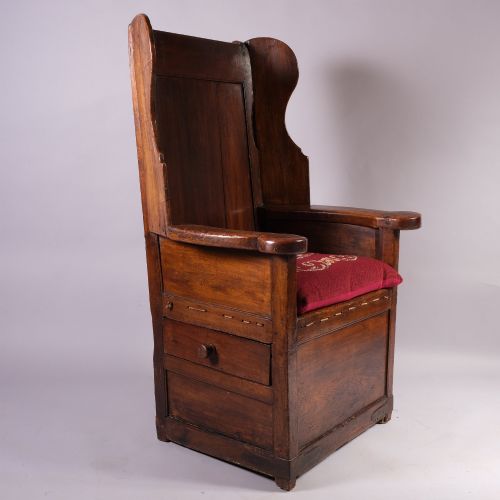
Alongside dedicated coal boxes and purdoniums, the selection includes related fireside forms such as log bins and coal scuttles. Each piece reflects the domestic requirements of heating rooms with solid fuel before central heating changed the British interior.
Materials and construction
Makers built these fireside containers using solid oak, chosen for its strength and resistance to the daily knocks of heavy coal and firewood. Grain patterns vary from plain quartersawn boards to richly figured pollard oak.
Metalwork plays a structural and decorative role, with brass hinges, drop handles, and iron fittings secured by screws or rivets. Many boxes incorporate removable metal or copper liners to contain soot and moisture from the fuel.
Carving is typically executed in relief directly onto the timber lids and fronts, utilising geometric motifs, foliage, or linenfold patterns. Joints are predominantly pegged mortise and tenon or dovetail construction, designed to withstand dry heat near the hearth.
Many Victorian coal boxes survived because children used them as illicit hiding spots for contraband toys during winter afternoons.
Judging quality and craftsmanship
Quality rests in the depth and crispness of the timber carving, alongside the thickness of the oak boards used for the carcase. Finer examples display hand-cut mouldings and well-fitted internal liners rather than mass-produced stamped components.
The integrity of the hardware distinguishes better pieces from plain utility items. Original brass handles, hinges, and matching shovels that have survived decades of use elevate a box above those fitted with later replacements.
Proportion and structural soundness matter deeply, as hearth furniture endured considerable physical strain. A well-balanced box retains tight joints, flat lids that close squarely, and an interior free from excessive fuel corrosion.
The Carved Oak Fireside Box Glossary
- Purdonium
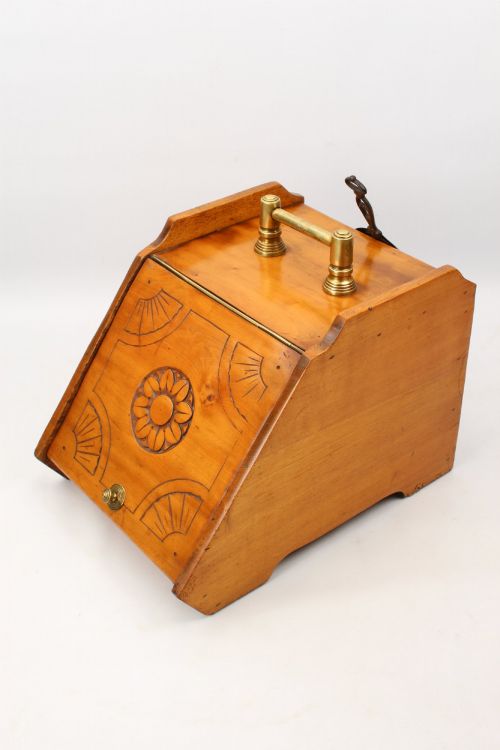
- A specific type of Victorian or Edwardian coal box featuring a sloping front door that drops forward to reveal an internal metal shovel or scuttle. This design kept coal contained while presenting a tidy appearance in the parlour.
- Pollard oak
- Timber taken from trees that were pollarded, creating a dense grain with dense clusters of knots and swirling patterns. Cabinet makers prized this figured wood for decorative panels on high-status furniture.
- Coal scuttle
- A bucket or container, often made of metal or wood with a handle, used for carrying coal to the grate. Many versions included a matching shovel stored in a side sleeve.
- Vernacular furniture
- Objects made by local craftsmen for everyday use, following regional traditions rather than strict academic style books. These pieces prioritize function and local materials above metropolitan fashion.
- Mortise and tenon
- A traditional woodworking joint where a projecting tongue fits snugly into a matching cavity, secured with wooden pegs. This method provides immense structural rigidity without relying on metal fasteners.
Carved Oak Fireside Box: Frequently Asked Questions
What is a purdonium?
A purdonium is an enclosed wooden coal box developed during the Victorian era with a hinged, sloping front panel. When opened, it tilts forward to grant access to a removable metal liner.
This clever mechanism prevented coal dust from spilling onto the hearth rug while concealing dirty fuel inside a handsome piece of carved furniture.
How do I clean an oak fireside box?
Maintenance requires only a soft cloth and occasional application of traditional beeswax to nourish the dry oak. Avoid modern silicone polishes that build up sticky residues.
Metal liners should be lifted out and brushed dry to prevent moisture from transferring to the internal timber floor of the box.
Are these boxes safe for modern use?
Most antique oak boxes are structurally sound enough to hold logs, kindling, or even magazines and hearth accessories. The original internal metal liners were designed to hold coal safely.
Inspect the hinges and base boards to ensure they can support the weight of heavy fuel before loading them near a burning fire.
How do I date an oak coal box?
Dating relies on stylistic clues, hardware types, and construction methods visible in the timber. Georgian and early nineteenth-century pieces show hand-sawn marks and simpler dovetails, while Edwardian examples often feature machine-planed boards and distinct Art Nouveau motifs.
Brass hinges and cast handles also evolved in shape and manufacturing technique across the decades.