


Carved Oak Drop Leaf
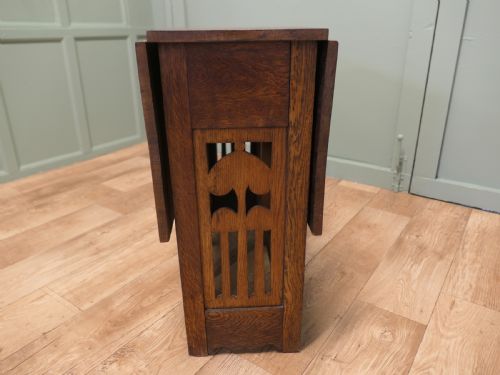
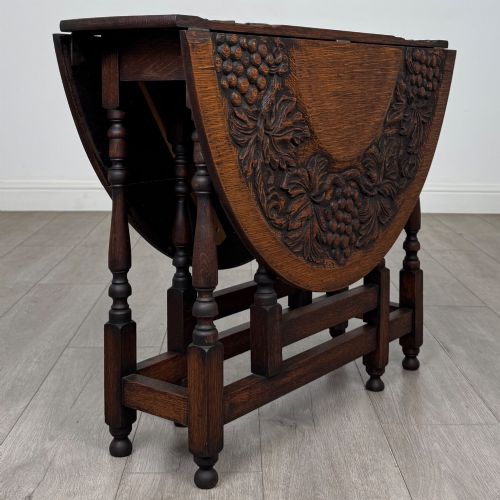
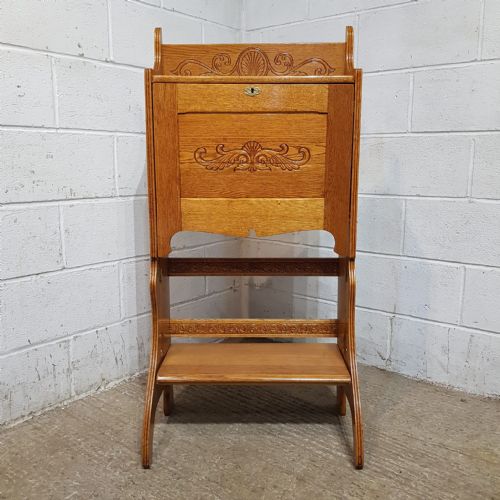
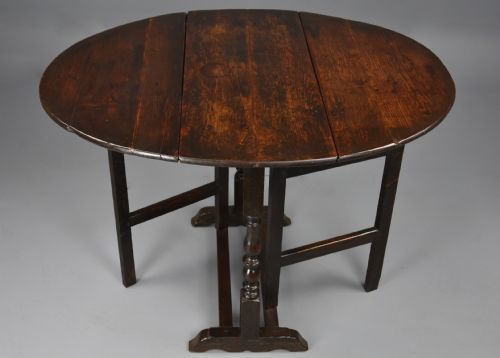
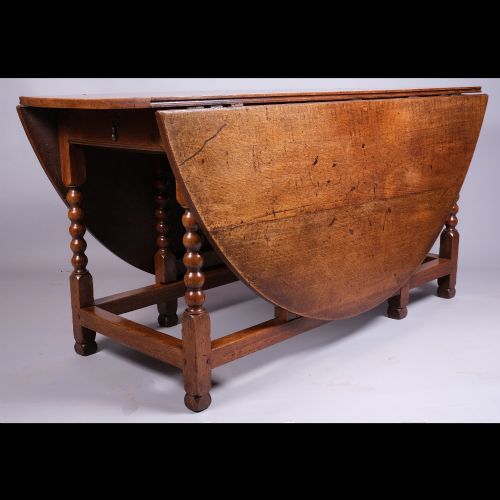
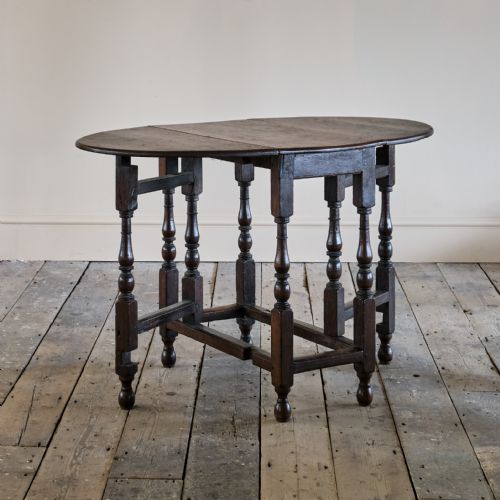
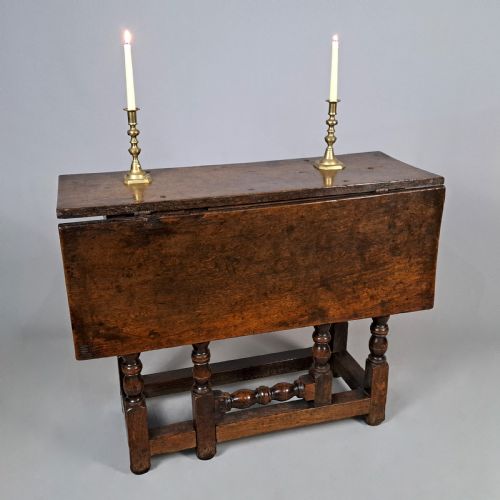
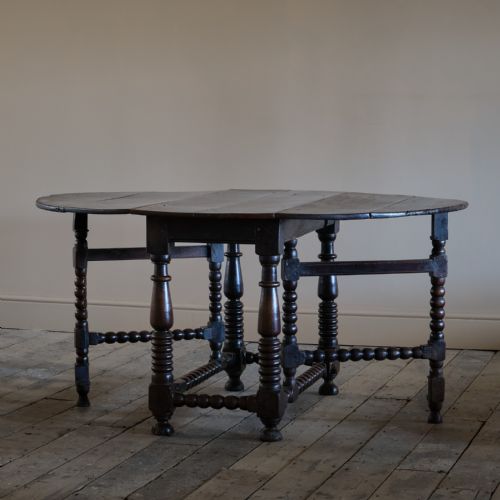
A carved oak drop leaf table brings robust seventeenth-century domestic utility and rich timber grain straight into a modern interior.
Carved Oak Drop Leaf
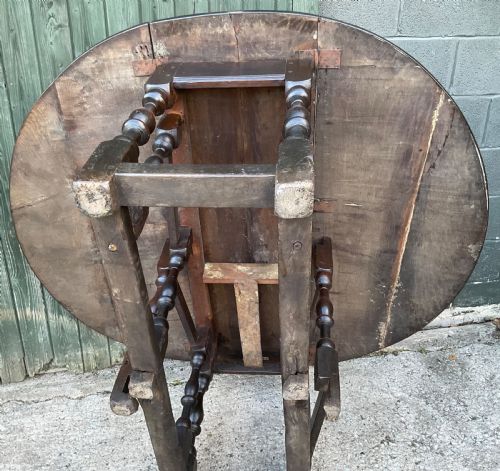
A carved oak drop leaf serves primarily as a versatile folding table, expanding from a compact footprint into a full dining surface by lifting hinged flaps supported on swinging legs.
The pieces appearing most frequently span the seventeenth century alongside later revivals from the Victorian era and the nineteen-twenties.
Forms range from small side and occasional tables to large six-seater dining tables and gateleg configurations constructed from solid oak.
How they were made
Construction relies heavily on solid oak timbers, occasionally incorporating pollard oak for distinct grain patterns alongside brass or iron hinges and fittings.
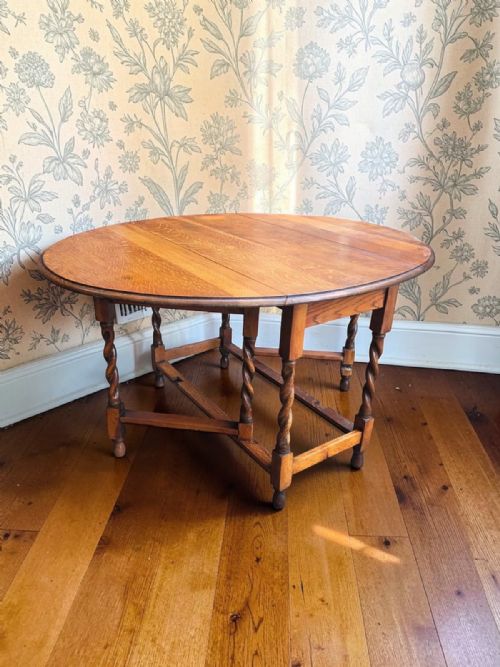
Structural support is achieved through turned elements such as barley twist or bobbin turned legs, often integrated into a gateleg mechanism that swings outward to hold the leaves.
Alongside heavy dining tables, the selection includes unexpected small items such as screwback oak leaf earrings.
What varies in quality
Quality rests on the integrity of the timber, the depth and crispness of the period carving, and the original condition of the surface patina.
Early pieces from the seventeenth century demonstrate distinct joinery methods and hand-turned supports that differ substantially from later nineteenth-century and twentieth-century revivals.
The Carved Oak Drop Leaf Glossary
- Gateleg table
- A table with hinged leaves supported by one or more legs that swing outward from the frame like a gate. This design provides robust support for folding flaps.
- Barley twist
- A spiral turning carved into furniture legs and supports. It became popular in seventeenth-century English joinery and saw widespread revival in the twentieth century.
- Bobbin turning
- A form of woodturning consisting of rounded, spool-like shapes set end to end. It appears frequently on seventeenth-century and Victorian frames.
- Pollard oak
- Oak timber taken from trees that have been pollarded, producing a dense, highly figured grain pattern. It was utilised for decorative surfaces.
- Drop leaf
- A table top configuration featuring a fixed centre section and hinged flaps that lower when not in use. It saves floor space in smaller rooms.
Carved Oak Drop Leaf: Frequently Asked Questions
How do I date a carved oak drop leaf table?
Dating relies on examining the construction joints, turning styles, and overall timber characteristics. Seventeenth-century examples display hand-cut joinery and heavy patination, whereas later revivals from the nineteenth and twentieth centuries show more uniform machining.
Hardware such as hinges and the style of the turned legs also offer clues to the period of manufacture, distinguishing original seventeenth-century pieces from later Jacobean revival items.
Are these tables suitable for daily dining?
Solid oak construction provides immense durability, making these tables well-suited for everyday meals and family gatherings. The drop leaf mechanism allows the table to remain compact against a wall when not in use.
Care should be taken to protect the historical surface from moisture and heat using appropriate mats, preserving the wood grain and original patina over time.
What is the difference between a gateleg and a drop leaf?
A drop leaf is any table with hinged flaps, while a gateleg is a specific type of drop leaf where the supporting legs pivot outward on a hinged frame. This swinging gate mechanism is necessary to support long wooden leaves.
Many pieces combine both terms, using swinging legs to hold up the extended leaves for dining or serving.
How should I care for an antique oak surface?
Maintenance requires minimal intervention, primarily dusting with a soft cloth and occasionally applying traditional beeswax to nourish the timber. Avoid modern silicone sprays or harsh chemical cleaners that can degrade the aged finish.
Keeping the table away from direct heat sources and drastic humidity changes prevents the solid oak from splitting or warping.