

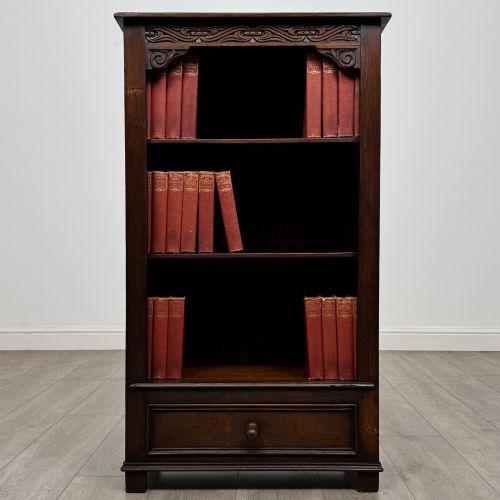


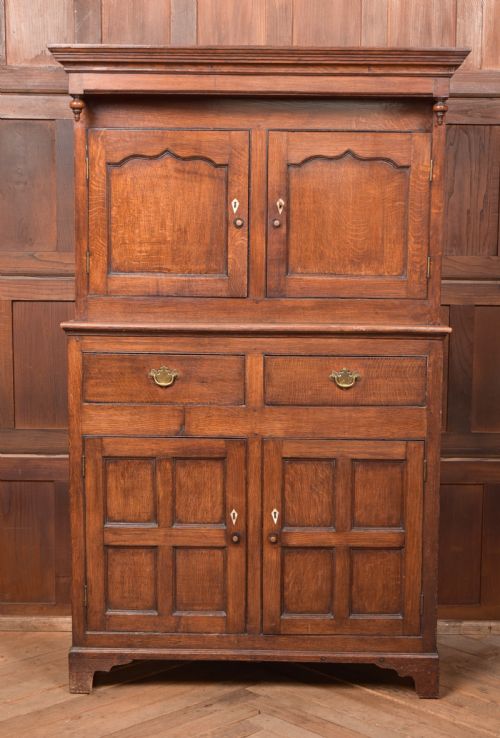
Carved Oak Drawer Unit
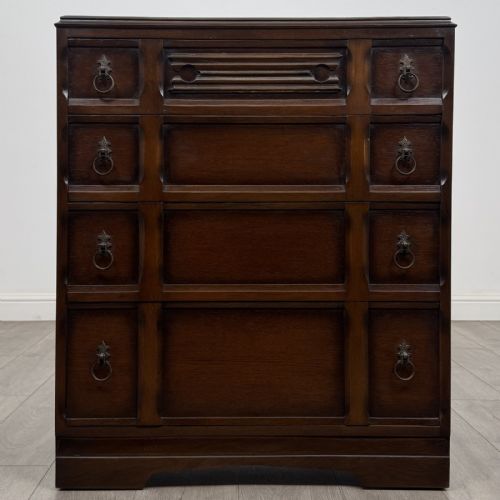
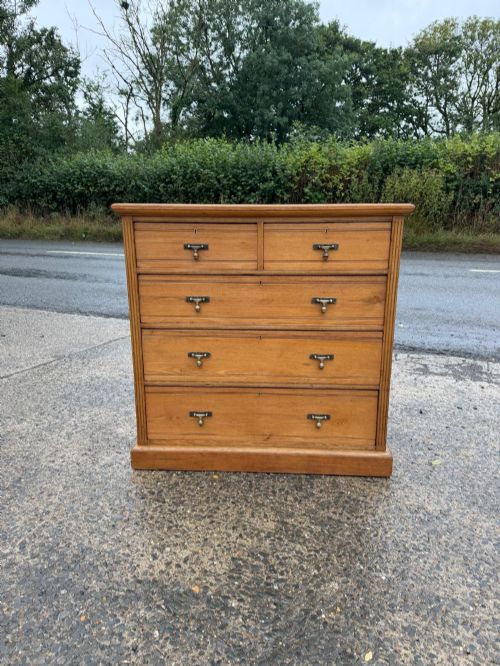
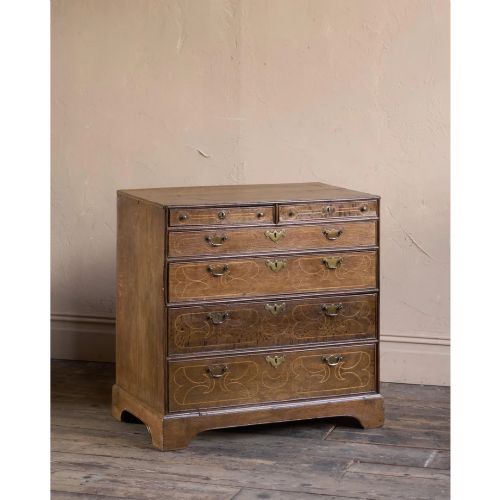
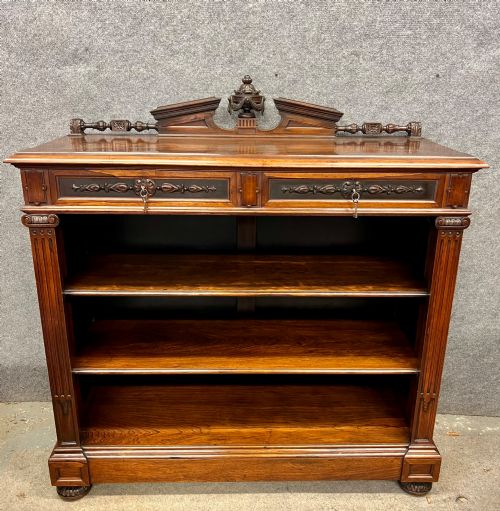
These carved oak drawer unit examples bring robust timber storage into a room, offering practical depth and period character.
Carved Oak Drawer Unit
A carved oak drawer unit encompasses sturdy storage furniture built from resilient timber, ranging from formal chests of drawers to compact bedside cabinets and bedside units. When examining this selection, buyers encounter diverse forms shaped across distinct eras, including 17th century geometric designs, Edwardian pieces, and later 1930s incarnations.
The objects span multiple domestic functions, taking the form of dressing tables, side cabinets, and housekeepers cupboards alongside traditional drawer configurations. Regional workshops and larger firms produced these storage items using solid boards, often embellished with turned details, panel work, and fruitwood inlay.
Jacobean revivals and Arts and Crafts aesthetics dominate the stylistic variations found within this group. Buyers frequently discover pieces exhibiting panelled doors, brass hardware, and linear carving that reflect the functional demands of their respective periods.
Assessing quality and craftsmanship
Superior examples distinguish themselves through the crispness of the hand-carved detail and the precise integration of panelled construction. Finer pieces retain their original brass hardware, uncompromised drawer linings, and stable timber joints without excessive replacement parts.
Proportion and decorative restraint often separate standard utility pieces from masterworks of regional joinery. The depth of the timber patination and the balanced placement of inlay or geometric mouldings indicate the care invested by the original maker.
The listings on this site feature oak pieces spanning the seventeenth century through to the 1930s, incorporating brass hardware and fruitwood inlay.
Shapland and Petter·Simpson Halifax·Trussant and Cie·Amberg
The Carved Oak Drawer Unit Glossary
- Jacobean Revival
- A nineteenth century stylistic movement emulating the heavy turned supports and geometric panelling of early seventeenth century English furniture. This style accounts for much of the dark, carved woodwork seen in later centuries.
- Dovetail joint
- A traditional interlocking woodworking joint used in drawer construction to resist pull forces. Fine, narrow pins and tails indicate careful hand construction.
- Fruitwood inlay
- The practice of inserting contrasting light fruitwood sections into recesses cut into an oak surface to form decorative patterns. This technique adds subtle colour variation to the drawer fronts.
- Patina
- The surface sheen and colour depth developed by timber over years of handling, polishing, and exposure to light. A rich patina signals age and natural wear rather than chemical intervention.
- Acorn handle
- A drop handle or drawer pull cast in the shape of an acorn, frequently found on late nineteenth and early twentieth century oak furniture. These small brass details provide a secure grip and period charm.
Carved Oak Drawer Unit: Frequently Asked Questions
How do I date a carved oak drawer unit?
Dating relies on examining construction techniques, such as hand-cut dovetails versus machine-made joints, alongside hardware styles and timber preparation. Earlier pieces from the seventeenth century exhibit pegged frames and hand-riven boards, while twentieth century versions show more uniform machining.
Stylistic revivals can sometimes complicate dating, as nineteenth century makers frequently copied earlier Jacobean motifs. Comparing the internal secondary woods and wear patterns helps clarify the true age of the piece.
Where were these storage units used?
These pieces served primary storage functions throughout the home, from bedroom dressing areas to formal living spaces and estate housekeepers rooms. Larger cupboards held linens and provisions, while smaller drawer units accommodated personal documents and apparel.
In modern interiors, they adapt readily to hallways, studies, and dining rooms as practical sideboards or general storage consoles. Their neutral timber tones allow them to integrate with both traditional and contemporary surroundings.
How should I care for antique oak?
Maintain oak furniture by dusting regularly with a dry, soft cloth and avoiding silicone-based polishes that build up sticky residues over time. Periodic application of a quality beeswax helps nourish the timber and preserve its natural sheen without sealing the pores.
Keep pieces away from direct heat sources and strong sunlight to prevent the timber from drying out, shrinking, or splitting. Stable room temperatures protect both the joints and the decorative surface carvings.
What is the difference between Arts and Crafts and Jacobean styles?
Arts and Crafts pieces emphasise simple lines, honest construction, and subtle plant-based carving, often reflecting a reaction against mass production. They celebrate the natural grain of the oak through clean, functional forms.
Jacobean styles rely on heavy geometric mouldings, strapwork, and deep relief carving designed to project status and visual weight. These contrasting approaches create very different silhouettes within the same timber family.