




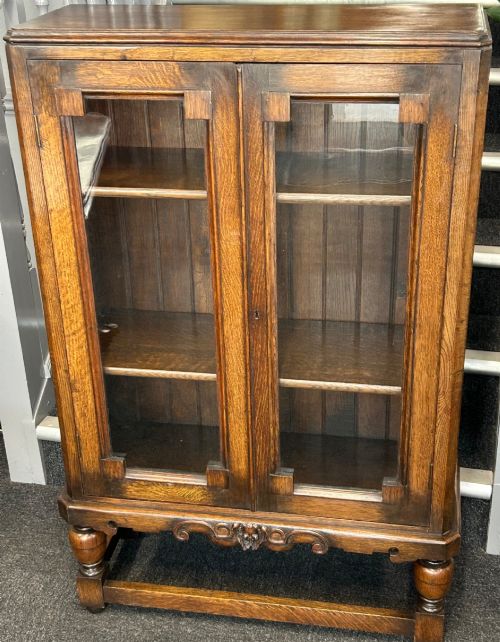
Carved Oak Display Stand
A carved oak display stand gives a room genuine architectural weight, holding objects with the quiet authority of solid timber.
Carved Oak Display Stand
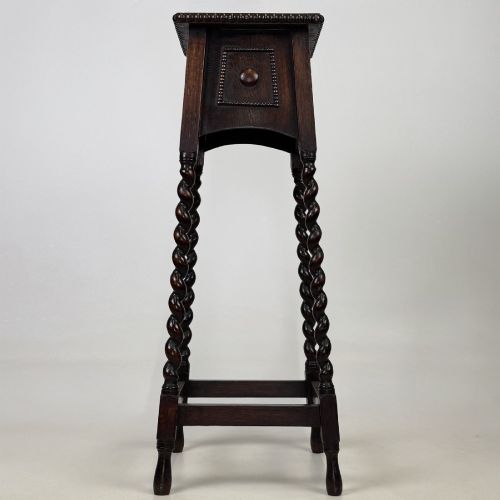
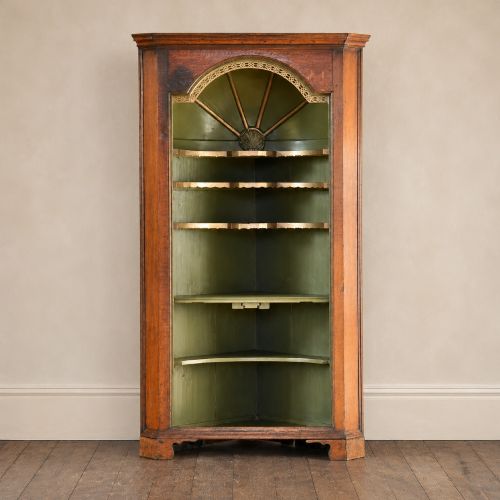
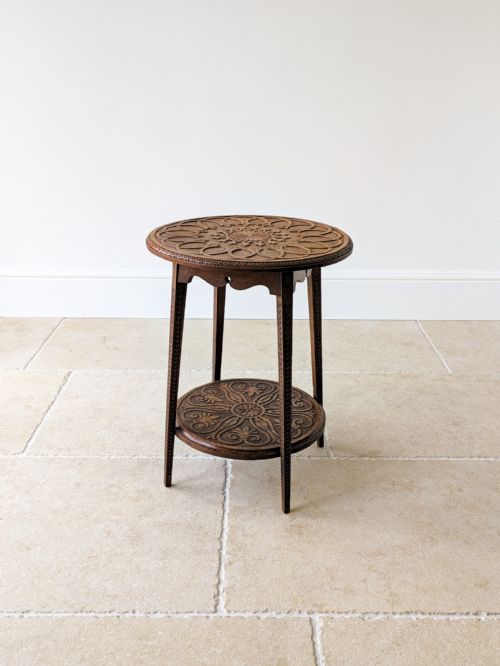
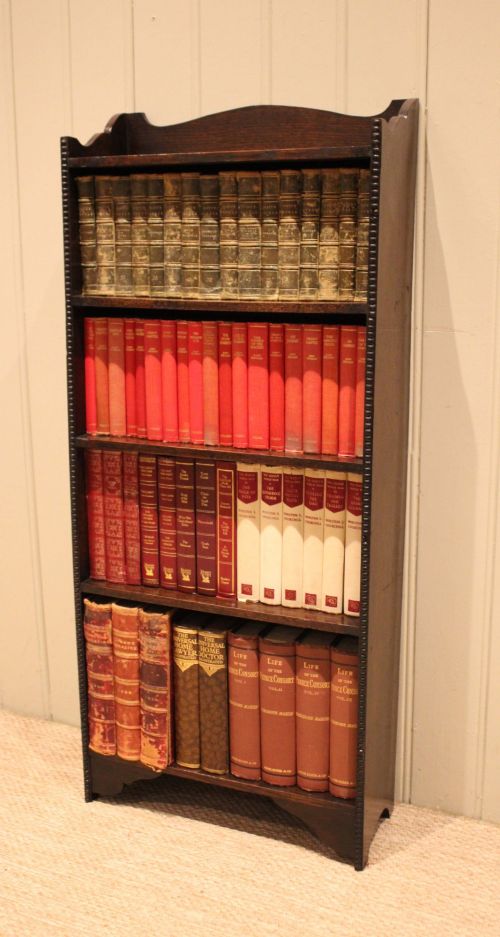
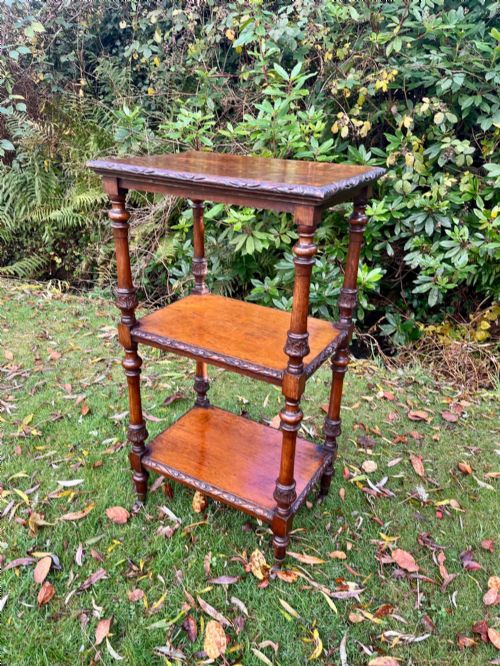
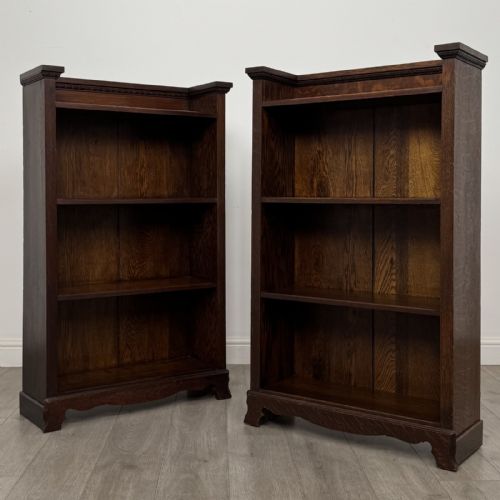
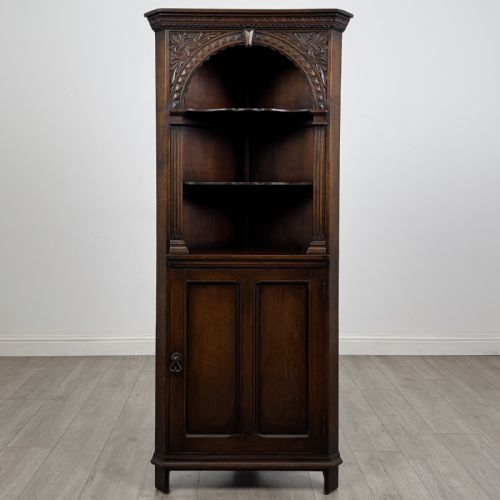
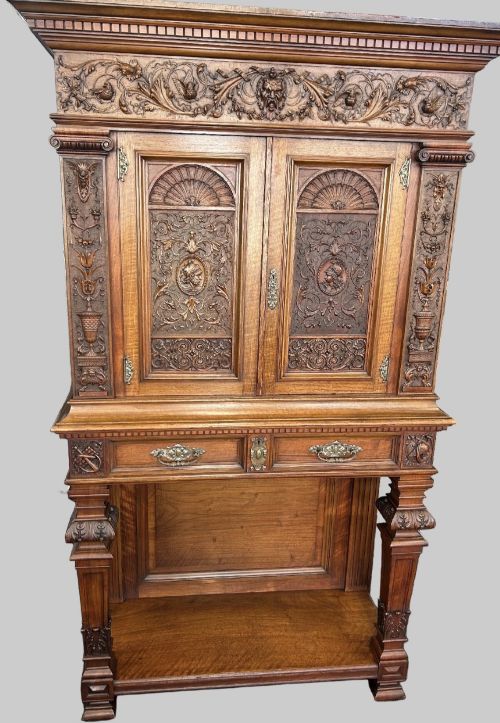
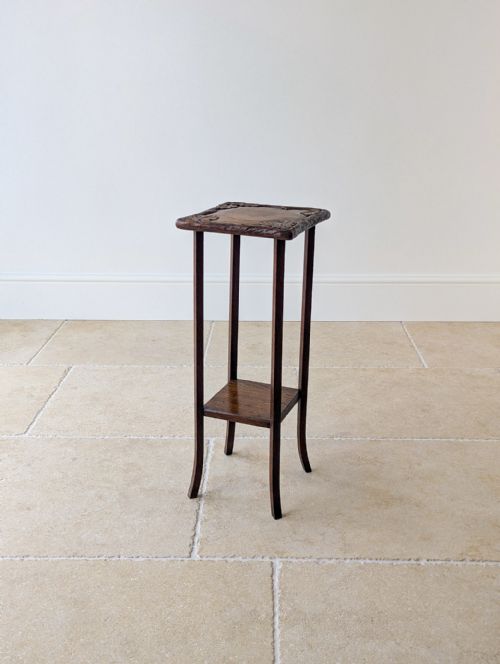
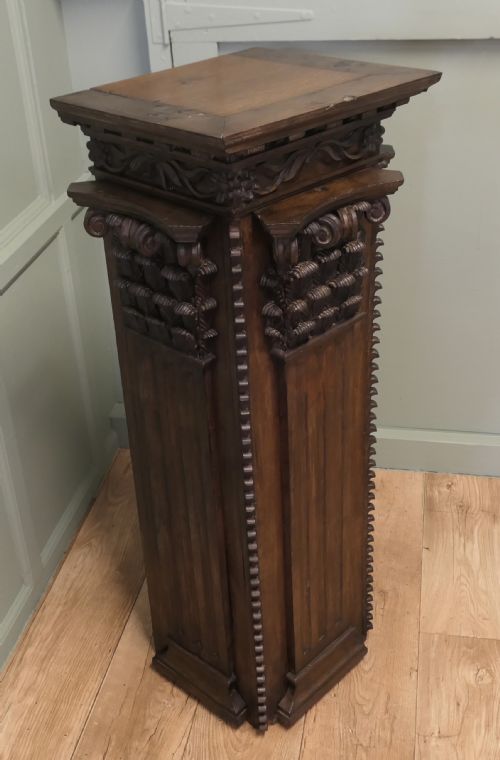
A carved oak display stand encompasses practical furniture designed to elevate and exhibit objects, spanning open bookcases, plant stands, pedestals, and cabinets on stands. The pieces seen here stretch from the Victorian era and the nineteenth century through Edwardian times into the early decades of the twentieth century.
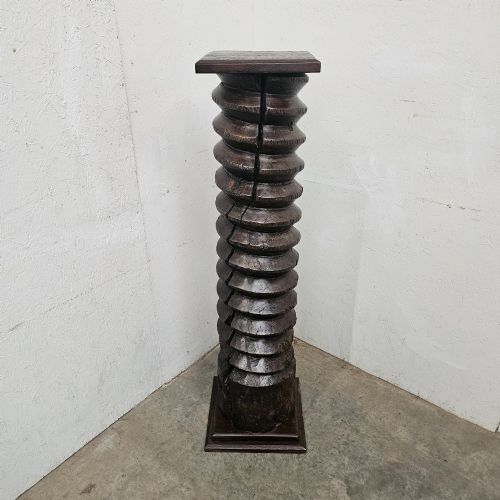
Buyers will encounter various forms, ranging from towering pedestals and columns to low occasional tables, plant stands, and glazed display cabinets. Styles lean heavily into revivalist and vernacular traditions, including Jacobean, Gothic, Arts and Crafts, and Art Deco movements.
Origins span English country workshops alongside French, German, and Dutch pieces, offering distinct regional interpretations of carved oak furniture. These items serve functional roles as bookcases and plant holders while acting as architectural anchors within a room.
Materials and construction methods
Construction relies primarily on solid oak, frequently paired with glass, brass hardware, metal accents, mirrors, and occasional secondary woods such as walnut. Carpenters shaped these materials using traditional joinery methods suited to load-bearing furniture and delicate display surfaces alike.
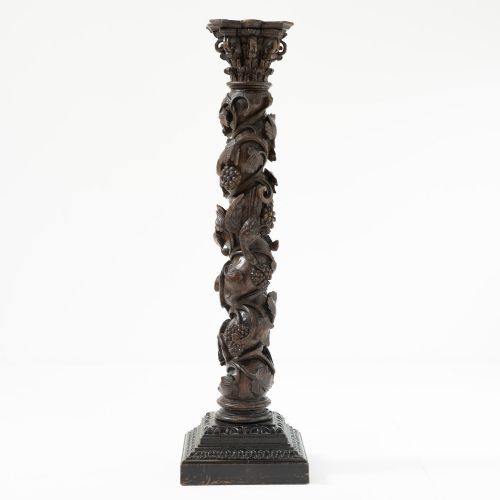
Carving serves as the principal decorative technique, ranging from crisp fret-cut patterns and linenfold motifs to deep relief work. Structural turnings such as barley twist legs, spiral pillars, and Solomonic columns appear frequently across pedestals and stands.
Carved Oak Display Stand Retail Price Guide 2026
Typical asking prices for carved oak display stand among the pieces listed under this phrase on Sellingantiques today, from the lower quarter to the upper quarter. They describe what is for sale here now, not the wider market.
One extraordinary Victorian stand accommodates a mirrored gateau centrepiece designed specifically for displaying German cakes.
Judging quality in oak furniture
Quality rests upon the crispness and depth of the manual carving rather than mechanical replication, separating ambitious workshop pieces from standard commercial output. Timber selection also dictates merit, with tightly figured oak grains and substantial stock elevating the presence of a stand.
The integrity of proportions and the refinement of secondary details, such as moulded cornices, glazed door framing, and original brass fittings, distinguish superior examples. Finer pieces demonstrate careful attention to stability and balanced weight distribution across slender pedestals and tall bookcases.
Liberty and Co
The Carved Oak Display Stand Glossary
- Pedestal
- A tall, freestanding column or base designed to support a bust, urn, or display piece. These vertical supports elevate objects to eye level within a room.
- Torcher
- A tall stand originally intended to hold a candle or torch, later adapted to carry plants, lamps, or decorative objects. They often feature slender shafts supported by tripod or weighted bases.
- Solomonic
- A helical column design characterised by a twisted rope shaft that rises in a spiral. This classical form gained renewed popularity during revivalist periods.
- Etagere
- A piece of furniture consisting of a set of open shelves for displaying small ornaments. French examples frequently incorporate mixed materials like marble and cane.
- Fret-cut
- Woodwork pierced with decorative patterns using a fine saw. This technique creates delicate openwork panels commonly seen on bookcase galleries.
Carved Oak Display Stand: Frequently Asked Questions
What rooms suit a carved oak display stand?
These stands suit entrance halls, libraries, and living spaces where their architectural presence can anchor lighter furnishings.
Smaller plant stands and pedestals fit into corners or beside seating, while larger bookcases and cabinets command entire walls.
How do I care for antique oak furniture?
Maintain oak furniture by dusting regularly with a dry cloth and avoiding placement near direct heat sources or strong sunlight.
Occasional application of traditional beeswax nourishes the timber and preserves the natural patina without sealing the wood.
What is the difference between a pedestal and a plant stand?
Pedestals generally feature heavier structural columns designed to support sculptural art, busts, or architectural ornaments at height.
Plant stands often include waterproof liners, trays, or multi-tiered platforms specifically intended to hold potted plants and greenery.
How do I identify Arts and Crafts oak pieces?
Arts and Crafts pieces emphasise honest construction, visible joinery, and simpler structural lines with minimal surface distraction.
Decoration often relies on naturalistic motifs, hammered metal hinges, and unpretentious finishes that highlight the grain of the oak.