
Carved Oak Cupboard Dresser
A carved oak cupboard dresser brings centuries of timber grain and substantial storage into a room, uniting utility with bold relief work.
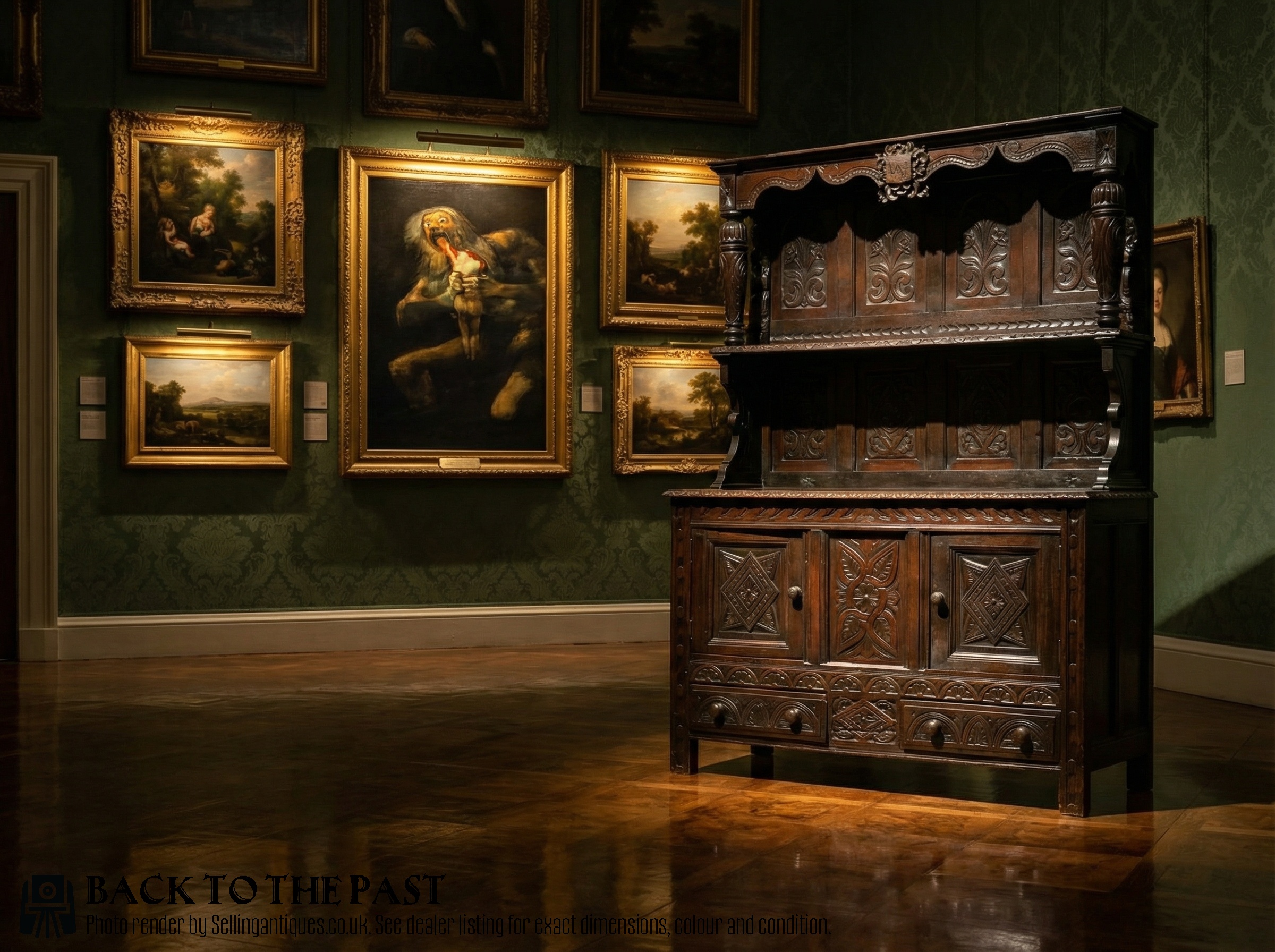
Carved Oak Cupboard Dresser
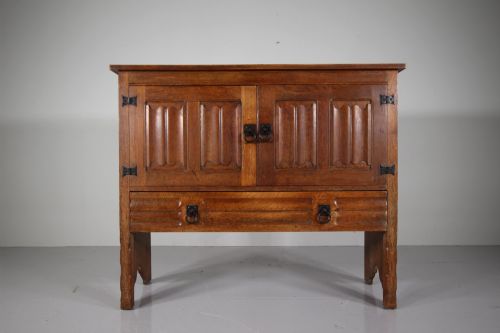
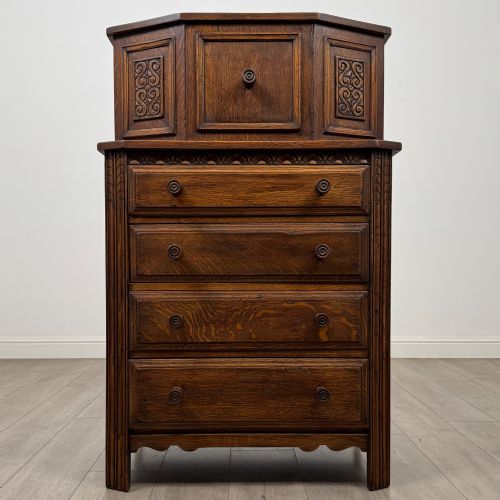
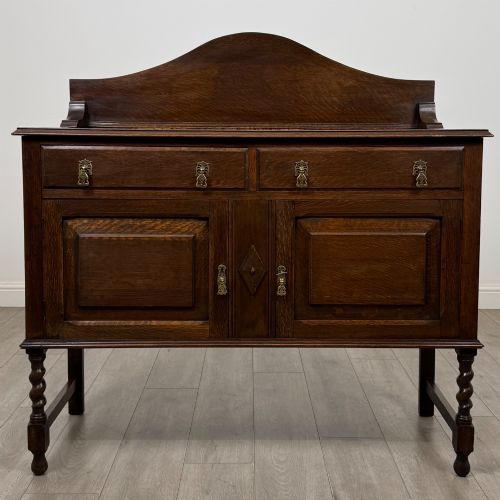
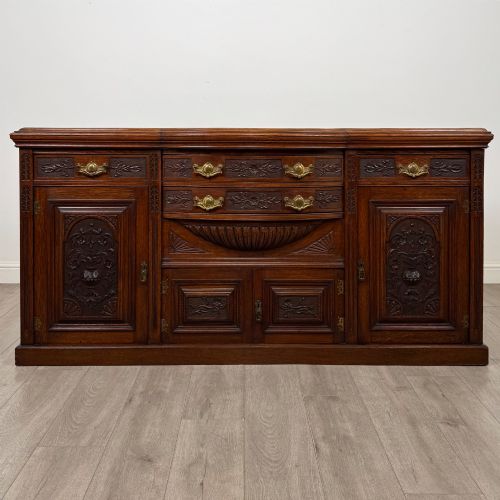
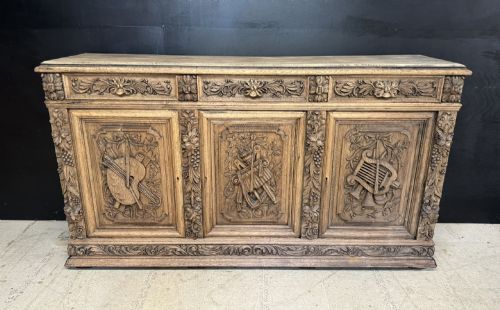
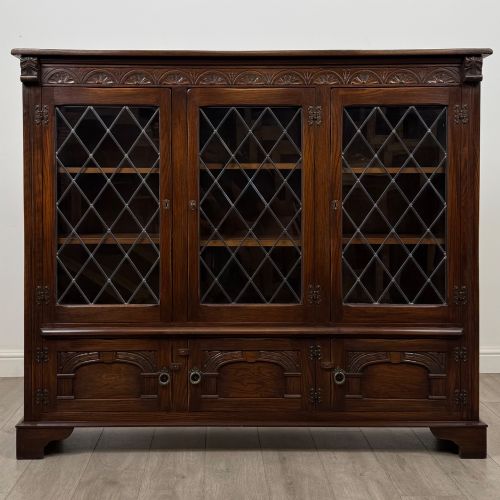
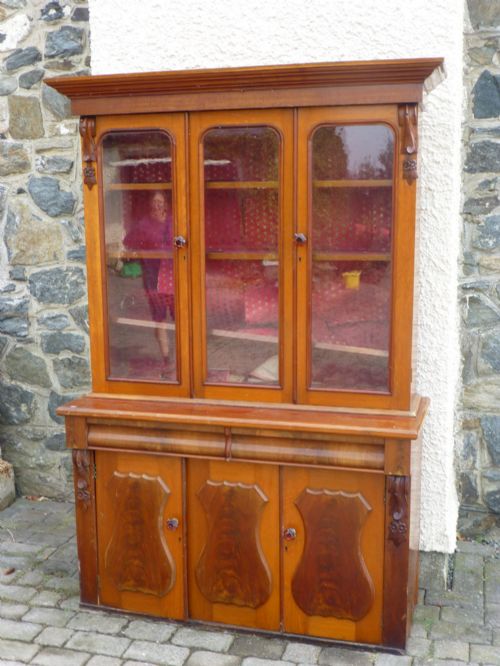
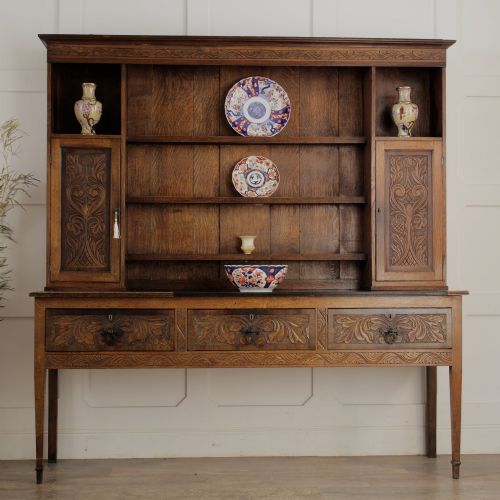
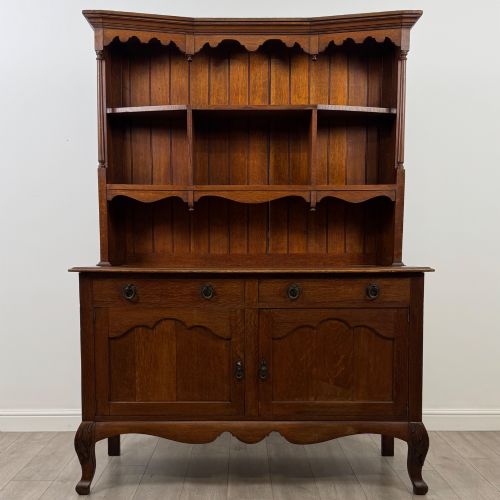
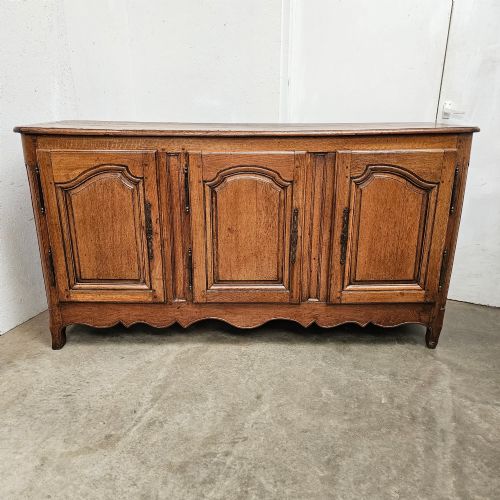
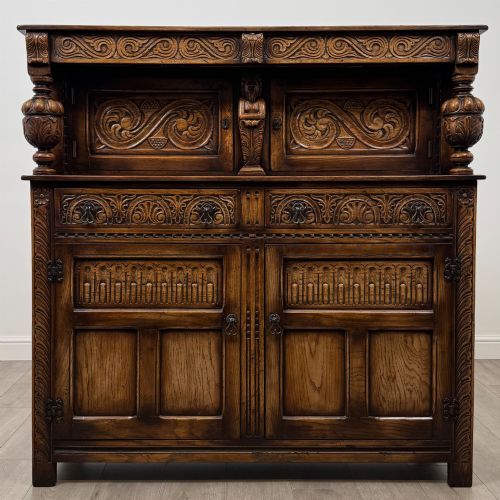
A carved oak cupboard dresser spans periods from the eighteenth century through the Victorian era and into the twentieth century, taking forms such as court cupboards, enclosed sideboards, and multi-tiered Welsh dressers. Buyers searching for a carved oak cupboard dresser encounter regional vernacular pieces alongside heavily ornamented revival designs.
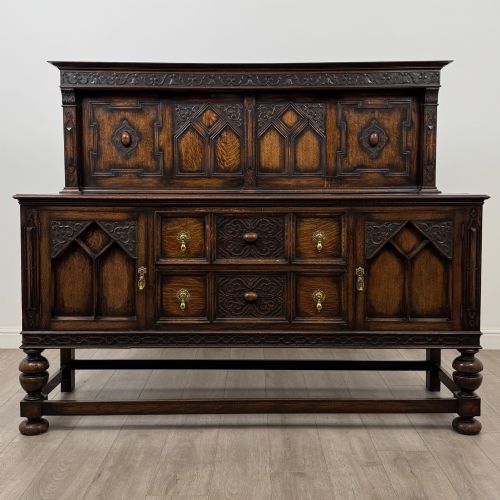
The nineteenth century yields many heavily carved examples, while earlier Georgian and eighteenth-century pieces display simpler panel construction and regional Welsh characteristics. Edwardian and later twentieth-century iterations often adopt Jacobean or Gothic revival motifs.
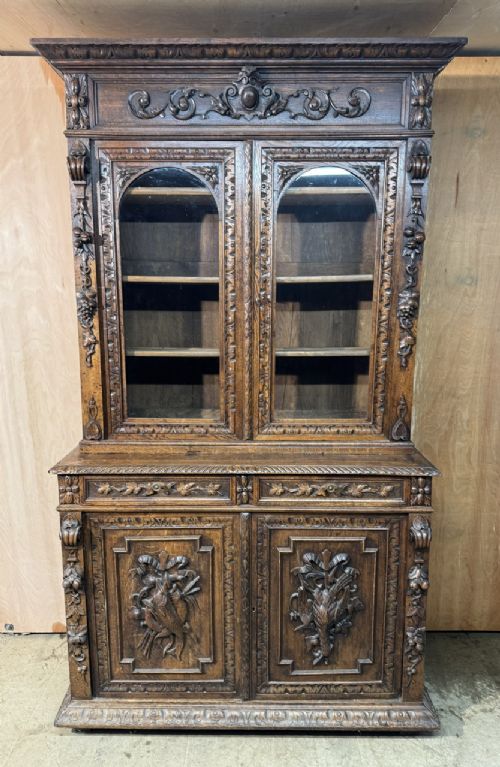
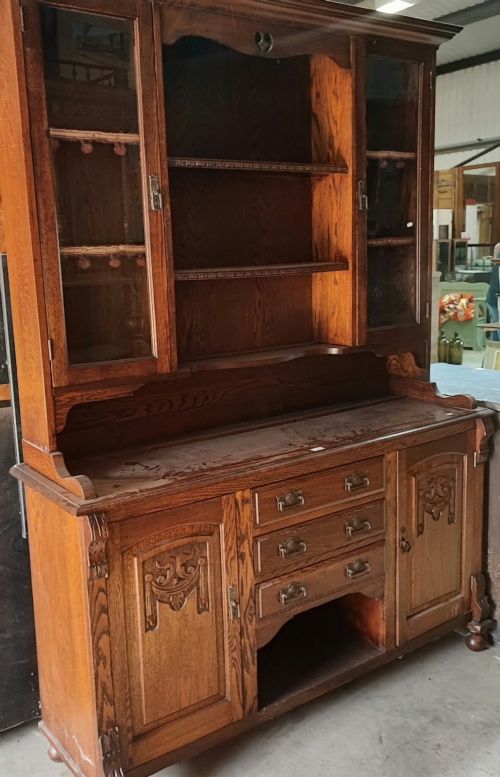
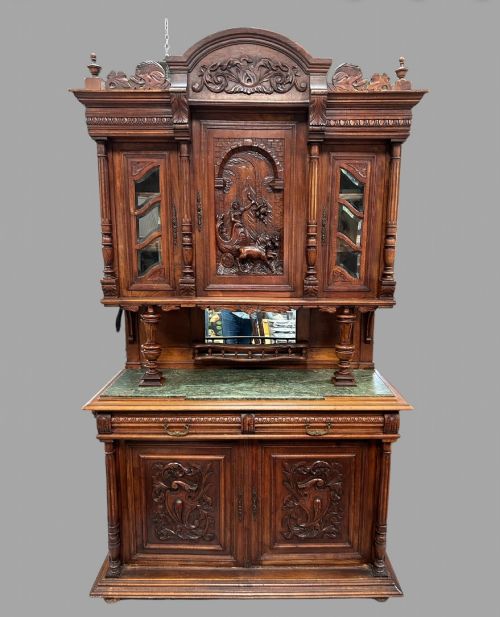
These items serve primarily as dining room or kitchen storage, combining lower cupboards with upper shelving or display cabinets. The selection ranges from compact sideboard bases to towering buffet deux corps cabinets.
Materials and technique
Construction relies predominantly on solid oak, frequently augmented with secondary timbers like mahogany or walnut, and assembled using traditional joinery methods such as mortise and tenon. Iron and brass hardware, including drop handles and hinges, secure the heavy doors.
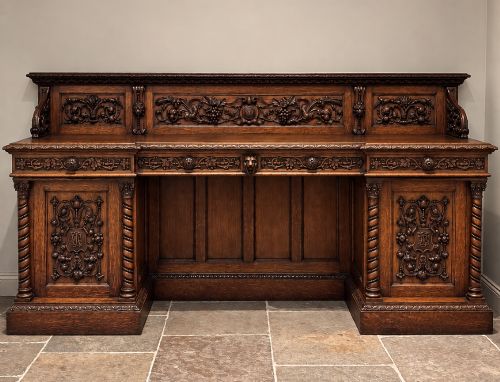
Carving technique defines the surface character, utilising deep relief work to render foliage, strapwork, and figural details like Green Man masks. Glazed panels and leaded glass appear in upper cabinet doors on select regional and revival pieces.
Object types include court cupboards, enfilades, and glazed Welsh dressers.
Craftsmanship and distinction
Quality rests upon the crispness of the hand-carved relief and the selection of figured or tiger oak timber. Superior examples exhibit balanced proportions and integrated structural harmony rather than applied surface ornamentation.
The integrity of the original joints and the preservation of the natural timber surface without excessive modern intervention separate utilitarian utility pieces from finer cabinetwork.
The Carved Oak Cupboard Dresser Glossary
- Court cupboard
- A heavy, multi-tiered enclosed cabinet used for storing food and utensils, originating in the sixteenth and seventeenth centuries. These pieces feature recessed upper sections supported by pillars.
- Tridarn
- A traditional Welsh three-tier cupboard featuring enclosed compartments and open display shelving. This form provides substantial storage capacity.
- Green Man
- A sculptural architectural motif depicting a human face emerging from or entwined with foliage. It appears frequently in Gothic revival carvings.
- Enfilade
- A suite of rooms or, in furniture terms, a long cabinet with a continuous series of doors. French provincial examples often utilise this layout.
- Barley twist
- A decorative turning technique resembling a twisted rope, found on legs and supports during revival periods. This detail adds vertical rhythm to heavy timber furniture.
Carved Oak Cupboard Dresser: Frequently Asked Questions
Where should I place a dresser?
These large timber items suit dining rooms, kitchens, or spacious hallways where their storage capacity and display shelving function effectively.
Ensure adequate wall space and clearance for heavy doors to open fully without obstruction.
How do I identify revival styles?
Revival pieces combine older motifs like strapwork and linenfold panels with nineteenth or twentieth-century construction methods and hardware.
Look at the interior linings and drawer joints to determine the actual period of manufacture.
How do I care for oak furniture?
Maintain the timber by applying occasional beeswax to nourish the grain and prevent the wood from drying out.
Keep pieces away from direct heat sources and strong sunlight to protect the finish.