
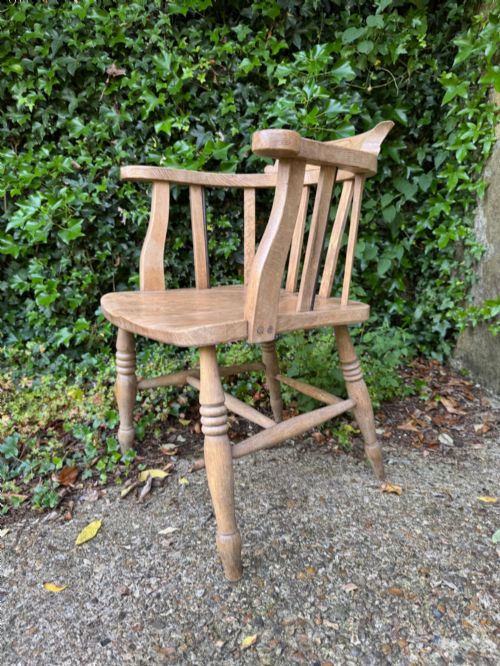
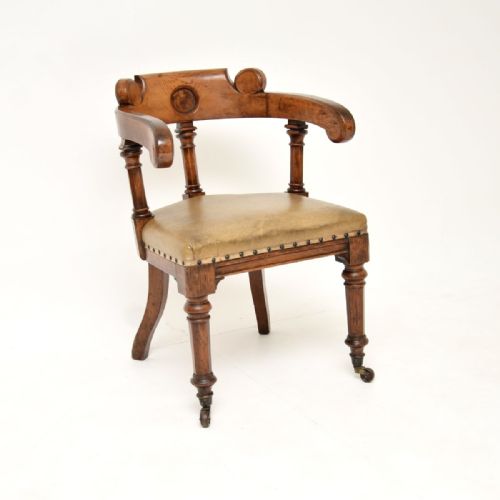
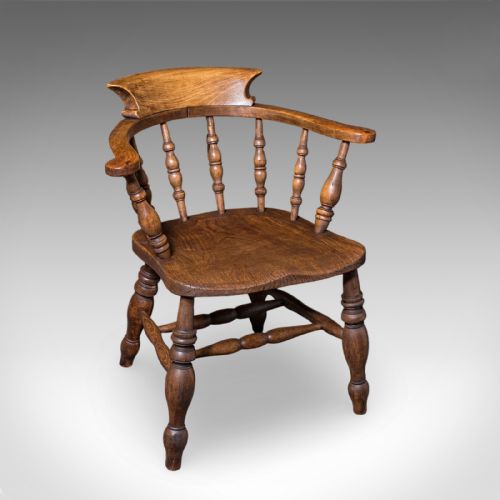
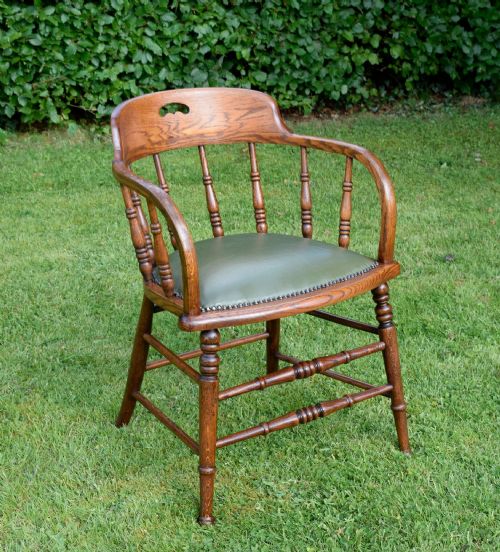


Carved Oak Captains Chair
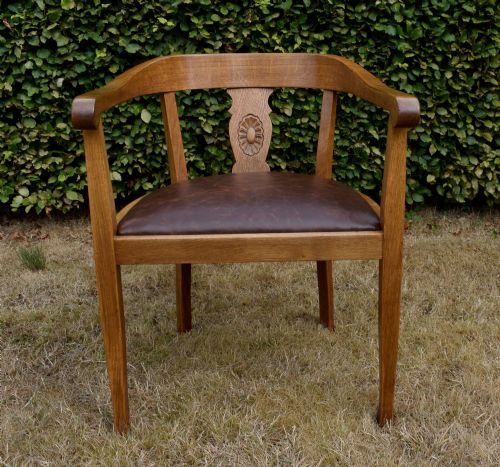
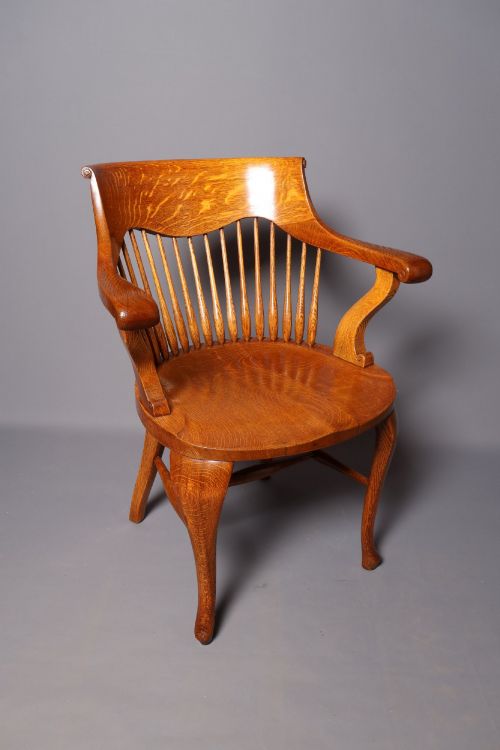
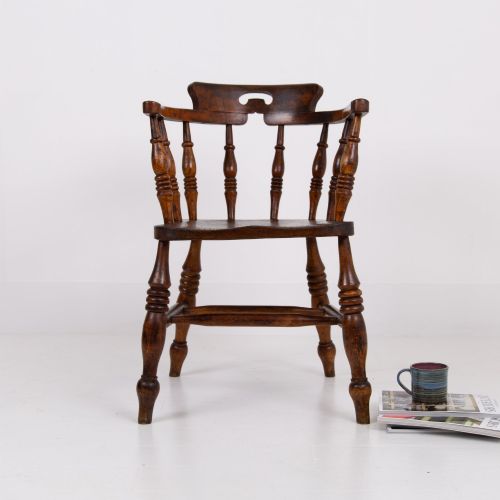
A carved oak captain's chair provides robust seating for a desk or study, combining sturdy timber construction with supportive curved armrests.
Carved Oak Captains Chair
A carved oak captain's chair is a sturdy timber seat designed primarily for desks, offices, and libraries. These pieces emerge in styles ranging from Victorian and Edwardian to Jacobean Revival and Gothic Revival.
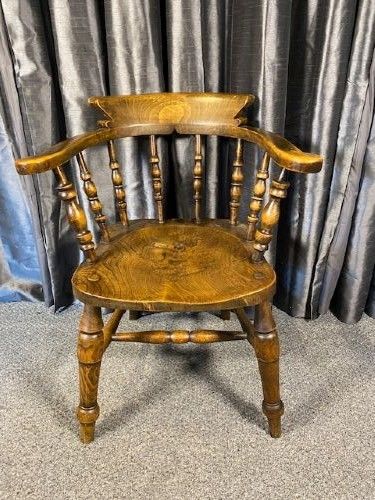
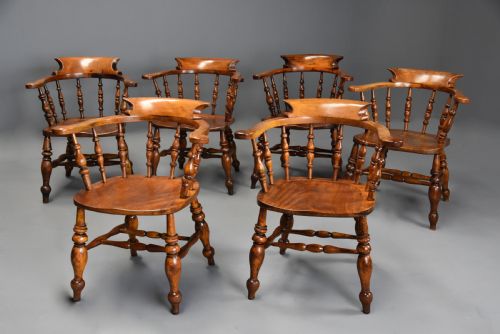
The versions most commonly found here date from the nineteenth and early twentieth centuries, spanning periods such as 1870, 1890, and 1900. They appear under various forms including desk chairs, smokers' bows, swivel chairs, and library armchairs.
Constructed predominantly from solid timber, these chairs serve as practical working seats while displaying carved ornament and panel details. They bridge the gap between heavy domestic seating and functional office furniture.
How they were made
Makers built these chairs using solid oak timbers, frequently paired with secondary woods like elm, beech, or walnut for structural framing. Joinery relied on traditional mortise and tenon methods to ensure stability under daily use.
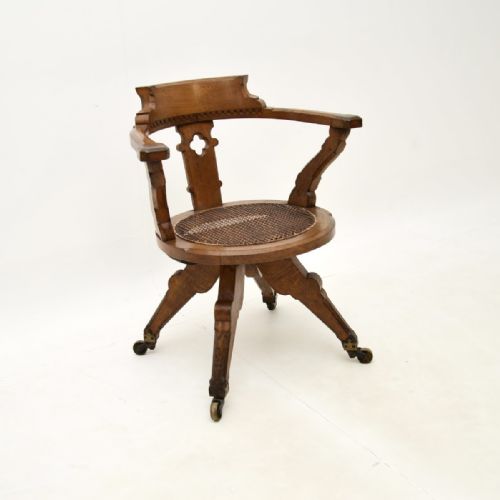
Surface decoration involved hand-carved detailing, particularly on crest rails, splats, and back panels, drawing on Gothic Revival and Jacobean motifs. Metal components such as brass fittings and swivel mechanisms appeared on later nineteenth and early twentieth-century desk variants.
Upholstery materials included fitted leather, fabric, and velvet seats, sometimes secured with brass studding. Bentwood techniques also appeared in later Victorian office designs to create curved backrests and rotating frames.
What varies in quality
The depth and crispness of the hand-carving distinguish standard production items from more ambitious workshop pieces. Heavy, intricate relief work on ships' chairs and Gothic revival models indicates greater artisan investment.
The complexity of the mechanical and structural design affects the grade of the piece, particularly where adjustable height mechanisms, swivel actions, or X-frames are integrated. Solid golden oak and heavy framing denote superior material selection compared to simpler elm or beech combinations.
S&H Jewell
The Carved Oak Captains Chair Glossary
- Smoker's bow
- A low-backed Windsor-style armchair with a continuous curved armrail, commonly associated with nineteenth-century tavern and office seating. It forms the basis of many traditional captain's chair designs.
- Gothic Revival
- An architectural and decorative style popular during the Victorian period that utilises pointed arches, trefoils, and heavy carved tracery. This aesthetic often appears on formal library and desk chairs.
- Swivel desk chair
- A revolving seat mounted on a central pivot, frequently featuring adjustable height mechanisms and wooden or iron bases. These pieces became prominent in late nineteenth and early twentieth-century offices.
- Elm
- A durable, tough timber with an interlocking grain, frequently utilised for chair seats in traditional Windsor and smoker's bow construction. Its resistance to splitting made it ideal for shaped saddle seats.
Carved Oak Captains Chair: Frequently Asked Questions
What is a captain's chair?
A captain's chair is a sturdy wooden armchair featuring a low, curved backrest supported by turned spindles. They were traditionally used in offices, ships, and libraries.
On this page, they appear in forms ranging from simple nineteenth-century smoker's bows to heavily carved Victorian desk chairs with leather seats.
Are these chairs comfortable for daily desk work?
Many of these pieces were built for sustained office or library use, offering supportive curved armrests and ergonomic wooden saddle seats. Some models include leather upholstery for added padding.
Swivel and adjustable height variants from the Edwardian period provide modern desk users with flexible positioning.
How do I date a carved oak chair?
Dating relies on identifying stylistic markers, construction methods, and materials recorded in the specific design. Victorian and Gothic Revival pieces often display heavy relief carving, while early twentieth-century examples introduce simpler lines and mechanical swivel bases.
Secondary woods such as elm or beech can also indicate regional workshop traditions from the nineteenth century.
Did captain's chairs always swivel?
Not all captain's chairs rotate, as the earliest nineteenth-century forms utilised fixed four-legged or pedestal bases. Swivel mechanisms and adjustable heights became more common towards the late Victorian and Edwardian periods for office use.
Stationary armchairs and smoker's bows remained popular for domestic libraries and studies.