
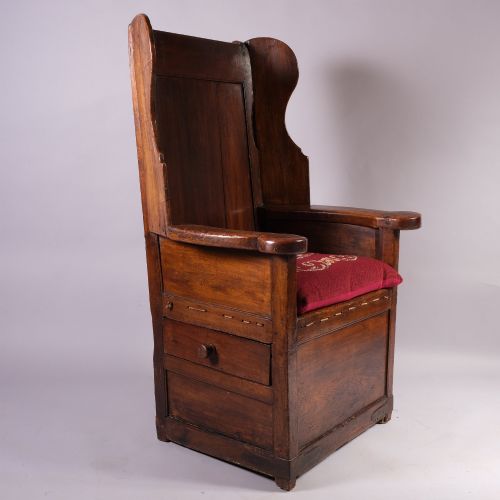


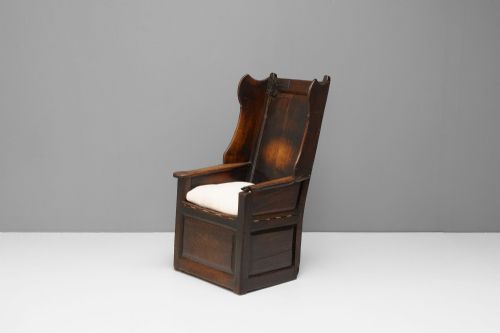

Carved Oak Box Chair
A carved oak box chair brings solid timber and centuries of domestic utility straight into a room.
Carved Oak Box Chair
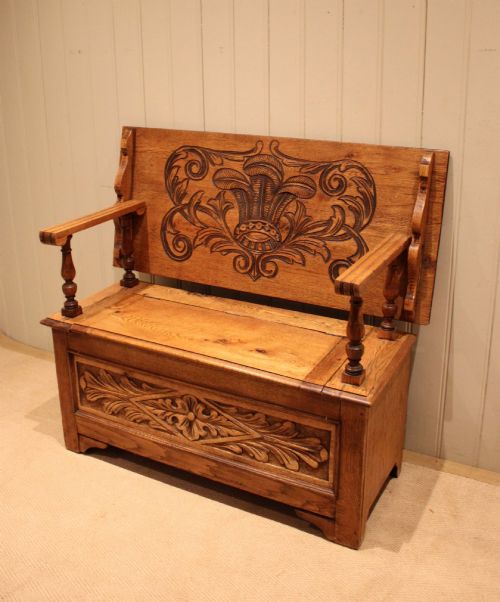
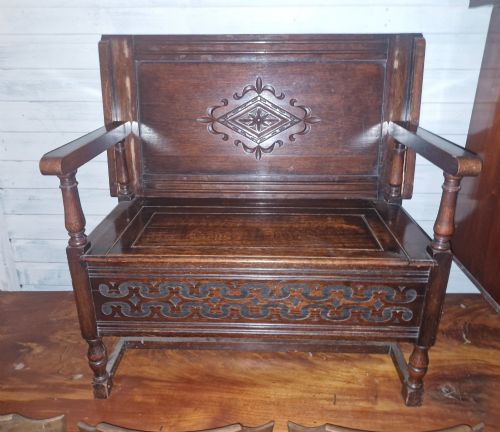
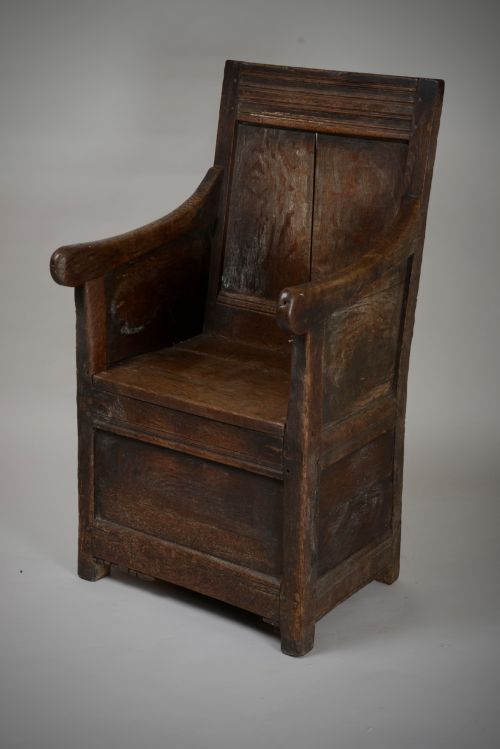
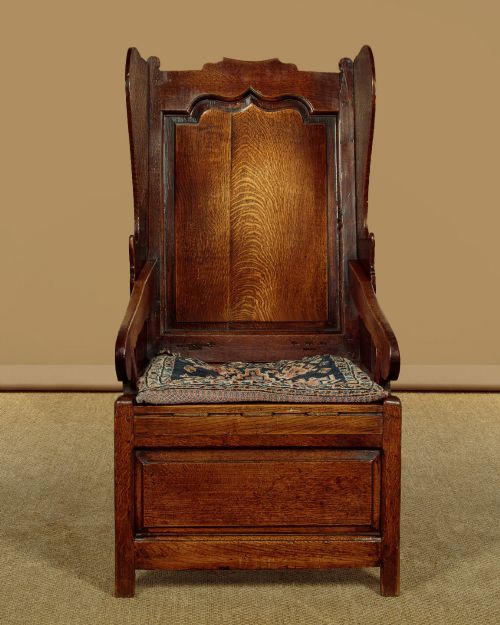
When you search for a carved oak box chair, you are looking at substantial seating built to double as storage, protection from draughts, or specialised domestic furniture. The selection ranges from early sixteenth-century Elizabethan examples and seventeenth-century enclosed armchairs through to eighteenth-century lambing chairs and later revival pieces from nineteen-ten and nineteen-twenty.
The most common forms on this page include sturdy oak armchairs, hall seats with lift-up lids and fold-over tops, and regional variations such as Lakeland or Welsh country commode chairs. These pieces often feature solid oak construction, sometimes paired with fabric or textile elements.
Originating across distinct periods, these seats span Jacobean, Elizabethan, Georgian vernacular, and rustic country styles. Whether you encounter a Dutch country open-arm lambing chair or a solid oak monks bench, each item reflects the practical needs of past households.
How they were made
Construction relies heavily on solid oak, hewn and joined to withstand heavy daily use in domestic settings. Carpenters utilised traditional framing and panel techniques to build the enclosed bases and high backs characteristic of these seats.
Decoration on these pieces typically involves hand carving directly into the timber, reflecting the Jacobean, Elizabethan, or regional country styles of their respective eras. Where textile or fabric elements appear, they are integrated into the seating to soften the robust wooden frames.
Some enclosed armchairs double as miniature architectural facades, keeping draughts at bay while you sit inside your own wooden fortress.
What varies in quality
The distinction between ordinary and superior pieces rests on the crispness and depth of the hand carving and the integrity of the original solid oak structure. Earlier sixteenth and seventeenth-century examples display deeply cut ornamentation that has softened naturally over generations of use.
Proportion and regional character also dictate distinction, as vernacular pieces with regional provenance - such as Lakeland or Welsh forms - demonstrate local craftsmanship that elevates the design beyond standard workshop output. The retention of original mechanisms, such as lift-up lids and fold-over tops, adds significantly to the integrity of a piece.
The Carved Oak Box Chair Glossary
- Box chair
- An armchair featuring a solid enclosed base that serves as storage beneath the seat. This form provides shelter from cold drafts in older homes.
- Lambing chair
- A vernacular armchair with high winged sides designed to block wind near a hearth. These typically include a box base or enclosed lower section.
- Monks bench
- A multifunctional piece of furniture featuring a hinged top that folds down to form a table. The base incorporates a box seat for storage.
- Jacobean revival
- A nineteenth and early twentieth-century style replicating the heavy proportions and geometric carving of the early seventeenth century. Makers utilised this aesthetic to evoke historic English interiors.
- Vernacular
- Furniture built by local tradesmen for everyday use rather than following strict high-fashion metropolitan designs. These items display regional quirks in construction and ornament.
Carved Oak Box Chair: Frequently Asked Questions
What is a box chair used for?
A box chair provides sturdy seating while incorporating a concealed compartment beneath the seat for storing household goods. The enclosed base also served to keep drafts away from the sitter in unheated rooms.
Over time, these versatile pieces transitioned from functional utility furniture into prominent hallway and fireside seats valued for their historic presence.
How do I identify a lambing chair?
A lambing chair is distinguished by its high wooden back and sweeping hooded wings designed to shield the occupant from cold air currents. Many examples incorporate a box base or enclosed lower section below the seat.
Regional variations often feature simple plank construction and deep storage compartments suited to rural domestic life.
Are these chairs made of solid oak?
The pieces listed in this category are constructed from solid oak timber, reflecting the primary material favoured by historical English and European cabinetmakers. This dense hardwood ensured the furniture could endure centuries of continuous use.
Some later revival or country examples incorporate secondary woods alongside the primary oak framework.
How do I date an antique oak chair?
Dating relies on observing construction methods, tool marks, and stylistic indicators that align with specific periods like the Elizabethan or Georgian eras. Joinery techniques shifted over the centuries from pegged mortise and tenon frames to later industrial production methods.
Comparing the style of carving and overall proportions against documented examples helps narrow down the century of manufacture.