





Carved Nephrite Jade
Carved nephrite jade brings dense, smooth mineral forms shaped across centuries of Chinese tradition into your hands.
Carved Nephrite Jade
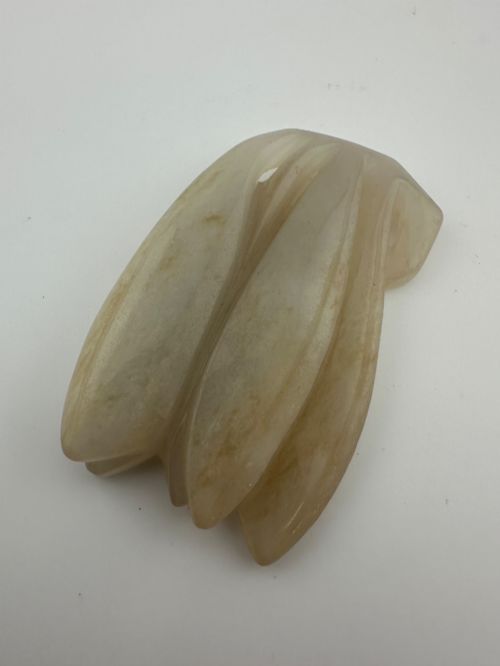
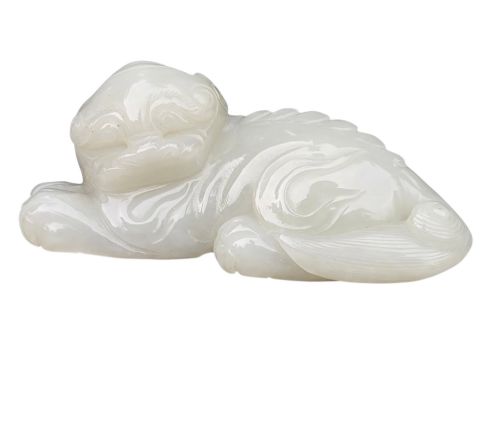
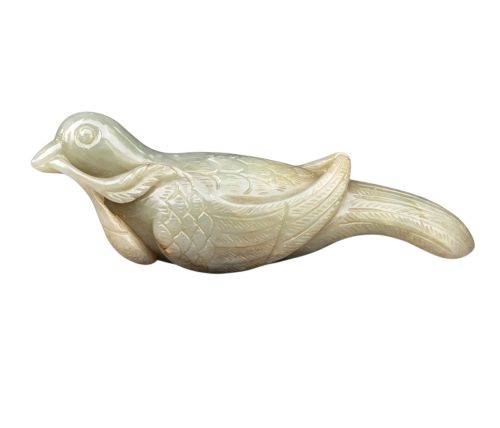
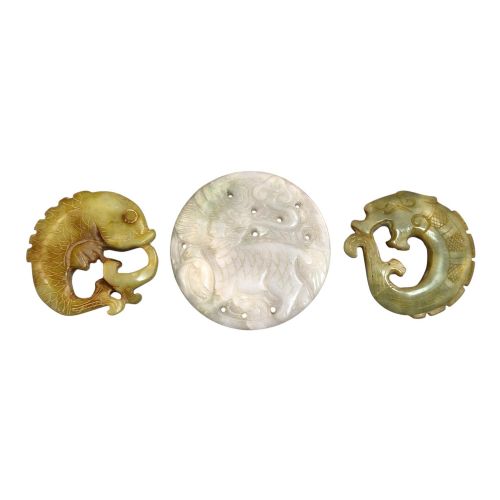
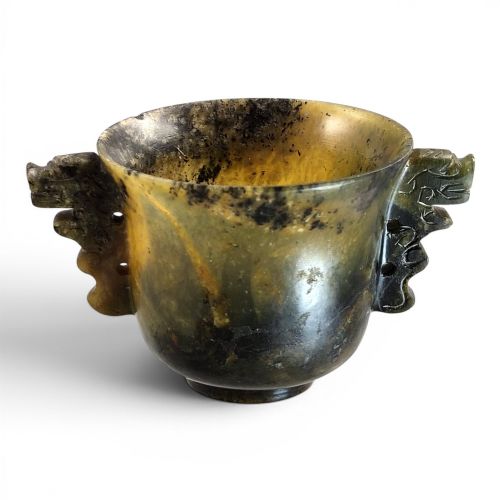
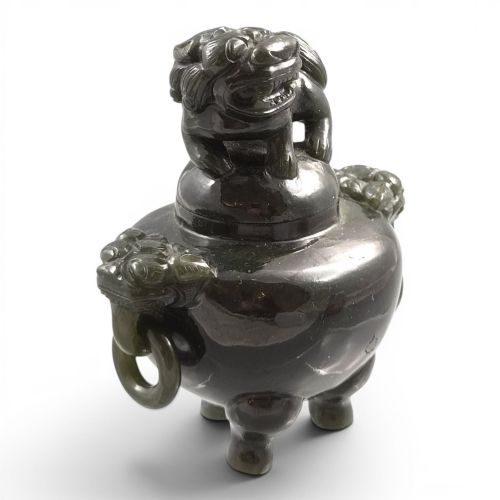
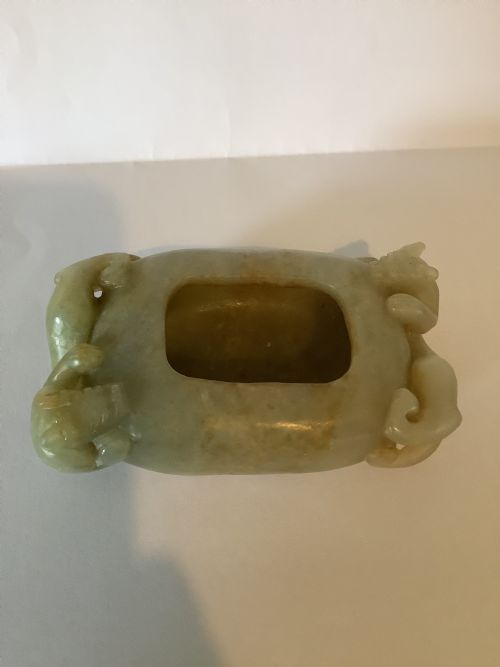
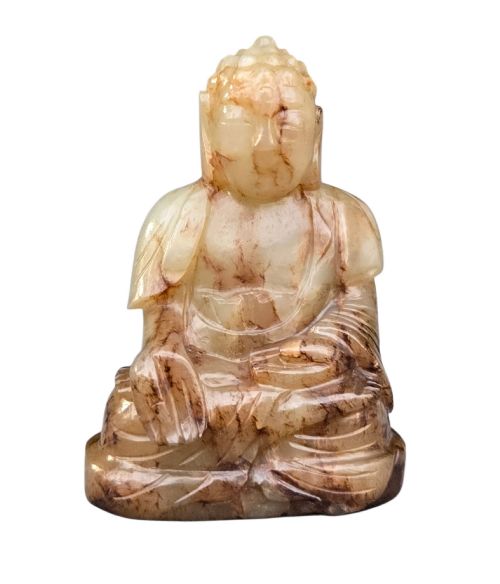
When you search for carved nephrite jade, you encounter solid mineral sculptures, pendants, vessels, and scholar's objects originating from periods such as the Qing Dynasty, the Chinese Republic Period, and Edwardian times. These pieces range from small amulets and bi discs to large mountain landscape sculptures and tripod censers.
The objects take traditional forms including mythical beasts, cicadas, water birds, and dragons, often mounted on custom hardwood stands. Most items follow classic Chinese designs, drawing on ancient motifs that signify longevity, auspicious fortune, and scholarly pursuits.
How they were made
Artisans worked tough nephrite and hardstone using abrasive sands and rotational tools to shape the dense material into complex, smooth contours. The natural colour variations within the stone, from pale celadon and white to dark green and russet tones, were often incorporated directly into the subject matter of the carving.
Object forms span functional scholar's brush washers and cups alongside decorative pendants, amulets, bi discs, and landscape sculptures.
What varies in quality
Quality rests heavily on the harmony between the natural stone's colour and the carver's anatomical or botanical interpretation. Superior examples display fluid depth and confident line work that respect the inherent toughness of the mineral without stiffness.
The distinction between standard decorative objects and exceptional works lies in the subtlety of the polish and the anatomical proportion of figures like the Pixiu, Qilin, or Buddha. Finer pieces demonstrate absolute control over challenging spatial compositions, such as multi-figure mountain landscapes or hollowed brush washers.
The Carved Nephrite Jade Glossary
- Nephrite
- A dense, microcrystalline amphibole mineral known for extreme toughness and a characteristic greasy lustre when polished. It forms the primary medium for traditional Chinese carvings.
- Celadon
- A pale green or grey-green colour shade occurring naturally in jade and hardstone. It remains highly prized in scholarly scholar's objects.
- Bi disc
- A flat circular jade object with a circular hole in the centre, often associated with ancient ritual and decorated with carved motifs like the Qilin.
- Archaistic
- A stylistic approach where later makers deliberately emulate the decorative motifs, shapes, and patination of ancient ritual bronzes or earlier dynasties.
- Taotie
- A stylised zoomorphic mask motif frequently found on ancient and traditional Chinese ritual vessels and cups.
Carved Nephrite Jade: Frequently Asked Questions
How do I care for carved nephrite jade?
Nephrite is an exceptionally tough mineral that resists scratching, making daily handling straightforward. Clean pieces gently using warm water and a soft cloth to remove dust from recessed carvings.
Avoid harsh chemical detergents or ultrasonic cleaning machines, particularly on pieces with russet skin or attached wooden stands. Store items securely away from hard impacts that might damage protruding elements.
What is the difference between nephrite and jadeite?
Nephrite and jadeite are two distinct mineral species grouped under the single term jade. Nephrite is an amphibole with a dense, fibrous structure that yields a warm, slightly oily lustre.
Jadeite is a pyroxene mineral that typically presents a more crystalline and vitreous appearance with brighter emerald greens. Historical Chinese carvings from the Qing Dynasty and earlier periods are predominantly nephrite.
How do I identify a Qianlong period piece?
Qianlong period carvings often exhibit extraordinary technical precision and deep, undercut relief work. The forms draw heavily on archaistic models and imperial tastes, matching the artistic output of the eighteenth century.
Examining the tool marks under magnification and verifying the handling of pale celadon or white stone provides further clues. These objects reflect the sophisticated aesthetic standards of the imperial court.
Where were scholar's objects used?
Scholar's objects like brush washers, water birds, and head rests were designed for the desks of traditional Chinese literati. They functioned as functional tools or contemplative items used during calligraphy and painting.
Placed within a scholar's studio, these pieces provided inspiration and reflected the owner's refinement and adherence to cultural traditions.