



Carved Metal Trinket Box
A carved metal trinket box is a small, heavy container for personal valuables, prized for its intricate surface work and enduring material presence.

Carved Metal Trinket Box
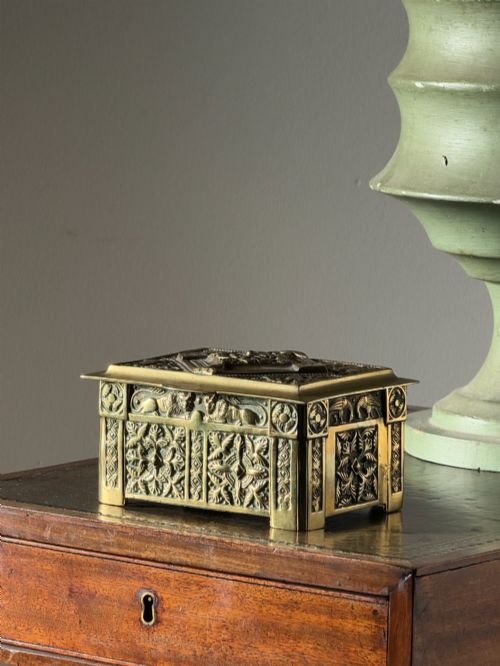
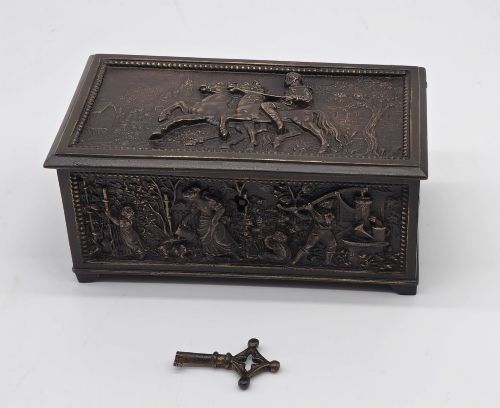
When you search for a carved metal trinket box, you are looking at small decorative containers designed to hold jewellery, trinkets, and small personal items. The pieces seen here span the nineteenth and twentieth centuries, taking forms such as jewellery caskets, decorative boxes, and cigarette containers. Origins range from French workshops to Anglo-Indian centres and German forges, reflecting diverse global tastes in small-scale metalwork.
The most common examples you will meet on this page date from the nineteenth century, particularly the Victorian era, alongside occasional twentieth-century Art Deco pieces. Forms vary from simple rectangular steel caskets to elaborate gilded copper electro-form boxes and silver-plated caskets decorated with figures or botanical motifs. These containers served both practical storage and ornamental display on dressing tables and writing desks.
How they were made
Makers utilised a range of metals including bronze, brass, steel, iron, silver, and silver-plated or gilded copper. Surface decoration was achieved through casting, chasing, engraving, and electro-forming, a nineteenth-century chemical technique that allowed intricate detail to be deposited over a form. Gilt and silvered finishes were frequently applied to enhance the visual depth of the carved and chased motifs.
Construction methods varied according to origin and date, with European caskets often featuring lined interiors, hinged lids, and cast feet or finials. Asian export and Anglo-Indian pieces often displayed dense surface carving mimicking traditional woodwork or textile patterns in metal. These techniques required skilled metalworkers who combined structural framing with meticulous surface ornament.
Carved Metal Trinket Box Retail Price Guide 2026
Typical asking prices for carved metal trinket box among the pieces listed under this phrase on Sellingantiques today, from the lower quarter to the upper quarter. They describe what is for sale here now, not the wider market.
Geographic origins span Europe and Asia, including French, German, and Anglo-Indian production.
What varies in quality
Quality rests in the crispness of the chasing and the weight of the metal used in the construction. Superior examples display deep, sharp relief work where every detail of the rural scene, floral pattern, or architectural motif remains distinct. Lesser pieces rely on shallow stamping or softer cast definition that blurs over time.
The integrity of the structural elements, such as hinges, clasps, and internal linings, also marks the difference between standard production and finer studio work. Makers who signed their pieces or incorporated specialised gilding and silvering generally produced boxes with superior overall finish and durability.
Walker and Hall·Hunter and Palmer·AB Paris
The Carved Metal Trinket Box Glossary
- Electro-form
- A nineteenth-century manufacturing technique where metal is deposited electrically onto a mould to create detailed hollow objects. This method allowed makers to produce intricate, lightweight caskets with complex surface relief.
- Chasing
- A metalsmithing technique where the design is hammered into the front surface of the metal using punches to create raised patterns. It gives carved metal boxes their tactile depth and texture.
- Finial
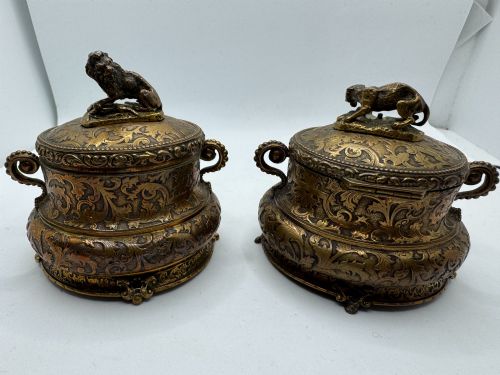
- A decorative ornament fixed to the top of a lid, such as the dog finials found on nineteenth-century caskets. They provide a focal point and a functional handle for lifting the lid.
- Silver plate
- A thin layer of silver applied to a base metal such as copper, brass, or Britannia metal. This process provided the appearance of solid silver at a lower production cost.
Carved Metal Trinket Box: Frequently Asked Questions
How do I date a metal trinket box?
Dating relies on the style of decoration, manufacturing techniques like electro-forming, and any maker marks stamped on the base or interior. Nineteenth-century pieces often display revival styles or specific patination associated with Victorian production.
Twentieth-century examples frequently shift towards cleaner modernist lines, such as Art Deco geometric patterns, or bear later twentieth-century import marks.
Are these boxes made of solid silver?
Most pieces on this page are constructed from base metals such as bronze, brass, steel, iron, or gilt and silvered copper. Some examples are silver-plated over a base metal rather than cast in solid silver.
Examining the wear points and interior surfaces helps reveal the underlying metal composition beneath the surface finish.
What were these small caskets used for?
These containers were originally kept on dressing tables, mantelpieces, or desks to hold jewellery, pins, coins, and small personal valuables. Cigarette boxes and tobacco containers served similar domestic functions in reception rooms.
Today, they continue to function as desktop storage or decorative objects that add texture and history to an interior.
How should I clean an antique metal box?
Maintenance depends entirely on the metal and the surface finish, whether it is gilded, silver-plated, bronze, or steel. Aggressive polishing should be avoided to preserve the original patination and the fine details of the carved relief.
Dusting gently with a soft, dry cloth is usually sufficient to keep the metal safe without stripping historic finishes.