







Carved Marble Stands
These carved marble stands unite heavy stone tops with intricate wood and metal frames to elevate vases, statues and plants.
Carved Marble Stands
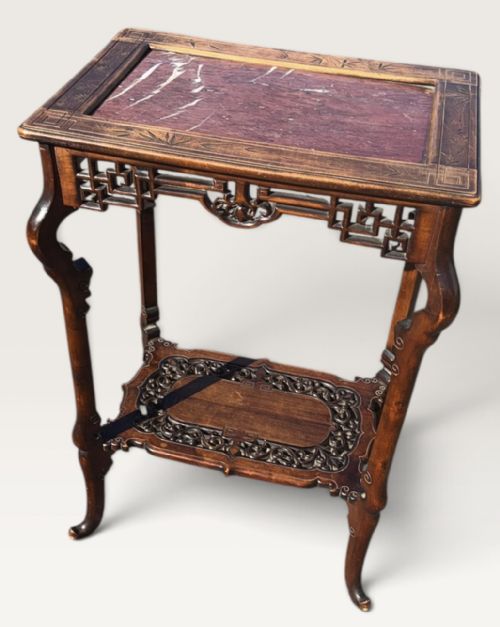
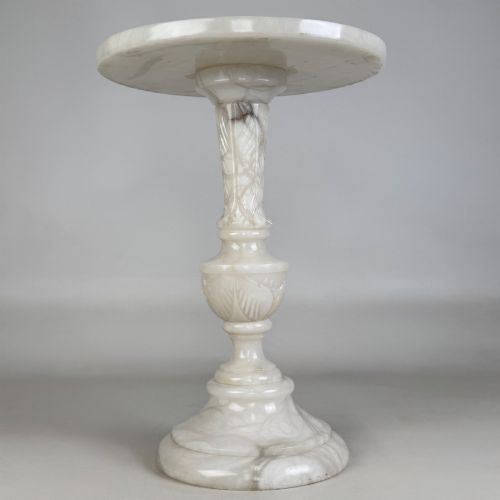
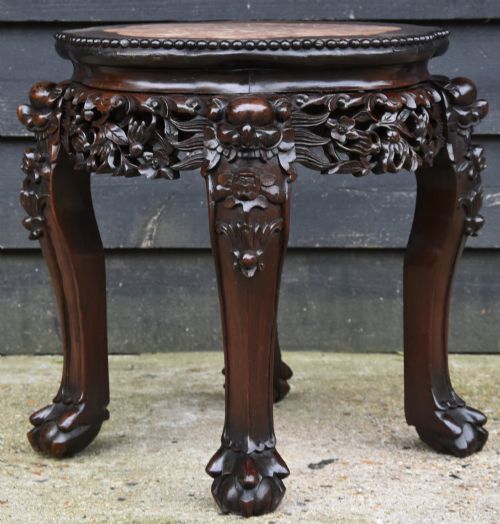
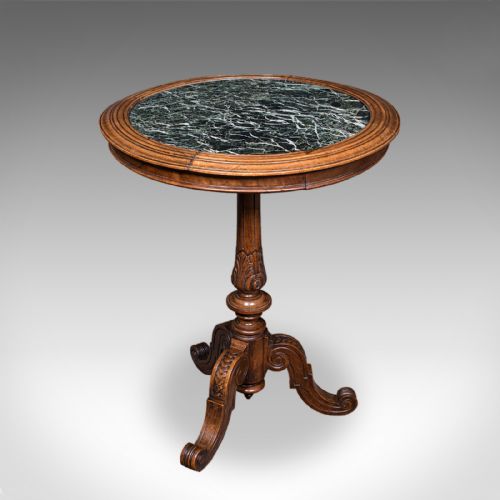
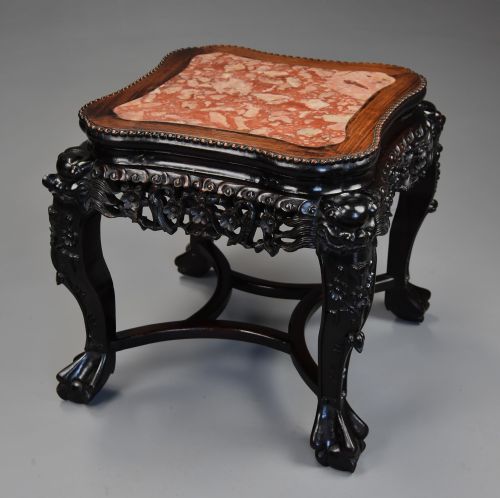
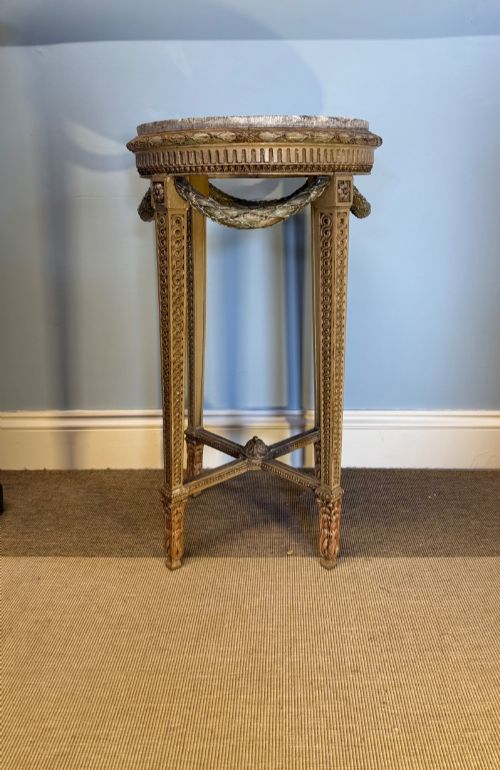
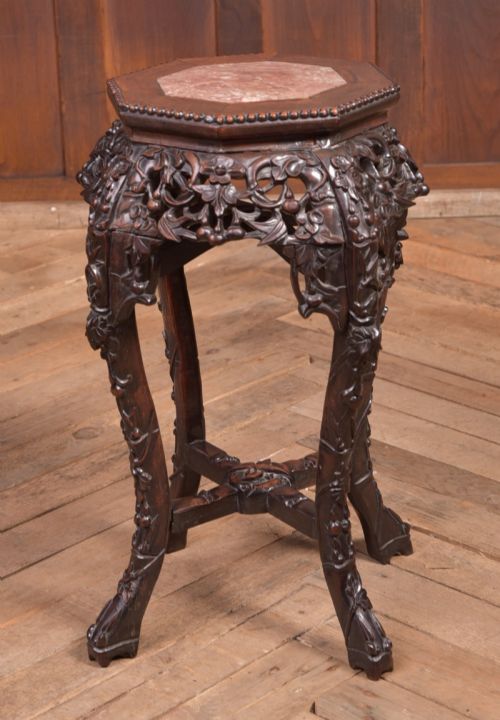
Carved marble stands appear primarily as plant stands, jardiniere supports, low occasional tables and classical pedestals spanning the nineteenth and early twentieth centuries. The selection here leans heavily towards Chinese hardwood pot stands set with rouge marble, alongside European occasional tables and French neoclassical columns.
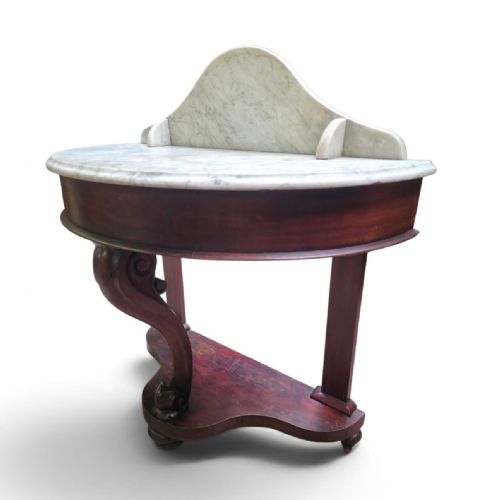
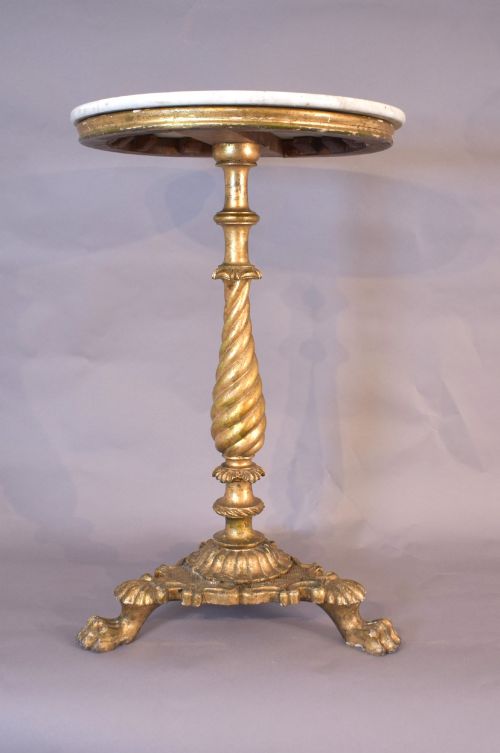
Makers and workshops from varied origins applied these inset stone surfaces to frames ranging from rosewood and padouk to giltwood and mahogany. Forms shift from low rectangular planters and tripod tables to tall statuary columns designed to hold heavy objects at eye level.
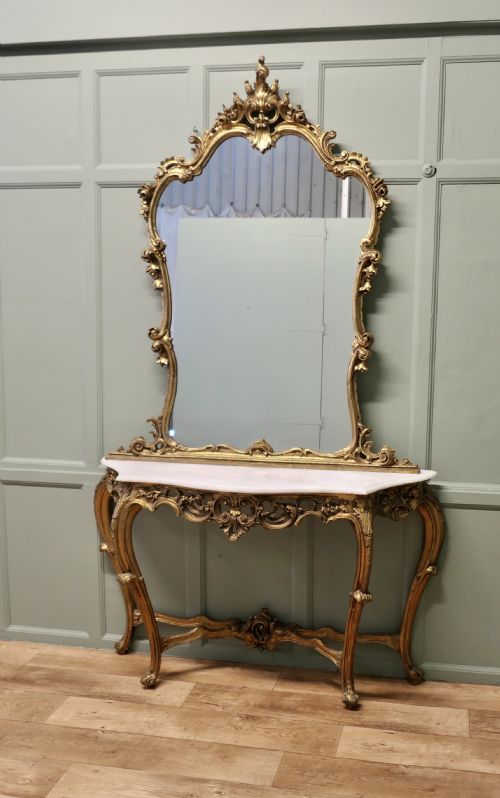
Buyers encounter everything from compact Chinese export tea tables to grand Italian console sets and French pedestals. Each piece combines a solid stone slab with carved timber or gilded frames intended to support display items securely in domestic interiors.
How they were made
Craftsmen shaped dense timbers such as rosewood, padouk, oak and walnut using traditional joinery to build sturdy frames capable of bearing substantial weight. Carving was executed by hand, producing detailed floral motifs, claw feet and pierced aprons that complement the natural grain of the wood.
The marble inserts, including variegated rouge and verde antico varieties, were carefully cut and polished to fit precisely into recessed tabletops. Additional materials like brass, mother of pearl inlay and giltwood appear across French and Chinese pieces to accent the primary stone and timber structures.
Carved Marble Stands Retail Price Guide 2026
Typical asking prices for carved marble stands among the pieces listed under this phrase on Sellingantiques today, from the lower quarter to the upper quarter. They describe what is for sale here now, not the wider market.
Listings unite nineteenth-century Chinese hardwood jardiniere supports with European neoclassical marble columns and French occasional tables.
What varies in quality
Quality rests upon the depth and precision of the hand carving in the wood or stone frame, where crisp botanical details and secure joinery distinguish superior workshops. The selection of the marble top itself matters greatly, particularly when figuring, colour and polishing display unusual natural variation.
Proportion and stability separate standard utility pieces from exceptional examples designed for formal display. Heavier hardwoods like padouk and hongmu combined with well-fitted stone segments indicate higher craftsmanship across both Chinese export and European traditions.
The Carved Marble Stands Glossary
- Jardiniere stand
- A low or medium table specifically built to support heavy ceramic plant pots filled with earth and flowers. These often feature inset marble surfaces to protect the wood from moisture.
- Hongmu
- A traditional Chinese term denoting dense, dark hardwoods used for fine furniture and stands. It translates literally to red wood and provides exceptional weight and durability.
- Verde antico
- A dark green serpentine marble prized in classical and neoclassical design for columns and tabletops. It brings rich tonal variation to European furniture.
- Padouk
- A heavy tropical hardwood valued for its strength and deep reddish hue. Makers utilised it for robust Chinese export tables and stands.
Carved Marble Stands: Frequently Asked Questions
What were carved marble stands used for?
These tables and pedestals served primarily as heavy supports for decorative items, jardiniere bowls, porcelain vases and indoor plants. Their solid stone tops resisted moisture and scratches from heavy ceramic vessels placed upon them.
In reception rooms and parlours, taller columns elevated sculptures and busts to eye level. Lower variants held tea sets or served as occasional tables beside seating furniture.
How do I identify Chinese export stands?
Chinese export stands typically feature dense Asian hardwoods such as rosewood or padouk combined with inset marble tops. Look for carved floral aprons, pierced bracket feet and traditional joinery methods.
Many examples incorporate subtle framing designed to hold the stone securely without metal fixings. Qing dynasty influences remain visible in the pierced scrolling and asymmetrical plant motifs.
How do I care for a marble top?
Clean the marble surface using a soft, damp cloth without harsh chemical detergents that might etch the polished stone. Wipe away spills immediately to prevent staining on porous varieties.
Protect the underside wooden frame from excess water when displaying live plants by using saucers beneath pots. Apply appropriate wax occasionally to maintain the sheen of surrounding rosewood or mahogany.
How do I date these stands?
Dating relies upon stylistic markers such as neoclassical columns, Victorian proportions or late nineteenth-century Chinese export carving techniques. Examine the construction methods of the underlying wood frame for hand-cut joints or machine-tooled elements.
Materials like brass mounts, giltwood finishes and specific marble types help narrow down the period of manufacture. Comparing pieces with established Victorian and Edwardian design trends clarifies the era.