
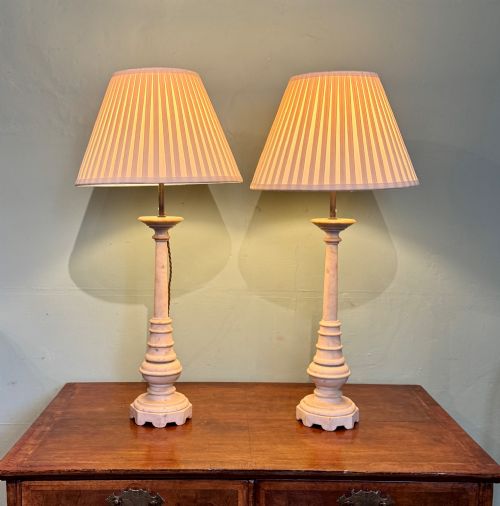
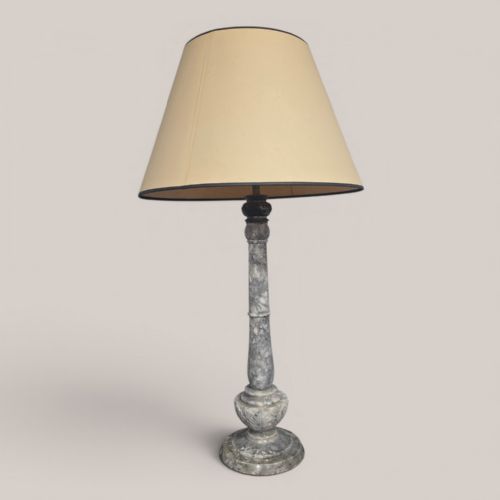
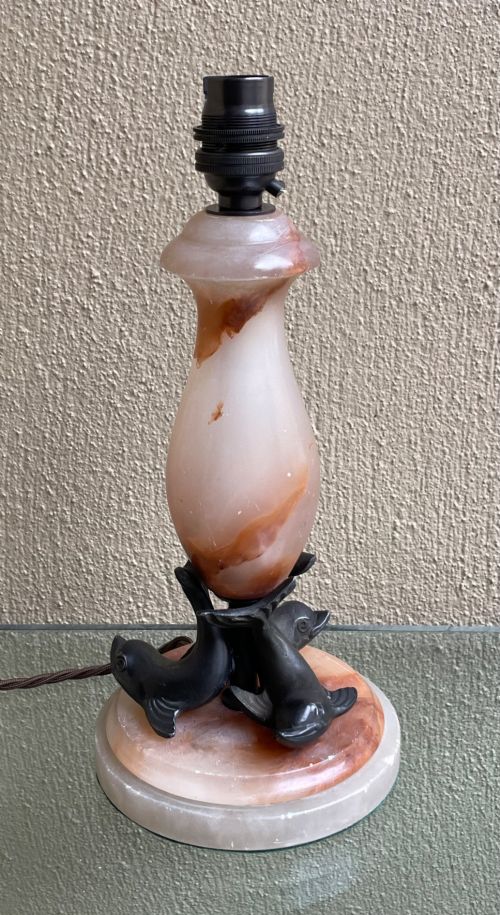
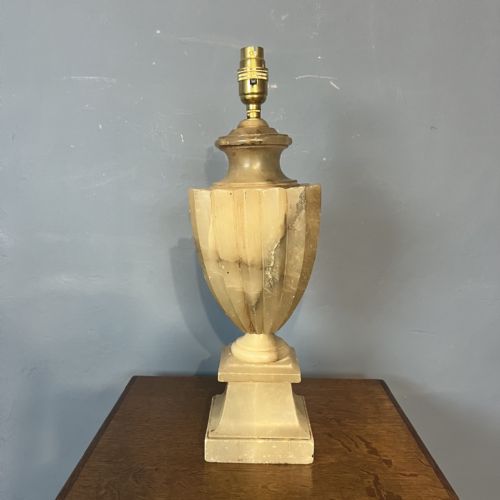




Carved Marble Lamp
A carved marble lamp brings solid weight and cool stone into a room, offering both a sturdy stand and a source of warm light.
Carved Marble Lamp
A carved marble lamp combines heavy stone bases with fitted electrical wiring or lighting elements designed to illuminate domestic spaces. Buyers searching for a carved marble lamp encounter pieces ranging from substantial table-top lighting to floor-standing columns.
The selections span styles from the Victorian era through the early twentieth century, including French Empire, Art Deco, and Neoclassical designs. Many pieces pair white or coloured marble with carved wooden frames, gilt bronze, or brass mounts.
Makers and manufacturers utilised imported Italian marble, alabaster, and onyx to shape columns, urns, and figural bases. These objects function simultaneously as carved marble lamps and as sculptural ornaments for side tables or pedestals.
Materials and construction
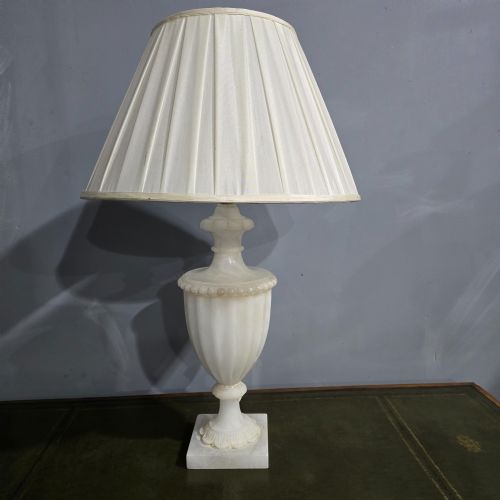
Craftsmen shaped solid blocks of marble and alabaster using chisels, files, and lathes to achieve smooth fluted columns, campana urns, and figural bases. The stone was often paired with turned hardwood, walnut, mahogany, or giltwood components.
Metal elements such as brass, gilt bronze, and ormolu were cast and chased to secure the stone sections and form mounts, eagles, rams heads, or dolphins. Fabric shades or frosted glass fittings completed the assembly, balancing the dense weight of the carved marble lamp base.
Listings feature materials including marble, brass, fabric, mahogany, alabaster, giltwood, hardwood, and onyx across multiple decades.
Evaluating the standard of workmanship
Quality rests upon the crispness of the stone carving and the selection of the marble itself, where finer grain and subtle veining elevate the visual impact. Heavy mounts in gilt bronze or cast brass indicate a higher grade of production than stamped sheet metal.
The integrity of the structural joinery between the stone column and its wooden or metal base dictates stability. Finer examples display meticulous lathe work and seamless integration of disparate materials like onyx, alabaster, and ormolu.
The Carved Marble Lamp Glossary
- Alabaster
- A fine-grained translucent stone often used for carved lamp bases and urns. It diffuses light gently when illuminated from within or nearby.
- Campana Urn
- A bell-shaped vessel form frequently carved from marble or alabaster to serve as the main body of a table lamp.
- Ormolu
- Gilt bronze mounts applied to furniture and lamp bases to accent the stone and wood components. This decorative technique requires precise metal casting and gold amalgamation.
- Gueridon
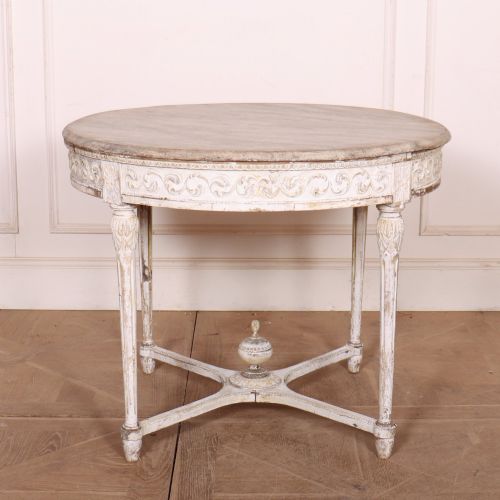
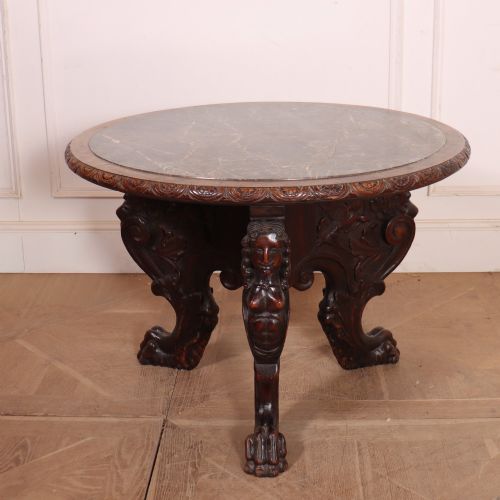
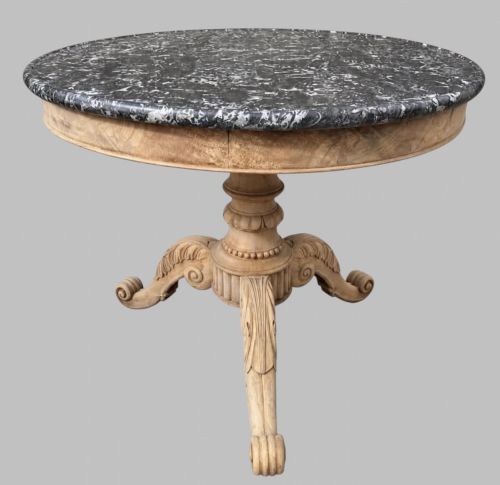
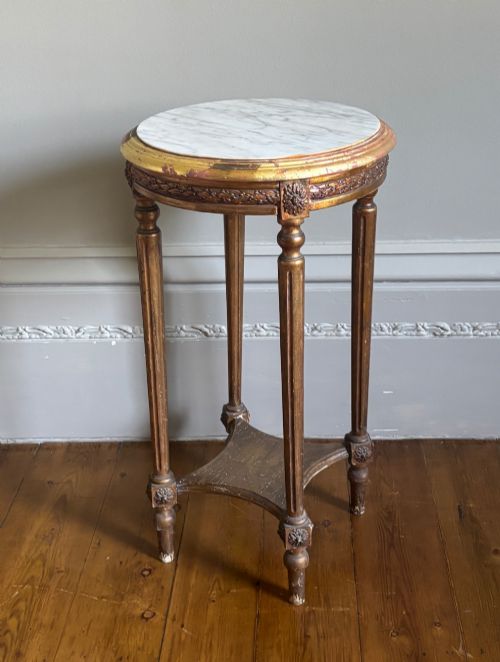
- A small round occasional table, often featuring a marble top and carved wooden supports, frequently utilised to hold lamps.
- Derbyshire Fossil marble
- A specialised British limestone containing fossilized crinoid fragments, polished to create a patterned decorative surface on tabletops.
Carved Marble Lamp: Frequently Asked Questions
How do I clean a carved marble lamp?
Dust the stone regularly with a soft, dry cloth to prevent dirt from settling into the porous surface. Avoid acidic cleaners or harsh chemicals that can etch or dull the polished marble.
For stubborn marks, wipe gently with a damp cloth using mild soap, then dry thoroughly immediately afterwards.
Are these lamps safe to use today?
Many older lamps retain vintage wiring that may not meet current safety standards. It is prudent to have a qualified electrician inspect the internal components before regular use.
Rewiring preserves the original appearance while ensuring the brass fittings and lamp holders operate safely.
Where should I place a heavy marble lamp?
Position the piece on a sturdy piece of furniture, such as a side table, chest, or pedestal, capable of supporting significant weight. Ensure the surface is level to keep the tall stone column stable.
Keep the lamp away from high-traffic household areas where the cord might be snagged or the base accidentally struck.
How can I tell the period of the stone?
Examine the tooling marks, the style of the carving, and the secondary woods or metals used in the construction. Neoclassical and Victorian examples often feature hand-turned elements and specific mount designs typical of the nineteenth century.
Comparing the patina on the brass or giltwood components helps distinguish older pieces from later reproductions.