
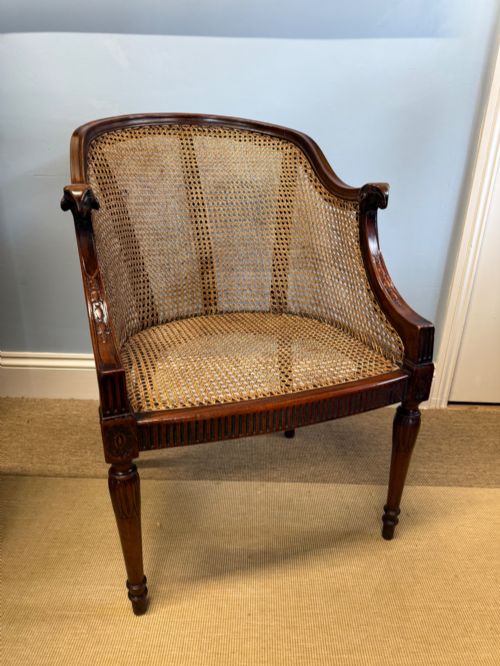

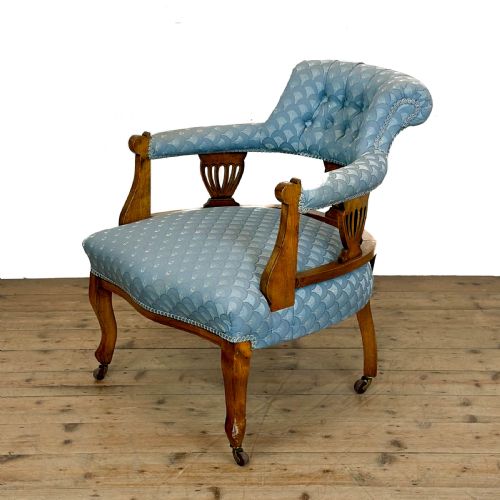


Carved Mahogany Tub Chair
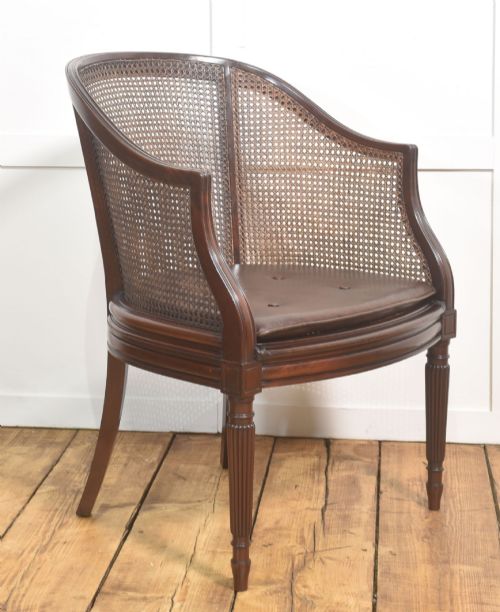
A carved mahogany tub chair brings rounded comfort and rich timber grain to a study or parlour.
Carved Mahogany Tub Chair
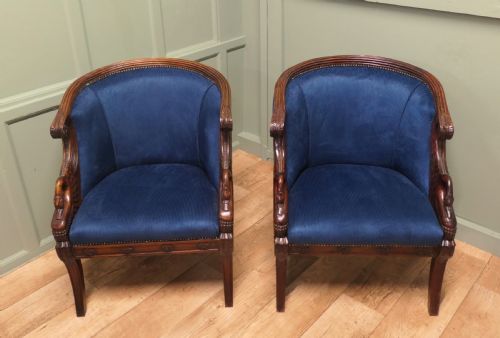
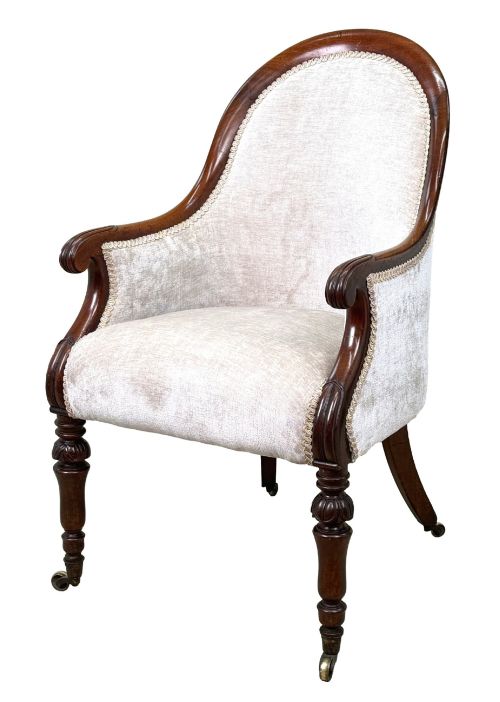
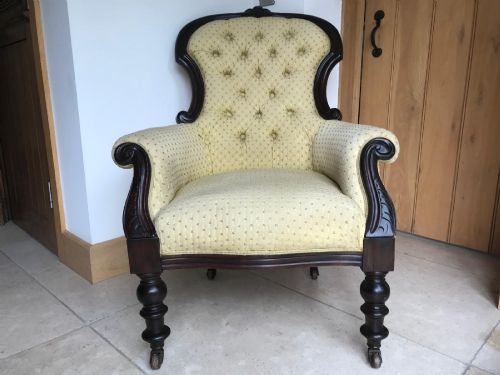
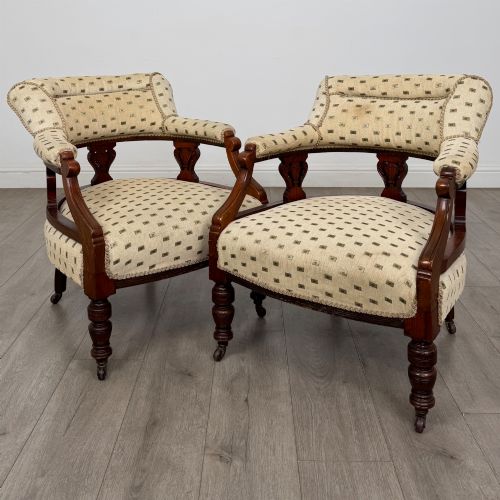
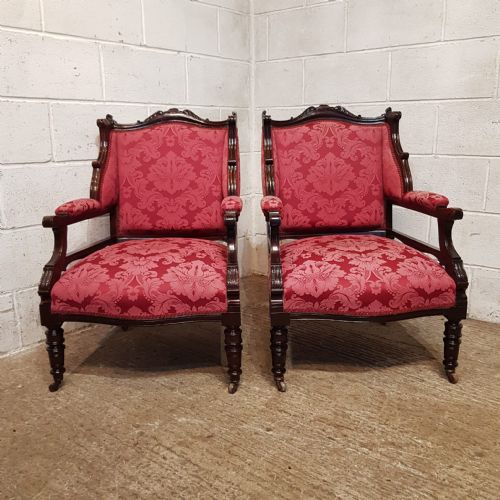
A carved mahogany tub chair combines a rounded, enclosing backrest with a solid timber frame shaped from deep reddish-brown wood. Buyers searching for a carved mahogany tub chair encounter pieces spanning the nineteenth century through the Edwardian era, taking forms such as library armchairs, desk seats, and parlour furniture.
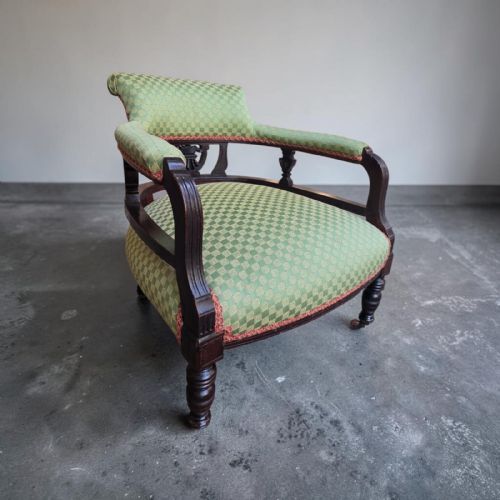
The evidence shows these seats appearing across multiple distinct design movements, including Regency, Victorian, Edwardian, and Art Nouveau styles. Many examples feature supportive armrests curving directly into the circular back, while others adopt cane panels or deep upholstery.
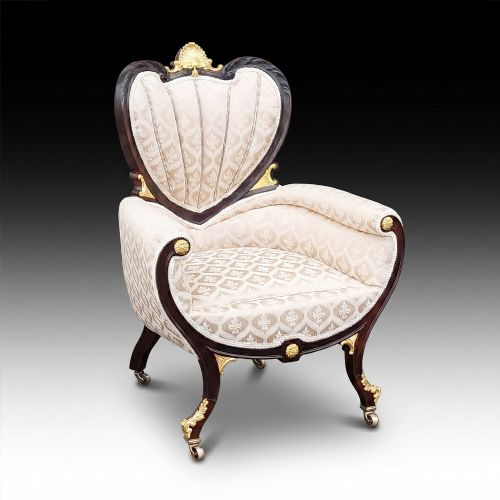
The selection ranges from simple nineteenth-century specimens to decorative Edwardian pairs with inlaid details and brass or ormolu mounts. Buyers most frequently meet Edwardian and Victorian iterations featuring carved wooden frames paired with modern fabric or original leather.
What varies in quality
The refinement of the timber carving separates standard production items from superior examples, where crisp floral motifs and deep relief work demonstrate skilled hand-tooling. The integrity of the curved frame joints determines structural stability, as continuous wooden hoops endure significant lateral pressure during daily use.
Material selection dictates overall prestige, seen in heavy mahogany framing matched with fire-gilt bronze mounts or finely woven caning. The quality of secondary elements, including inlaid marquetry and original leather upholstery, defines the distinction between ordinary seating and high-status library pieces.
Desk chairs and library armchairs form a substantial portion of the available tub chair inventory.
Gillows
The Carved Mahogany Tub Chair Glossary
- Tub chair
- An armchair featuring a continuous curved backrest that drops down to form low, enveloping arms. This enclosed design originated to block draughts in cooler rooms.
- Bergère
- An enclosed armchair with stuffed upholstery and wooden framing where the sides are frequently filled with cane or wicker work. These seats appeared in French and English drawing rooms.
- Marquetry
- Decorative veneer work created by fitting thin pieces of wood and shell into a design on a timber surface. Cabinetmakers utilised this technique to ornament Edwardian desk and corner chairs.
- Ormolu
- Gilt bronze mounts applied to furniture frames for decorative accent. This technique frequently appears on pieces influenced by French Empire styles.
- Regency
- A British design period spanning the early nineteenth century defined by classical restraint and archaeological revival. Chairs from this era often feature sabre legs and simple brass detailing.
Carved Mahogany Tub Chair: Frequently Asked Questions
What is a tub chair?
A tub chair is an armchair with a low, rounded backrest that wraps continuously around to form the arms. The enclosed shape resembles the rim of a wooden tub.
Cabinetmakers designed these seats to provide shelter from draughts in nineteenth-century libraries and drawing rooms. They appear frequently in mahogany with upholstered or caned seats.
How do I date a mahogany chair?
Dating relies on examining the timber grain, joining techniques, and stylistic markers recorded across Victorian, Edwardian, and Regency periods. Cabinetmakers changed construction methods over time as machinery evolved.
Earlier nineteenth-century examples display hand-cut joinery and dense mahogany stock, whereas Edwardian pieces often incorporate lighter inlay work and factory-turned components.
Where should I place a tub chair?
These chairs suit studies, home desks, and reading corners where their compact curved profile fits easily into room corners or beside tables. Library armchairs function well as dedicated desk seating.
Pairing matching or near-matching pieces creates balanced seating arrangements in drawing rooms and parlours, echoing historical placement.
How do I care for mahogany and leather?
Maintain mahogany frames by applying natural beeswax sparingly to nourish the timber and preserve the grain. Avoid placing furniture in direct sunlight or near heat sources.
Clean leather upholstery with appropriate specialist balms to prevent drying, while caned panels require gentle dusting with a soft brush.