

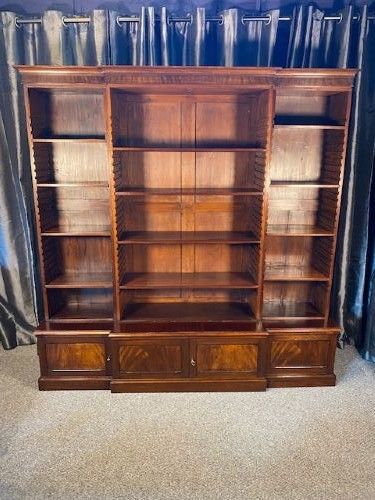
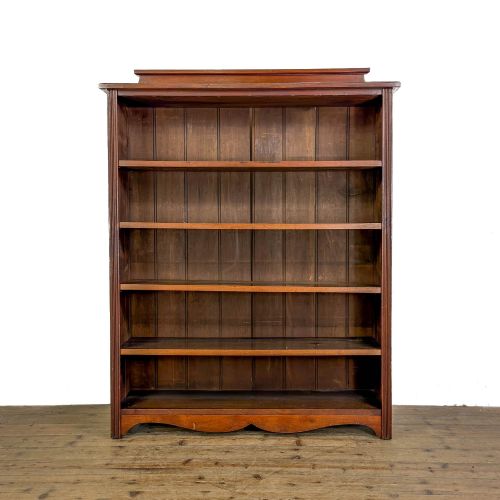
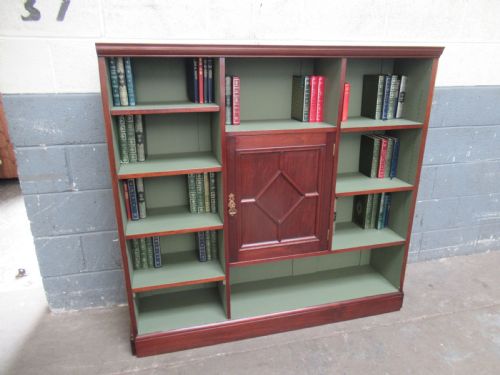
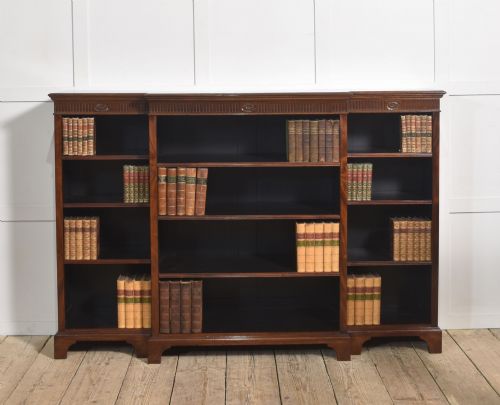



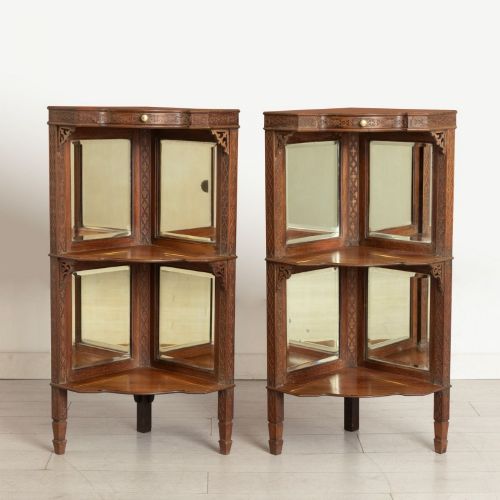
Carved Mahogany Shelving Unit
A carved mahogany shelving unit brings sturdy timber and open storage to a room, ranging from simple wall shelves to grand library bookcases.
Carved Mahogany Shelving Unit
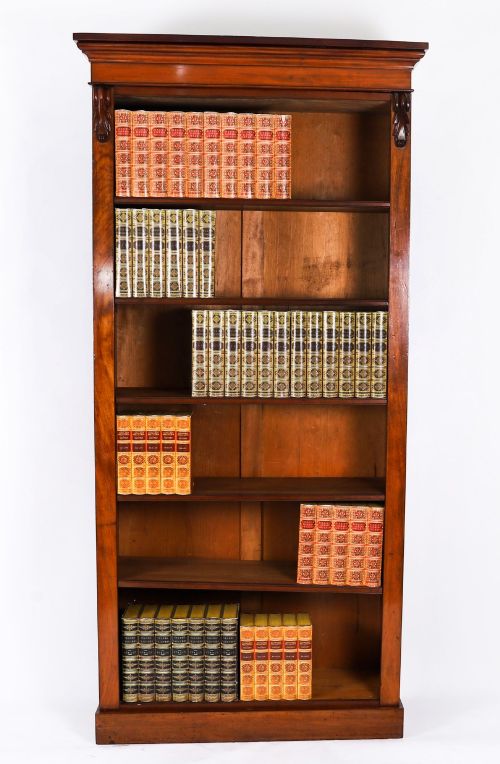
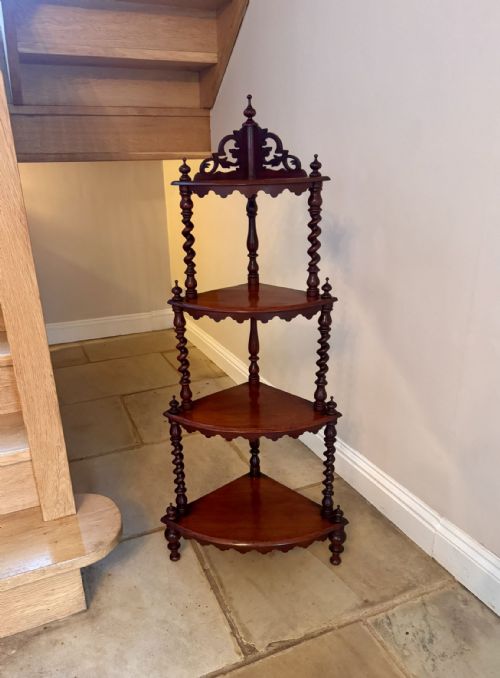
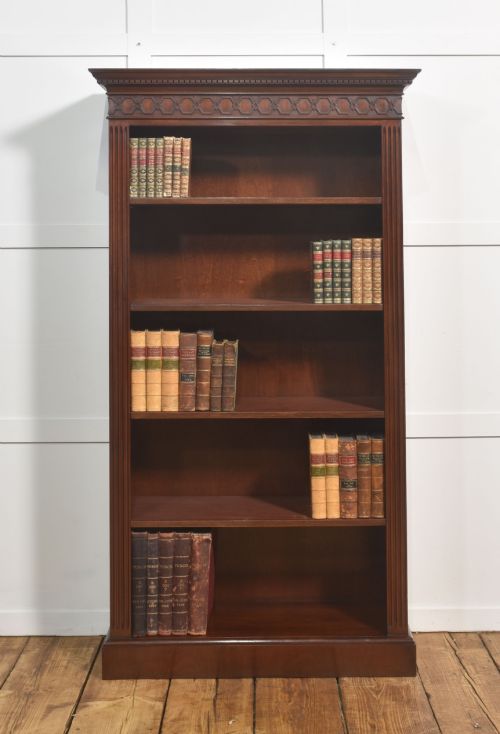
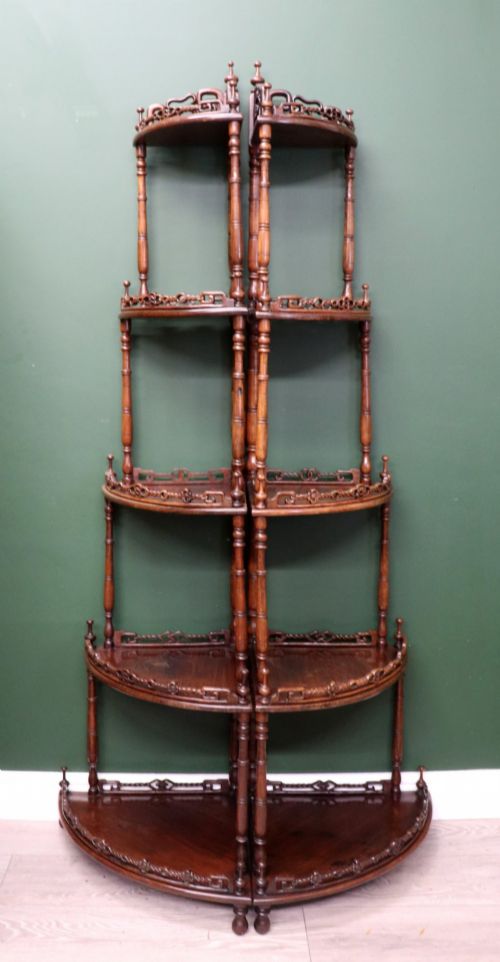
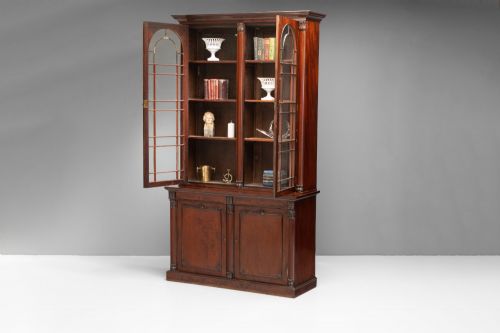
A carved mahogany shelving unit encompasses open bookcases, corner whatnots, etageres, and wall-hanging shelves designed to hold books and display objects. These pieces appear frequently from the nineteenth century, including Victorian, Edwardian, and Regency periods.
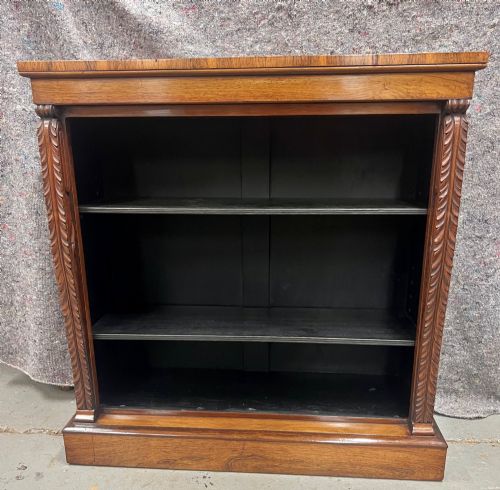
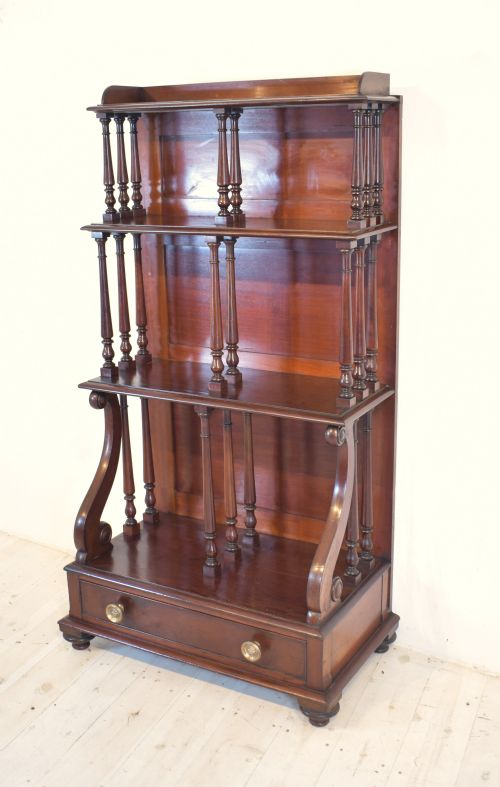
The most common form on this page is the open bookcase, often featuring adjustable shelves and standing tall in libraries or living spaces. Alongside these, buyers find multi-tiered etageres, wall shelves, and corner cabinets intended to maximise room utility.
How they were made
Cabinet makers utilised solid mahogany, Spanish mahogany, and flame mahogany veneer over secondary timbers such as pine and oak to construct these shelving units. Brass details, glass panels, and multi-wood marquetry sometimes complement the primary wood.
Construction techniques include open front designs with adjustable shelving, wall-hanging brackets, and multi-tiered framing for etageres and whatnots. Carved ornamentation marks the stylistic influences of Georgian, Victorian, Arts and Crafts, and Regency makers.
Carved Mahogany Shelving Unit Retail Price Guide 2026
Typical asking prices for carved mahogany shelving unit among the pieces listed under this phrase on Sellingantiques today, from the lower quarter to the upper quarter. They describe what is for sale here now, not the wider market.
Portable mahogany bookshelves from the 19th century prove that Victorians simply could not leave their library behind when travelling.
What varies in quality
The calibre of a carved mahogany shelving unit rests on the selection of timber, such as highly figured flame mahogany veneer or solid Spanish mahogany, paired with the crispness of its carved details. Superior examples display thoughtful proportions and substantial construction that mark out workshop output.
Makership and structural integration define the upper tier, seen in functional elements like smoothly adjustable shelving, integrated drawers, or mirrored backings in whatnots. Pieces carrying documented workshop stamps or attribution demonstrate the higher standard of period cabinet making.
Edwards and Roberts·Robert Strahan·Goodhall Lamb and Heighway·Shapland and Petter
The Carved Mahogany Shelving Unit Glossary
- Etagere
- An open piece of furniture with multiple tiers for displaying small objects or books. These freestanding units often feature slender upright supports.
- Whatnot
- A multi-shelved stand used for ornaments and books, frequently produced during the Victorian period with corner or freestanding configurations.
- Breakfront
- A large cabinet or bookcase where the central section projects forward from the side sections. This architectural form adds depth to library bookcases.
- Flame mahogany veneer
- A thin slice of mahogany timber cut from the point where a branch joins the main trunk, showing a distinctive flame-like grain pattern.
- Waterfall bookcase
- A tiered shelving unit where each successive shelf steps back from the one below it, creating a cascading silhouette.
Carved Mahogany Shelving Unit: Frequently Asked Questions
What is a whatnot shelf?
A whatnot is a multi-tiered shelving unit designed for displaying decorative objects, ornaments, and small books. They appear in both corner and freestanding formats.
Victorian examples frequently incorporate mirrors, single drawers, or intricate turned supports, making them both decorative and practical pieces for a corner or wall.
How do I identify a Regency bookcase?
Regency bookcases generally display classical restraint, clean architectural lines, and fine mahogany surfaces. They date from the early nineteenth century and often feature open shelving.
Country house examples from this period may show unusual designs, sometimes incorporating brass mounts or simplified pediments that reflect the neoclassical taste of the era.
Are the shelves adjustable?
Many of the larger nineteenth and early twentieth century open bookcases on this page feature adjustable shelving. This allows the internal layout to accommodate books of varying heights.
Fixed shelves are more commonly found in smaller wall-hanging units, etageres, and specific cabinet formats where structural rigidity takes priority over customisation.
Where should I place a wall-hanging shelf?
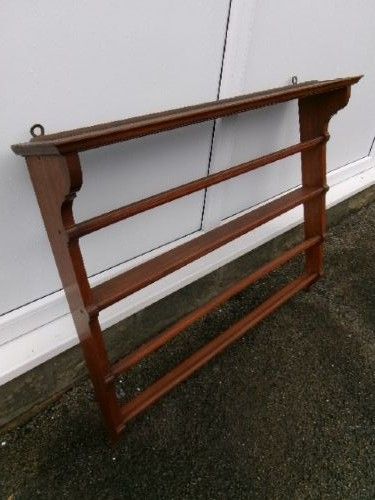
Wall-hanging shelves and bookcases suit smaller spaces, hallways, or rooms where floor area is limited. They provide open display space without interrupting the room footprint.
Arts and Crafts and Victorian wall shelves often include sturdy brackets or hanging fixtures designed to support the weight of books and decorative ceramics.