
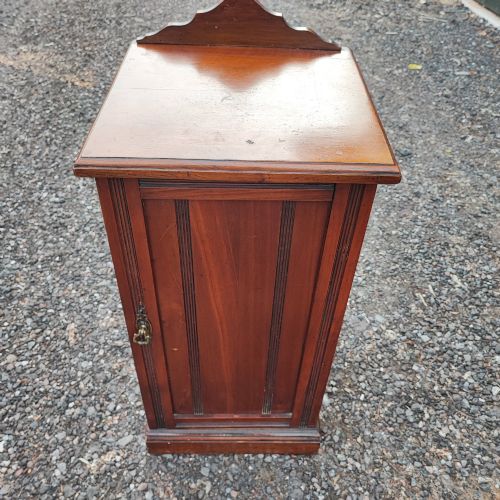

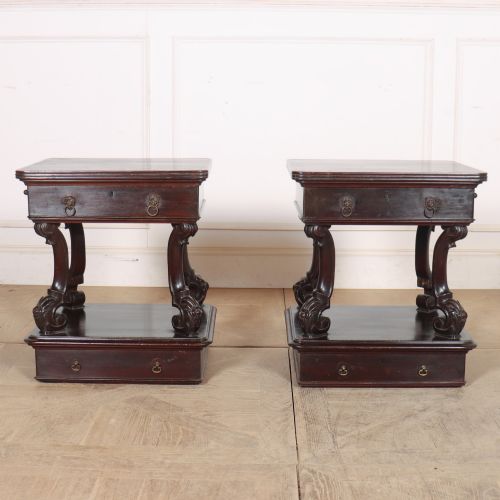


Carved Mahogany Pedestal Cabinet
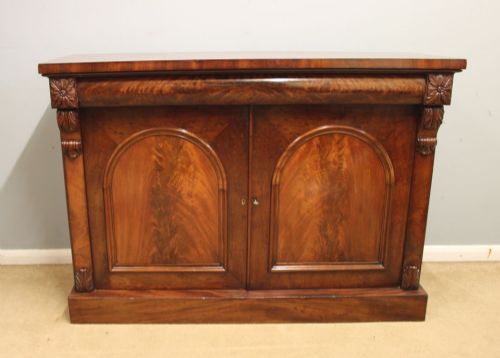
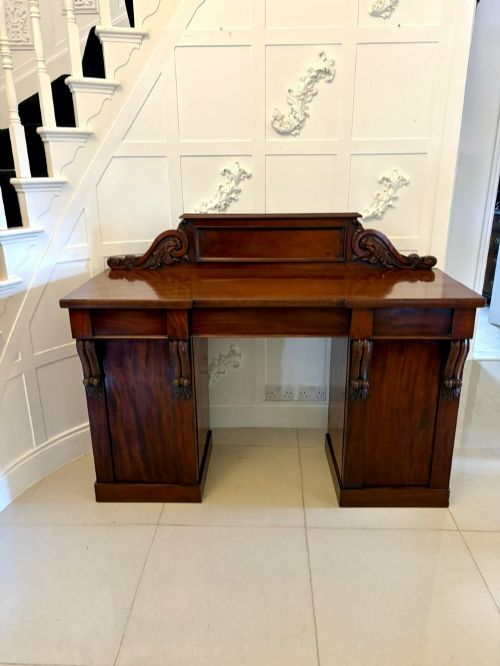
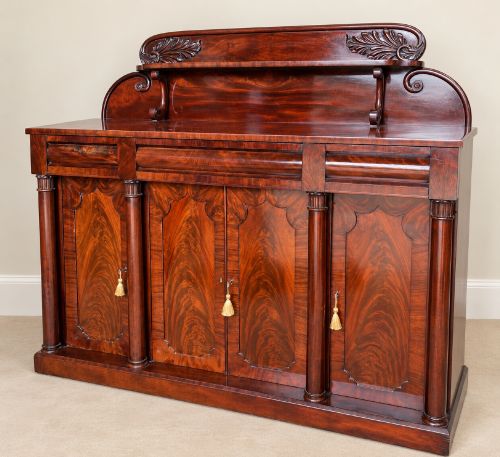
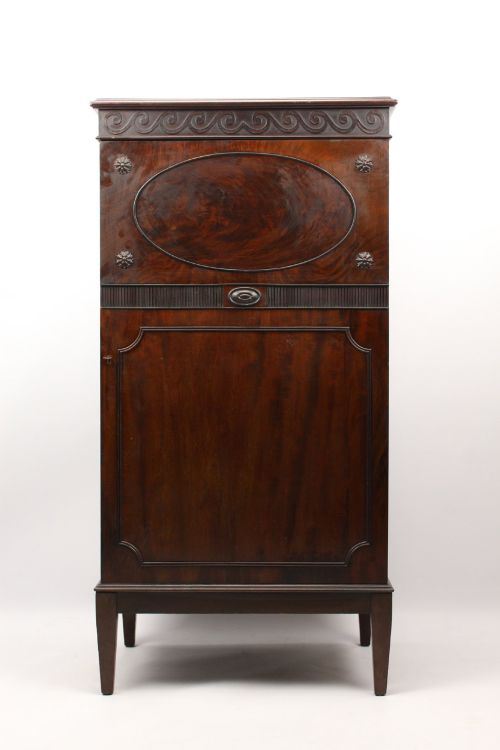
A carved mahogany pedestal cabinet brings substantial timber and architectural presence to a room, offering practical storage through pedestal columns or cupboards.
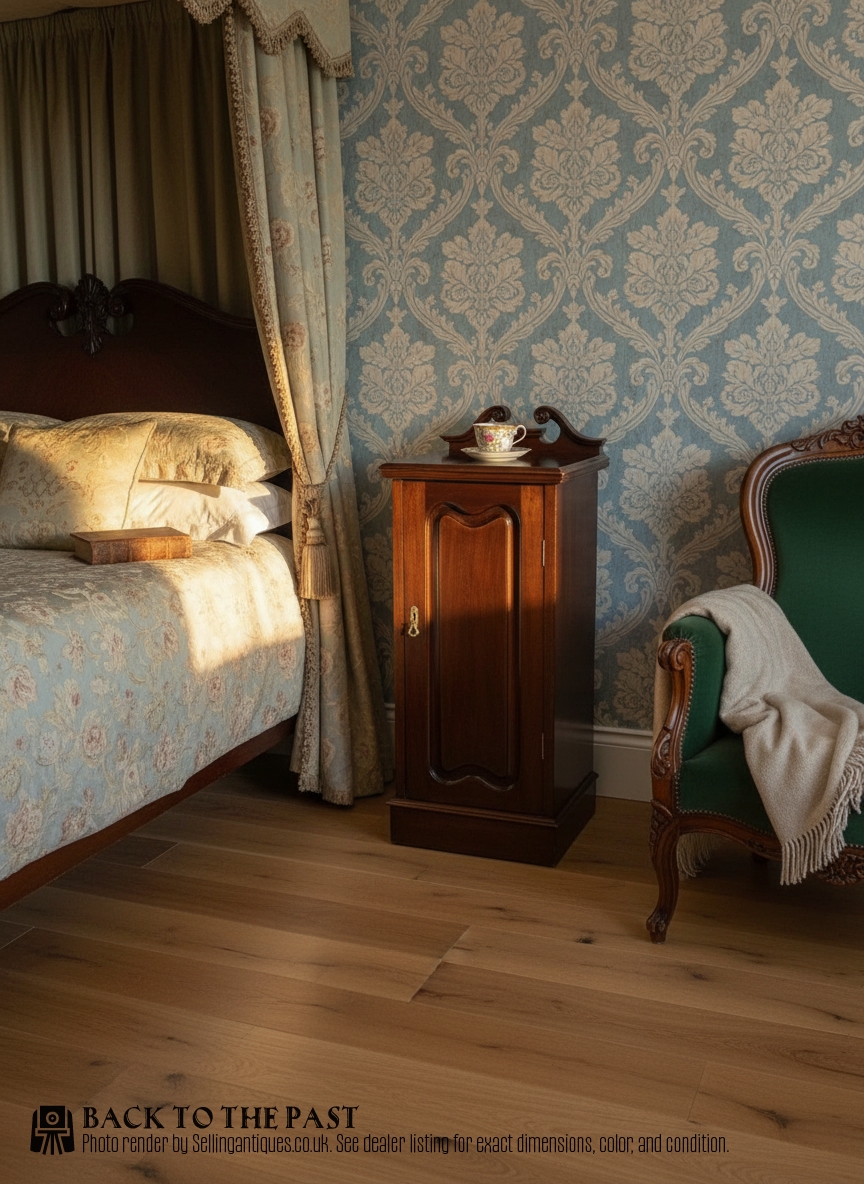
Carved Mahogany Pedestal Cabinet
When you search for a carved mahogany pedestal cabinet, you encounter forms ranging from compact bedside cupboards and lampstands to large dining room sideboards and library pieces. These items span the 18th century, Regency, William IV, Victorian, and Edwardian periods.
The most common formats on this page are bedside cabinets and larger pedestal sideboards, reflecting domestic storage needs across the Georgian and Victorian eras.
Makers and designers from these periods utilised solid timber alongside figured veneers to create architectural statements that served both utility and display.
Judging the standard
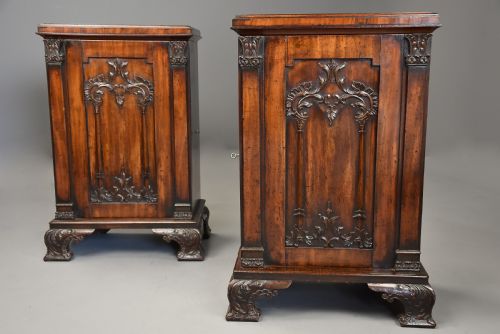
The distinction between tiers rests upon the choice of timber figure, such as highly figured flame mahogany, and the depth and crispness of the hand-carving.
Proportion and architectural harmony dictate the upper echelon of these pieces, alongside the integrity of the original timber and period brass mounts.
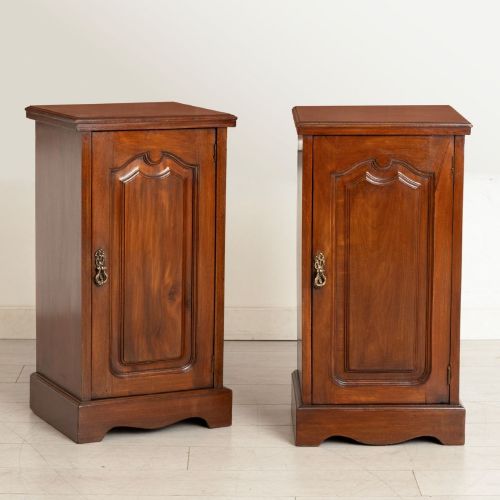
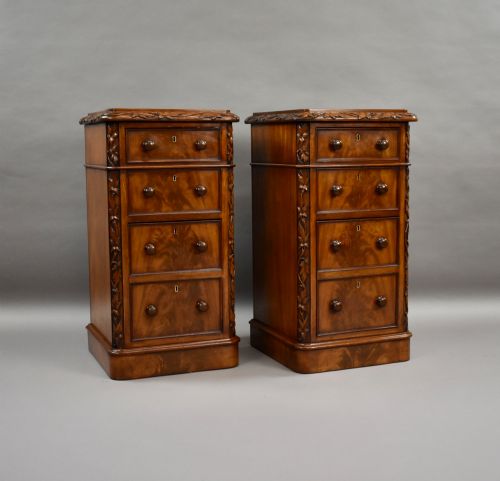
Several bedside cabinets arrive in matched pairs, proving that even 19th-century furniture appreciated the symmetry of a twin act.
Denby and Spinks·Gillows of Lancaster
The Carved Mahogany Pedestal Cabinet Glossary
- Pedestal sideboard
- A large dining room base unit comprising two flanking pedestals joined by a central console or recess. These forms often incorporate carved corbels or drawers.
- Chiffonier
- A compact sideboard or low cabinet developed during the Regency and Victorian periods, typically featuring enclosed cupboards beneath a shelf tier.
- Breakfront
- A cabinet or sideboard whose central section projects forward from the flanking pedestals or wings, creating a structured architectural facade.
Carved Mahogany Pedestal Cabinet: Frequently Asked Questions
What rooms suit a pedestal cabinet?
These cabinets suit bedrooms, living spaces, and dining rooms depending on whether the piece functions as a bedside cupboard or a large sideboard.
The smaller lampstands and bedside versions fit neatly beside seating or beds, while the larger pedestal sideboards anchor a dining room.
How do I date a mahogany cabinet?
Dating relies on observing stylistic markers such as Chippendale carving, Regency architectural lines, or heavy Victorian proportions.
Secondary woods, construction methods, and hardware like brass handles further clarify whether a piece originates in the 18th, 19th, or early 20th century.
Are these cabinets made of solid wood?
Makers constructed the structural frames and heavy mouldings from solid mahogany, while utilising flame mahogany veneers across large flat surfaces.
This combination prevented warping while maximising the visual impact of the decorative grain.
What is the difference between a sideboard and a pedestal cabinet?
A sideboard serves primarily dining and serving functions with expansive top surfaces and elongated base storage, appearing in larger proportions.
A pedestal cabinet often refers to single or paired vertical units designed as bedside cupboards, lampstands, or architectural storage columns.