

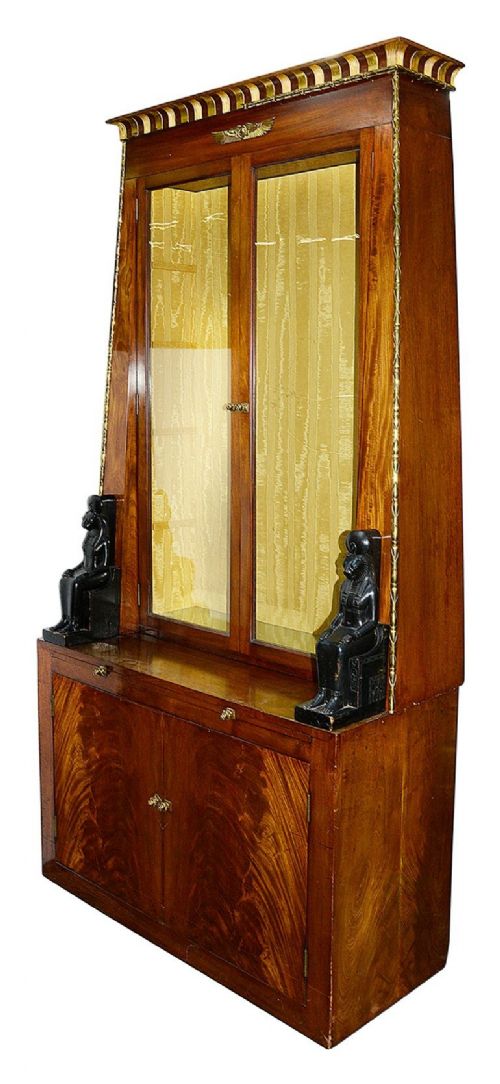


Carved Mahogany Glazed Case
A carved mahogany glazed case brings together rich timber and clear glass to hold books or precious objects in the home.
Carved Mahogany Glazed Case
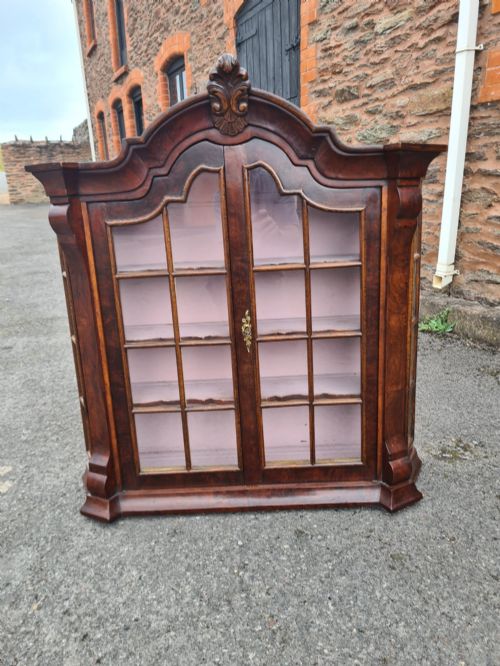
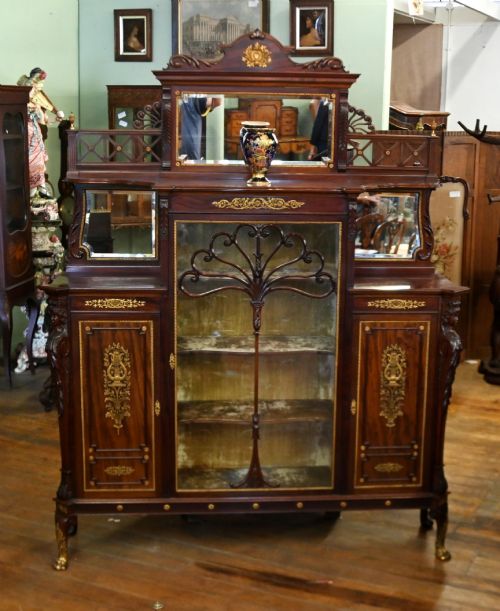
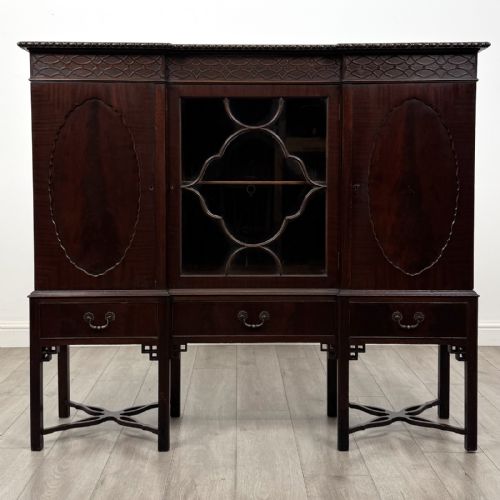
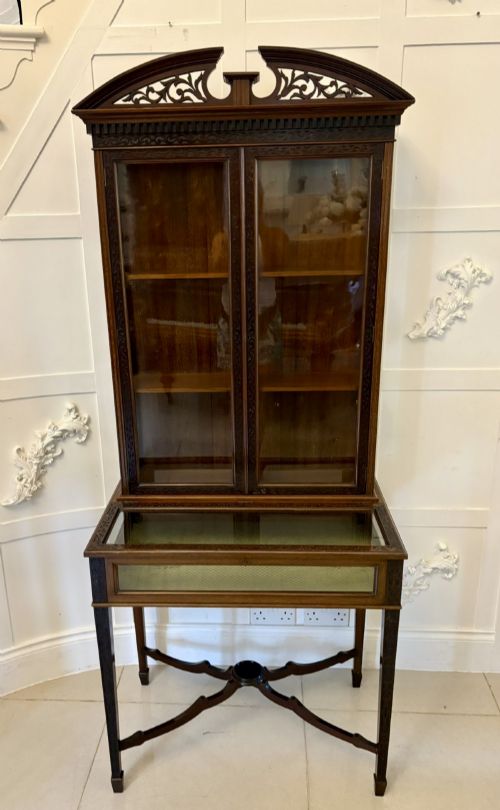
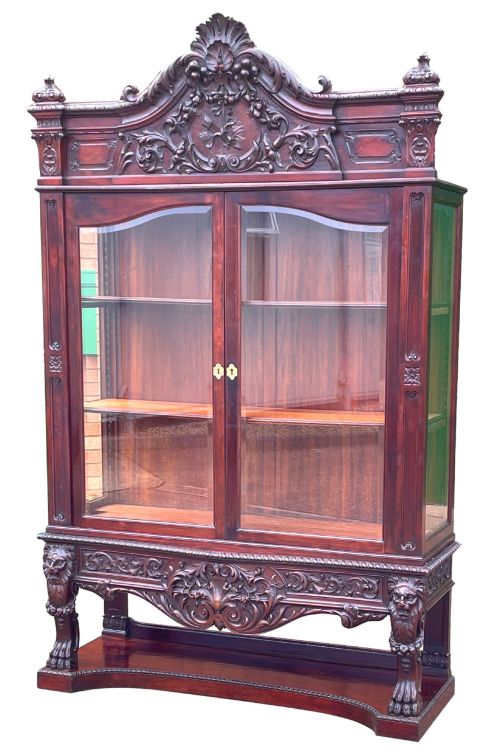
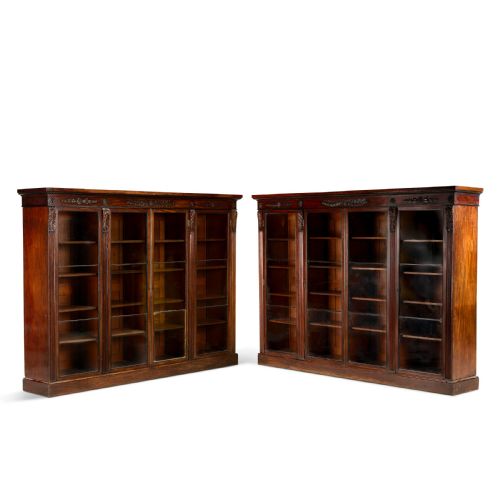
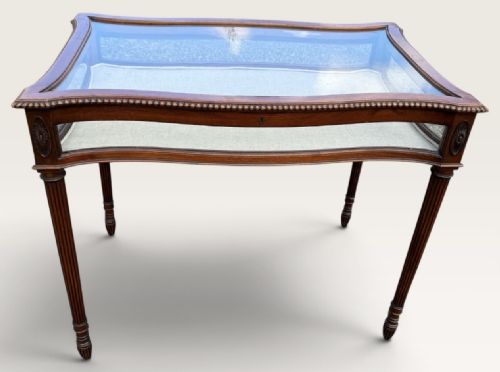
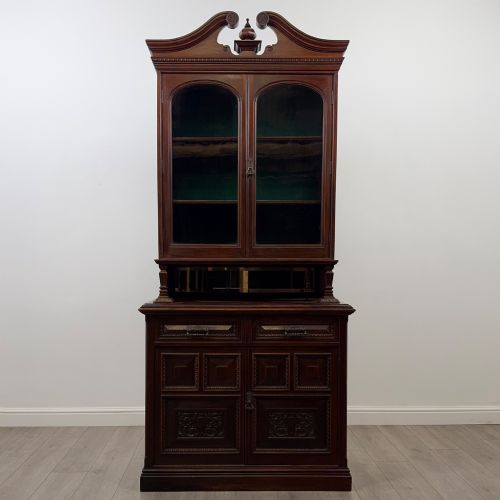
A carved mahogany glazed case serves primarily as a display vehicle or a bookcase, protecting valuable volumes and small treasures behind glass panels. These items appear in various forms across this page, ranging from tall library bookcases to compact wall cabinets, bijouterie tables, and drinks cabinets.
Most examples originate from the Victorian and Edwardian eras, alongside pieces from the Regency period and the early twentieth century. Makers drew upon diverse styles such as Chippendale Revival, Sheraton Revival, Louis XVI, and Art Deco to shape the timber frames.
The version most commonly met on this page is the upright display cabinet or bookcase, frequently detailed with carved accents on the mahogany frame. Buyers seek these forms to organise collections while keeping items visible and secure.
How they were made
Constructed predominantly from solid or veneered mahogany, these cases often incorporate secondary timbers and detailed carving along the cornice, rails, or legs. Glass panels are fitted into wooden doors, sometimes supported by brass hinges and locks.
Interior elements frequently include adjustable wooden shelves, fabric linings, or mirror backs to reflect light through the display area. Certain variants also integrate satinwood stringing, ebonised wood details, or gilt metal mounts to add contrast to the dark mahogany surfaces.
Carved Mahogany Glazed Case Retail Price Guide 2026
Typical asking prices for carved mahogany glazed case among the pieces listed under this phrase on Sellingantiques today, from the lower quarter to the upper quarter. They describe what is for sale here now, not the wider market.
One shop counter cabinet retains old sign-writing for a chemist and opticians firm.
What varies in quality
Quality rests heavily on the depth and crispness of the carving, the selection of figured mahogany timber, and the balance of the overall proportions. Superior pieces demonstrate meticulous cabinet-making through tight joinery, carefully fitted glass, and harmonious decorative details like satinwood inlay.
Simpler commercial pieces or later revival examples often rely on stamped rather than hand-carved ornamentation and simpler straight-grained timber. The distinction lies in the architectural presence of the cabinet and the refinement of its secondary materials, such as brass hardware and mirrored backs.
C Hindley and Sons·Gillows
The Carved Mahogany Glazed Case Glossary
- Astral glazing
- A method of dividing glass panes with slender wooden bars, often forming geometric patterns. This technique allows maximum light into bookcases and display cabinets.
- Bijouterie table
- A glass-topped display table designed specifically for small ornaments, jewellery, or curiosities. These pieces lift items to eye level while seated.
- Demi-lune
- A half-moon shape used for the footprint of specific cabinets and tables. This curved form fits flush against a wall while offering a softer profile.
- Double fusee
- A mechanical clock movement using two fusee cones and chains to equalise the pull of the mainspring. This mechanism ensures consistent timekeeping in tall clock cases.
- Vernis Martin
- A type of simulated Japanese lacquer developed in France, utilised to decorate furniture panels. It provides a glossy, layered finish in various colours.
Carved Mahogany Glazed Case: Frequently Asked Questions
What is a carved mahogany glazed case used for?
These pieces serve to house and exhibit libraries, porcelain, and small collections while protecting them from dust. The glazed panels allow full visibility of the contents within living spaces.
Historically, larger versions anchored formal libraries and drawing rooms, whereas smaller wall-mounted or table variants displayed personal curiosities and valuables.
How do I date a mahogany glazed cabinet?
Dating relies on observing the prevailing style, construction methods, and timber characteristics. Victorian pieces often display heavier proportions and rich carved detail, while Edwardian examples can exhibit lighter revival aesthetics.
Hardware, such as brass locks and hinges, alongside the cut of the glass, provides additional clues regarding the decade of manufacture.
Where should I place a display cabinet at home?
Position these cabinets away from direct sunlight to prevent the mahogany timber from fading and to protect fabric interiors. Interior lighting can be integrated carefully if shelves lack mirror backs.
Ensure the floor is level, particularly with taller bookcases or delicate bijouterie tables, to maintain structural stability and proper door alignment.
Are these cases suitable for small rooms?
Certain forms, such as wall cabinets or slender demi-lune cases, occupy minimal floor space while offering vertical storage and display. Mirrored backs inside the glazing also help reflect ambient light and create a sense of depth.
Choosing a wall-hanging version keeps the floor completely clear, making them practical additions to compact hallways or studies.