



Carved Mahogany Barrel Chair
A carved mahogany barrel chair brings deep wood grain and curved comfort to a room.
Carved Mahogany Barrel Chair
A carved mahogany barrel chair is a sturdy seating form defined by a rounded, enclosing back that wraps around the sitter in a continuous curve. The pieces matching this search phrase span the Georgian, Victorian, and Edwardian eras, alongside pieces built in Regency style and Empire revival.
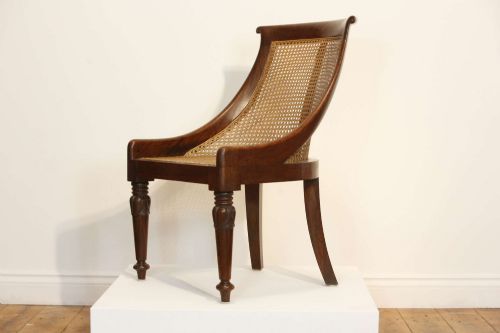
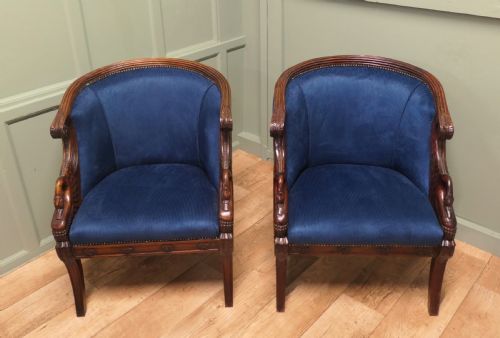
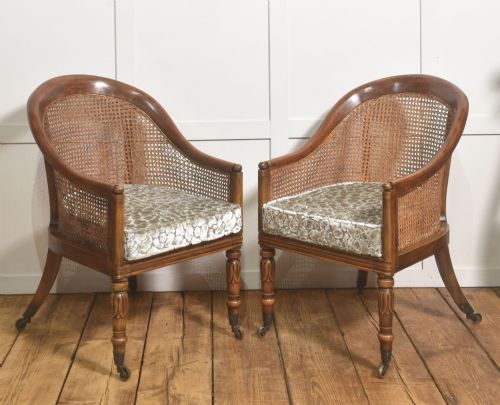
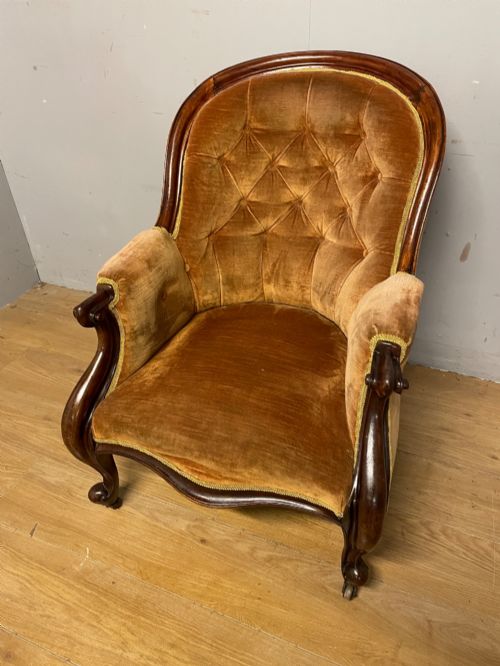
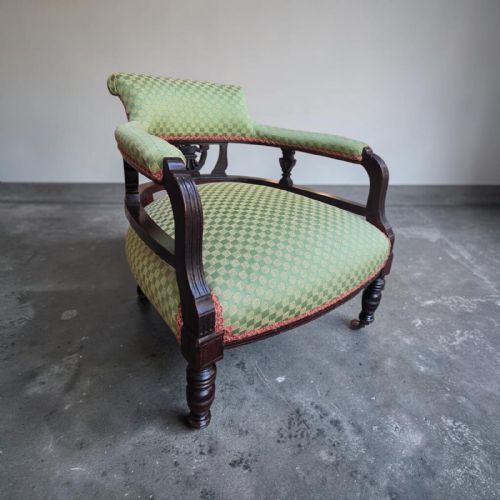
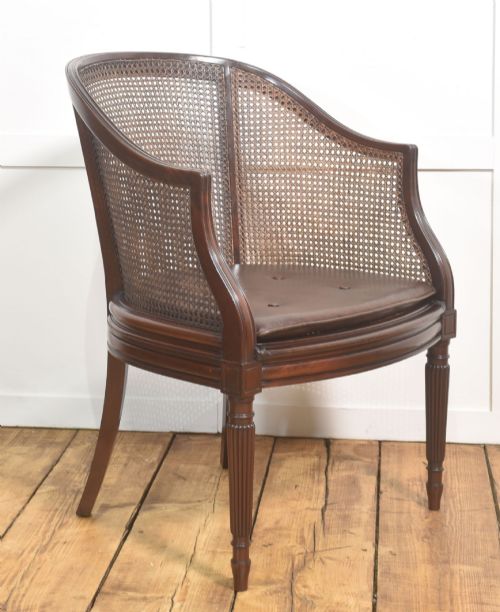
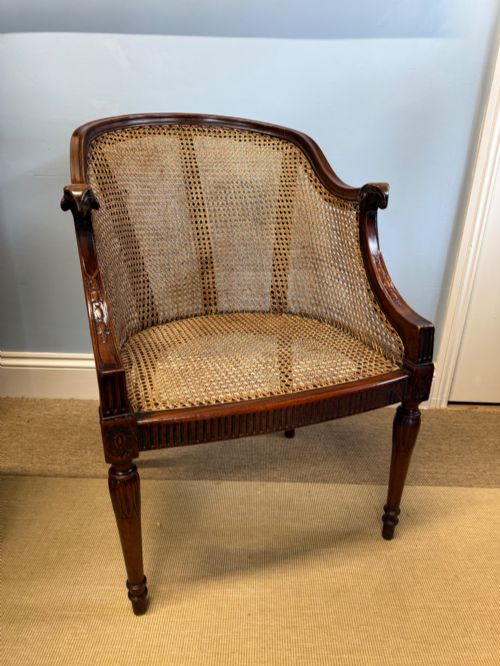
Most examples found on this page take the form of tub chairs or armchairs, constructed from rich mahogany timber. Makers combined the warm timber with various seat treatments, including cane panels, button-back padding, and plush velvet or leather upholstery.
Originating as library or parlour seating, these chairs prioritise ergonomic support through their curved shell backs. Buyers encounter everything from simple country house library chairs to ornate ormolu-mounted showwood versions.
How they were made
Cabinet makers built the frames of these chairs from solid mahogany, often bending the wood or carving the continuous back rails from substantial timber. Turned legs provide support beneath the heavy frames, while brass details or gilt bronze mountings accent specific revival pieces.
Seating surfaces relied on traditional methods, incorporating woven cane for lightness or deep upholstery over springs and stuffing. Showwood frames expose the polished mahogany grain around the upholstered shell, demonstrating the joinery skills of the period.
Carved Mahogany Barrel Chair Retail Price Guide 2026
Typical asking prices for carved mahogany barrel chair among the pieces listed under this phrase on Sellingantiques today, from the lower quarter to the upper quarter. They describe what is for sale here now, not the wider market.
Some Victorian parlour chairs catered specifically to musicians, featuring specialised seating designs for performers.
What varies in quality
The quality of a carved mahogany barrel chair depends on the depth and crispness of the timber carving around the frame. Heavier, well-figured mahogany timber indicates superior material selection by the original cabinet maker.
Construction rigidity defines the better examples, where the curved back rail remains solid and stable without movement at the joints. The finesse of the secondary materials, such as tight cane work or neat showwood finishing, separates standard utility seating from finer parlour pieces.
The Carved Mahogany Barrel Chair Glossary
- Tub chair
- An armchair featuring a low, rounded back that encloses the sides in the shape of a tub. This form provides enclosing comfort for the sitter.
- Bergère
- An enclosed upholstered armchair with wooden framing and cane panels on the back and sides. It typically includes a loose seat cushion.
- Showwood
- Furniture framing where polished wood is deliberately left visible around the upholstered sections. This highlights the grain and carving of the mahogany.
- Ormolu
- Gilt bronze mounts applied to furniture for decorative effect during revival periods. It adds metallic contrast to the dark timber.
Carved Mahogany Barrel Chair: Frequently Asked Questions
What is a barrel chair?
A barrel chair is an upholstered or caned seat featuring a rounded, semi-circular back that resembles the staves of a wooden barrel.
This enclosed shape was designed to keep out drafts in cooler rooms while offering wrap-around support for the sitter.
How do I identify a Victorian tub chair?
Victorian tub chairs typically display deep button-back upholstery, turned mahogany legs, and substantial proportions suited to nineteenth-century parlours.
Makers of this era frequently utilised dark mahogany and rich velvet fabrics to create imposing library and parlour seating.
Where should I place a barrel chair?
These chairs suit studies, libraries, and corners of living rooms where their curved profiles can be viewed from multiple angles.
Because the back forms a continuous semi-circle, they sit comfortably away from walls as freestanding accent pieces.
What is the difference between cane and upholstered versions?
Cane versions utilise woven plant material on the back and sides to create a lighter, more breathable structure.
Upholstered variants rely on padding, springs, and fabrics like leather or velvet to deliver a softer, fully cushioned seat.