
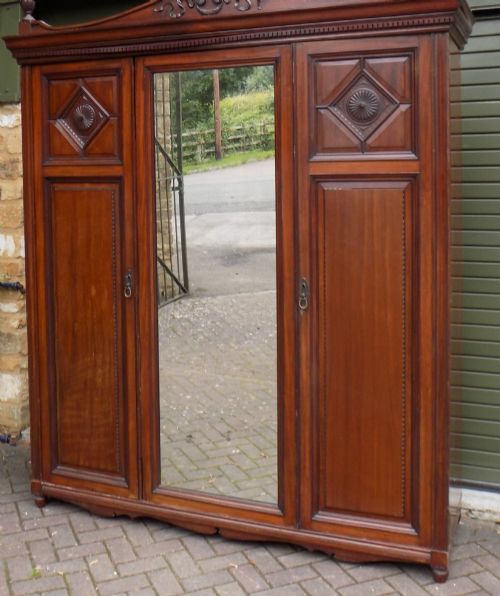
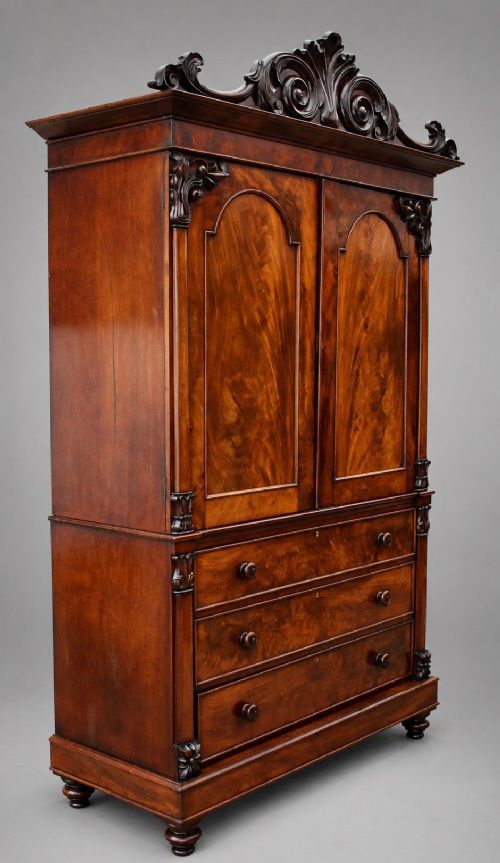
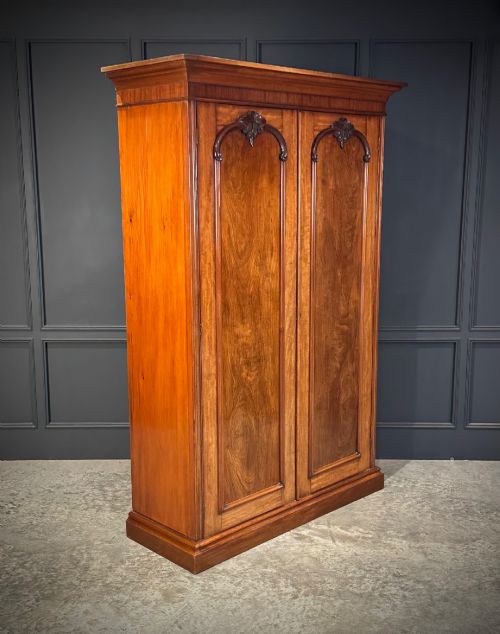
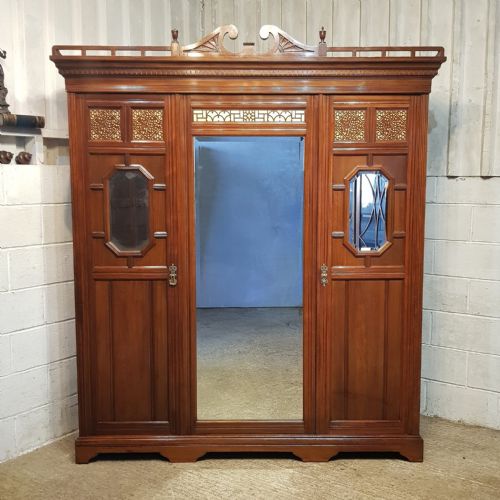
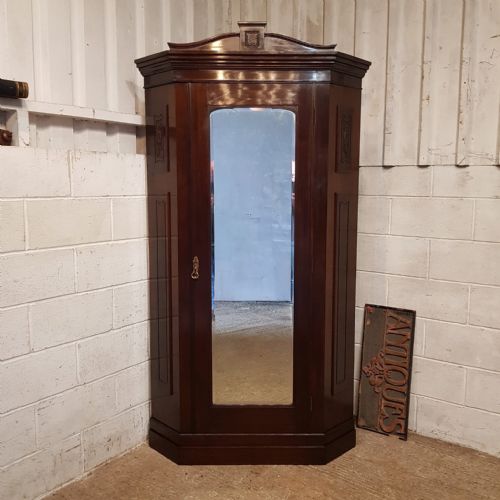


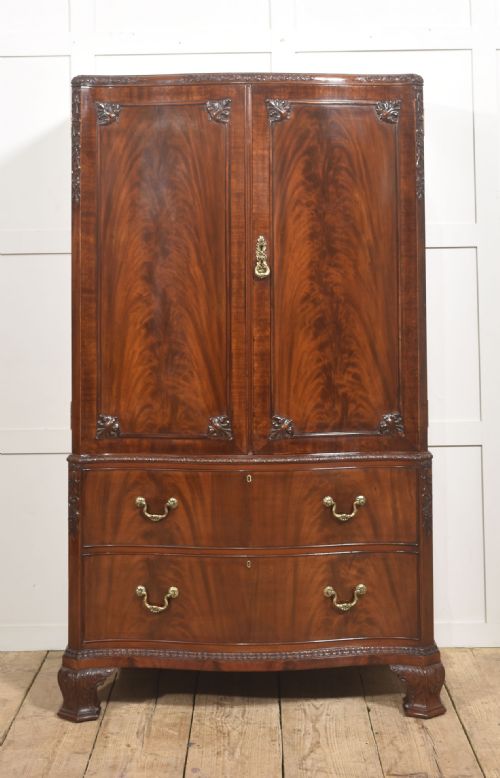


Carved Mahogany Armoire
These substantial carved mahogany armoire pieces offer practical storage with deep timber grain and classical proportion.
Carved Mahogany Armoire
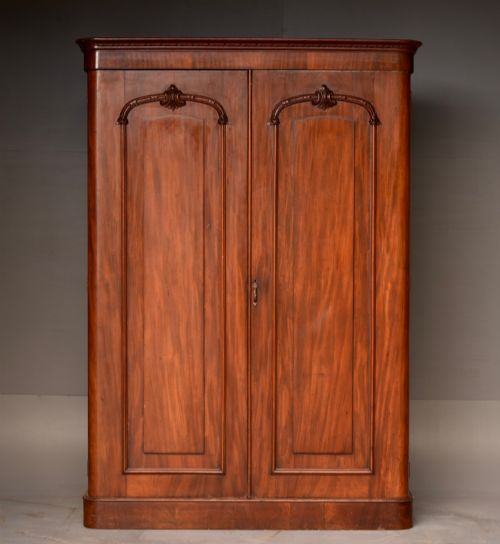
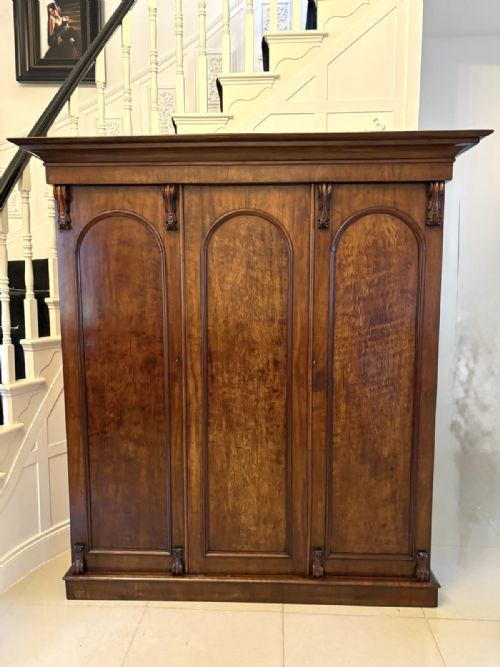
A carved mahogany armoire provides large-scale timber storage spanning several historical eras from the Georgian period through to Edwardian times. Most examples encountered here date from the Victorian epoch, presenting substantial double or triple doors designed for bedroom utility.
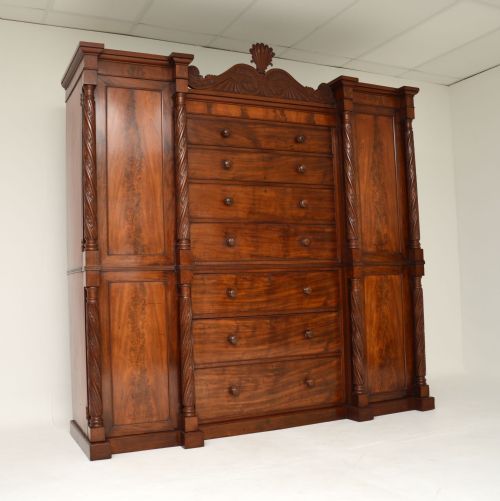
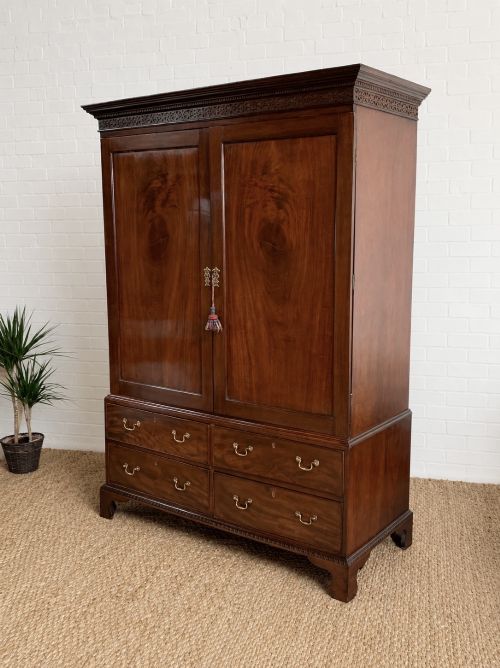
The evidence shows diverse forms including compactums, linen presses with sliding trays, and corner cabinets alongside traditional wardrobes. These pieces originate across British and French workshops, utilising dense timber to create commanding bedroom furniture.

Assessing Quality
Quality rests upon the selection of the timber, where figured or flame mahogany veneers display superior grain movement compared to plain boards. The depth and crispness of the hand-carved detail distinguish finer workshop output from simpler commercial production.
Internal configuration also separates standard pieces from superior examples, particularly fitted interiors with original sliding trays, linen slides, and multiple internal drawers. Original brass hardware and well-balanced door hanging further indicate superior craftsmanship.
Carved Mahogany Armoire Retail Price Guide 2026
Typical asking prices for carved mahogany armoire among the pieces listed under this phrase on Sellingantiques today, from the lower quarter to the upper quarter. They describe what is for sale here now, not the wider market.
The archive shows French single armoires alongside British compactums and multi-door breakfront wardrobes.
Thomas Chippendale·Edwards & Roberts
The Carved Mahogany Armoire Glossary
- Compactum
- A large fitted wardrobe combining hanging space, shelves, and multiple internal drawers within a single carcass. This design maximises storage efficiency for bedroom garments.
- Linen Press
- A tall cabinet featuring upper sliding trays enclosed by doors, positioned above a chest of base drawers. Historically used for storing flat linens before modern hanging wardrobes became standard.
- Flame Mahogany
- A specific veneer cut taken from the fork of the mahogany tree where branches join the trunk. This cutting method produces a distinctive, fiery feather pattern in the grain.
- Blind Fretwork
- Carved decorative openwork glued to a solid background rather than pierced right through the timber. It appears frequently on mid-Georgian and revival cornices.
- Satinwood
- A pale, hard timber utilised for contrasting stringing and inlay work on dark mahogany surfaces. It provides a bright visual accent to drawer fronts and cabinet doors.
Carved Mahogany Armoire: Frequently Asked Questions
How do I fit a large armoire into a modern room?
Many Victorian and Georgian wardrobes dismantle into sections including the cornice, base, and side panels to ease transport and assembly. Check the ceiling height and doorway clearances of your room before delivery.
Position the cabinet away from direct sunlight and heating vents to protect the mahogany timber and polish from drying out. Ensure the floor is level so the heavy panelled doors hang true and close evenly.
What is the difference between an armoire and a linen press?
An armoire provides vertical hanging space behind large doors for garments, whereas a linen press is traditionally built with internal sliding trays for folded textiles. Many period pieces combine both functions within a multi-door carcass.
Linen presses often feature a chest of drawers in the lower section, while French armoires typically concentrate on full-length door storage. Both forms make substantial architectural statements in a bedroom.
How do I care for antique mahogany furniture?
Dust the timber regularly with a soft, dry cloth and apply a traditional beeswax polish sparingly to maintain the lustre. Avoid silicone sprays which can damage the aged patina over time.
Maintain stable humidity levels in the room to prevent the solid timber and veneers from shrinking or cracking. Simple environmental care preserves the rich colour and grain depth of the wood.
How can I tell a Victorian wardrobe from an Edwardian one?
Victorian wardrobes tend to use heavier proportions, darker finishes, and deep architectural cornices with bold carved details. Mahogany grain in these pieces often appears dense and dark.
Edwardian examples frequently display lighter framing, subtle inlay work, and occasionally simpler satinwood banding. These later pieces reflect a turn towards airier bedroom aesthetics while retaining traditional timber construction.