
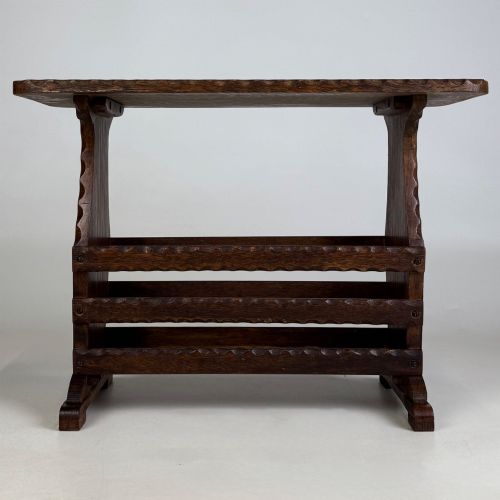
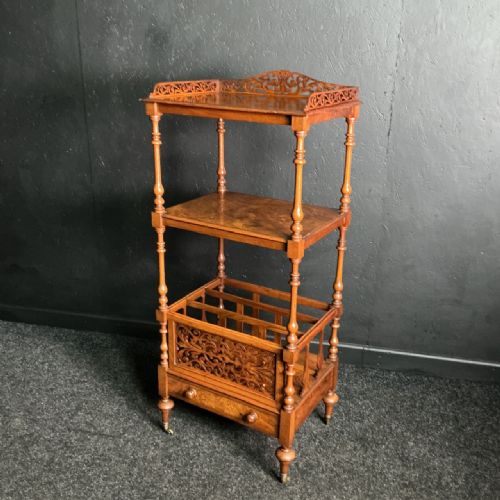
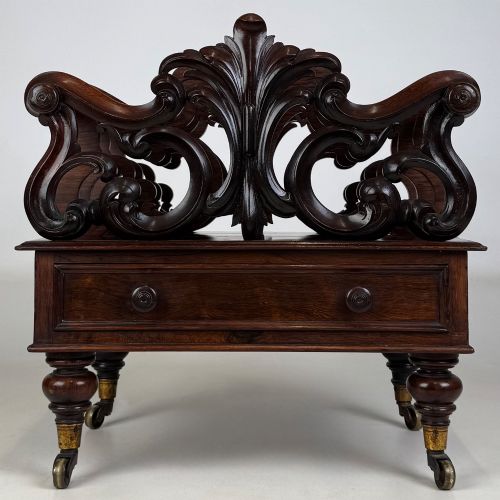
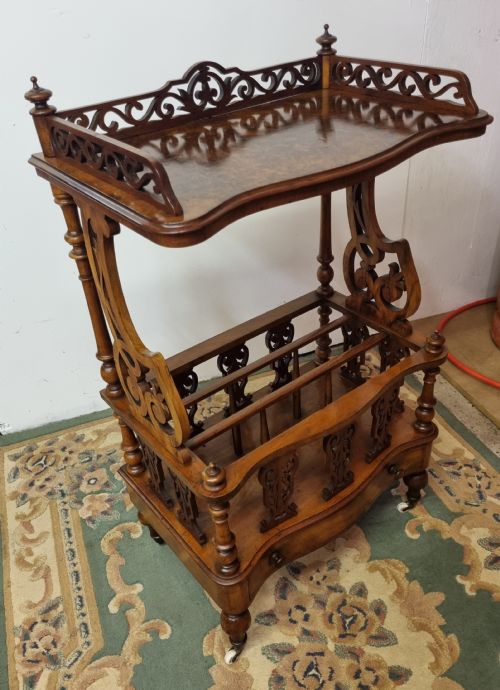
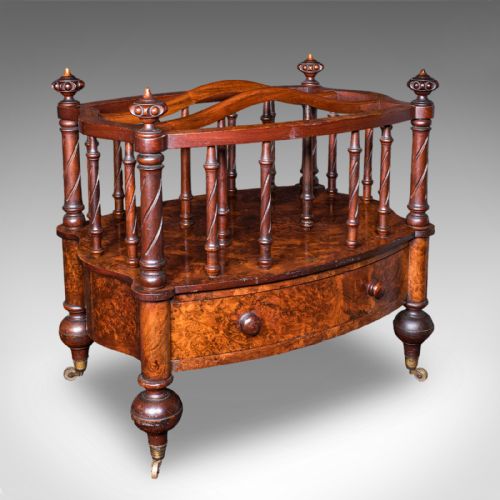
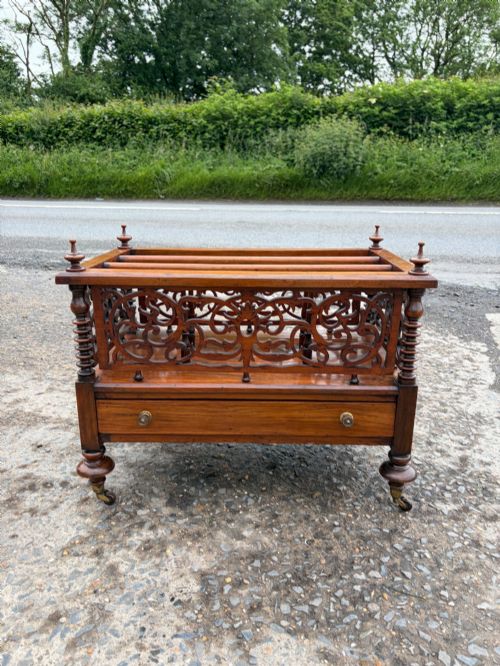
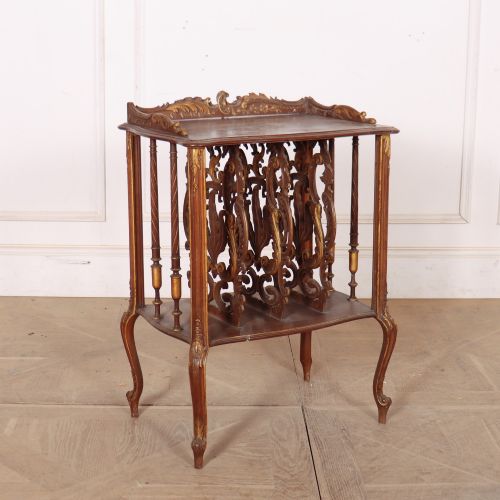


Carved Magazine Rack
These pieces for a carved magazine rack bring traditional timber storage to a room, holding papers and folios with upright division.
Carved Magazine Rack
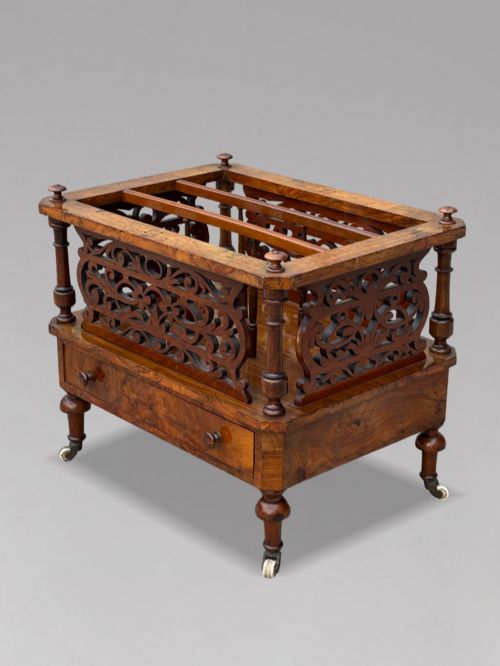
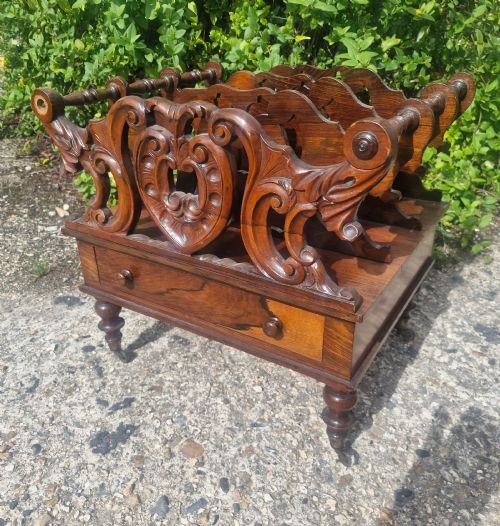
When you search for a carved magazine rack, you encounter functional nineteenth-century pieces designed to organise newspapers, folios and sheet music. The listings show that these items often take the form of traditional canterburys, music stands and book troughs alongside dedicated racks.
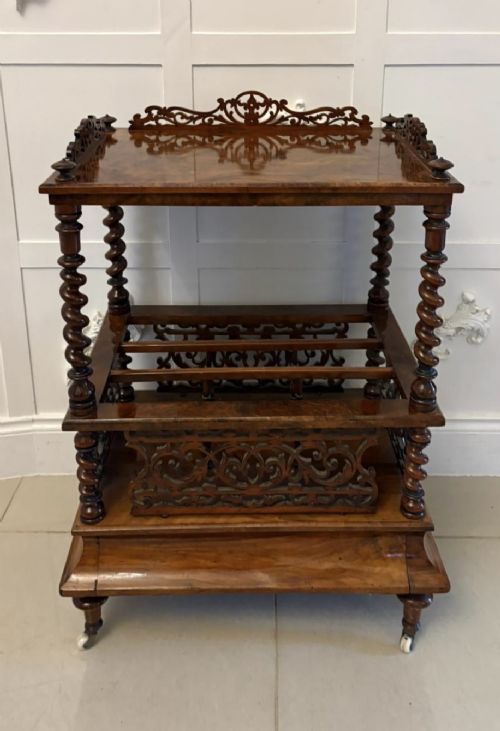
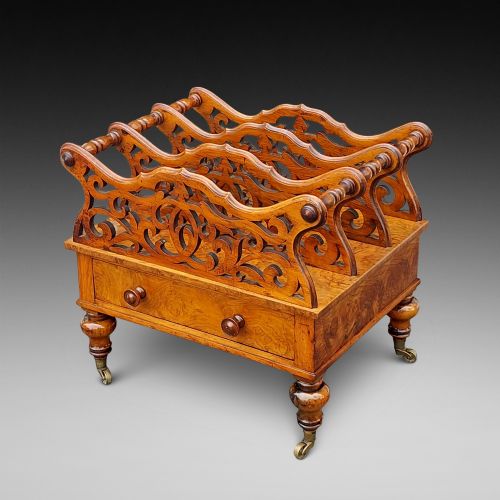
The dominant forms originate in the Victorian and Regency periods, with walnut, rosewood and mahogany serving as the primary timbers. Makers constructed these items with partitioned sections for sorting daily reading material, frequently combining storage with occasional table tops or lower drawer compartments.
How they were made
Cabinet makers utilised dense hardwoods such as burr walnut, figured mahogany and rosewood, shaping the timber into slender spindle uprights and sturdy dividing slats. Many examples incorporate pierced carving, turning and serpentine shaping along the framework.
Surface decoration frequently includes contrasting inlay, mother of pearl highlights and applied carved motifs such as Prince of Wales feathers. Joinery involves precise slotting and framing to support the weight of heavy paper folios and books without warping.
Listings feature walnut, rosewood, mahogany and oak across Victorian, Regency and Arts and Crafts periods.
What varies in quality
The standard of timber selection sets the scale of quality, with highly figured burr walnut and rich rosewood grain commanding greater visual depth than plain oak or standard mahogany. Finer examples display crisp, hand-carved detail on the uprights and feet rather than softened or mass-produced moulding.
Structural integrity depends on the rigidity of the slatted divisions and the strength of the joints connecting the base compartments to the legs. Superior items maintain stability in the upright partitions and incorporate well-fitted castors or integrated drawer units.
The Carved Magazine Rack Glossary
- Folio stand
- An adjustable or fixed upright rack designed to hold large books, maps or art folios. These items often feature folding X-frame supports.
- Whatnot
- A set of open shelves supported by slender pillars, sometimes combined with a Canterbury base for multi-tier storage. The design allows for displaying small decorative objects alongside reading material.
- Serpentine shape
- A undulating, curved outline found on the shelves or edges of tabletops. This contour adds rhythmic movement to the timber silhouette.
- Inlay
- A decorative technique where contrasting woods, brass or mother of pearl are inserted into recessed cavities on the surface. It creates geometric or floral patterns across the panels.
Carved Magazine Rack: Frequently Asked Questions
How do I care for walnut wood?
Walnut surfaces require protection from direct sunlight and excessive heat to prevent fading and timber splitting. Regular dusting with a soft cloth maintains the natural sheen without heavy chemical polishes.
Applying a traditional beeswax occasionally nourishes the grain and preserves the depth of colour in antique rosewood and walnut pieces.
Are these racks sturdy enough for daily use?
These items were built from solid hardwoods like mahogany and oak to withstand the heavy weight of paper and books. The internal partitions and framed bases provide adequate support for normal domestic storage.
Care should be taken when moving them, particularly models fitted with original castors, to avoid straining the upright spindle joints.
How do I identify a Regency piece?
Regency items generally date from the early nineteenth century and display classical restraint with clean lines and dark rosewood or mahogany timbers. They often incorporate brass inlay, turned supports and sabre legs.
Victorian pieces that follow tend to feature heavier carving, burr walnut veneers and more ornate serpentine outlines.
Can these racks function as side tables?
Many surviving examples combine a magazine rack base with a solid timber top, serving dual purposes as a small lamp table or occasional surface. The flat upper section accommodates books, drinks or decorative items while keeping reading material stored underneath.
Pieces designed specifically as canterburys or book troughs offer a lower profile suited for placement beside armchairs or sofas.