



Carved Library Shelving
Carved library shelving brings architectural weight and orderly warmth to a room, offering robust open storage for substantial volumes.
Carved Library Shelving
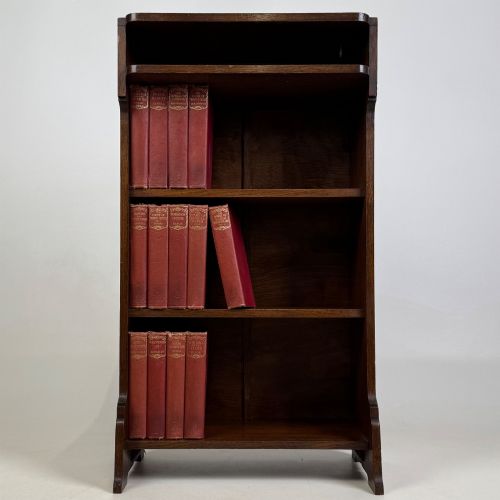
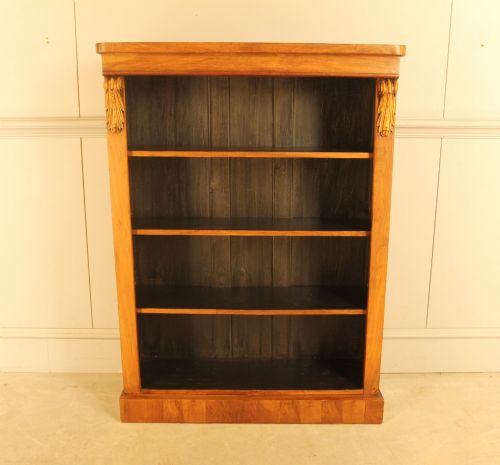
When you search for carved library shelving, you encounter open bookcases and low dwarf shelving designed to house books within domestic and institutional studies. The examples meeting this description span the nineteenth and early twentieth centuries, drawing heavily on Victorian, Edwardian, and Regency aesthetic traditions.
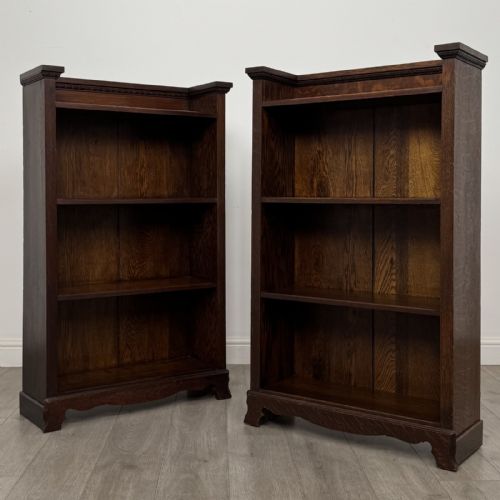
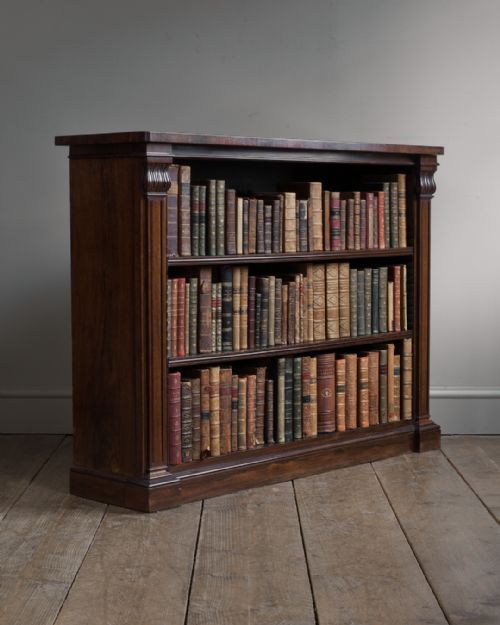
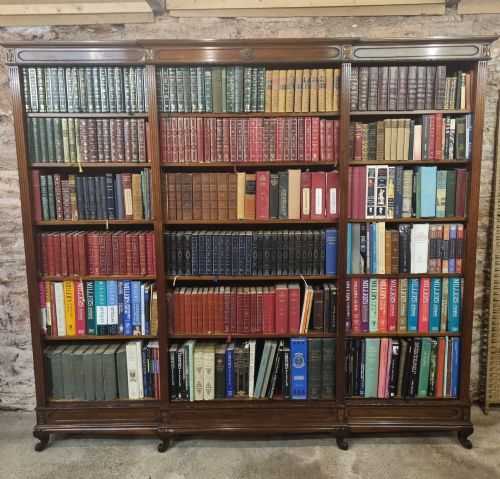
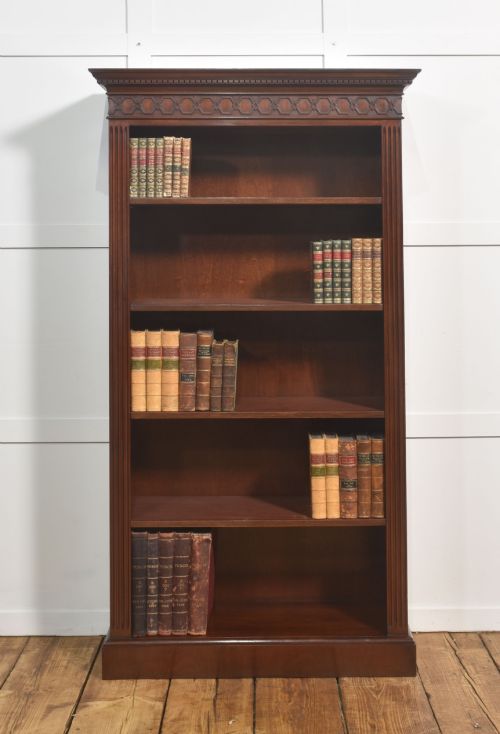
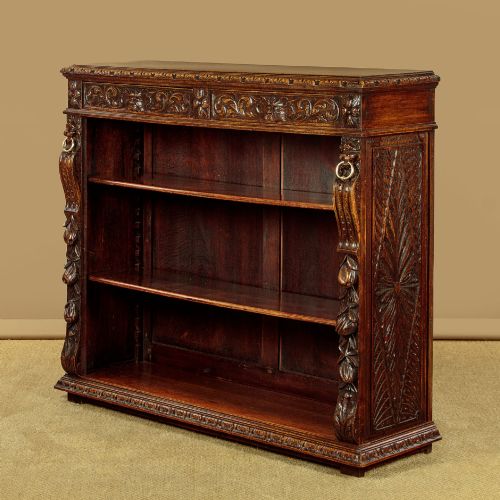
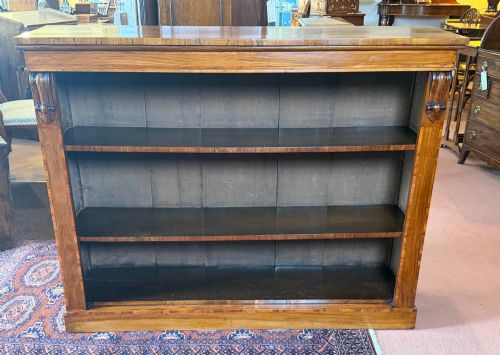
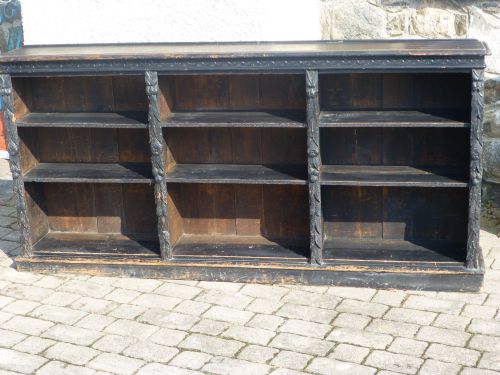
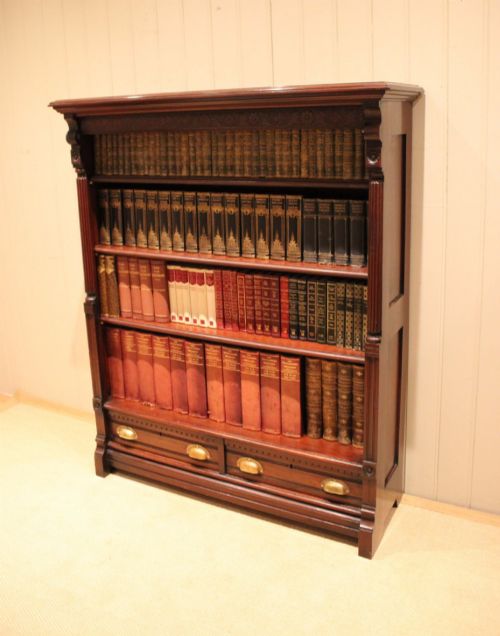
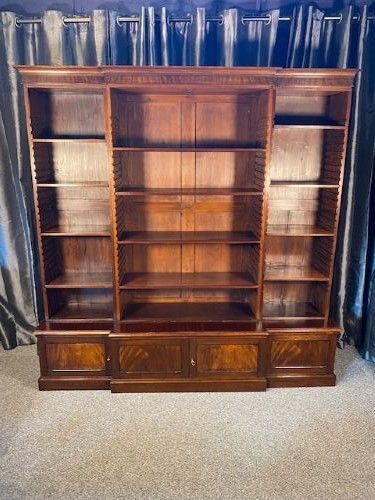
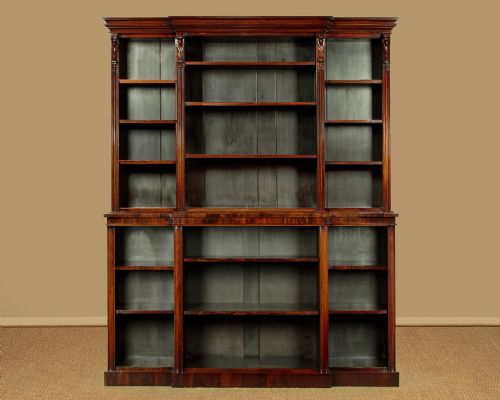
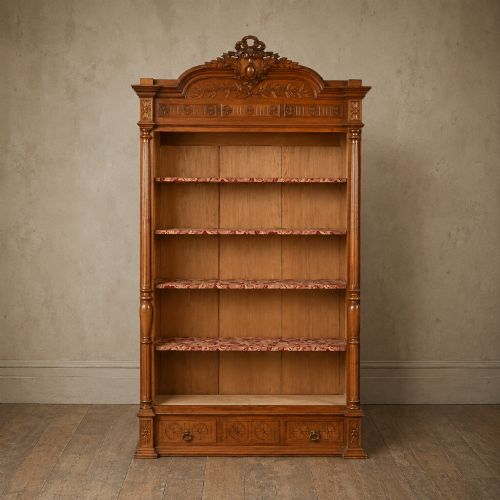
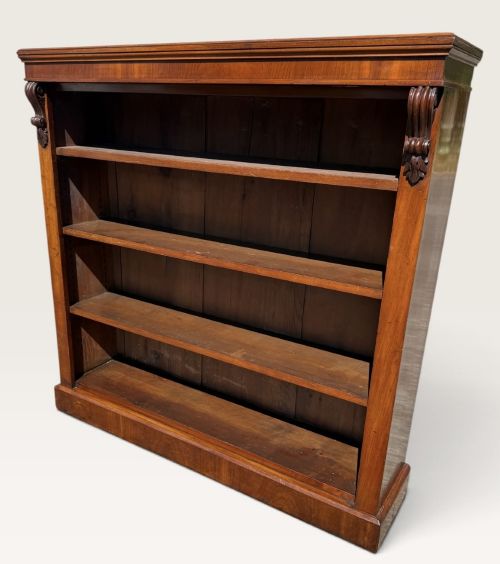
The pieces appearing on this page most frequently take the form of open mahogany and oak bookcases with adjustable shelves, often standing as large breakfront units or low dwarf configurations. Makers from these periods utilised solid timbers and applied decorative carving, ranging from Renaissance Revival motifs to distinct green man masks.
The origins of these items trace through English and continental workshops operating during the height of the Victorian era and into the Edwardian period. Buyers find both monumental breakfront library bookcases and smaller scaled pieces suited to domestic rooms.
Materials and construction methods
Carpenters constructed these bookcases primarily from dense hardwoods like oak, mahogany, walnut, and rosewood, sometimes applying ebonisation or incorporating burr veneers to enrich the surfaces. Solid wood and sturdy pine carcasses received hand-carved ornamentation, such as Gothic tracery, geometric mouldings, and figurative elements.
Makers integrated functional mechanics including adjustable shelving systems to accommodate varying book heights within large library settings. Brass mounts, ormolu details, and occasional glass elements completed the assemblies, binding structural integrity with decorative ambition.
Carved Library Shelving Retail Price Guide 2026
Typical asking prices for carved library shelving among the pieces listed under this phrase on Sellingantiques today, from the lower quarter to the upper quarter. They describe what is for sale here now, not the wider market.
Styles span the nineteenth century through the Edwardian era, encompassing Regency, Gothic Revival, Aesthetic Movement, and Renaissance Revival designs.
Distinctions in craftsmanship and design
Quality rests upon the depth and precision of the carving, the selection of figured timbers like burr walnut or figured mahogany, and the architectural proportion of the bookcase. Finer pieces display crisp hand-carving rather than mechanical replication, alongside well-figured grain matching across breakfront facades.
The internal construction dictates longevity, with superior examples maintaining smooth mechanisms for adjustable shelving and robust backboards of solid timber. Modest utilitarian pieces contrast with grander Renaissance Revival or Gothic commissions through simpler joinery and restrained ornamentation.
The Carved Library Shelving Glossary
- Breakfront
- A piece of furniture whose central section projects forward from the flanking wings. This configuration creates dynamic shadow lines and visual weight in large library settings.
- Dwarf bookcase
- A low open bookcase designed to sit beneath window height or along domestic walls without dominating the vertical space of a room.
- Ebonised
- Wood treated with a chemical stain or pigment to imitate the dense, black appearance of ebony. This finish gained popularity during the nineteenth century for decorative contrast.
- Green man
- A sculptural architectural motif depicting a human face disgorging or entwined with foliage and vines. It symbolises rebirth and appears frequently in Victorian carved woodwork.
- Adjustable shelves
- Shelving supported by pegs, ratchets, or metal tracks that allows the internal vertical spacing to be altered. This mechanism accommodates books of varying heights.
Carved Library Shelving: Frequently Asked Questions
How do I adjust the shelves?
Most period bookcases utilise traditional wooden support slips, brass tracks, or peg systems set into the interior vertical sides. You simply lift the shelf and reposition the supports into adjacent slots.
Older mechanisms require care to avoid damaging the interior veneered or solid timber linings during adjustment.
Are these bookcases suitable for modern heavy books?
Period library shelving was engineered to bear the substantial weight of leather-bound volumes and reference folios. Solid oak and mahogany boards provide immense load-bearing capacity.
Over decades, some long shelves may exhibit slight sagging, which can often be mitigated by rotating the boards.
How do I identify a Victorian Gothic Revival piece?
Gothic Revival bookcases display architectural elements borrowed from medieval cathedrals, including pointed arches, quatrefoils, and heavy carved tracery. These pieces are almost invariably executed in dark solid oak.
They carry a distinct vertical emphasis and solemn presence compared to lighter Edwardian or Regency forms.