
Carved Leg Hallway Table
A carved leg hallway table brings architectural form and practical surface space to an entrance through centuries of traditional cabinetmaking.
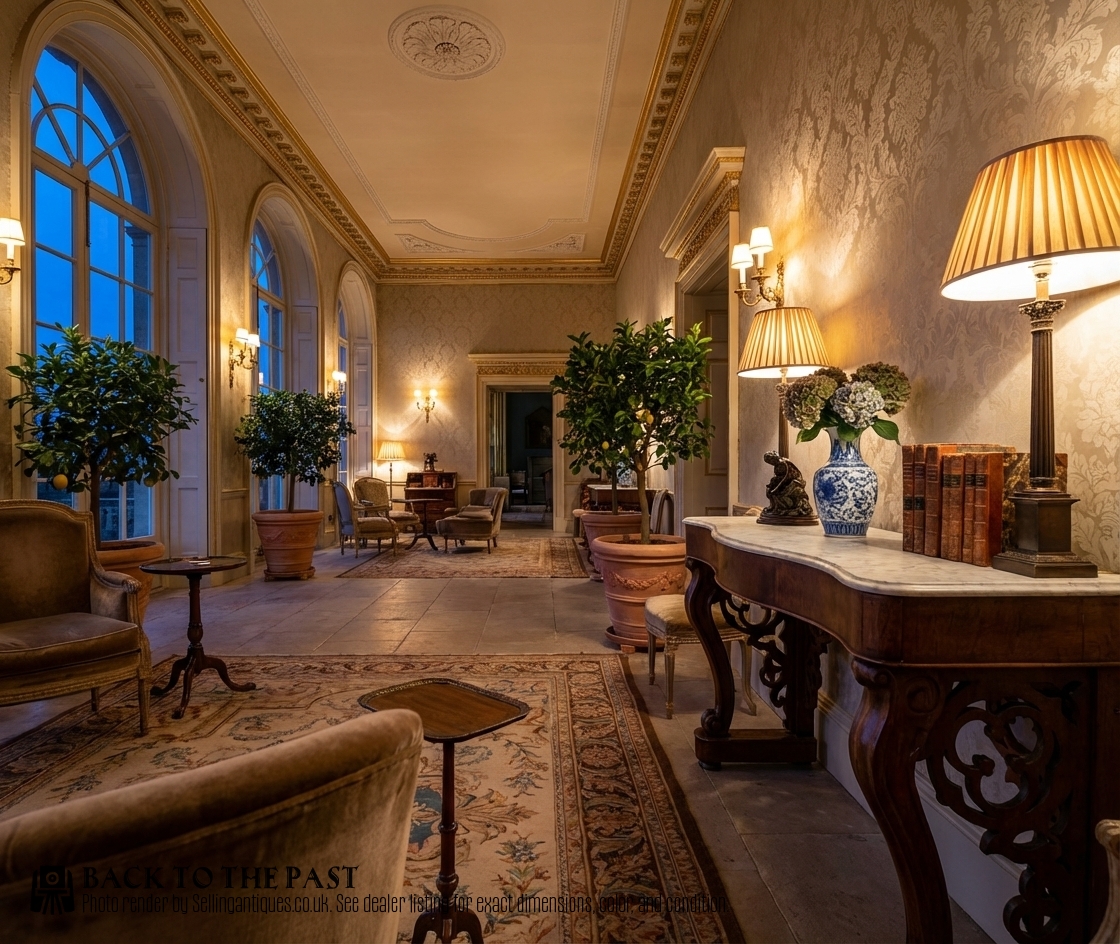
Carved Leg Hallway Table
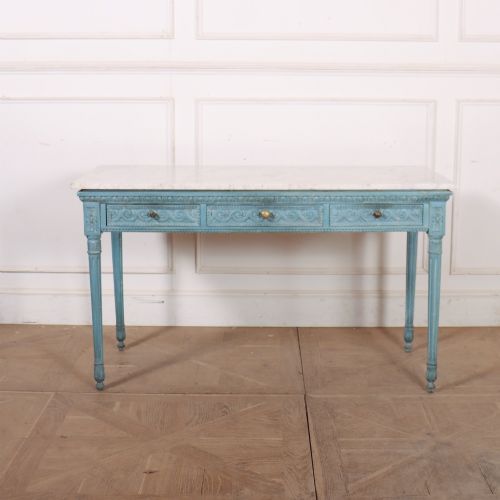
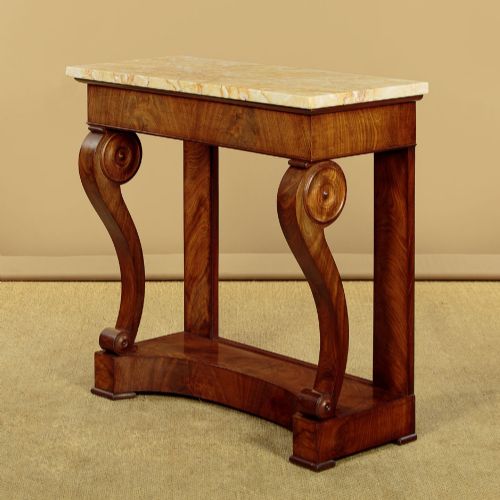
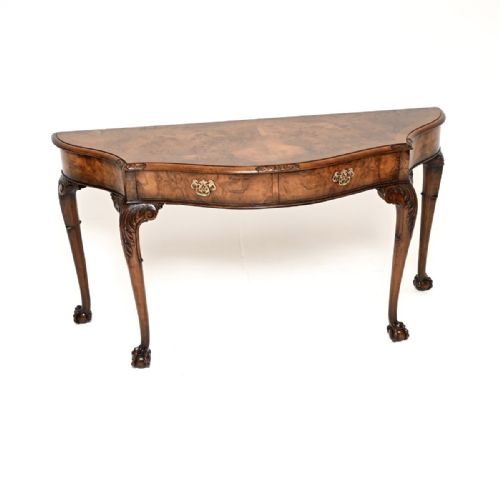
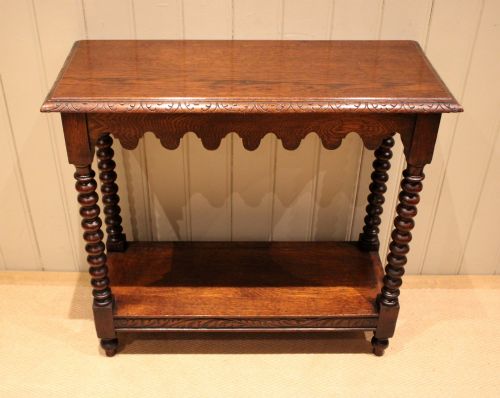
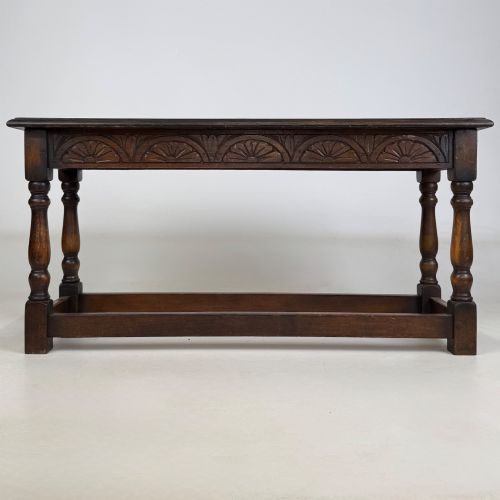
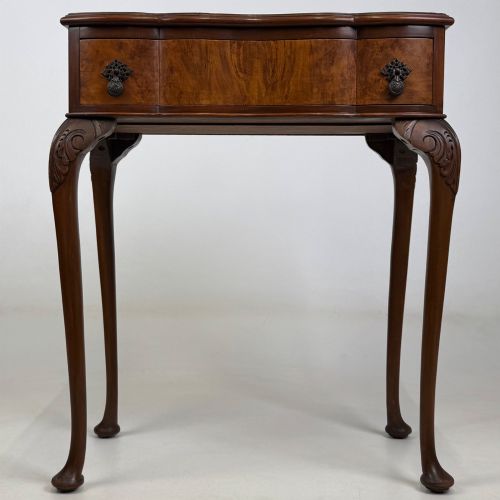
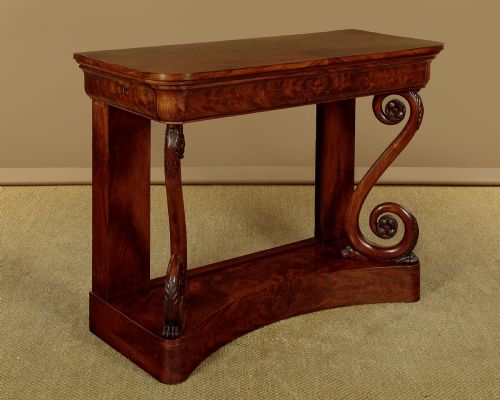
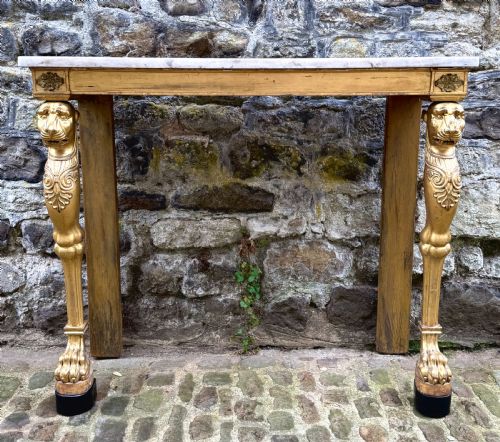
A carved leg hallway table encompasses narrow console tables, side tables, and servers designed to sit against a wall in a passage or reception space. The selection spans the seventeenth, eighteenth, nineteenth, and early twentieth centuries, drawing on Victorian, Edwardian, Regency, and Queen Anne styles.
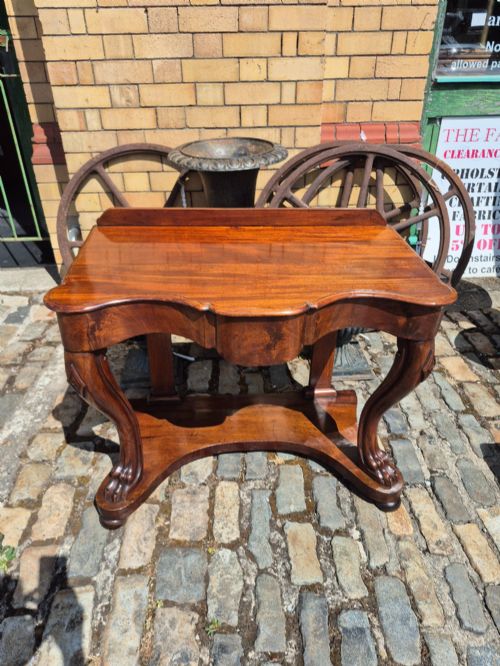
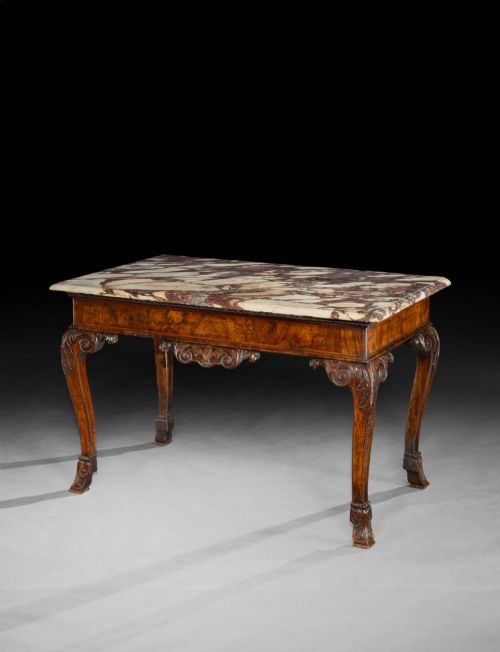
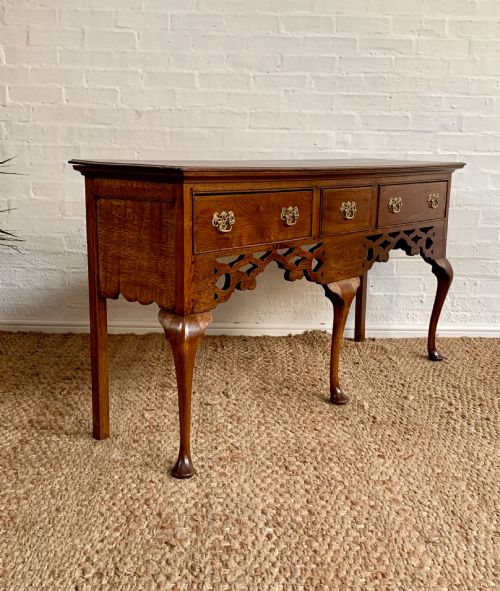
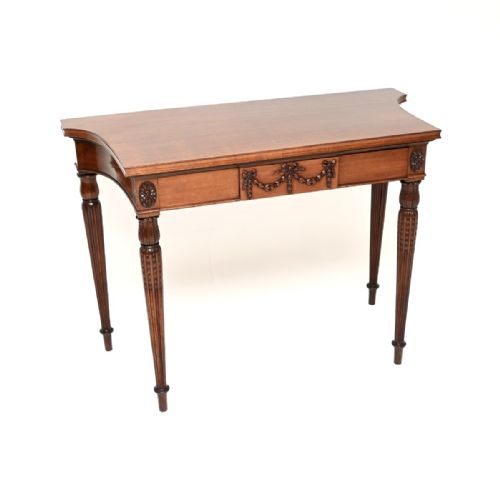
Console tables and side tables dominate the offerings, frequently rendered in mahogany, walnut, or oak, often featuring shaped marble tops or elaborate cabriole and turned supports. Pieces range from formal Italian and French console tables to English country house oak furniture and Irish Chippendale revival designs.
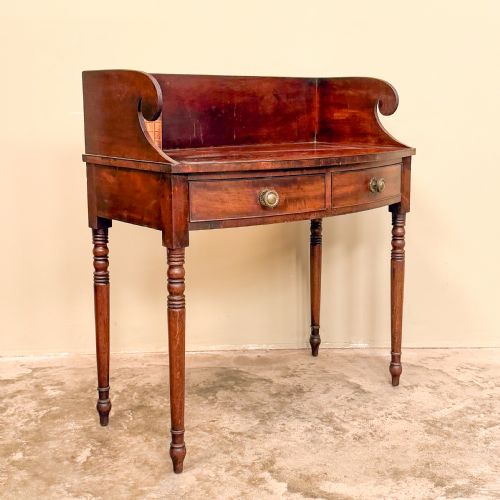
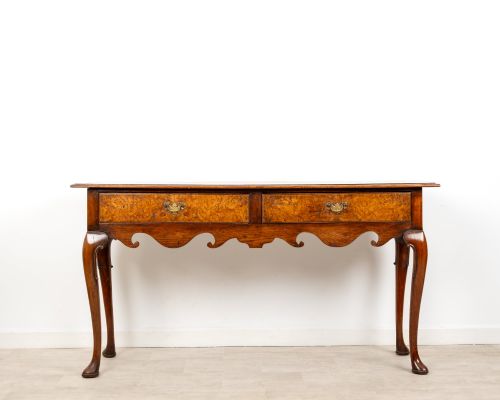
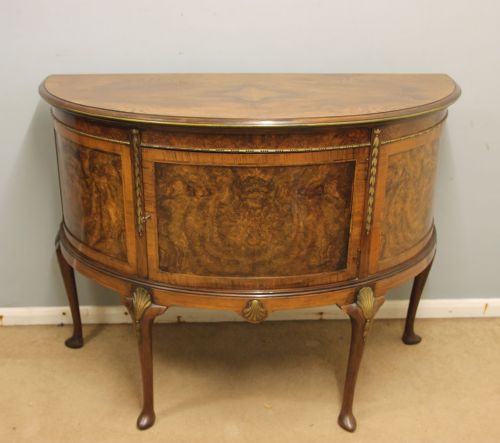
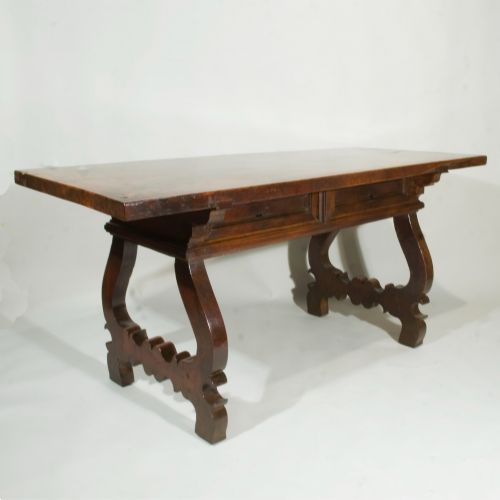
Buyers will encounter form variations including demi-lune shapes, serpentine fronts, and rectangular serving tables with multiple drawers. The physical evidence shows these tables served diverse domestic functions, from washstands and chiffoniers to dedicated writing desks and library tables.
Materials and construction methods
Cabinetmakers utilised dense hardwoods including solid oak, mahogany, and walnut, often applying flame mahogany or burr walnut veneers to primary surfaces to create dramatic grain patterns. Structural elements frequently incorporate brass hardware, while high-status examples integrate inset marble slabs into the timber frame.
Construction relied on traditional joinery techniques combined with hand-carving applied to legs, aprons, and friezes. Wood was shaped using hand tools to achieve serpentine curves, demi-lune silhouettes, and characteristic revival styles such as Queen Anne cabriole legs.
The listings span multiple centuries, ranging from seventeenth-century oak pieces to early twentieth-century revival designs in burr walnut.
Assessing quality and execution
The standard of carving determines the distinction between ordinary production and superior craftsmanship, with crisp, deeply undercut foliage and mouldings elevating a piece. Weight and substance in the primary timber, such as solid figured walnut or dense mahogany, indicate higher grade materials.
Integration of secondary materials like genuine rouge marble tops and well-executed brass mounts signal ambitious commission work rather than standard commercial output. The crispness of veneer matching and the harmony of proportion between the carved legs and the top surface define the success of the design.
The Carved Leg Hallway Table Glossary
- Console table
- A table supported by wall brackets or front legs, designed to stand flat against a wall in a hallway or drawing room.
- Demi-lune
- A half-moon shape used for table tops and cabinets designed to fit flush against a wall.
- Cabriole leg
- A furniture leg that curves out and then in, resembling the leg of an animal, common in Queen Anne and Chippendale styles.
- Serpentine
- A curved line with a convex centre flanked by concave curves, creating an undulating front edge on a table.
- Frieze
- The horizontal band situated directly beneath the top surface of a table, frequently decorated with carving or drawers.
- Giltwood
- Timber that has been coated with a thin layer of gold leaf or gold paint for decorative effect.
Carved Leg Hallway Table: Frequently Asked Questions
Where should I place a hallway table?
These narrow tables suit entrance halls, corridors, and reception spaces where floor area is restricted. Their shallow depth allows them to sit against a wall without obstructing movement.
They provide a functional surface for correspondence, keys, and decorative lamps while establishing a formal character at the entrance of a house.
How do I identify a Victorian table?
Victorian tables often utilise dark, heavy timbers such as mahogany and walnut, frequently displaying robust carved ornamentation. Proportions tend to be substantial and solid.
Cabinetmakers of this era frequently revived earlier styles, incorporating decorative elements from the Georgian and Elizabethan periods into new domestic furniture.
What is a marble top table used for?
Marble top tables provided a durable, cool surface resistant to moisture and staining. In nineteenth-century interiors, they frequently functioned as washstands or serving tables.
The stone insert adds considerable weight to the piece, anchoring the console firmly against the wall without requiring permanent structural fixings.
How do I care for antique wood furniture?
Maintain timber furniture by keeping it away from direct heat sources and sudden temperature fluctuations that cause wood to split. Regular dusting with a soft cloth preserves the polish.
Avoid commercial silicone sprays and rely instead on traditional beeswax applied sparingly to nourish the grain of mahogany, oak, and walnut.