


Carved Leg Drinks Cabinet
These carved leg drinks cabinet selections bring period proportion and concealed storage into a room, offering clever compartments for bottles and glassware.
Carved Leg Drinks Cabinet
A carved leg drinks cabinet brings together period revival design and purposeful entertaining storage, spanning from Victorian side cabinets to 1920s and 1930s cocktail cabinets. Buyers searching this phrase meet everything from oak sideboards and cellarettes to burr walnut cocktail cabinets on cabriole supports.
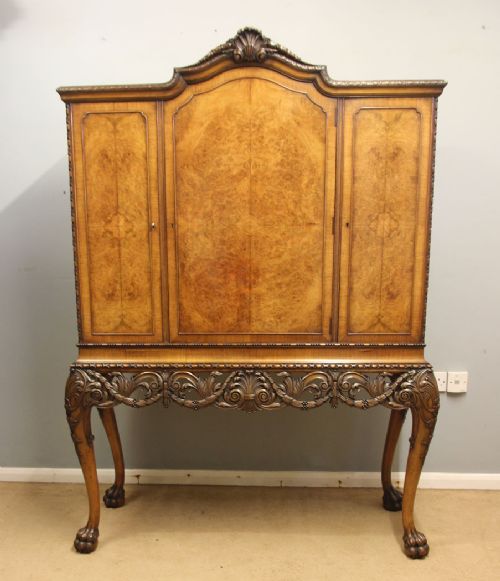
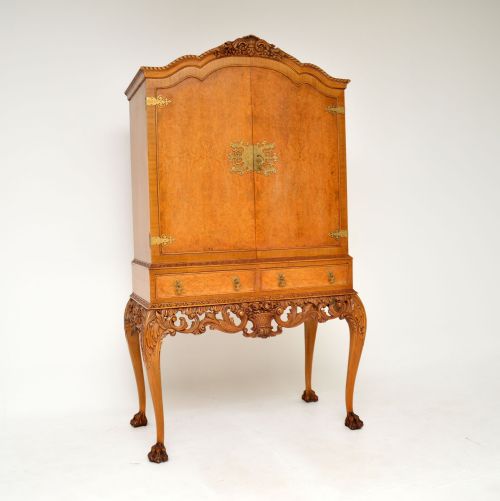
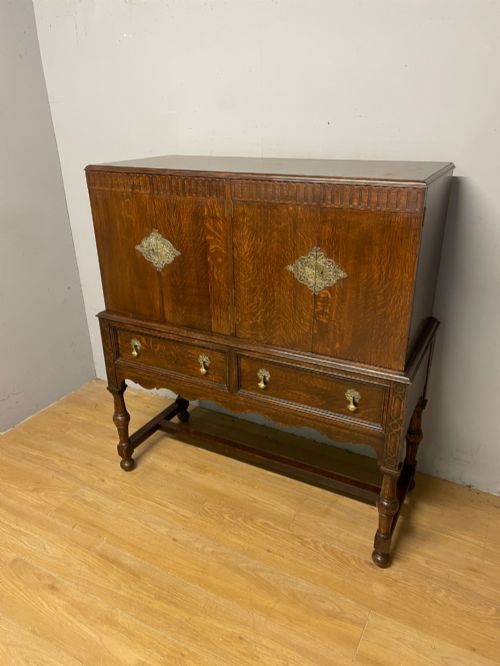
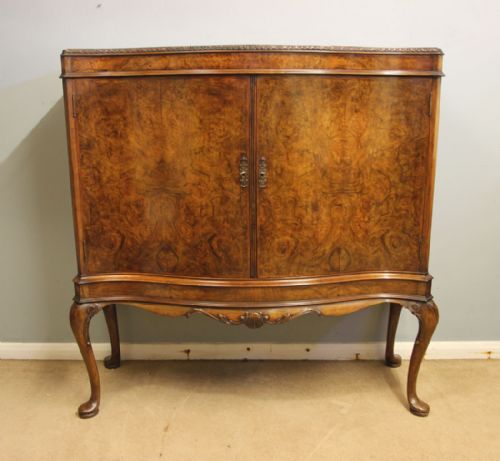
The 1920 and 1930 examples dominate the selection, heavily favouring burr walnut veneer with Queen Anne style cabriole legs and pad feet. Earlier Victorian and Edwardian iterations appear in mahogany and dark oak, sometimes taking the form of cabinets on stands or glazed bookcases adapted for beverage storage.
Forms range widely in scale and silhouette, including demi-lune shapes, three-door side cabinets, and architectural Flemish Renaissance revival pieces featuring carved lion masks. Whichever format surfaces, each piece is designed to hold bottles and glassware securely behind panelled or glazed doors.
Judging the range
The grade of timber veneer sets the visual hierarchy, with richly figured burr walnut creating a striking patterned surface compared to plain walnut or dark oak. Crispness in the hand-carved details, such as cabriole leg shaping and applied relief work, separates standard production from finer cabinetmaking.
Interior configuration and original glass fittings also mark the standard of a piece, with fitted cocktail interiors demonstrating greater specialist joinery. The integrity of the timber joints and the alignment of heavy cupboard doors determine how well a cabinet has survived decades of use.
Fierce carved lion masks peer out from nineteenth-century oak stands, guarding the spirits inside with silent Victorian dignity.
The Carved Leg Drinks Cabinet Glossary
- Burr walnut
- A decorative wood veneer taken from the wart-like growths on walnut trees, prized for its swirling, intricate grain patterns. It forms the primary visual finish on many 1920s and 1930s cocktail cabinets.
- Cabriole leg
- A furniture leg that curves outward and then tapers inward, typically ending in a pad or claw foot. This form is central to the Queen Anne revival style seen frequently on these cabinets.
- Wine cellarette
- A specialised storage chest or cabinet designed to hold bottles horizontally or vertically, often lined or brass-bound. These items date back to the nineteenth century before dedicated cocktail cabinets emerged.
- Demi-lune
- A half-moon shape used for table tops and cabinet fronts, allowing furniture to sit flush against a wall while saving floor space. It appears in early twentieth-century walnut drinks furniture.
- Flemish Renaissance revival
- A nineteenth-century design movement incorporating heavy carvings, scrollwork, and figurative elements like lion masks. Pieces in this style use solid oak and deep relief.
Carved Leg Drinks Cabinet: Frequently Asked Questions
What is inside a vintage drinks cabinet?
Most period cocktail cabinets feature specialised compartments for glassware, bottle racks, and pull-out mixing slides lined with pull-down or hinged doors. These internal spaces are tailored specifically for entertaining supplies.
Earlier side cabinets and cellarettes offer simpler shelving or compartment layouts designed for bulk bottle storage rather than cocktail preparation.
How do I date a carved leg cabinet?
Dating relies on combining timber choices, revival styles, and hardware details visible across the piece. Oak and heavy carvings typically point toward Victorian or Edwardian craftsmanship, while burr walnut veneers on cabriole legs point firmly to the 1920s and 1930s.
Construction methods inside the cupboards, such as drawer dovetailing and hinge types, also provide clear clues to the manufacturing decade.
Where should I place a drinks cabinet?
These cabinets work well in dining rooms, living spaces, or studies where entertaining takes place, functioning as both surface space and concealed storage. Their finished backs and detailed facades allow them to anchor a room as a focal point.
Keep them away from direct heat sources and strong sunlight to protect the fragile burr walnut veneer and polished timber surfaces from drying out.
Are these cabinets suitable for modern bottles?
Standard liquor bottles and modern stemware fit comfortably into the internal shelves and racks of most 1920s and 1930s cocktail cabinets. Some older cellarettes or smaller side cabinets may have fixed partitions sized for nineteenth-century bottle dimensions.
Checking the internal clearance height before purchase ensures tall spirits bottles and specialised glassware fit securely behind the closed doors.