




Carved Leaf Candlesticks
These carved leaf candlesticks bring substantial height and rich historical texture to a room, spanning Baroque to Neoclassical styles.
Carved Leaf Candlesticks
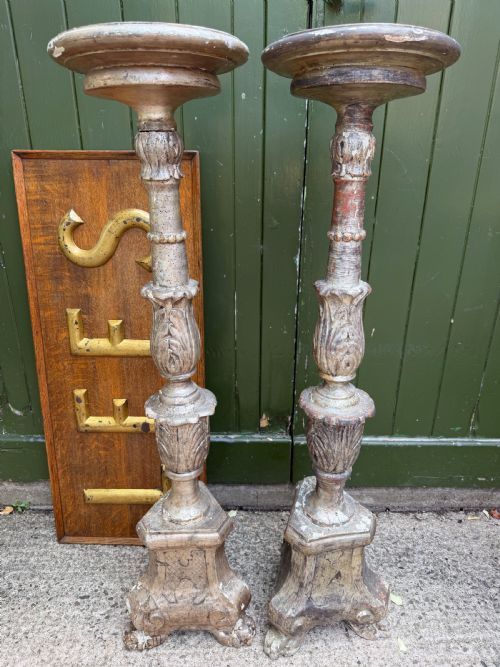
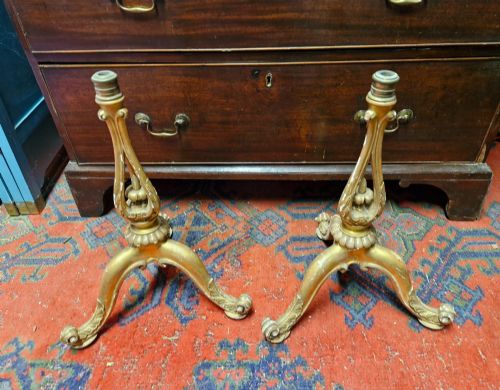
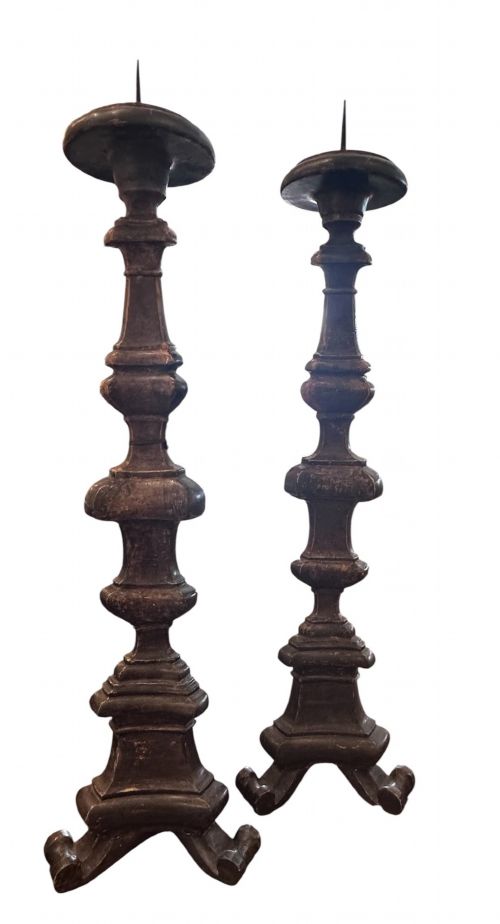
Carved leaf candlesticks take the form of tall altar-style sticks, torcheres, and converted lamp bases originating from the eighteenth and nineteenth centuries. Continental workshops in Italy, Spain, and France produced the majority of these wooden forms, often pairing them with candle holders and prickets.
Buyers will frequently encounter pairs dating from the eighteenth century through to the early twentieth century. These pieces encompass various regional designs, ranging from Italian Baroque and Spanish Baroque to French Rococo and Georgian aesthetics.
Materials and construction
Artisans carved these objects primarily from solid wood, utilising gesso to prepare intricate surface details before applying finishes. Giltwood, silver leaf, and silvered mecca techniques provide the metallic sheen seen across the surfaces.
Certain pieces incorporate polychrome pigments alongside traditional gilding, while other variations utilise plain carved oak or brass. Structural forms often rely on turned wooden shafts or tripod bases to support the height.
Carved Blackamoor figures double as elaborate candelabras among the nineteenth-century selections.
Assessing quality
Quality rests upon the depth and precision of the hand carving within the foliage and structural elements. Artisans who executed sharper leaf contours and more balanced proportions produced pieces with greater visual presence.
The application and retention of the original giltwood, silver leaf, or mecca finish heavily influence the character of the object. Surviving surfaces that retain their original layered preparation show superior historical integrity.
The Carved Leaf Candlesticks Glossary
- Giltwood
- Wood that has been coated with a thin layer of gold leaf or gold paint. This technique created an opulent surface finish popular in continental Baroque and Rococo decorative objects.
- Pricket
- A sharp metal spike set in the drip pan of a candlestick to hold a candle in place. They appear frequently on altar-style candlesticks from the eighteenth and nineteenth centuries.
- Torchere
- A tall stand or candlestick designed to elevate a light source. These pieces often feature substantial turned shafts and tripod bases for stability.
- Gesso
- A plaster mixture applied to wood to create a smooth surface for gilding or painting. It allowed carvers to achieve fine relief details on decorative objects.
Carved Leaf Candlesticks: Frequently Asked Questions
How are these candlesticks used today?
Many examples function as traditional candle holders or prickets on side tables and mantelpieces. Others have been converted into table lamps while retaining their original carved wooden bases.
Their substantial height and decorative presence allow them to serve as sculptural focal points in traditional and eclectic interiors.
How do I identify Italian and Spanish pieces?
Continental pieces from Italy and Spain often display dramatic Baroque or Neoclassical motifs executed in heavy giltwood. Altar-style forms frequently incorporate silvered mecca finishes and polychrome details.
French pieces from the same eras tend to show softer Rococo curves or chateau-style ornamentation.
What is silvered mecca?
Silvered mecca is a traditional finishing technique involving silver leaf covered with a transparent yellow lacquer. This process produced a warm, golden-silver tone that imitated genuine gold leaf.
It appears frequently on eighteenth-century Venetian-style altar candlesticks and torcheres.
Are these pieces usually found in pairs?
The listings frequently feature matching pairs or near pairs intended for symmetrical placement on furniture. Single torcheres and altar candlesticks also appear as standalone decorative objects.
Pairing allows for balanced arrangement on larger surfaces or flanking architectural elements.