



Carved Lacquer Side Table
A carved lacquer side table brings deep red or black surfaces and oriental motifs into a room, offering a functional surface with distinct historical character.
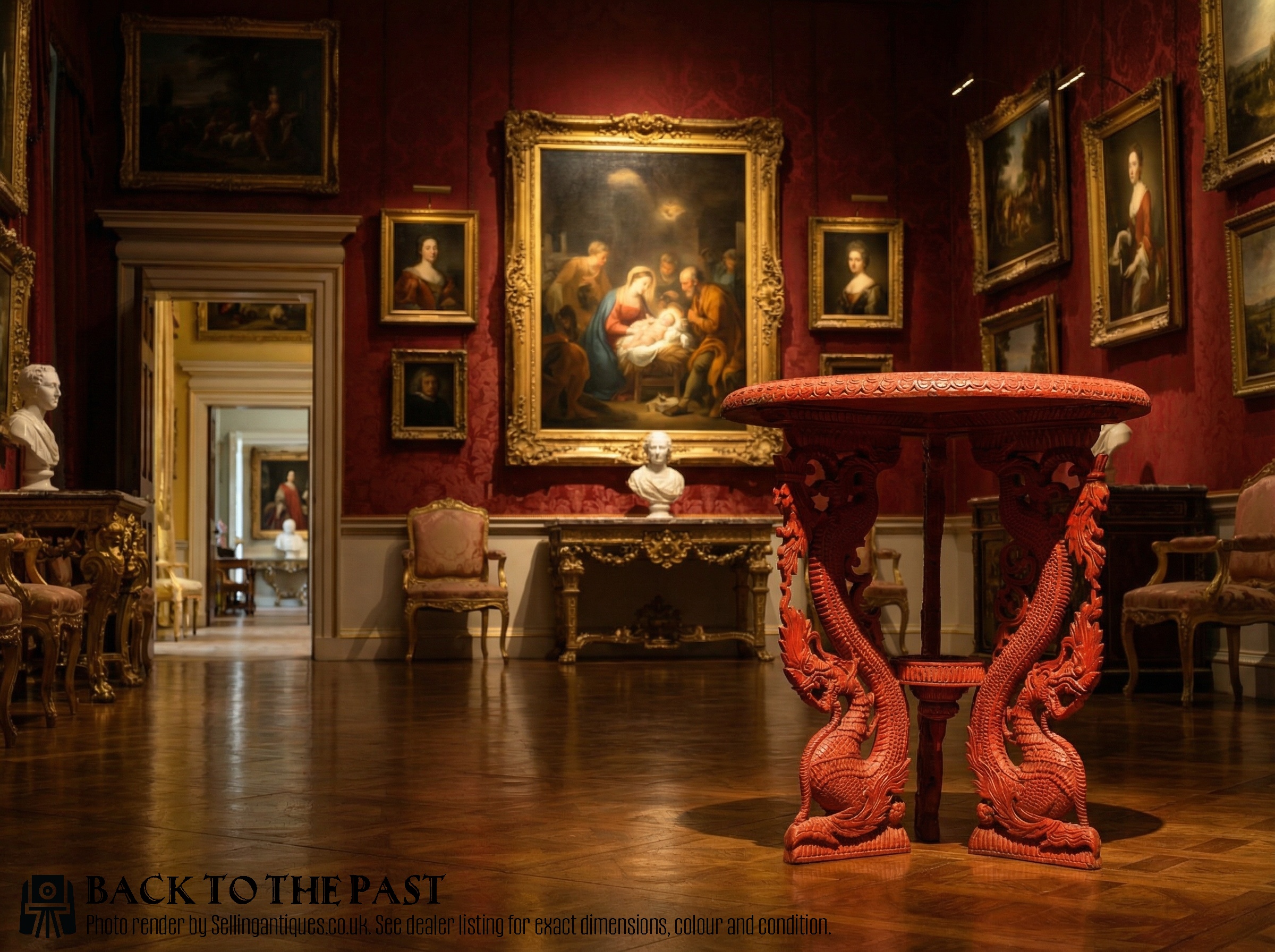
Carved Lacquer Side Table
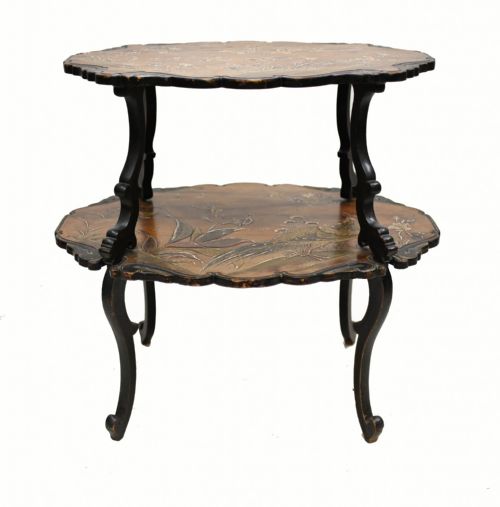
When you search for a carved lacquer side table, you encounter diverse forms ranging from low occasional tables and demi lune console tables to plant stands and altar tables. These pieces span the nineteenth century, the Edwardian era, and the early twentieth century, drawing on Chinese regional designs, Qing Dynasty influences, and Japanese aesthetics.
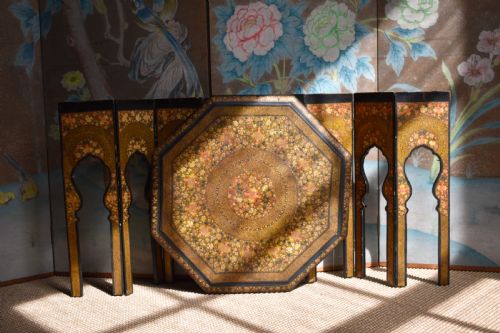
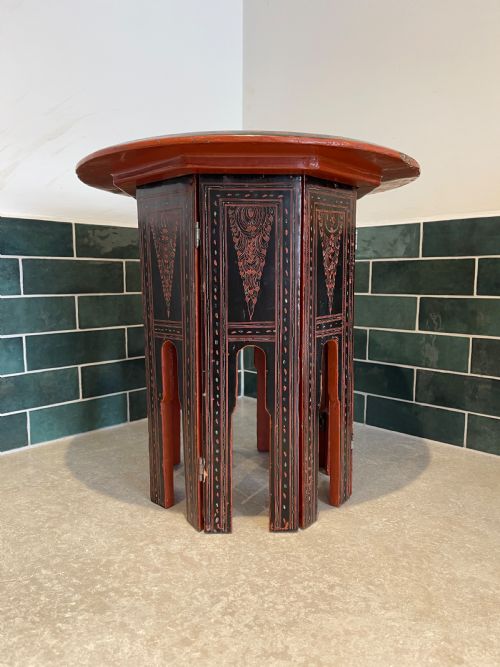
The selections on this page heavily feature Chinese red and black lacquer work alongside Indian Kashmiri painted and carved wood examples and Burmese lacquered items. You will also find related forms like writing desks, work tables, and small cabinets sharing these distinct decorative surfaces.
How they were made
Craftsmen built these tables using wood, elm, and hardwood as structural bases before applying layers of lacquer, paint, or japanning. Some pieces incorporate carved wood elements, rootwood structures, brass details, and deep quartz inserts.
Techniques range from intricate cinnabar carving and red or black lacquering to hand-painted Kashmiri ornamentation and ebonised wood finishes. These methods created durable, glossy, or textured decorative surfaces designed to withstand daily use while displaying elaborate ornamentation.
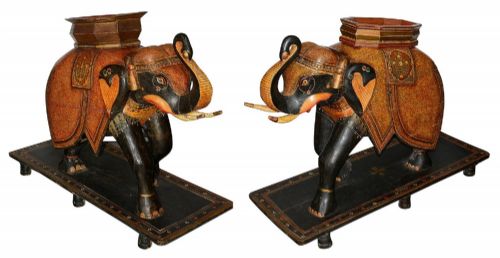
Elephants carved from wood and finished in lacquer stand ready to support your room's decor.
What varies in quality
Quality in these tables rests primarily on the depth and execution of the lacquer work and the underlying woodwork. Pieces featuring rich, multi-layered cinnabar carving or detailed hand-painting demonstrate superior craftsmanship compared to simpler painted surfaces.
The choice of structural timber, such as solid elm or dense hardwood, also dictates the durability and heft of the table. Furthermore, the fidelity of regional stylistic details, from Qing Dynasty altar table designs to Kashmiri floral motifs, separates standard utility items from finer decorative examples.
The Carved Lacquer Side Table Glossary
- Cinnabar lacquer
- A technique involving numerous layers of red lacquer carved with intricate patterns. It produces a weighty, tactile surface with high relief detail.
- Japanning
- European imitation of East Asian lacquerwork popular in the nineteenth century. It typically involves dark varnishes and raised metallic decorations.
- Altar table
- A traditional Chinese table form characterised by upturned ends or recessed legs. These pieces were originally used for ceremonial purposes before adapting to domestic interiors.
- Demi lune
- A half-moon shaped furniture form designed to stand flat against a wall. These tables often function as console or side surfaces in narrow spaces.
- Rootwood
- Natural gnarled tree root timber utilised in Chinese furniture making. It creates organic, asymmetrical supports and table tops with unique figuring.
Carved Lacquer Side Table: Frequently Asked Questions
Where should I place a lacquer table?
These tables suit hallways, living rooms, and bedrooms where their distinct surfaces can catch the light. They function well as lamp tables, plant pedestals, or decorative console surfaces against plain walls.
Keep them away from direct sunlight and excessive heat sources to protect the lacquer finish from drying out or cracking over time.
How do I clean carved lacquer?
Dust the surface regularly with a soft, dry cloth to prevent grit from settling into the carved recesses. Avoid using chemical polishes, modern detergents, or wet cloths that might damage the aged finish.
If cleaning is necessary, use a barely damp cloth followed immediately by a dry one. Treating the surface with mild care preserves the integrity of the lacquer layers.
Are these tables sturdy enough for daily use?
Most pieces are built from solid woods like elm or hardwood, providing a stable frame for everyday items like books or lamps. However, the decorative lacquer and carved details require gentle treatment to avoid scratching or chipping.
Smaller plant stands and occasional tables serve best for holding lightweight items rather than heavy daily burdens.
How can I tell the origin of the lacquer?
Chinese pieces often feature red or black cinnabar carving, altar forms, or export cabinet designs reflecting Qing Dynasty traditions. Indian Kashmiri examples display distinct painted floral patterns on carved wood, while Burmese pieces utilise unique local lacquer techniques.
Examining the construction methods, wood types, and decorative motifs helps identify the specific regional workshop traditions behind each item.