




Carved Dragon Accent Table
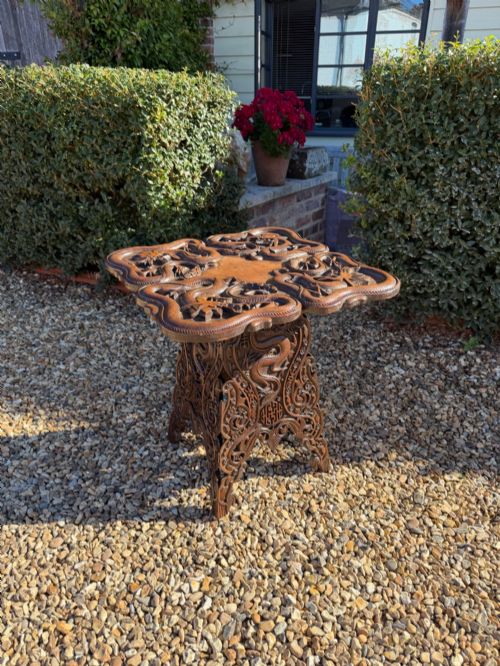
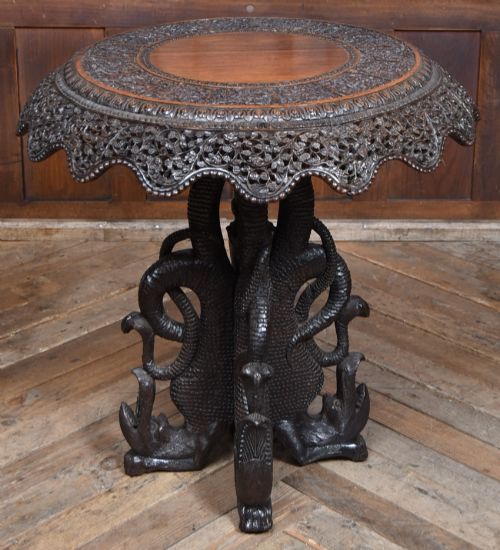
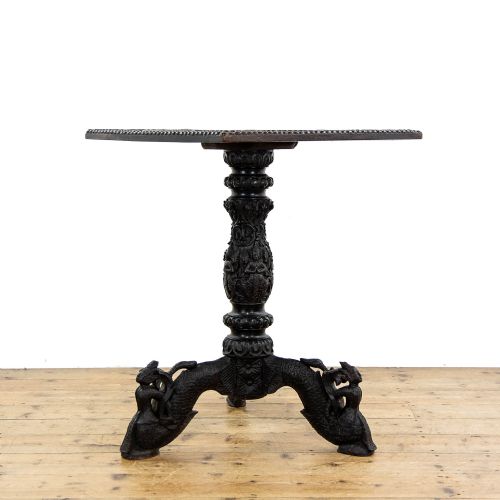
These carved dragon accent table pieces bring intricate Far Eastern craftsmanship into a room, offering functional surfaces styled with mythical motifs.
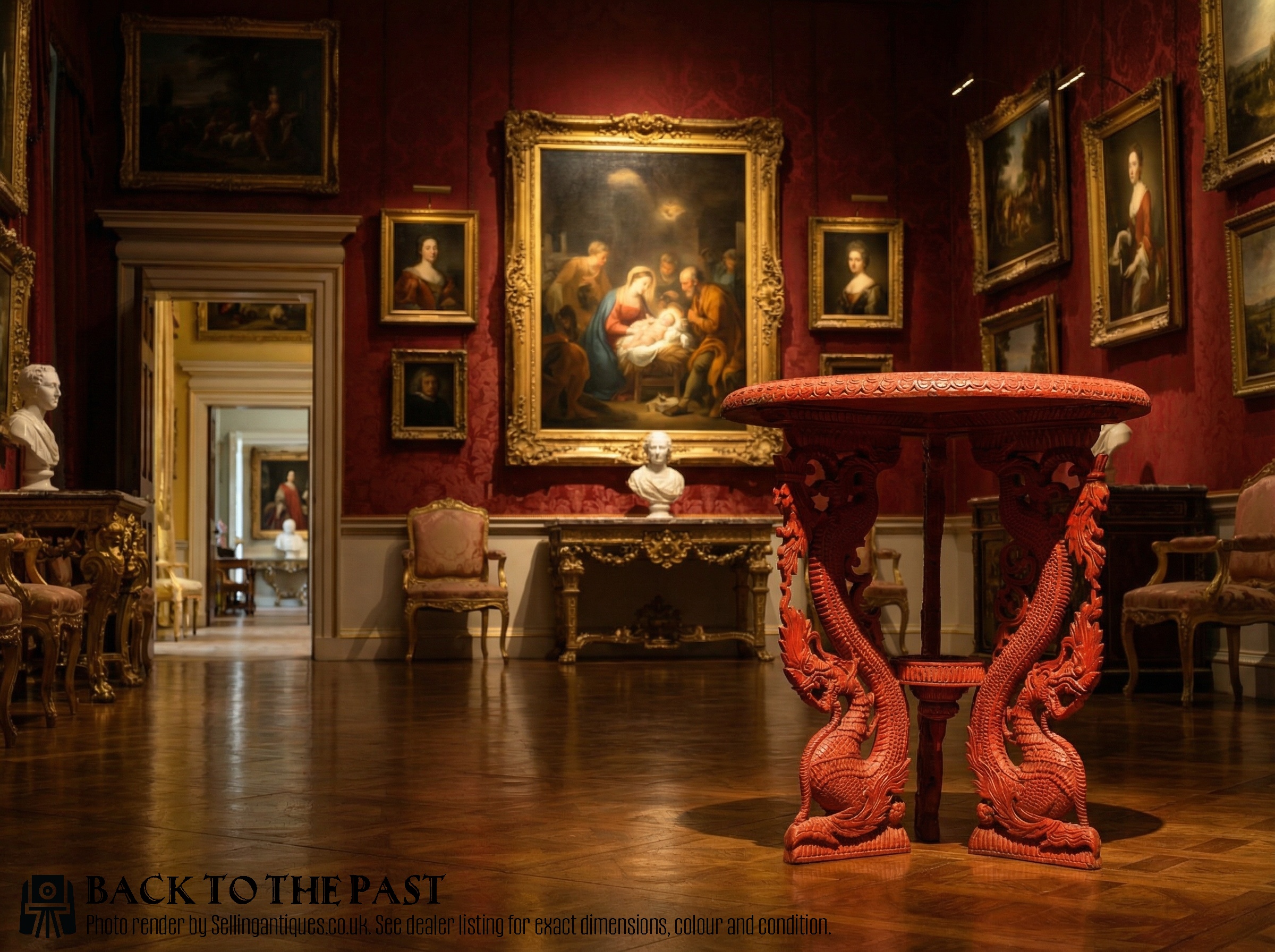
Carved Dragon Accent Table
A carved dragon accent table brings dense, traditional carving and sturdy foreign timbers into domestic interiors. These small occasional pieces originate from Asian export workshops, British colonial trades, and regional periods spanning the late nineteenth and early twentieth centuries.
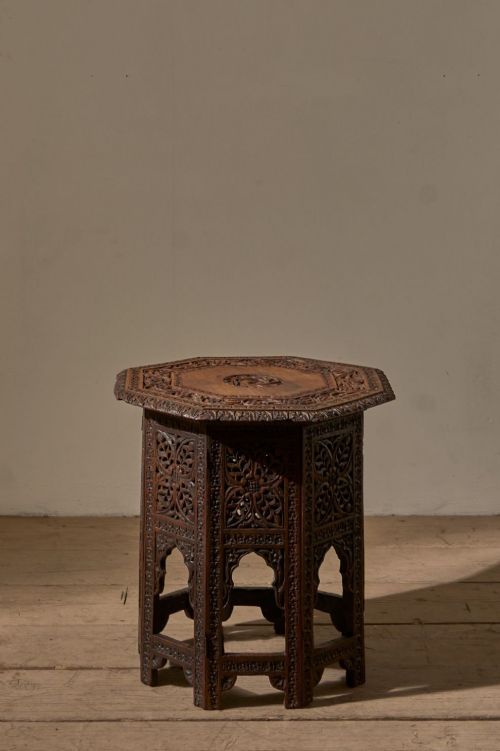
Side tables and small occasional tables form the bulk of what appears, often featuring low profiles suited for display or resting objects. Examples range from octagonal shapes to nest configurations and small coffee variations.
Origins stretch across Chinese Qing Dynasty production, Anglo-Indian trades, and Burmese workshops. The nineteenth century yields the heaviest concentration of surviving timber pieces.
Materials and construction methods
Makers utilised dense tropical timbers such as teak, padauk, and rosewood to withstand deep hand chiselling without splitting. These heavy woods provide the dark, uniform ground necessary for sharp relief work.
Surfaces frequently incorporate inset marble panels or intricate cinnabar lacquer applications alongside carved wooden tops. Joinery relies on traditional framing methods designed to accommodate timber movement across varying climates.
Dragons peer from table corners with fierce expressions, guarding tea cups and small plants with ancient reptilian vigilance.
Distinguishing quality across examples
The depth and clarity of the chisel work dictate the visual success of the carved dragon motif. Superior pieces display crisp scales, expressive claws, and three-dimensional scaling that stands clear of the background timber.
Material selection separates standard production from finer work, particularly where heavy dense rosewoods or padauk are chosen over lighter secondary woods. The integration of fitted marble inserts or smooth lacquer finishes indicates higher workshop standards.
The Carved Dragon Accent Table Glossary
- Padauk wood
- A heavy, dense tropical timber prized for its reddish-brown colour and durability under deep carving. It forms the primary structure for many nineteenth-century colonial and export tables.
- Cinnabar lacquer
- A building up of numerous layers of vermilion-coloured lacquer on a core before carving the hardened surface. This technique produces tactile relief panels often found on decorative surfaces.
- Qing Dynasty
- The final imperial dynasty of China, spanning from the seventeenth to the early twentieth century. Many export pieces date from the later decades of this period.
- Anglo-Indian
- A descriptive term for items produced in India under British rule, combining local timber and carving styles with European furniture forms. These items often feature dense foliage and animal motifs.
- Nest of tables
- A set of graduated tables designed to slide neatly beneath one another when not in use. They save floor space while offering multiple independent surfaces.
Carved Dragon Accent Table: Frequently Asked Questions
What woods are used?
Makers relied on heavy tropical hardwoods such as teak, padauk, and rosewood. These timbers offered the density required for deep relief carving.
Lighter general woods or lacquer preparations appear on specific regional export items, but dense dark timber remains standard for nineteenth-century examples.
How old are these tables?
Surviving examples date principally from the nineteenth century through the early twentieth century. Pieces emerge from periods including the Qing Dynasty and the Taisho era.
Exact dating relies on timber characteristics, construction joints, and stylistic markers linked to regional export trades.
Where were they made?
Production centres spanned China, Burma, and India during periods of active international trade and colonial presence. Workshops tailored these decorative furnishings for export to Western markets.
Design traits often reflect local craftsmanship combined with the furniture shapes demanded by European buyers.
Are the tops always wood?
Many examples feature solid carved wooden tops, but several incorporate inset marble slabs or cinnabar lacquer panels. Marble provides a cool, smooth contrasting surface resistant to heat and liquid.
Lacquer tops display carved red resin layers built up over a stable core.