
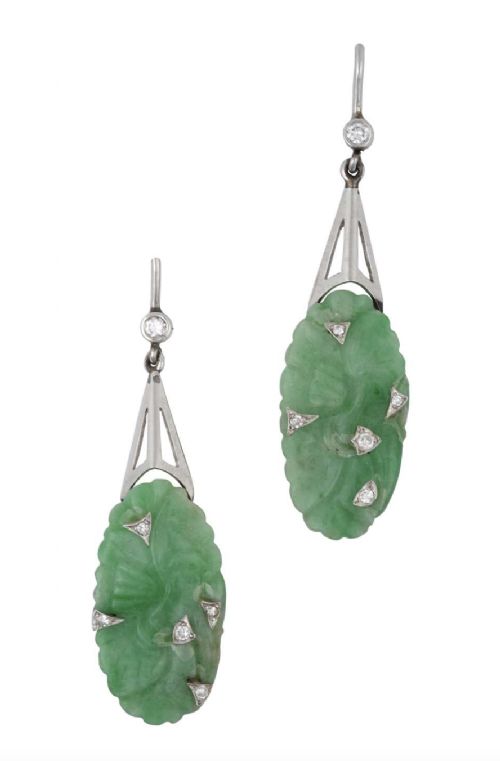


Carved Jade Pendant
A carved jade pendant brings ancient symbolism and meticulous lapidary art into modern wear, offering a tangible link to historical Chinese dynasties and Western revival periods alike.
Carved Jade Pendant
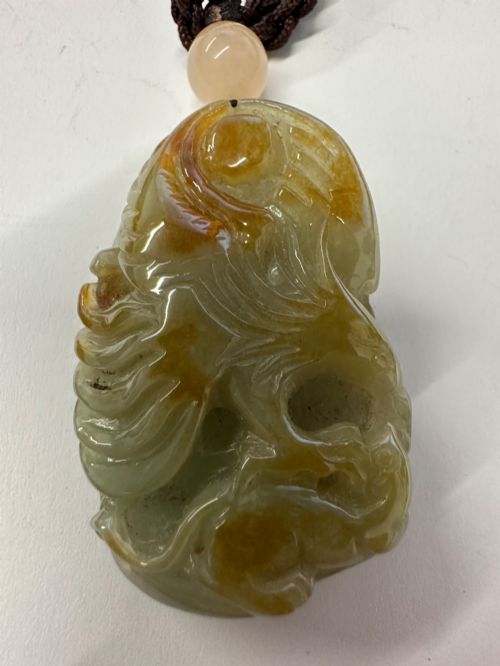
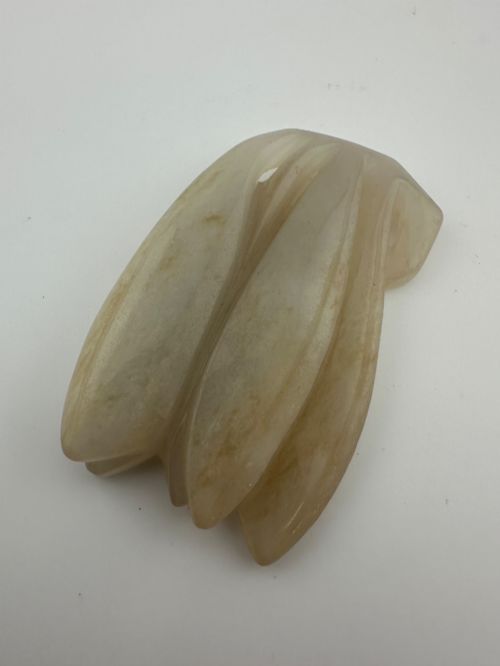
A carved jade pendant represents centuries of lapidary tradition, encompassing traditional Chinese motifs such as dragons, cicadas, lotus flowers, and bi discs alongside Western revival settings. These ornaments range from ancient talismans and amulets to sophisticated drop plaques designed to be worn close to the skin.
The version most commonly met on this page is the Chinese carved pendant originating from the Qing Dynasty through the Republic Period, frequently featuring intricate pierced work or mythical creatures. Buyers also encounter pieces mounted in platinum and gold during the Edwardian and Art Deco eras, blending Eastern stones with Western jewellery design.
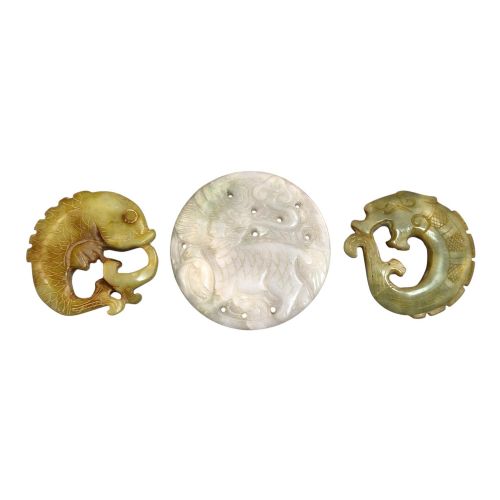
Forms extend beyond simple flat discs to include intricate animal carvings like the Pixiu, Chi dragon, and carp, each carrying specific cultural symbolism. Whether structured as a solitary talisman or set with diamonds in precious metal mounts, every piece highlights the natural lustre and tonal variation of the stone.
Materials and Techniques
Carving jade demands immense patience due to the extreme hardness of the material, requiring abrasive sands and rotary tools to shape nephrite and jadeite minerals. Artisans utilised meticulous hand-cutting and piercing techniques to create translucent layers, openwork motifs, and delicate surface relief without fracturing the stone.
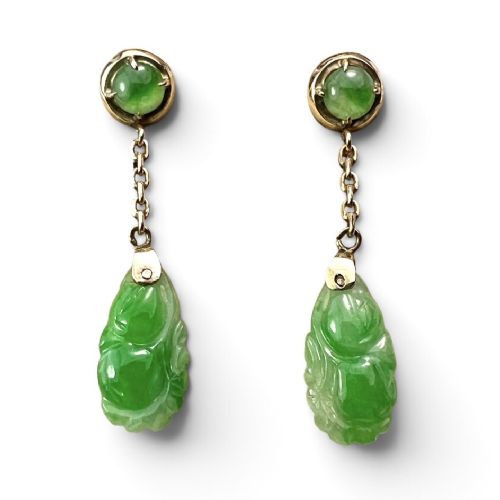
Precious mountings incorporate yellow gold, white gold, and platinum, often paired with accent diamonds to frame the central jadeite or nephrite carving. Settings from the Edwardian and Art Deco periods utilise geometric metalwork and millegrain edges to secure these hardstone plaques.
The material itself varies from pale celadon and white jade to vibrant green jadeite, each reacting differently to light and carving pressure. Historical workshops selected specific tones to enhance the subject matter, such as translucent green for foliage or pale celadon for insects and mythical birds.
Materials documented across the inventory include jadeite, nephrite, celadon jade, gold, platinum, and diamonds.
Evaluating Quality in Carved Jade
The refinement of the carving dictates the distinction between standard items and exceptional works, where undercut depth, symmetry, and anatomical precision of creatures like dragons define the craftsmanship. Superior pieces display crisp edges and purposeful relief that bring the subject to life without losing the structural integrity of the stone.
Material quality rests upon translucency, natural colour distribution, and the absence of distracting flaws within the mineral body. A fine jadeite or nephrite exhibits an even or attractively mottled tone that absorbs and diffuses light, whereas lesser stones appear flat and opaque.
The integration of the pendant with its metal mount, particularly in Edwardian and Art Deco pieces utilising platinum and diamonds, reflects the overall ambition of the piece. Master jewellers ensured that gold or platinum bales and settings complemented the stone rather than overpowering its natural silhouette.
The Carved Jade Pendant Glossary
- Jadeite
- A pyroxene mineral and one of the two distinct minerals classified as jade, known for its bright green hues and crystalline structure. It typically exhibits higher translucency than nephrite.
- Nephrite
- An amphibole mineral comprising a microcrystalline interlocking fibrous matrix, traditionally carved in China for millennia. It offers immense toughness and ranges in colour from white to dark green and celadon.
- Celadon
- A pale grey-green glaze or stone colour resembling the traditional ceramic tones of ancient China. This shade is frequently seen in nineteenth-century carvings.
- Bi Disc
- A flat circular jade disc with a circular hole in the centre, historically associated with ancient Chinese cosmology and ritual. These objects often incorporate carved dragons or auspicious symbols.
- Pixiu
- A mythical winged celestial creature in Chinese culture, frequently depicted in carvings as a protector of wealth and fortune. It is a common subject for antique pendants and amulets.
Carved Jade Pendant: Frequently Asked Questions
What is the difference between jadeite and nephrite?
Jadeite and nephrite are two distinct mineral species sharing the common name of jade, though they differ in chemical composition and crystal structure. Jadeite tends to be brighter and more vitreous, whereas nephrite is celebrated for its fibrous toughness and mellow historical patina.
Both materials were utilised across different periods for carving pendants, with nephrite dominating earlier Chinese pieces and jadeite frequently appearing in later Qing and Art Deco jewellery.
How can I tell the period of a carved jade pendant?
Dating relies heavily on the stylistic clues of the carving motifs, the mounting metals, and the technical execution of the piece. Edwardian and Art Deco examples often feature platinum and diamond settings, while Qing Dynasty and Republic Period pieces display specific traditional iconography and hand-drilled suspension loops.
Examining tool marks under magnification and understanding historical trade in Chinese export items further clarifies the era in which the pendant was fashioned.
Can I wear my pendant every day?
Jade is remarkably tough due to its interlocking crystal structure, making most pendants durable enough for regular wear if handled sensibly. However, antique pieces with fine pierced work or delicate precious metal mounts require extra mindfulness during activities that involve physical impact.
Securing the pendant with a sturdy gold or platinum chain ensures the antique bale or suspension ring remains protected from undue stress.