


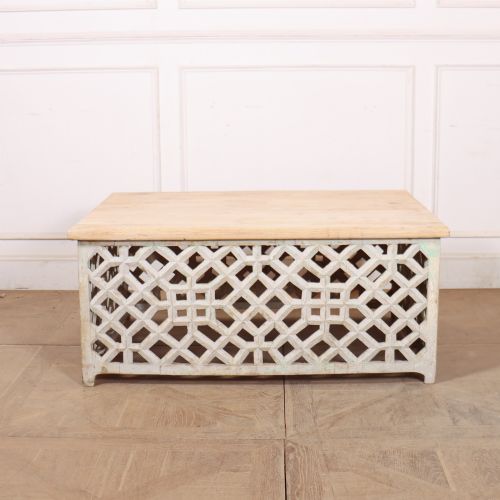
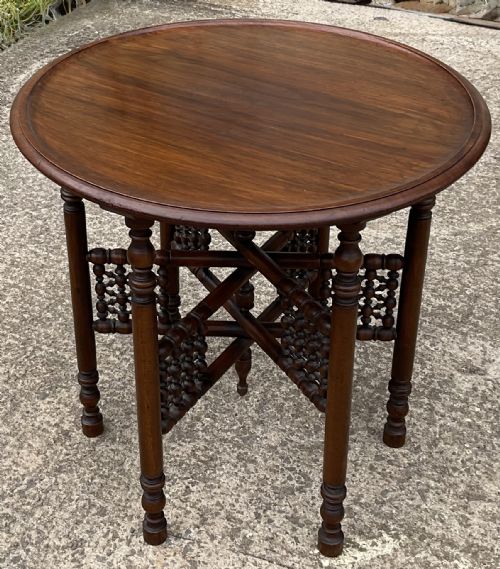


Carved Indian Low Table
A carved indian low table brings rich, hand-worked timber and intricate regional motifs straight to the centre of a room.
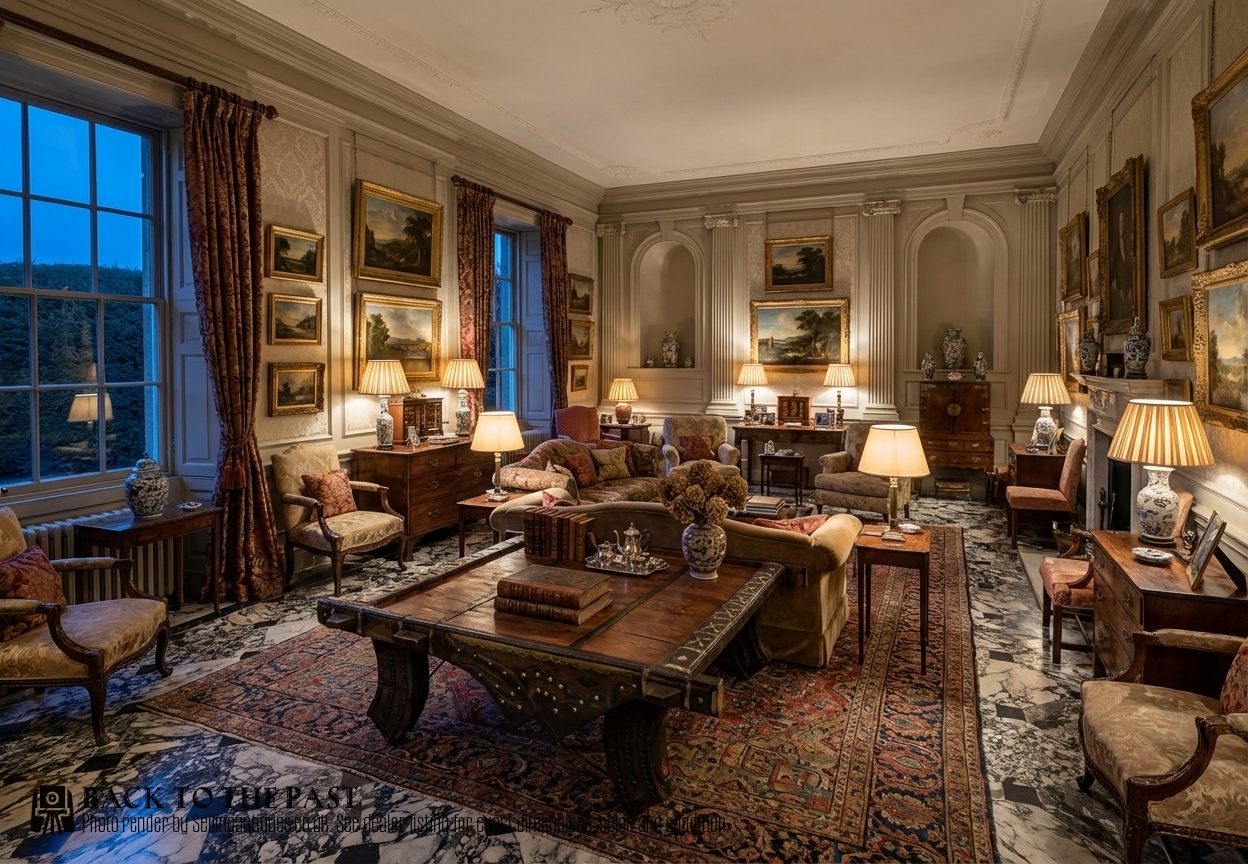
Carved Indian Low Table
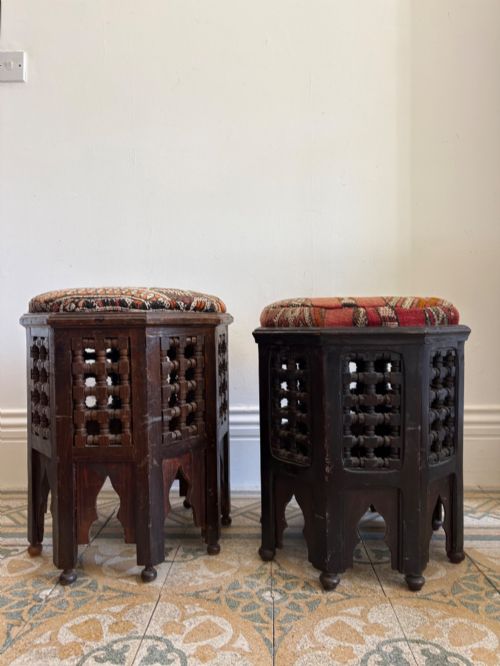
A carved indian low table encompasses a diverse group of low-set surfaces and seating forms, ranging from traditional takhat coffee tables to occasional tables and stools. These pieces arrive in styles such as Anglo-Indian, Colonial Indian, Kashmiri, and Persian, reflecting rich cross-cultural design histories.
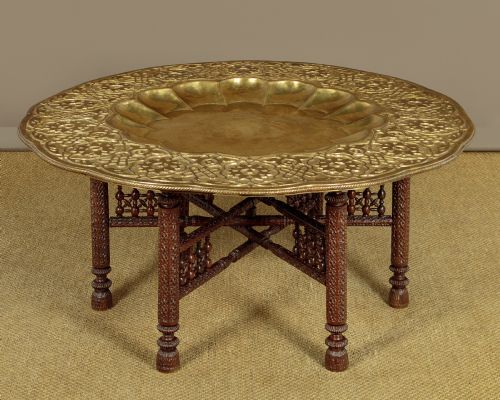
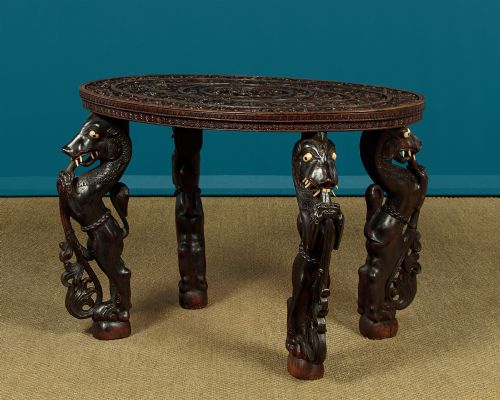
The selections available on this page lean heavily toward nineteenth-century origins alongside early twentieth-century examples. Forms span from circular centre tables and elephant-carved novelties to brass-topped and inlaid coffee tables.
Buyers frequently encounter robust hardwoods such as teak, rosewood, and padouk, often paired with contrasting materials like brass and bone. Their low profiles make them exceptionally versatile for modern living spaces as coffee tables or ottomans.
How they were made
Construction relies heavily on dense tropical hardwoods like teak, rosewood, and mahogany, shaped and joined by hand. Artisans carved deep relief patterns directly into the timber, incorporating floral motifs, animal figures, and geometric designs.
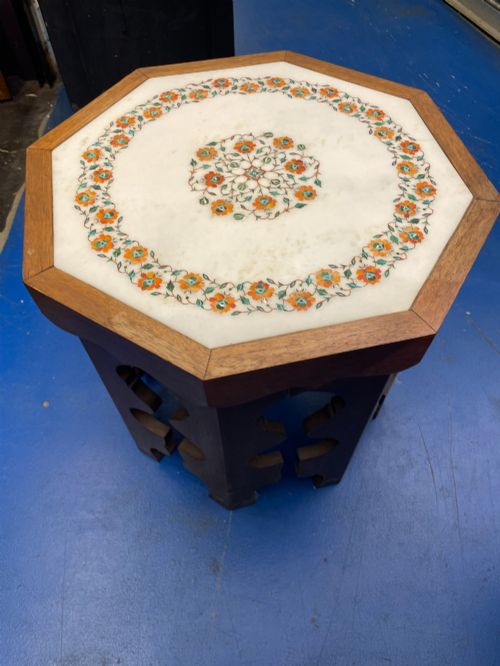
Many surfaces integrate hammered sheet brass or intricate bone inlay, fixed securely into the wooden base. Finishes range from natural polished grain to ebonised treatments, highlighting the precision of the regional joinery.
Carved Indian Low Table Retail Price Guide 2026
Typical asking prices for carved indian low table among the pieces listed under this phrase on Sellingantiques today, from the lower quarter to the upper quarter. They describe what is for sale here now, not the wider market.
The documented periods range from the Georgian era and nineteenth century through to the 1930s.
What varies in quality
Quality rests primarily on the depth and sharpness of the carving work, where crisp detail distinguishes superior pieces from softer, shallower execution. The choice of primary timber also dictates value, with dense rosewood and padouk holding higher regard than standard hardwoods.
The integrity of the structural joinery and the original pairing of mixed materials, such as brass tops and inlaid bone, influence the overall desirability. Pieces retaining their original surface patination and structural firmness represent the upper tier of the range.
The Carved Indian Low Table Glossary
- Anglo-Indian
- Describing furniture made in India during the British colonial period, often combining European forms with traditional Indian craftsmanship. These pieces frequently utilise local hardwoods and intricate native carving motifs.
- Takhat
- A traditional low Indian platform table or seating surface, frequently constructed from heavy timber with deep carvings. They are commonly adapted today for use as coffee tables.
- Padouk
- A heavy, durable reddish-brown tropical hardwood prized for stability and rich colouration. It appears frequently in high-status nineteenth-century colonial furniture.
- Ebonised
- Wood treated with a dark stain or chemical finish to simulate expensive ebony. This technique provides a sleek, dark surface that contrasts effectively with inlaid bone or brass.
- Occasional table
- A small, movable table designed for specific, intermittent use rather than central placement. In these listings, they often feature detailed brass tops or carved wooden frames.
Carved Indian Low Table: Frequently Asked Questions
What is a takhat table?
A takhat is a traditional low Indian seating platform or table, heavily carved from dense timber. They provide sturdy, low surfaces that suit modern coffee table placement.
Their origins lie in traditional domestic interiors, where residents sat low to the floor for dining or socialising.
How do I clean a brass top table?
Clean the brass surface gently with a soft, dry cloth to remove dust without disturbing the metal. Avoid harsh chemical polishes that strip the natural age and patina accumulated over decades.
For stubborn marks, use a mild soapy solution on a damp cloth, drying the metal immediately afterwards.
Are these tables sturdy enough for daily use?
Most pieces are built from heavy hardwoods like teak, rosewood, and padouk, offering robust structural foundations. Their solid construction handles everyday living room demands quite well.
Care should be taken with intricate carved edges and applied brass or bone inlays to prevent accidental impact damage.
How can I date a carved indian low table?
Dating relies on examining the timber species, joinery techniques, and the style of the carving work. Nineteenth-century examples typically show hand-cut joints and deeper, more varied patination on the wood.
Twentieth-century pieces may display machine-assisted elements or standardised brass work alongside traditional motifs.