



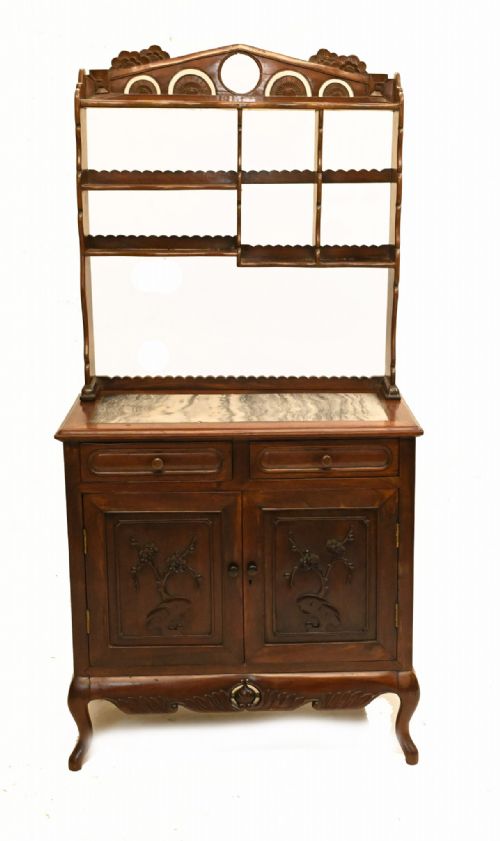


Carved Hardwood Cupboard
A carved hardwood cupboard is a substantial storage piece shaped by diverse global workshops, offering deep relief work and enduring timber construction.
Carved Hardwood Cupboard
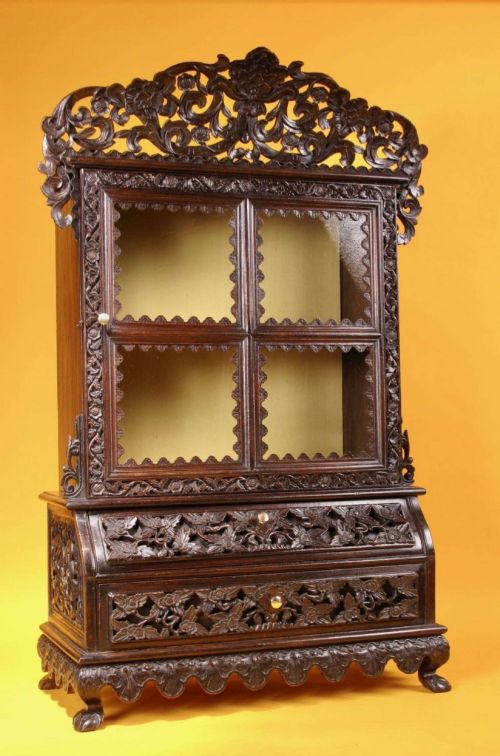
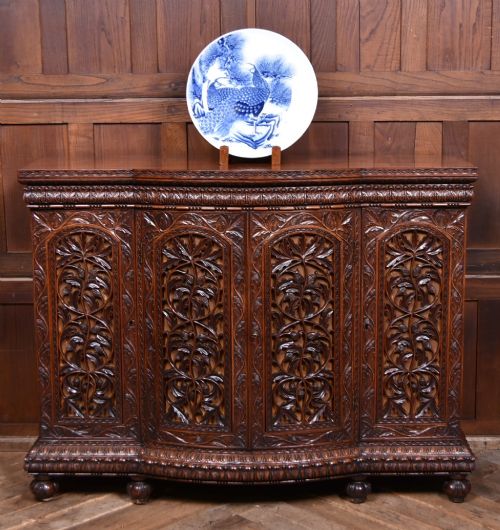
A carved hardwood cupboard brings intricate regional traditions into the home, ranging from Anglo-Indian display cabinets to Chinese storage pieces. These forms serve practical roles while showcasing deep surface carving executed across various nineteenth-century and early twentieth-century periods.
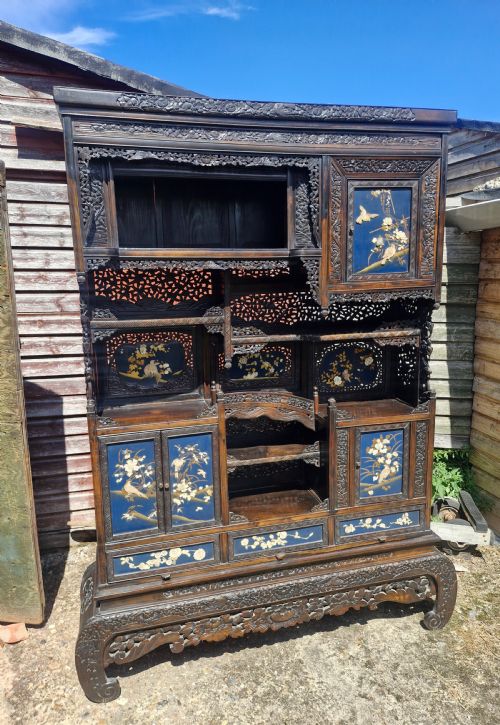
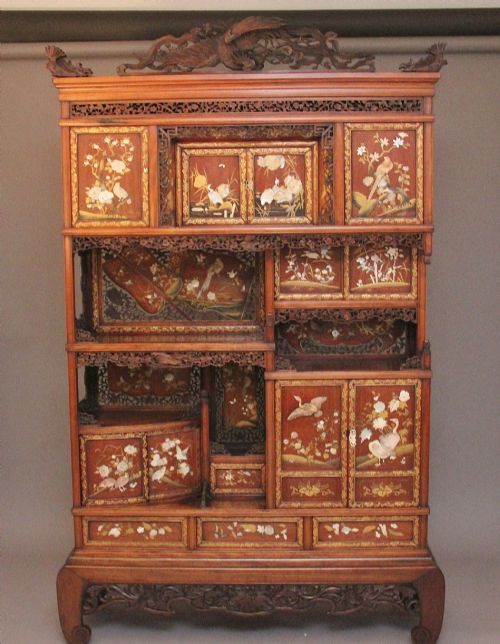
Buyers will most frequently encounter Anglo-Indian padouk sideboards, Japanese Meiji period shodana cabinets, and Chinese hardwood cupboards on this page. Each regional variant employs distinct structural layouts, from multi-shelf display units to enclosed floor cabinets.
The materials span dense tropical timbers enriched with brass, bone, mother of pearl, and glass inserts. These elements work together to create functional furniture that doubles as sculptural decoration.
Materials and construction methods
Construction relies heavily on dense tropical hardwoods such as padouk, teak, mahogany, and zitan. These timbers provide the structural stability necessary to support deep, sculptural relief work without warping.
Surface ornamentation is achieved through direct chisel work into the solid wood, supplemented in specific regional styles by inlaid bone, mother of pearl, and brass fixtures. Glass panels and lacquer finishes appear on display-oriented pieces to protect interior contents while maintaining visibility.
Carved Hardwood Cupboard Retail Price Guide 2026
Typical asking prices for carved hardwood cupboard among the pieces listed under this phrase on Sellingantiques today, from the lower quarter to the upper quarter. They describe what is for sale here now, not the wider market.
Some nineteenth-century cabinets hide tiny secret drawers behind their heavily carved facades, waiting for a hidden spring.
Distinctions in craftsmanship
Quality rests on the depth and precision of the carving, where crisp undercutting and balanced composition elevate a piece above simpler surface incising. The integration of secondary materials like bone or mother of pearl also indicates the level of workshop care.
The selection and seasoning of the hardwood determine structural longevity, ensuring drawers glide and doors hang true despite environmental changes. Superior examples maintain original hardware and glass without compromise to the joinery.
The Carved Hardwood Cupboard Glossary
- Padouk
- A dense, durable tropical hardwood prized for its reddish-brown colour and stability in fine furniture. It takes fine carving exceptionally well.
- Shodana
- A traditional Japanese display cabinet featuring asymmetrical shelving, sliding doors, and small compartments. These pieces often showcase intricate decorative arts from the Meiji period.
- Shibayama
- A decorative technique utilising inlaid shell, ivory, and other materials to create pictorial reliefs on cabinet panels. It originates from Japanese craftsmanship.
- Anglo-Indian
- A stylistic term describing furniture made in India by local artisans for British patrons, combining traditional eastern carving with western cabinet forms.
Carved Hardwood Cupboard: Frequently Asked Questions
What is a shodana cabinet?
A shodana is an asymmetrical Japanese display cabinet featuring multiple staggered shelves and small cupboards designed for ornamental objects.
These pieces emerged strongly during the Meiji period and demonstrate meticulous joinery alongside decorative inlay work.
How do I clean carved hardwood?
Dust the deep relief carving regularly with a soft-bristled brush to prevent particulate accumulation in the recesses.
Avoid liquid polishes and instead maintain the timber with appropriate paste wax applied sparingly.
Where were Anglo-Indian cupboards made?
Anglo-Indian cupboards were produced in India by native craftsmen working under colonial influence during the nineteenth century.
They combine familiar European furniture silhouettes with dense local padouk or teak carving.
What is zitan wood?
Zitan is an exceptionally dense Asian hardwood known for its dark, nearly black appearance and substantial weight.
It was utilised for high-grade Chinese compound cabinets and floor cupboards.
How are display cabinets used today?
Display cabinets provide enclosed shelving to exhibit collections while protecting delicate items from dust and handling.
Their glazed doors and internal compartments suit living spaces or dining rooms.