

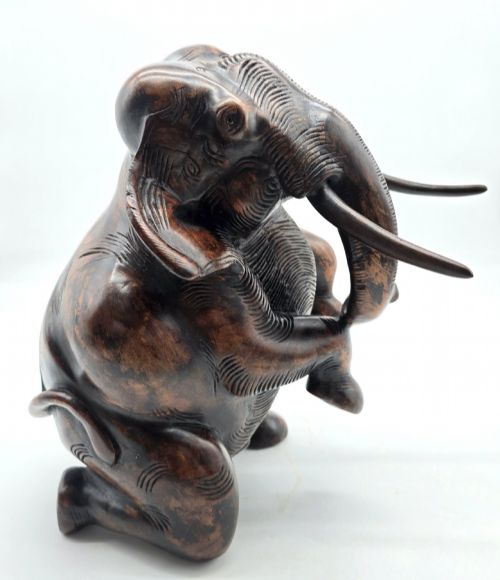
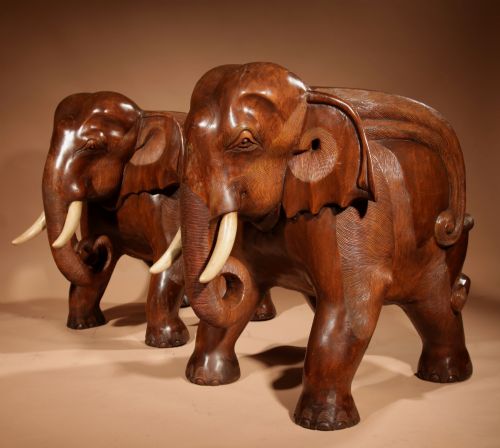


Carved Hardwood Animal
These carved hardwood animal figures span global traditions from the nineteenth century to the art deco era, offering distinct regional hand-carved forms for interiors.
Carved Hardwood Animal
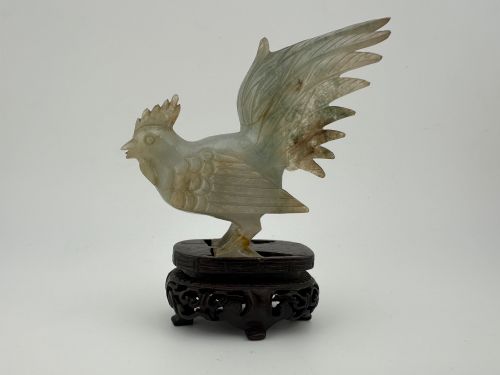
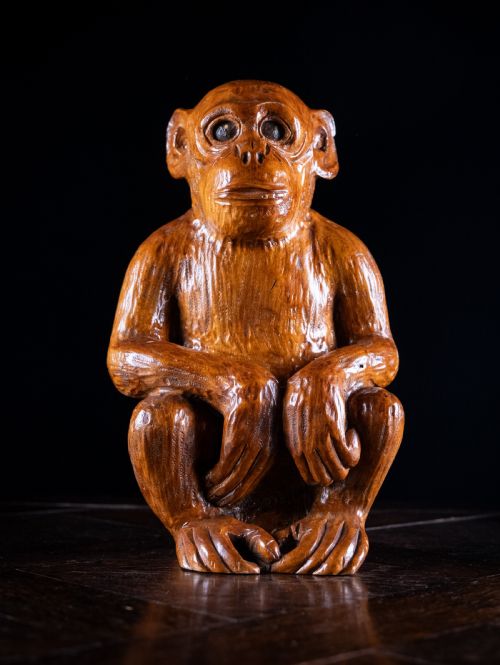
A carved hardwood animal brings tactile regional forms into an interior, ranging from substantial seated elephants to smaller study models of panthers and monkeys. The selection reflects global craftsmanship across multiple periods, including Qing dynasty figures, Meiji period sculptures, and Raj period studies.
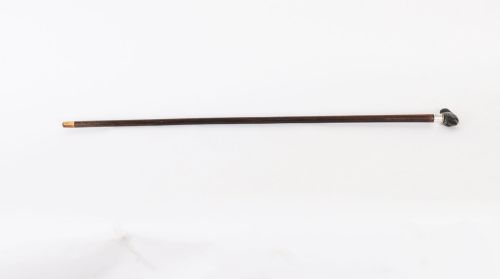
Buyers encounter diverse object types within this category, stretching from freestanding decorative sculptures and bookends to utilitarian armchairs and walking sticks incorporating animal motifs. Forms span Chinese water buffaloes, Anglo-Indian camels, and African hippopotami.
Dating ranges from the late nineteenth century through to the art deco period of the nineteen-twenties and thirties. Pieces appear as single decorative studies or balanced pairs originating from diverse international workshops.
Materials and construction
Makers utilised dense timbers such as ebony and general hardwood, sometimes pairing them with bone, horn, glass, or silver details. These natural materials demanded patient hand-carving to render musculature, hides, and plumage.
Techniques relied entirely on manual carving tools to shape solid blocks of timber into sculptural figures. Workshops across regions applied specialist surface finishing, highlighting the natural grain and dark tones of the wood.
Carved Hardwood Animal Retail Price Guide 2026
Typical asking prices for carved hardwood animal among the pieces listed under this phrase on Sellingantiques today, from the lower quarter to the upper quarter. They describe what is for sale here now, not the wider market.
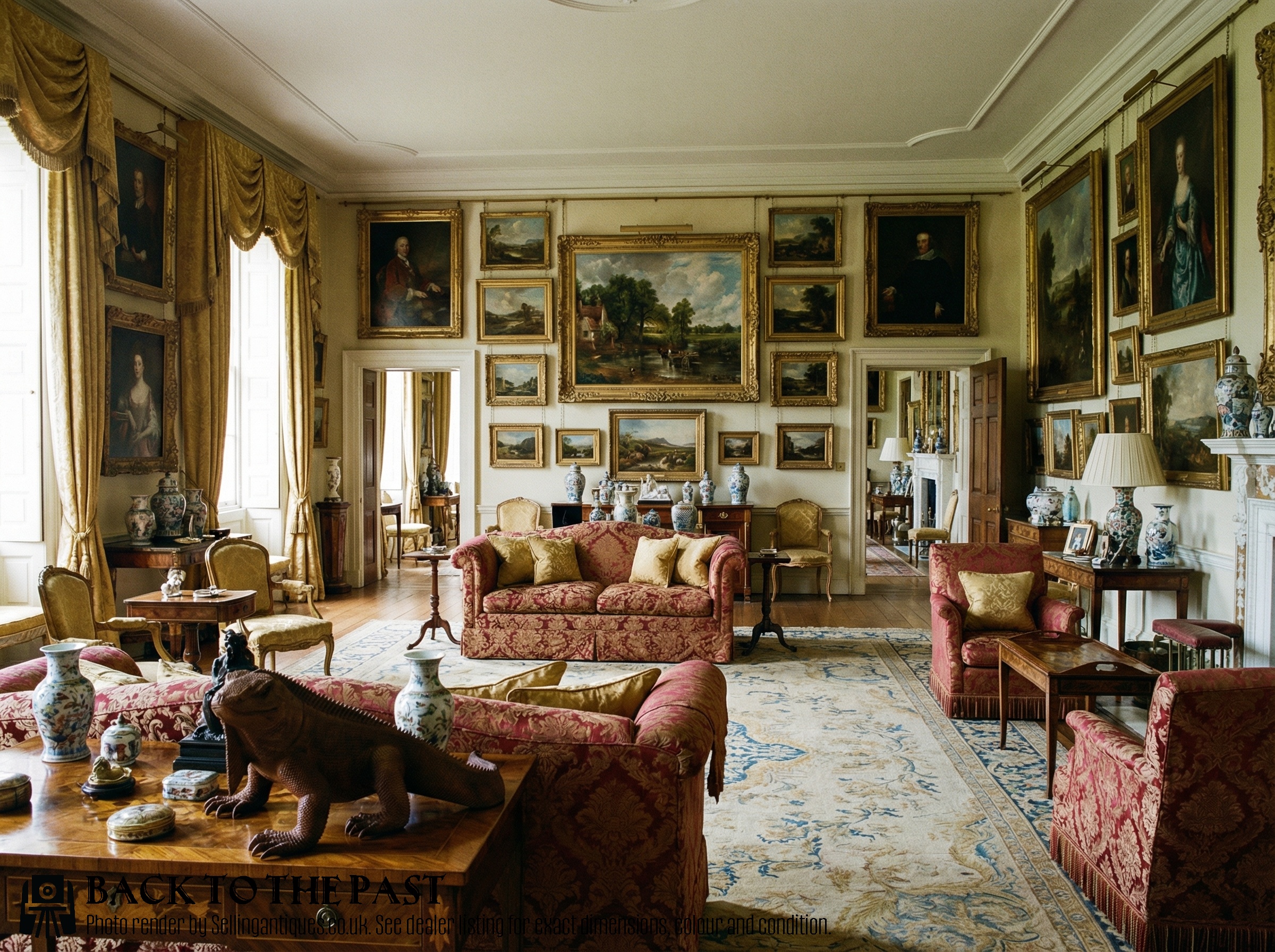
A solitary wooden iguana stands among the elephants and panthers, reminding us that carvers looked to every corner of the natural world.
Assessing quality and execution
Quality rests in the anatomical conviction of the carving and the sensitivity with which the timber grain enhances the subject. Stronger examples capture the natural movement and posture of the creature rather than relying on generic outlines.
The Carved Hardwood Animal Glossary
- Raj period
- An era spanning British rule in the Indian subcontinent, noted here for detailed ebony and hardwood studies of elephants and other fauna. Items from this time often reflect local carving traditions executed for British patrons.
- Meiji period
- A historic era in Japanese history associated with accomplished craftsmanship and decorative arts. Sculptures from this period demonstrate precise attention to naturalistic form.
- Qing dynasty
- The final imperial dynasty of China, represented here by traditional hardwood sculptures such as auspicious Mandarin ducks. Carvings from this context frequently carry symbolic cultural meaning.
- Anglo-Indian
- A style describing decorative objects produced in India under British influence, combining local woodworking techniques with European furniture forms and tastes.
Carved Hardwood Animal: Frequently Asked Questions
What animals are found in these carvings?
The selection includes elephants, water buffaloes, panthers, monkeys, horses, camels, tigers, and hippopotami. Many reflect the native fauna of the regions where they were carved.
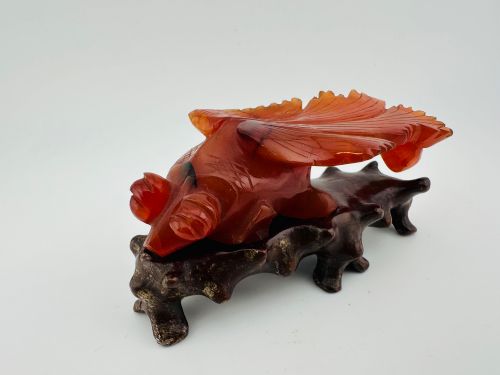
Makers also produced birds and aquatic life, including Mandarin ducks, parrots, and flying fish.
Where were these wooden animals made?
Origin locations span Asia and Africa, encompassing Chinese workshops, Japanese studios, and Indian centres during the Raj period. Pitcairn and African folk art traditions also contribute to the selection.
Each region applied distinct carving techniques and utilised locally available dense timbers.
How do I date a wooden animal sculpture?
Dating relies on stylistic markers, such as the geometric lines associated with the art deco period or the traditional motifs found in nineteenth-century Qing dynasty and Raj period pieces.
Material choices and construction methods also offer clues to the age of the carving.
How can I style these pieces at home?
These sculptures suit placement on tables, desks, and bookshelves, where their dark timber tones contrast with lighter interiors. Larger items function as freestanding floor sculptures or decorative furniture.
Pairs of animals, such as elephants or ducks, work well displayed symmetrically on mantelpieces or sideboards.