



Carved Guardian Dog
A carved guardian dog stands ready to ward off misfortune, bringing traditional sculptural presence and rich symbolic history into any room.
Carved Guardian Dog
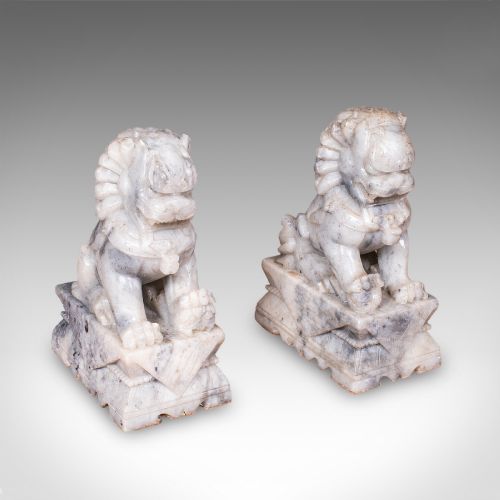
A carved guardian dog, commonly recognised as a Foo Dog, Shi Shi, or temple lion, represents a mythical protector rooted in Asian art and traditional Chinese sculpture. Buyers seeking this phrase encounter figurative pieces ranging from single temple guards to matched pairs designed for display.
The selections on this page span several centuries, with particular emphasis on nineteenth-century examples and twentieth-century interpretations. Forms vary from substantial freestanding statues and bookends to smaller desk seals and boxwood carvings.
Origins heavily reflect traditional Chinese and Qing dynasty aesthetics alongside Victorian Chinoiserie interpretations made for export. These figures serve both decorative and symbolic functions, appearing as energetic temple guardians or domestic ornaments.
Materials and carving techniques
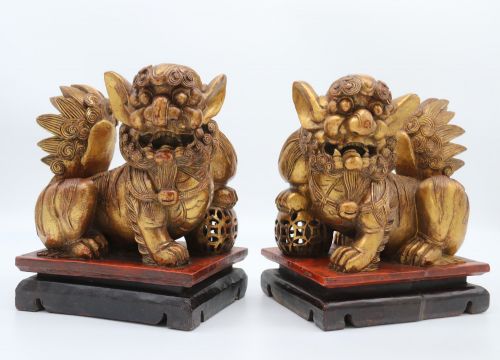
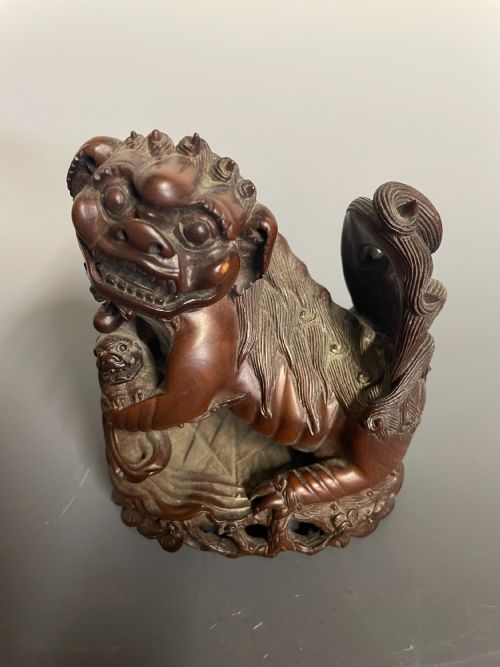
Carvers utilised organic materials such as boxwood, root wood, and general timber to create textural depth and muscular definition. Gilt wood and polychrome paint frequently enhance wooden surfaces, adding metallic sheen and colour.
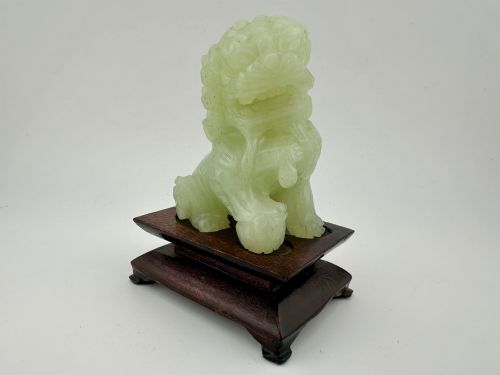
Mineral materials play a significant role, with artisans carving hardstones like pale green jade, jade marble, and soapstone. These stone varieties allow for smooth tactile finishes and intricate detailing on smaller objects like desk seals.
Carved Guardian Dog Retail Price Guide 2026
Typical asking prices for carved guardian dog among the pieces listed under this phrase on Sellingantiques today, from the lower quarter to the upper quarter. They describe what is for sale here now, not the wider market.
Listings feature items from the eighteenth, nineteenth, and twentieth centuries, spanning Victorian export pieces to Qing dynasty works.
Judging sculptural quality
Quality rests upon the vigour of the carving and the anatomical expression captured by the artisan. Superior pieces exhibit deep undercut details, balanced proportions, and a strong sense of movement rather than stiff execution.
The Carved Guardian Dog Glossary
- Shi Shi
- The traditional name for stone guardian lions found in Chinese architecture. These figures are often depicted in pairs with one holding a ball and the other a cub.
- Chinoiserie
- European artistic style reflecting Chinese motifs and decorative techniques, popular during the Victorian period. This style blends traditional Asian subjects with Western manufacturing methods.
- Desk Seal
- A carved stamp or signet featuring a figural handle, often used for applying wax impressions. Many guardian dog carvings double as functional desk accessories.
- Boxwood
- A dense, pale hardwood prized by carvers for its fine grain and ability to hold microscopic detail. It ages to a warm honey tone over time.
Carved Guardian Dog: Frequently Asked Questions
What is a guardian dog?
A guardian dog is a traditional symbolic protector, often modelled as a lion, placed to ward off negative influences. They appear in pairs or as single figures across various Asian art traditions.
In domestic settings, they function primarily as decorative sculptures, bookends, or desk seals while retaining their protective mythology.
How do I display a pair?
Matched pairs are traditionally arranged flanking an entrance, fireplace, or shelf, facing inward toward each other. This traditional placement creates a balanced look for mantelpieces and large surfaces.
Single figures work well as focal points on desks, side tables, or incorporated into existing book collections.
Are these made of jade?
Some pieces utilise pale green jade or hardstone, while others are carved from soapwood, boxwood, root wood, or gilt wood. Material choice varies significantly between different periods and object types.
Checking the listing details helps confirm whether a specific piece is formed from mineral stone or timber.
How do I date these figures?
Dating relies on material patination, tool marks, and stylistic traits associated with periods like the nineteenth century or the Victorian era. Export pieces often reflect Western tastes of their specific decade.
Comparing the carving depth and surface wear against known historical examples aids in establishing age.
What is the difference between a lion and a dog?
While Western terminology refers to them as Foo Dogs, the iconography derives from Asian guardian lions. True lions in this tradition possess stylised mannes and playful attributes.
Both terms describe the same mythical temple protector found throughout Chinese sculpture.