

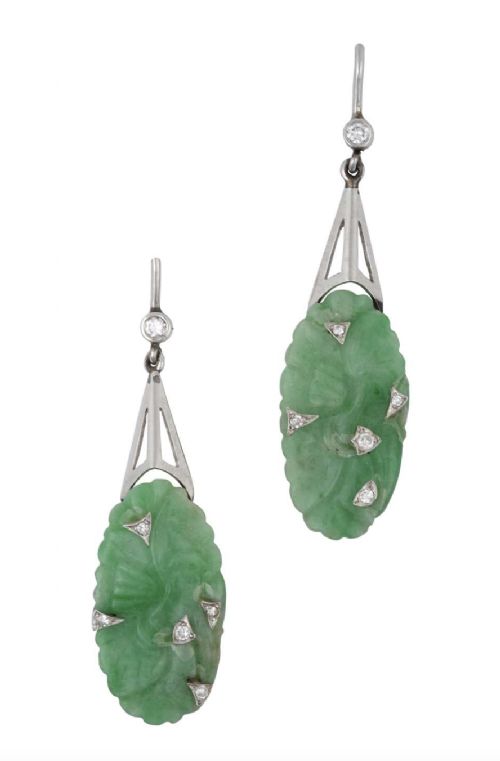


Carved Green Jade Jewellery
Carved green jade jewellery brings together ancient carving traditions and precious metals like platinum and gold.
Carved Green Jade Jewellery
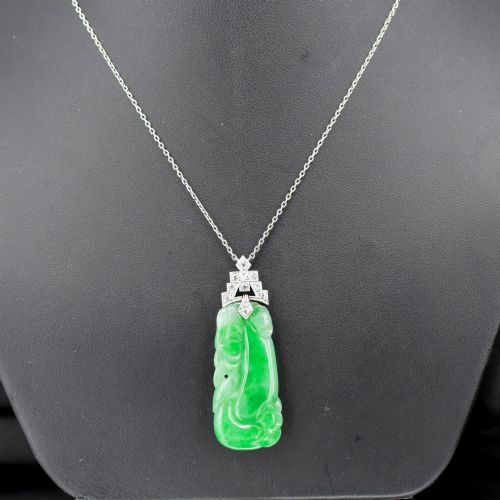
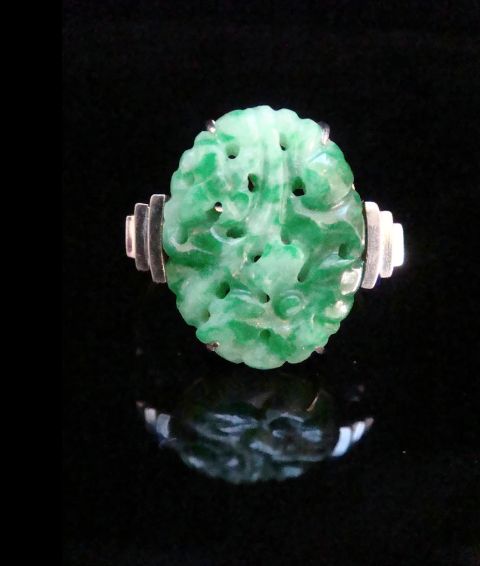
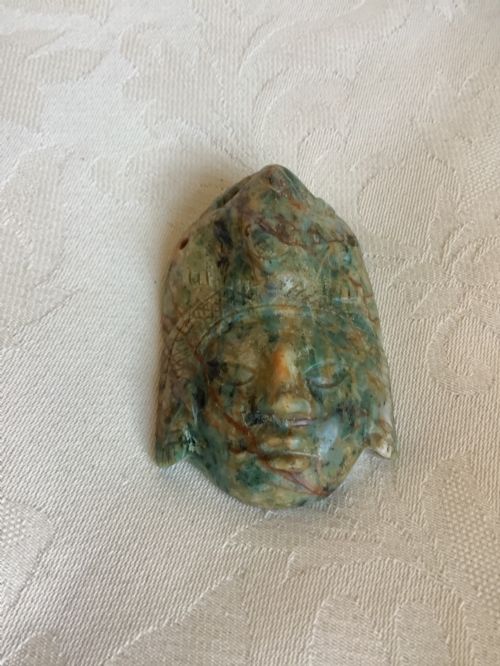
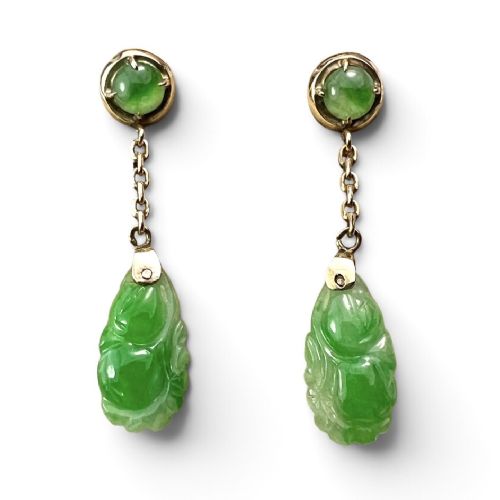
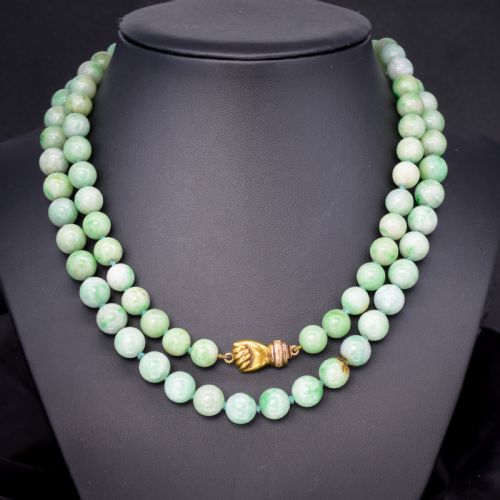
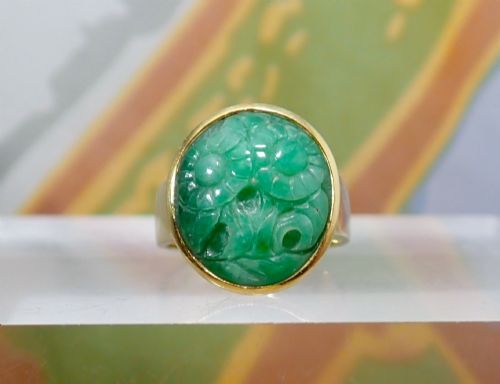
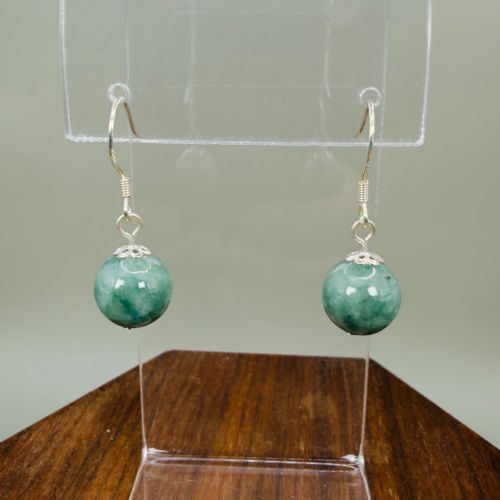
Carved green jade jewellery spans pieces shaped from jadeite, nephrite jade, and mineral stone, taking the form of rings, pendants, earrings, and necklaces. These items surface across various historical periods, including the nineteenth century, Edwardian era, and the nineteen-twenties.
The most common examples on this page are carved pendants, drop earrings, and rings featuring Chinese export styles alongside Art Deco and Republic Period designs. Buyers also encounter nineteenth-century talisman pendants and beaded strand necklaces.
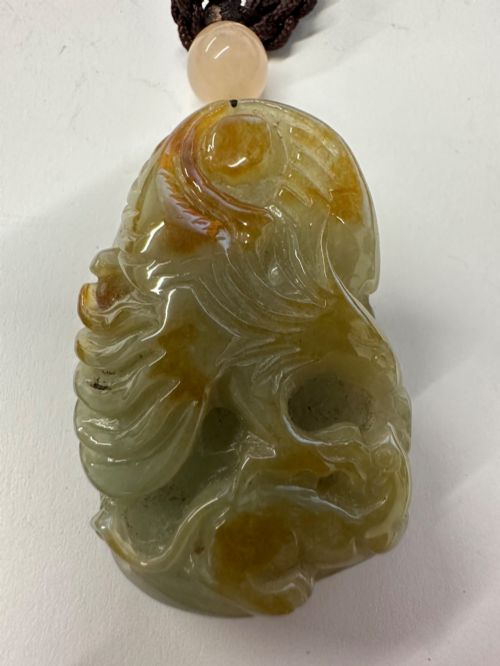
Pieces frequently incorporate traditional motifs such as dragons, phoenixes, and blessing symbols, alongside Western geometric settings. The green coloration ranges from pale yellow-green to intense imperial hues, sometimes accented by russet stone inclusions.
How they were made
Lapidaries shaped the hard jadeite and nephrite mineral stones using abrasive grinding and cutting techniques to achieve delicate pierced and low-relief carvings. These green stones were then mounted into precious settings fashioned from platinum, yellow gold, and nine-carat or fourteen-carat gold.
Artisans combined the carved jade components with supplementary gemstones, mounting diamonds, pearls, and smaller stones into the metalwork. The resulting jewellery marries traditional Chinese stone carving with European setting styles like Art Deco geometric frameworks.
Carved Green Jade Jewellery Retail Price Guide 2026
Typical asking prices for carved green jade jewellery among the pieces listed under this phrase on Sellingantiques today, from the lower quarter to the upper quarter. They describe what is for sale here now, not the wider market.
Some pieces feature mythical beasts carved to ward off misfortune, keeping mythical creatures close at hand on a Tuesday morning.
What varies in quality
Quality in carved green jade jewellery rests on the translucency and colour saturation of the stone, alongside the crispness and depth of the carving. Stones displaying even imperial colour or fine natural grain command attention above opaque or unevenly coloured mineral stones.
The sophistication of the metalwork also distinguishes pieces, with platinum and high-karat gold settings holding superior craftsmanship compared to simpler mountings. Well-defined iconography in motifs like dragons and phoenixes indicates superior lapidary skill.
The Carved Green Jade Jewellery Glossary
- Jadeite
- A pyroxene mineral and one of the primary materials used in carved green jade jewellery. It is known for its crystalline structure and wide spectrum of green shades.
- Nephrite
- An amphibole mineral serving as the second major variety of jade seen in these pieces. It typically exhibits a tougher, more fibrous composition than jadeite.
- Republic Period
- A historical era in China spanning the early twentieth century. Pieces from this time often feature traditional symbolic carvings intended for export or domestic use.
- Art Deco
- A design style prominent in the nineteen-twenties and nineteen-thirties characterised by geometric symmetry and clean lines. In this jewellery, it pairs green carved jade with platinum and diamonds.
- Pixiu
- A mythical Chinese hybrid creature frequently depicted in carved jade pendants. It is traditionally associated with wealth and good fortune.
Carved Green Jade Jewellery: Frequently Asked Questions
What periods do these pieces date from?
The selection includes items from the nineteenth century, the Edwardian period, and the nineteen-twenties, nineteen-thirties, and nineteen-fifties.
Art Deco and Republic Period examples appear frequently alongside nineteenth-century works.
What metals are used in the settings?
Metals span platinum, yellow gold, and specific carat weights including nine-carat, fourteen-carat, and fifteen-carat gold.
Sterling silver also appears in certain twentieth-century drop earrings.
What motifs appear on the carvings?
Common motifs include phoenixes, trees, dragons, and auspicious symbols derived from Chinese export and Republic Period traditions.
Other items take the form of talisman pendants or beaded strands with figa hand clasps.
Are other gemstones combined with the jade?
Diamonds and pearls frequently accompany jadeite and nephrite in Edwardian and Art Deco platinum or gold mounts.
Russet stone inclusions also occur naturally within the green jade material.