
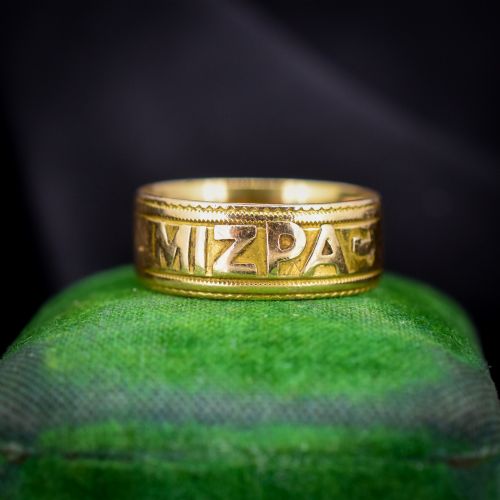
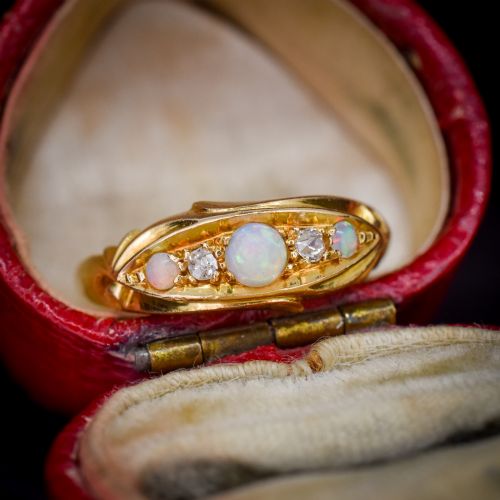
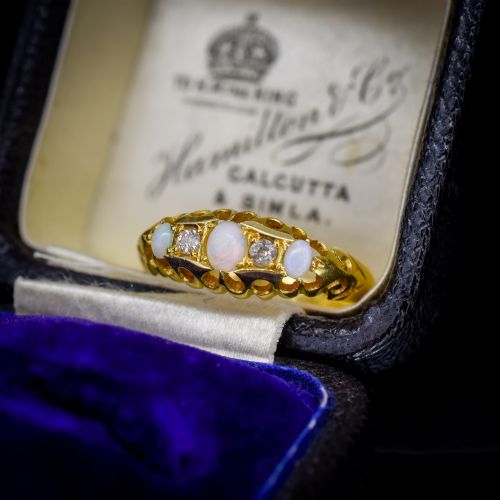
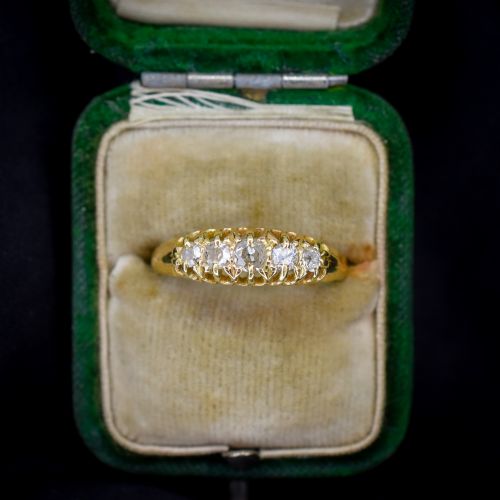

Carved Gold Ring
A carved gold ring brings together historical handcraft and precious metal, offering enduring personal ornament from past centuries.
Carved Gold Ring
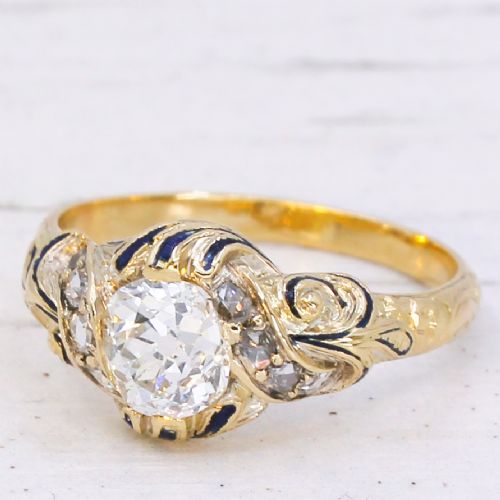
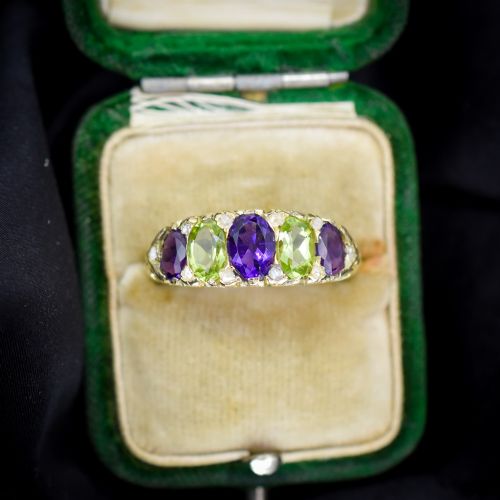
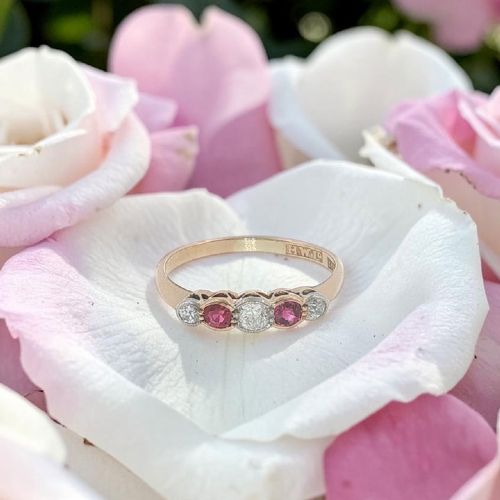
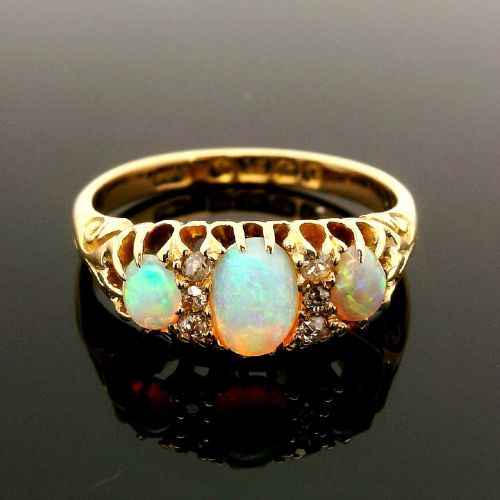
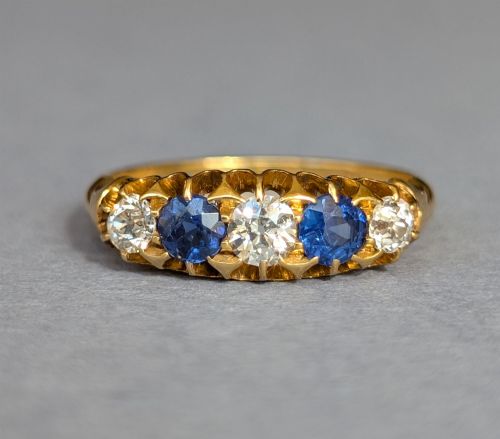
The evidence shows these rings often incorporate gemstones such as diamonds, opals, rubies, sapphires, and turquoise alongside sculptural gold elements. Examples span the nineteenth century into the twentieth, providing diverse choices for daily wear or collection.
How they were made
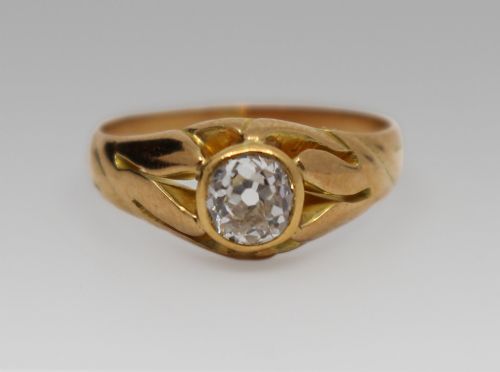
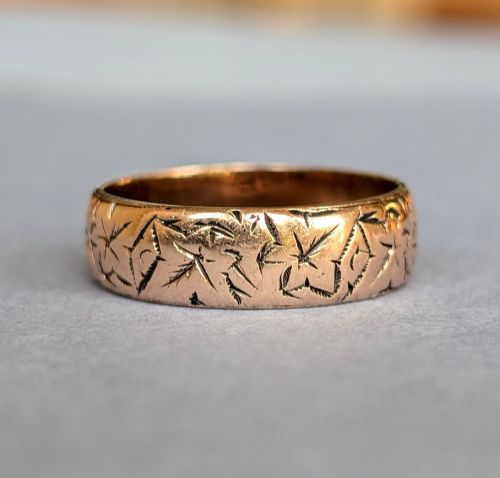
Goldsmiths utilised high-purity alloys, predominantly 18ct yellow and rose gold alongside 9ct and 15ct variations, shaping the metal through casting, band formation, and detailed manual engraving. Gemstones including old cut diamonds, opals, and rubies are flush set, star set, or secured in claw configurations.
Techniques recorded in the archive and current listings also include hardstone cameo carving, intaglio cutting, and delicate wirework. Artisans applied these methods to mount coral, jet, jadeite, and layered agates securely into precious bezels.
Several items feature dog finials and love heart bands, proving that sentimental Victorians adored a canine companion alongside their gold.
What varies in quality
The standard of a carved gold ring depends upon the crispness of the manual work and the symmetry of the metal shaping. Superior examples display sharply defined motifs and robust settings that hold gemstones firmly without distortion in the surrounding gold.
Quality also rests in the selection and matching of set materials, whether clear old cut diamonds, vibrant opals, or finely layered hardstones. The weight and gauge of the gold band further distinguish finer productions from lighter commercial output.
The Carved Gold Ring Glossary
- Boat ring
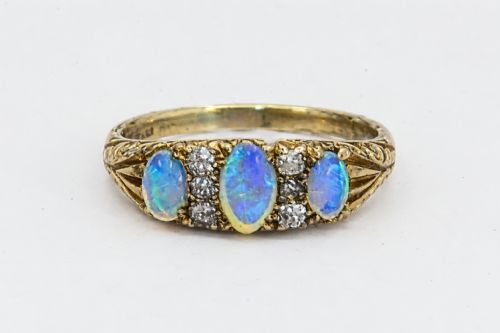
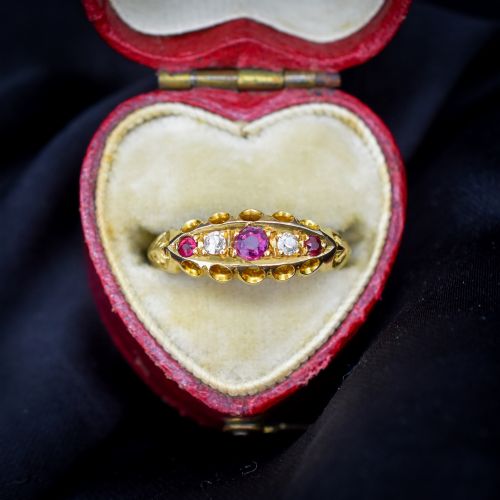
- A ring featuring a curved, navette-shaped setting that resembles the hull of a vessel, popular during the Georgian and Victorian eras. This design allows multiple smaller stones to sit low along the finger.
- Gypsy ring
- A style where stones are flush-set directly into a thick, tapering gold band, creating a smooth exterior surface. This form emerged strongly in the late nineteenth century.
- Intaglio
- A design incised into a hardstone or gem so that the impression sits below the surface, often used historically for sealing wax. It contrasts directly with a cameo.
- Old cut diamond
- A hand-faceted diamond cut before modern machinery standardised proportions, typically featuring a small table and a high crown. These stones display a softer, candlelit sparkle.
- Trilogy ring
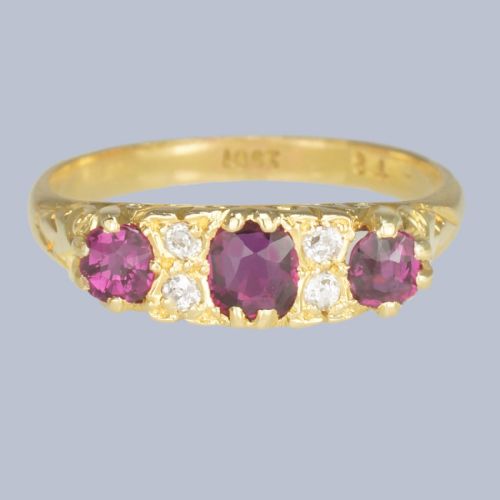
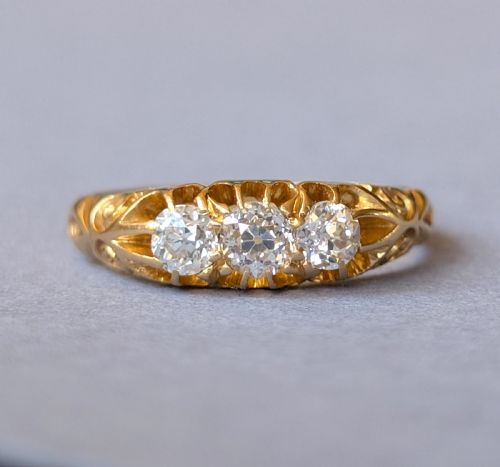
- A ring set with three stones, traditionally symbolising the past, present, and future. They frequently combine diamonds with coloured gems such as sapphires or rubies.
Carved Gold Ring: Frequently Asked Questions
What periods do these rings come from?
The available selection spans from the nineteenth century, including Georgian and Victorian eras, through Edwardian and Art Deco periods, up to mid-century modern designs.
Most pieces date between the late Victorian years and the nineteen-twenties, reflecting the predominant manufacturing periods recorded in the inventory.
How do I care for antique gold rings?
These rings require gentle handling due to their age and the delicate nature of set stones like opals or pearls. Cleaning should involve warm soapy water and a soft brush, avoiding harsh chemical dips.
It is advisable to remove them during manual labour or heavy tasks to protect the gold settings and prevent stone loss.
What is a boat ring?
A boat ring is a specific historical setting where the central stones and metal mount curve outward into a navette or boat-like silhouette. This shape allows stones to graduate neatly across the finger.
Makers frequently paired opals and diamonds within this distinct configuration during the late nineteenth and early twentieth centuries.
Are these rings suitable for daily wear?
Many of these pieces are robust enough for regular wear, particularly solid gold bands and sturdy gypsy settings. However, softer materials such as opals, pearls, or coral demand greater caution.
Owners should consider the setting height and stone durability when choosing a ring for continuous everyday use.