
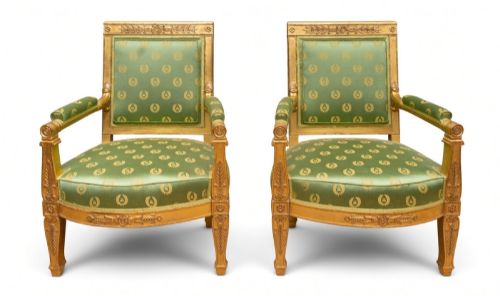
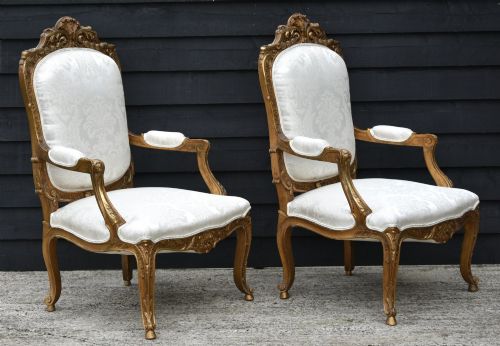
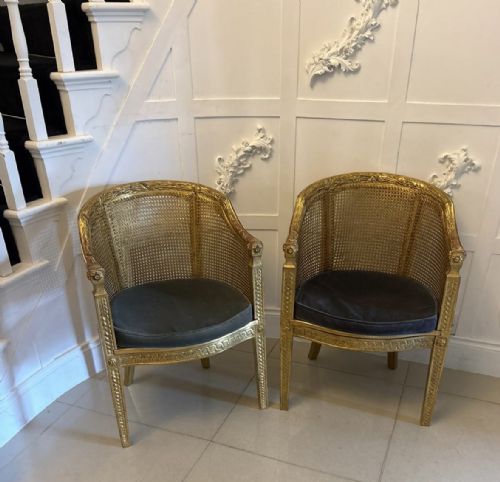


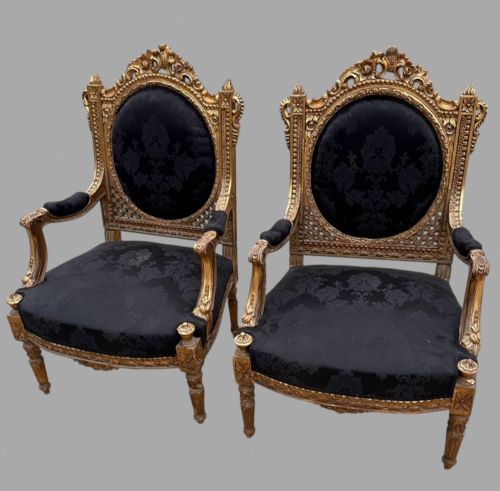
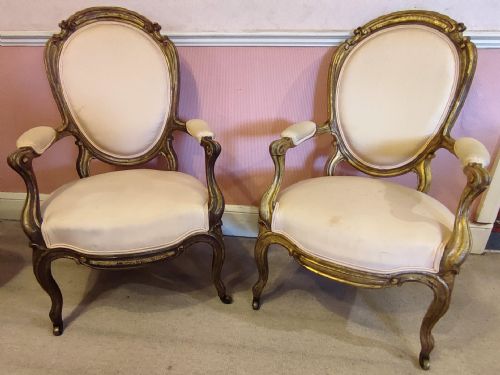


Carved Giltwood Lounge Chairs
These carved giltwood lounge chairs bring giltwood frames and upholstered seats directly from French chateaux and salons into your home.
Carved Giltwood Lounge Chairs
When you search for carved giltwood lounge chairs, you encounter seating built for formal rooms, ranging from armchairs and bergères to day beds and window seats. The forms draw on French styles like Louis XVI, Rococo Revival, and Restauration, alongside Napoleon III designs.
Most pieces date from the nineteenth century, including specific decades such as eighteen eighty and eighteen seventy, with additional examples from around nineteen hundred and the early twentieth century. You also find eighteenth-century Italian pieces and items produced later than nineteen sixty.
Makers and origins span French workshops, such as Jacob-Desmalter associated with the Palais de Tuileries, as well as Italian makers producing painted and gilded seating. The frames typically combine carved timber with a gilt finish, paired with textiles like velvet, damask, cane, and fabric.
How carved giltwood lounge chairs were made
Frames are constructed from timber, including beech and walnut, shaped through carving and then covered with a layer of gold leaf or gilt decoration. This giltwood surface creates the characteristic metallic sheen seen across the nineteenth-century and earlier pieces.
Upholstery relies on traditional textiles recorded in the listings, including velvet, damask, fabric, and cane panels. These materials are fitted to armchairs, bergères, day beds, and window seats to provide structured seating.
Listings feature materials including giltwood, velvet, timber, brass, fabric, textile, damask, and cane.
What varies in quality
The precision and depth of the carved wooden ornament determine the visual weight of the frame, separating standard production from exceptional pieces. Crisp detailing in the foliage, scrolls, or classical motifs indicates skilled hand carving rather than mechanical execution.
The application and preservation of the giltwood surface dictate the overall character of the piece. Intact gilding that retains its warm metallic tone without excessive modern overpainting preserves the historical integrity of the furniture.
Jacob-Desmalter
The Carved Giltwood Lounge Chairs Glossary
- Giltwood
- Timber coated with gold leaf or a gold-coloured metallic finish. This surface provides the bright exterior characteristic of these formal chairs.
- Bergère
- An enclosed upholstered armchair with wooden framing around the back and sides. It often includes upholstered armrests and a loose seat cushion.
- Restauration
- A French design period spanning the early nineteenth century. Furniture from this era bridges the gap between Empire styles and later revivals.
- Napoleon III
- A nineteenth-century French style known for eclectic revivalism and ornate decoration. Pieces from this era often embrace exuberant gilt finishes and rich upholstery.
Carved Giltwood Lounge Chairs: Frequently Asked Questions
How do I identify a bergere chair?
A bergère is distinguished by its enclosed upholstered sides and back, enclosed within a visible wooden frame. This design offers a more enclosed seat than an open armchair.
Many examples feature cane panels or fully padded sides, paired with a matching loose seat cushion for comfort.
Where were these chairs used?
These lounge chairs were traditionally placed in formal salons, withdrawing rooms, and chateaux. Their ornate gilt frames and upholstered seats suited spaces designed for entertaining guests.
Today, they function as accent seating in living rooms, studies, or bedrooms, adding historical character to an interior.
How do I date a giltwood chair?
Dating relies on stylistic markers, such as Louis XVI neoclassical straight tapered legs or Rococo Revival asymmetric curves. Construction methods and timber choices also provide clues to the period.
Reference points include nineteenth-century revival periods, earlier eighteenth-century Italian pieces, and specific decades noted in the design details.