

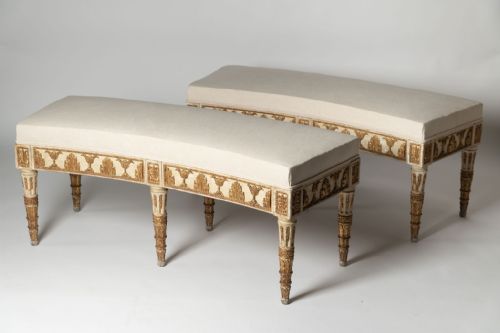


Carved Giltwood Bed
A carved giltwood bed brings regal presence to a bedroom, offering sculptural gilded timber and traditional upholstery that suits grand interiors.
Carved Giltwood Bed
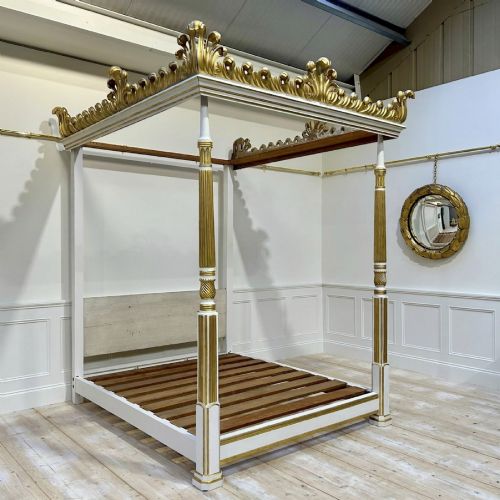
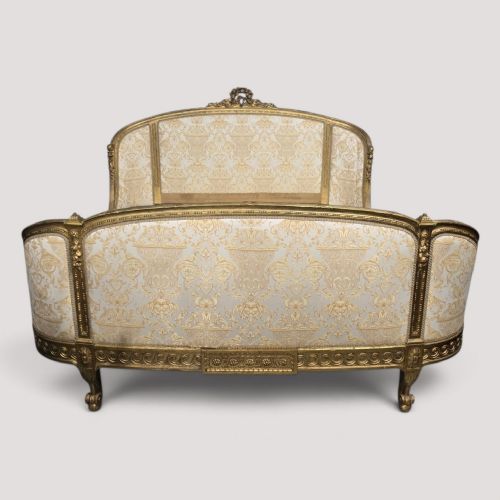
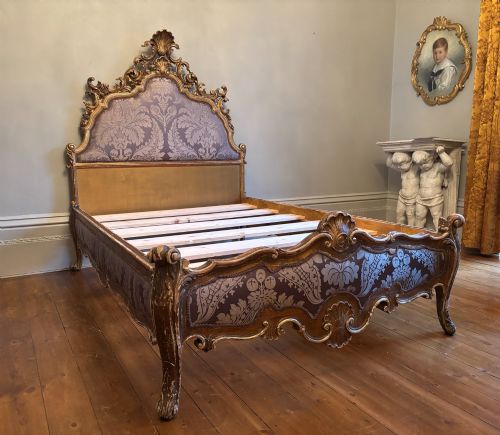
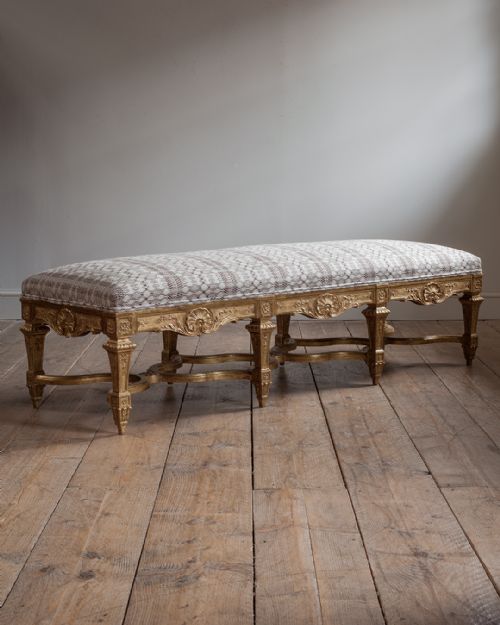
A carved giltwood bed encompasses various forms ranging from full bed frames and day beds to architectural bed crowns and canopies. These pieces originate predominantly from the eighteenth and nineteenth centuries, spanning periods such as Regency, Victorian, and Italian Rococo. Buyers frequently encounter related seating and architectural elements like stools and finials alongside full bed frames.
How they were made
Craftsmen built the core structures from solid timber and wood, shaping the components through traditional joinery and hand carving. The decorative surface relies on applications of gesso over the wood substrate to provide a smooth base for subsequent gilding. Artisans then applied gold leaf or gilt decoration to create the characteristic metallic sheen.
Upholstered elements within these listings incorporate traditional textiles such as damask fabric. Structural timber work frequently combines with cane panels or carved architectural details like finials and bed crowns. The application of paint and parcel gilt highlights specific carved motifs across the wooden frames.
Carved Giltwood Bed Retail Price Guide 2026
Typical asking prices for carved giltwood bed among the pieces listed under this phrase on Sellingantiques today, from the lower quarter to the upper quarter. They describe what is for sale here now, not the wider market.
Listings feature periods from the 18th Century through to the 1920s, employing materials including giltwood, gesso, damask fabric, and timber.
What varies in quality
The depth and crispness of the hand carving dictate the sculptural quality of the woodwork across different frames. Elaborate Italian Rococo or Louis XIV revival scrolls and foliage demand superior artisan skill compared to simpler linear mouldings. The preservation of the original gold leaf and gesso ground directly influences the visual depth of the gilded surface.
Proportion and scale distinguish standard pieces from exceptional marriage beds and architectural canopies. The integrity of the underlying timber frame and the quality of integrated textiles such as damask fabric further establish the distinction between ordinary items and masterworks.
The Carved Giltwood Bed Glossary
- Giltwood
- Timber that has been coated with gold leaf or a gold-coloured metallic finish. This surface treatment defines the primary visual characteristic of these frames.
- Gesso
- A plaster-like mixture applied to wood surfaces as a smooth base for gilding. It allows craftsmen to carve fine details before applying gold leaf.
- Damask fabric
- A reversible figured textile typically used for upholstery on beds and seating. It provides traditional texture that complements carved wooden frames.
- Bed crown
- An architectural canopy or corona mounted to the wall above a bed to support hanging drapery. These decorative elements frame the head of the bed.
- Finial
- A decorative crowning ornament placed at the corners or posts of a bed frame. It terminates vertical elements with carved wooden detail.
Carved Giltwood Bed: Frequently Asked Questions
How do I clean a carved giltwood bed?
Dust the gilded surfaces gently with a soft, dry brush to prevent accumulation without disturbing the delicate leaf. Avoid liquid cleaners and harsh chemicals that can strip the historic gold finish from the gesso.
Inspect the carved wooden details periodically for stability and keep the bed away from direct sunlight and excessive humidity. Professional conservation is recommended if the gilt layer begins to flake or separate from the timber.
Are antique beds standard mattress sizes?
Older beds frequently feature dimensions that differ from modern standard mattress sizes, varying by period and region of origin. Custom mattresses are often necessary to ensure a proper fit within antique wooden rails and headboards.
Consult the internal dimensions of the specific frame carefully before purchasing bedding. Some nineteenth-century or king-size frames accommodate standard contemporary sizes with minor internal adjustments.
What is the difference between Regency and Victorian styles?
Regency design draws inspiration from neoclassical motifs, featuring clean classical lines, restrained gilding, and architectural symmetry. Pieces from this era often exhibit influence from ancient Roman and Greek forms.
Victorian pieces tend toward more exuberant revivalism, incorporating heavier proportions and ornate detailing inspired by earlier French and Italian periods. The ornamentation on Victorian furniture is generally denser and more deeply carved.
How are bed crowns and canopies used?
Bed crowns attach directly to the wall above the head of a bed to suspend decorative fabric curtains and drapery. They create a focal point that emulates historic state bedchambers and grand country house aesthetics.
These architectural elements can also frame a day bed or window seat within a larger interior scheme. They function primarily to add vertical presence and textile softness to a room.