

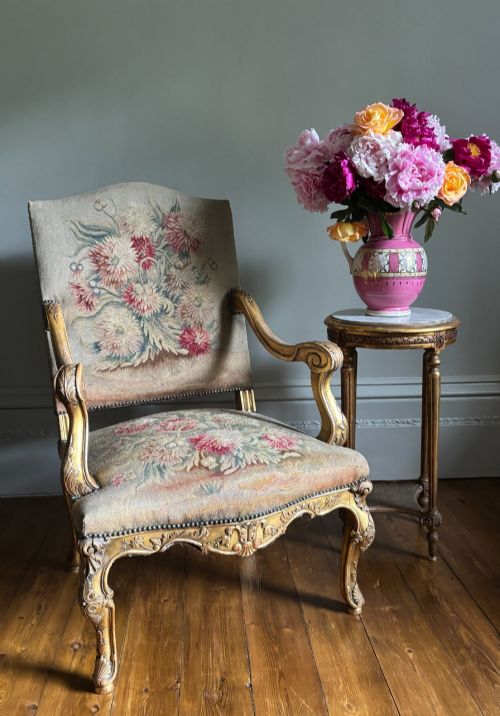
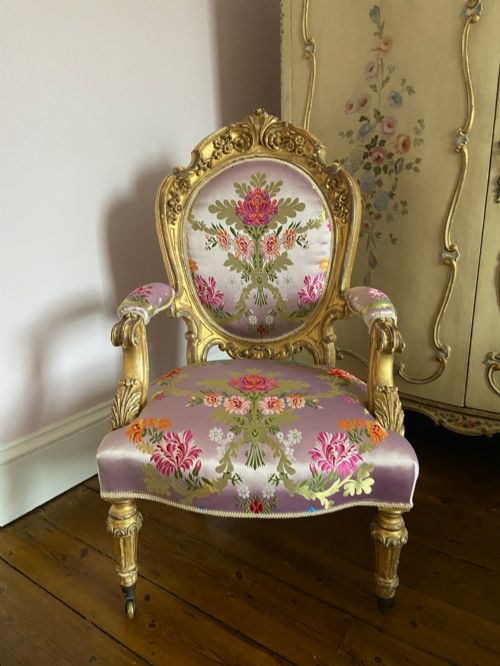
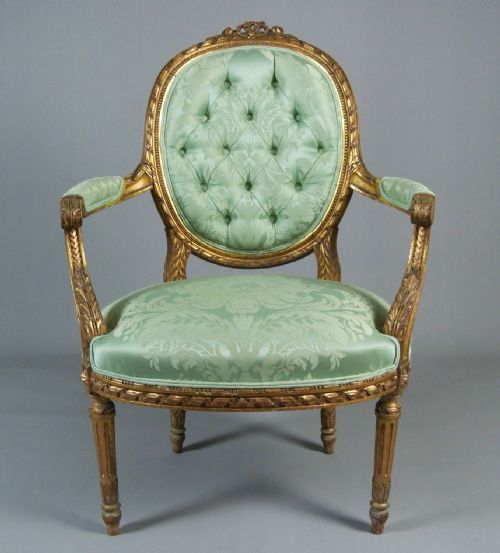
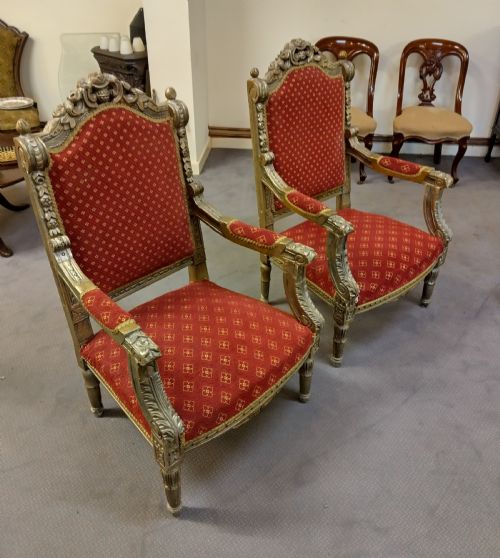
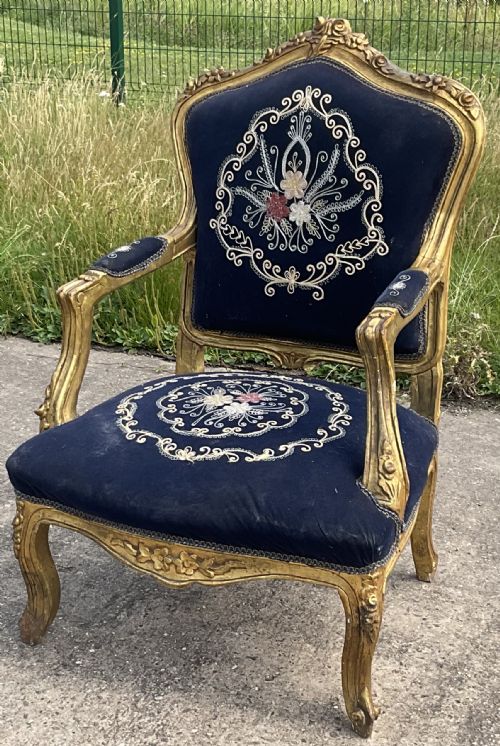
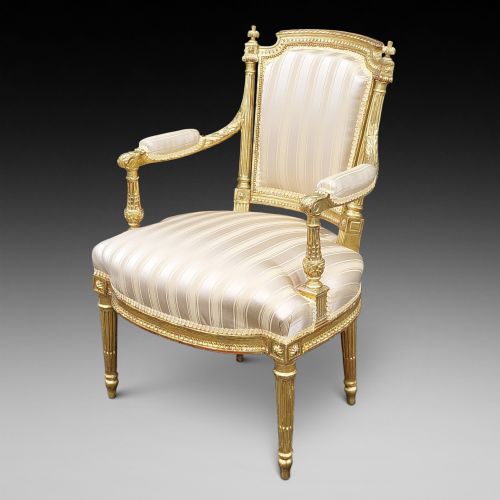
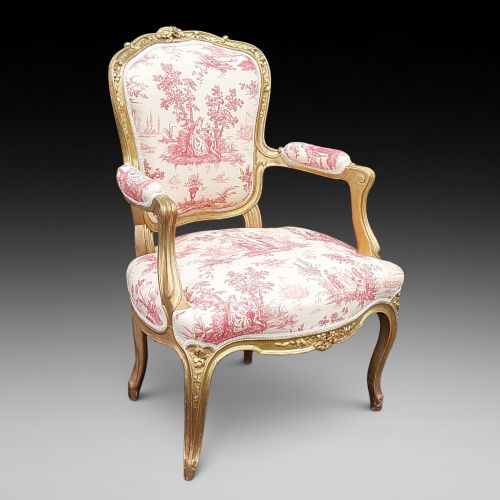
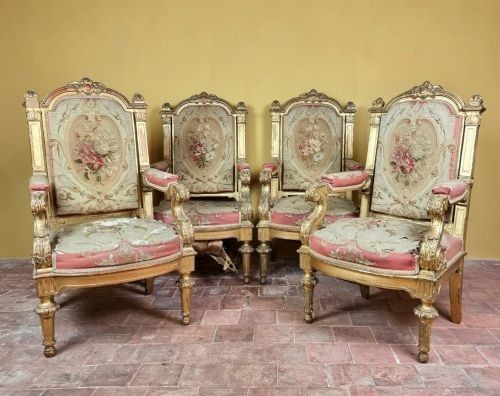


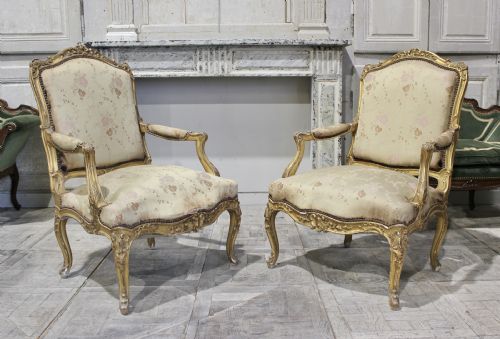

Carved Giltwood Arm Chair
A carved giltwood arm chair brings gilded presence and classic seating to a room, drawing the eye with rich carved detail and metallic warmth.
Carved Giltwood Arm Chair
A carved giltwood arm chair is an upholstered seat framed in timber and coated in gold leaf or gilt finish, designed for formal reception rooms and parlours. You will frequently encounter nineteenth century examples that channel earlier French and English tastes.
The selections span distinct historical revivals, including Rococo Revival, Louis XVI style, and French Baroque. Makers often drew upon classical motifs, scroll arms, and elaborate crest rails to signal status.
While many pieces originate from French workshops, English interpretations also surface, showing local adaptations of walnut and beech frameworks. Pairs and individual salon chairs appear alongside larger throne chairs.
Materials and construction methods
Carpenters shaped structural frames from hardwoods like beech, walnut, and general timber, applying deep chisel work for the characteristic ornamentation. Gilding was then meticulously applied over a prepared gesso layer to achieve the bright metallic surface.
Upholstery completed the piece, utilising traditional textiles such as velvet, tapestry, and heavy fabric secured over padding. This combination of carved wooden skeleton and plush upholstery defined the comfort and aesthetic of the seating.
Carved Giltwood Arm Chair Retail Price Guide 2026
Typical asking prices for carved giltwood arm chair among the pieces listed under this phrase on Sellingantiques today, from the lower quarter to the upper quarter. They describe what is for sale here now, not the wider market.
Design influences on this page draw heavily from French Baroque, Rococo Revival, and George III neoclassical traditions.
Distinguishing quality across examples
The depth and crispness of the chisel work dictate the visual strength of the ornament, separating deeply hand-carved surfaces from shallow or mechanical production. Skilled carving retains sharp definition in acanthus leaves, scrolls, and floral motifs.
The integrity of the original gilding and the fidelity of the period revival style determine the historical weight of a piece. Subtle burnishing on the gold leaf and proportional balance in the arm supports reveal superior craftsmanship.
Thomas Chippendale·Holland and Sons
The Carved Giltwood Arm Chair Glossary
- Giltwood
- Timber coated with gold leaf or a golden finish. This surface treatment gives the wooden framework its characteristic metallic lustre.
- Fauteuil
- An open-armed upholstered armchair with exposed wooden sides. Originating in France, this form is central to many period revival seating designs.
- Rococo Revival
- A nineteenth century design movement that reinterprets the ornate, asymmetrical curves of the eighteenth century. It frequently appears on carved giltwood seating.
- Louis XVI Style
- A neoclassical design aesthetic characterised by straight tapered legs, geometric forms, and classical ornamentation. Chairs in this style offer a more restrained silhouette than their Rococo counterparts.
- Scroll Arm
- An armrest curved into a spiral or scroll shape. This profile provides both ergonomic support and a decorative flourish to the frame.
Carved Giltwood Arm Chair: Frequently Asked Questions
What is a giltwood armchair?
A giltwood armchair is a wooden seat decorated with a gold leaf or gilt finish, featuring upholstered components and carved ornamentation. These chairs served as formal seating in grand interiors.
They combine structural timber frames with elaborate decorative surfaces designed to catch the light in a reception room or salon.
How do I identify the period?
Dating relies on stylistic clues such as the revival movement referenced, the specific profile of the legs, and the character of the carved motifs. Nineteenth century pieces often imitate eighteenth century French or English designs.
Examining the underlying timber and the method of gilding also helps distinguish earlier craftsmanship from later interpretations.
Were these chairs used at desks?
These chairs were primarily designed for formal reception rooms, drawing rooms, and parlours rather than workspaces. Their ornate frames and upholstered seats prioritised status and social display.
Occasional chairs and open armchairs functioned as movable seating for guests during gatherings.
How should I care for gilded surfaces?
Giltwood requires gentle dusting with a soft, dry cloth to protect the delicate gold leaf layer from abrasion. Moisture and harsh cleaning agents can strip or tarnish the metallic finish.
Placing the chair away from direct sunlight and fluctuating humidity preserves both the timber frame and the historic upholstery.