

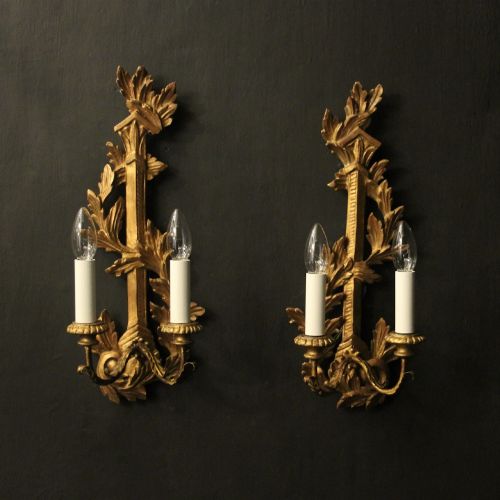
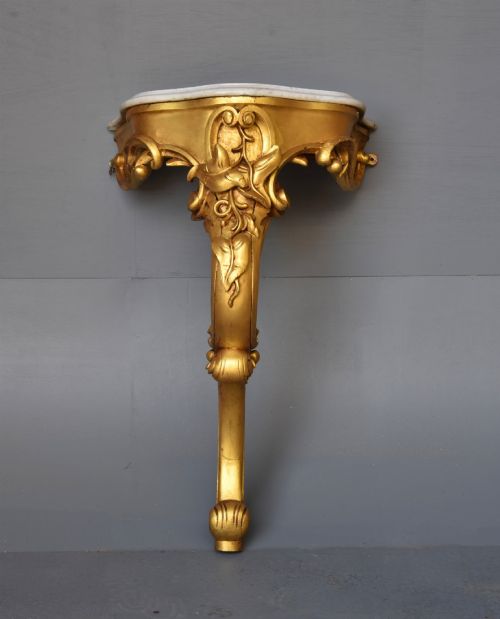
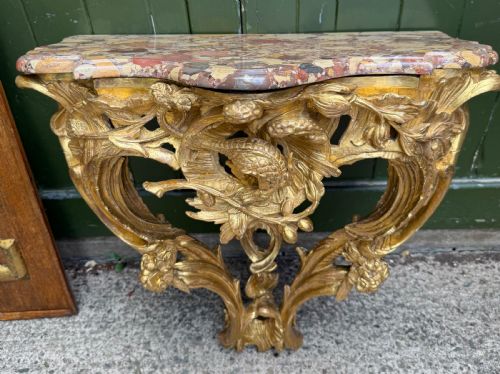
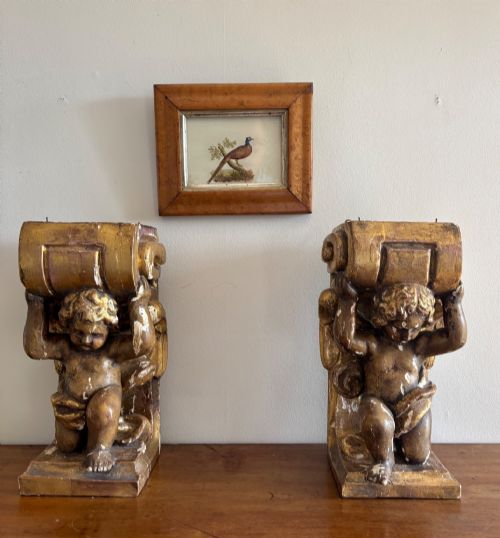
Carved Gilt Brackets
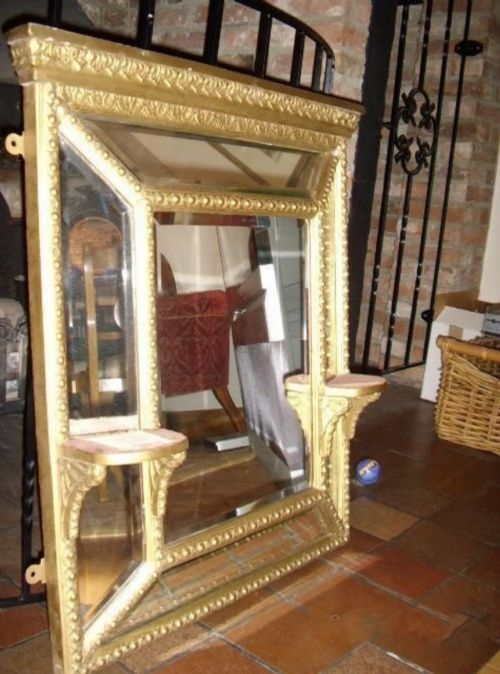
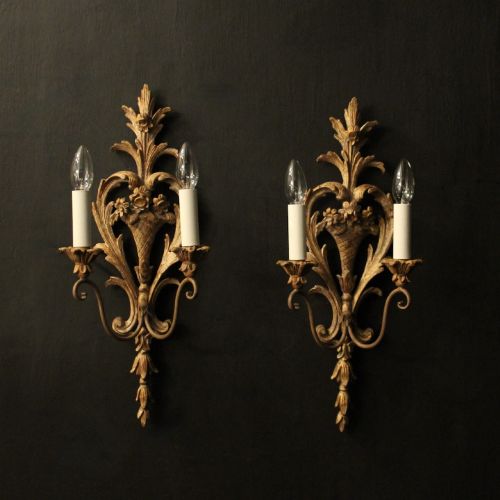
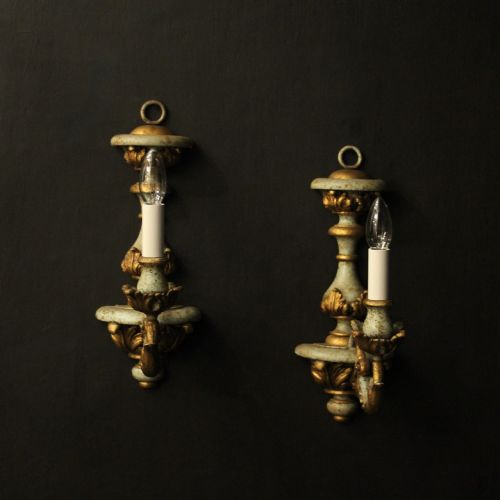
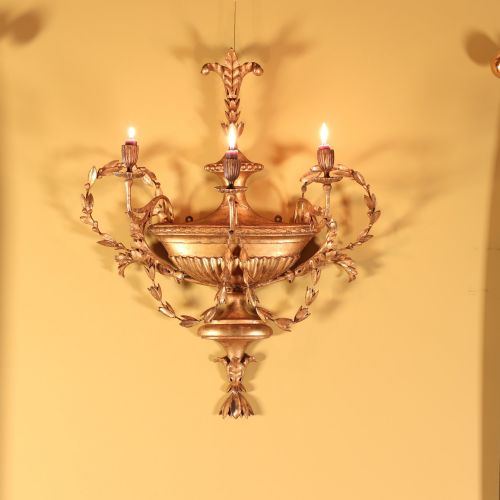
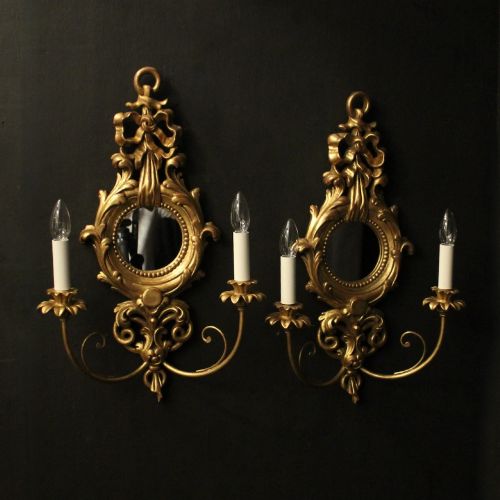
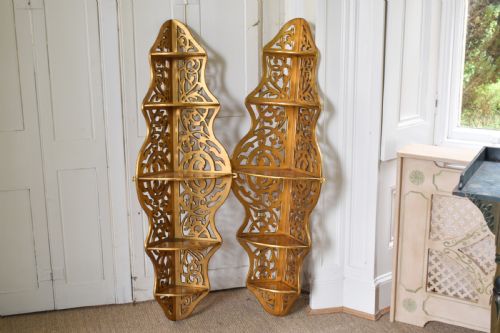
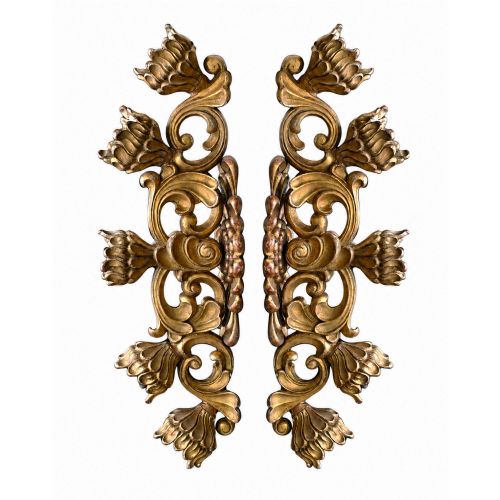
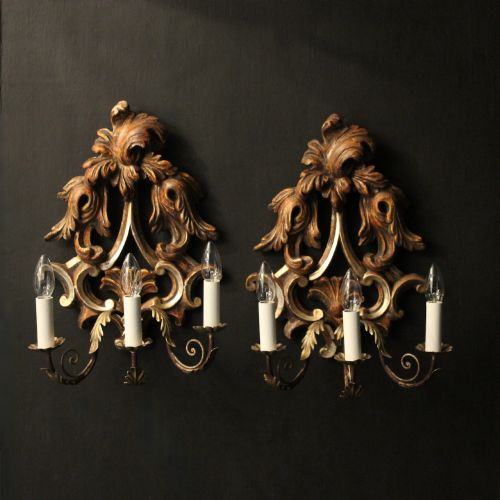
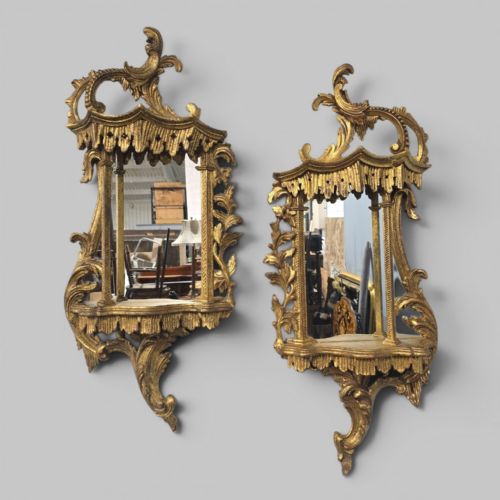
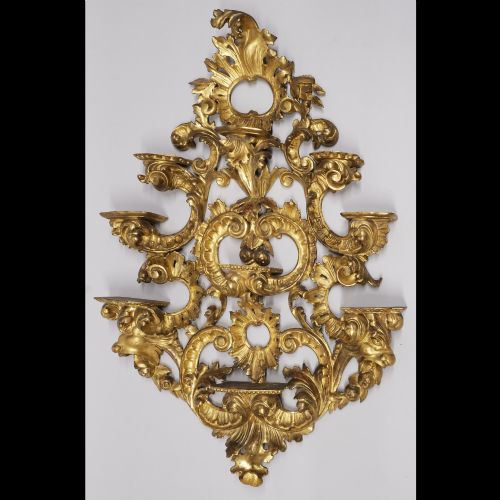
These carved gilt brackets bring architectural depth to an interior, offering ornate support for ornaments or display.
Carved Gilt Brackets
When searching for carved gilt brackets, a buyer encounters architectural supports designed to project from a wall and hold decorative objects. These items appear across multiple centuries, including examples from the seventeenth, eighteenth, and nineteenth periods, alongside early twentieth century interpretations.
The most common forms on this page include dedicated wall brackets alongside related items like console tables, wall lights, and corner shelves. Pieces frequently exhibit stylistic influences such as French Rococo, Italian Baroque, and Victorian ornamentation.
Origins span across British, French, and Italian workshops, reflecting diverse regional interpretations of gilded wooden furnishings. Buyers select these items to mount small sculptures, clocks, or vases while adding metallic lustre to a room.
How they were made
Makers shaped structural timber through hand carving before applying preparatory layers of gesso to smooth the surface. Craftsmen then laid fine gold leaf or metal gilt over the prepared base, occasionally introducing polychrome pigments or silver gilt highlights.
Construction techniques rely on traditional joinery to ensure the projecting shelf securely fastens to the wall mount. The combination of carved wood, gesso, and gilding creates the characteristic reflective surface associated with these ornamental supports.
Carved Gilt Brackets Retail Price Guide 2026
Typical asking prices for carved gilt brackets among the pieces listed under this phrase on Sellingantiques today, from the lower quarter to the upper quarter. They describe what is for sale here now, not the wider market.
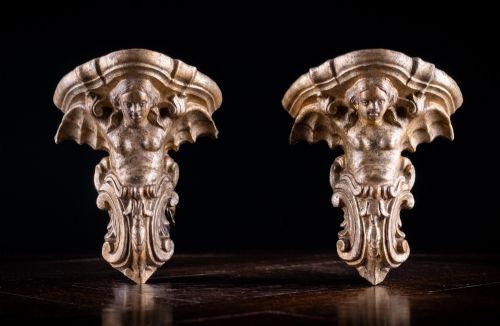
Some winged sirens decided to hold up walls instead of ships.
What varies in quality
The depth and definition of the hand carving separate standard items from superior examples. Crisp execution in floral or scroll motifs indicates skilled workshop production rather than mass output.
The preservation of the original gilt surface and gesso foundation dictates the desirability of a piece. Finer items retain their original metallic layers without excessive modern restoration or loss of detail.
Strahan of Dublin·Joseph Windmills
The Carved Gilt Brackets Glossary
- Giltwood
- Wood that has been coated with gold leaf or a gold-coloured substance. This finish provides the characteristic metallic sheen seen on antique frames and wall supports.
- Gesso
- A plaster mixture applied to wood as a smooth base for gilding. It allows craftsmen to model crisp details before laying gold leaf.
- Rococo
- An ornate artistic style characterised by asymmetric scrollwork, shell motifs, and natural curves. It heavily influences eighteenth-century and revival wall brackets.
- Console
- A decorative table or shelf supported by wall-fixed brackets rather than vertical legs. These items often feature marble tops or elaborate gilded carving.
Carved Gilt Brackets: Frequently Asked Questions
How were wall brackets historically used?
These supports held decorative objects such as clocks, porcelain vases, or small sculptures within formal rooms. They allowed homeowners to display prized possessions at eye level.
Positioned on either side of fireplaces or mirrors, they contributed to symmetrical interior decorative schemes.
What styles do these brackets follow?
Designs frequently draw on Rococo, Baroque, and Neoclassical traditions. French and Italian examples often feature elaborate scrollwork and asymmetrical motifs.
Victorian and later twentieth-century pieces adapt these historical vocabularies for domestic settings.
How do I mount a wall bracket?
Mounting requires locating appropriate wall studs or using heavy-duty fixings suited to the weight of the timber and gesso. Because these items project outward, secure anchoring is essential for safety.
Professional installation is recommended to support the cantilevered weight effectively.
How do I distinguish nineteenth-century pieces?
Nineteenth-century items often show revival styles inspired by earlier French and Italian periods. Examination of the underlying wood and gesso ageing helps indicate the true age.
Tool marks and the composition of the gilding layers provide further clues regarding the period of manufacture.