

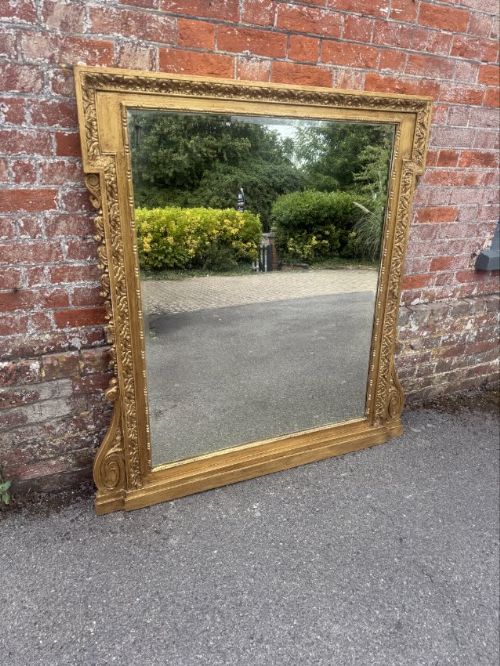
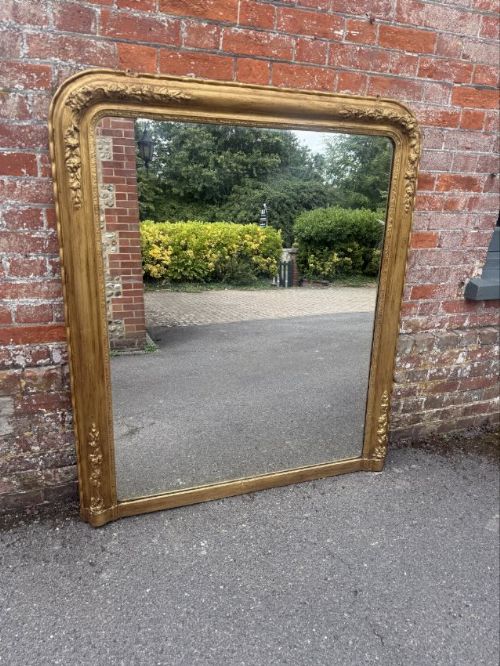
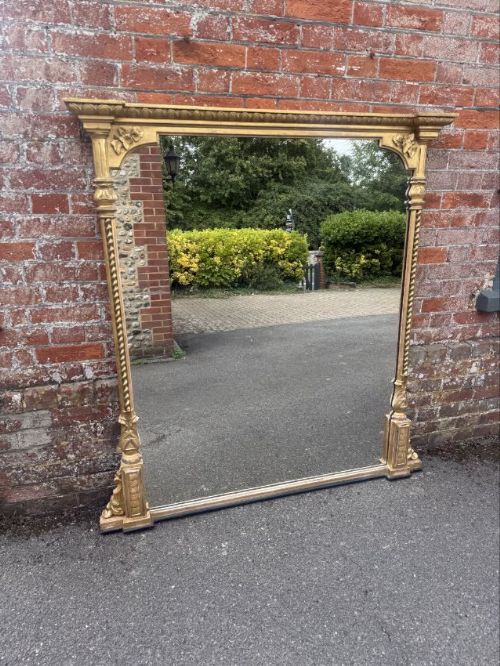
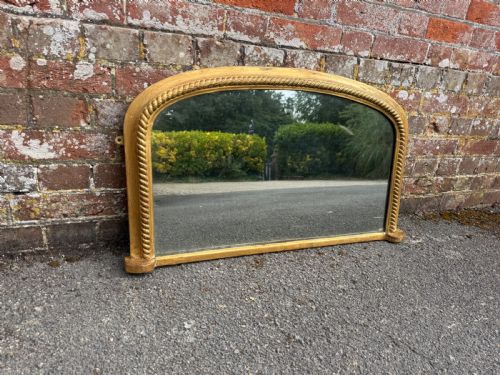
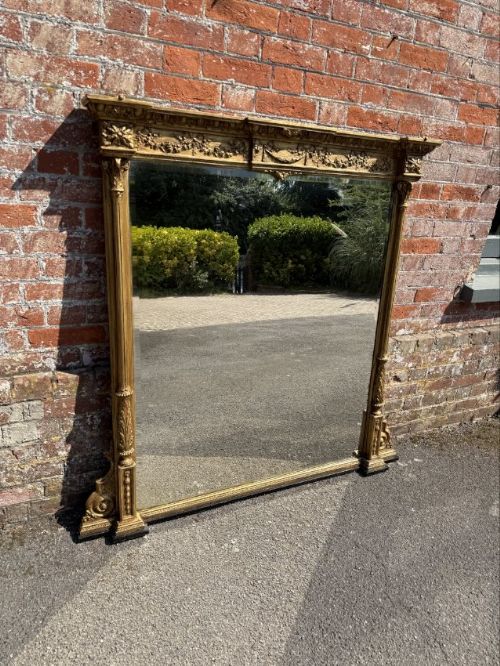


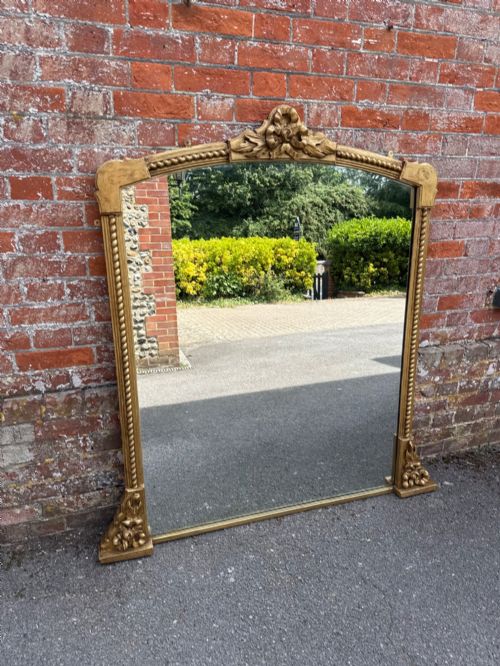
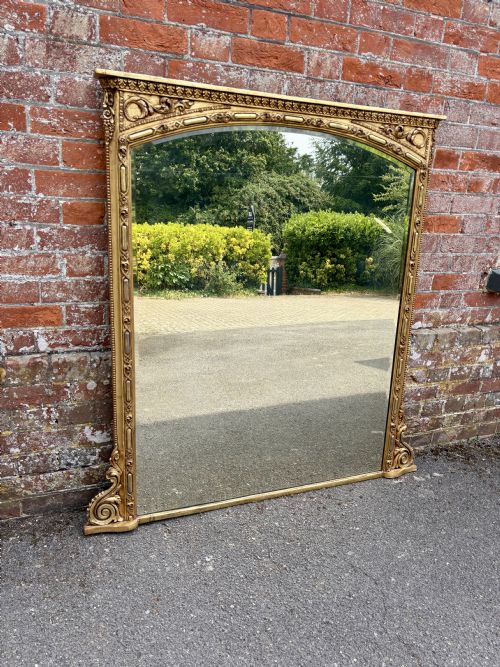
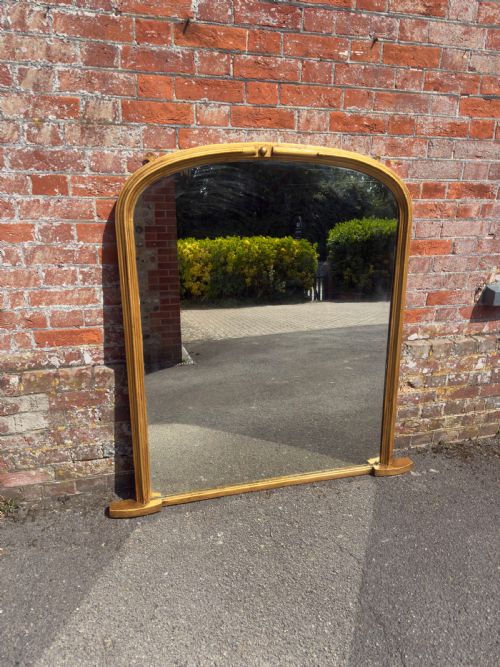
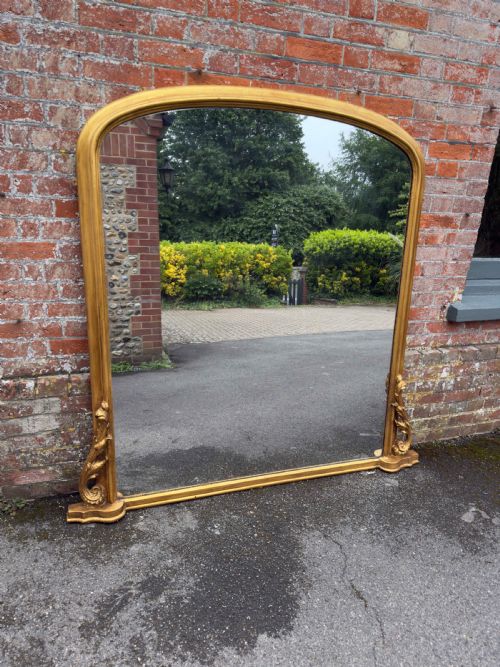


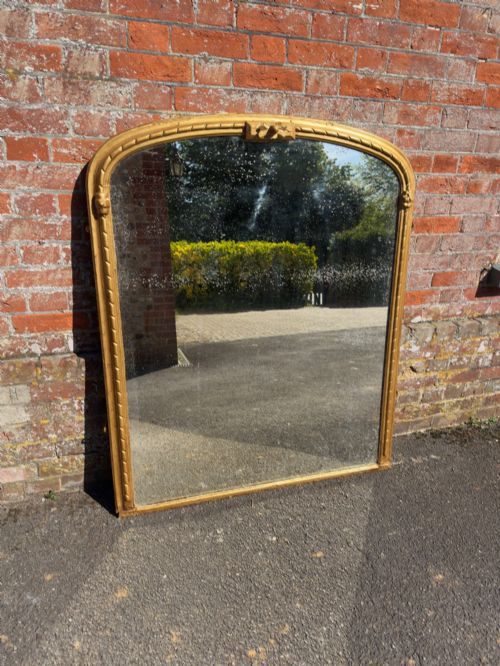
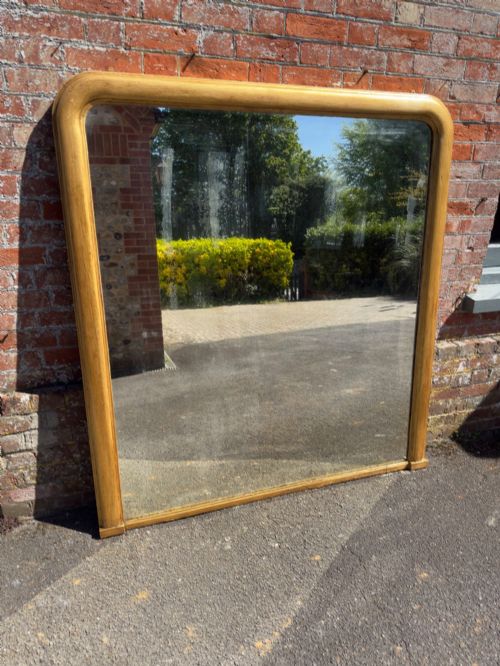
Carved Gesso Fireplace Mirror
A carved gesso fireplace mirror commands the chimney breast with its luminous gilt frame and generous proportions.
Carved Gesso Fireplace Mirror
A carved gesso fireplace mirror sits above the mantelpiece, reflecting light and expanding the visual space of a room. These large looking glasses date primarily from the nineteenth century, encompassing Victorian and earlier periods.
The most common form on this page is the overmantel mirror, often featuring an arched or shaped top designed to follow the architectural lines of a fireplace. English makers constructed these substantial wall mirrors to anchor domestic interiors.
Styles range from Victorian Neoclassical and Rococo Revival to French Chateau influences, displaying ornamental framing that commands attention.
How they were made
Craftsmen built the structural foundation from carved wood, shaping the timber frame to receive surface ornamentation. Artisans then applied layers of gesso, a fine plaster mixture, directly onto the wood base.
This pliable gesso layer allowed workers to impress or carve intricate details such as rope twist patterns, column designs, and laurel leaves before the substance hardened. Gilders subsequently applied gold leaf and paint to the prepared surface to achieve a brilliant finish.
Mirror glass was then fitted into the rebate behind the decorated frame, secured to complete the overmantel piece.
Listings feature items spanning the eighteenth century through the Victorian era, utilising materials including mirror glass, carved wood, and gold leaf.
What varies in quality
The depth and crispness of the modelled gesso ornamentation distinguish finer pieces from simpler examples, as skilled hands achieved sharper relief and more delicate motifs in the plaster. Deeply undercut carving in the underlying wood structure likewise marks a superior production.
The quality of the gilding and the preservation of the original gold leaf surface dictate the visual richness of the object over time. Proportion also plays a role, with harmonious curves and balanced framing establishing a commanding presence on the chimney breast.
The Carved Gesso Fireplace Mirror Glossary
- Gesso
- A dense mixture of chalk, gypsum, and size used as a ground for gilding and relief moulding on wooden frames.
- Overmantel mirror
- A large looking glass specifically proportioned to hang on the wall directly above a fireplace mantel.
- Giltwood
- Timber that has been decorated with a thin application of gold leaf or gold paint across its visible surfaces.
- Rope twist
- A carved decorative moulding resembling the spiralling strands of a rope, frequently seen on Victorian frames.
- Arched top
- A curved upper frame profile designed to soften the rectangular geometry of a large wall mirror.
Carved Gesso Fireplace Mirror: Frequently Asked Questions
How do I hang a heavy overmantel mirror?
These large mirrors require secure fixing directly into structural wall studs or masonry using heavy-duty brackets suited to the substantial weight of wood and gesso construction.
Professional installation ensures the piece remains safely positioned above the fireplace without straining the frame joints.
Can these mirrors be placed in any room?
While traditionally designed for the living room chimney breast, these large looking glasses suit dining rooms and hallways where they amplify natural light and create a sense of depth.
Positioning them opposite a window maximises the reflective quality throughout the space.
How do I clean a gilt gesso frame?
Dust the ornate surface gently with a soft, dry brush to prevent debris from settling into the intricate recesses of the gesso mouldings.
Avoid liquid cleaners and damp cloths, which can damage the delicate gold leaf and historical painted finishes.
What indicates a nineteenth-century origin?
Nineteenth-century pieces typically exhibit traditional joinery methods, heavy timber construction, and characteristic gesso formulations applied over carved wooden foundations.
Stylistic cues such as Victorian Rococo Revival ornamentation and rope twist borders further confirm the era of manufacture.