


Carved Games Table
A carved games table brings centuries of social parlour play into a room through folding tops, baize surfaces and carved timber frames.
Carved Games Table
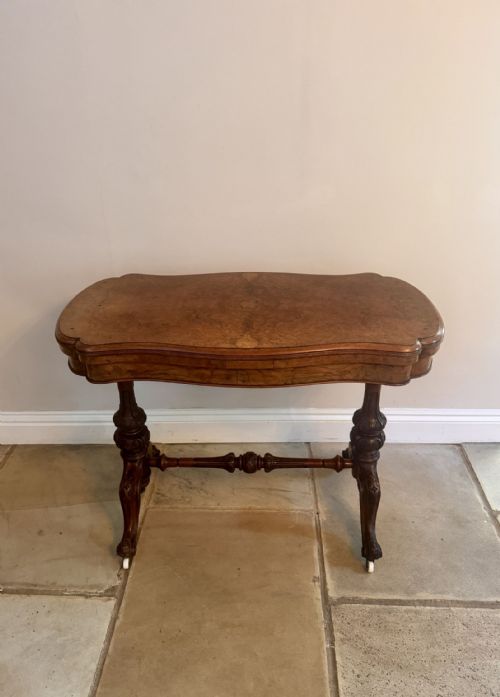
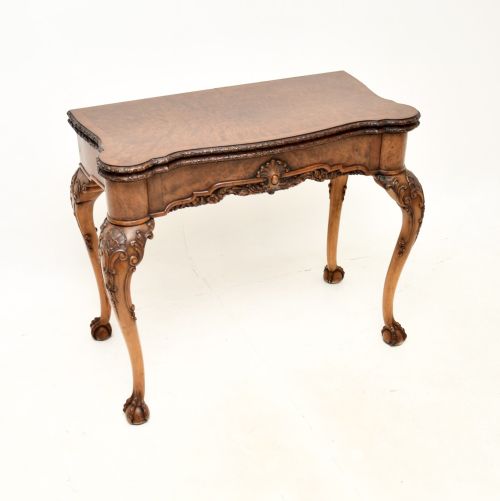
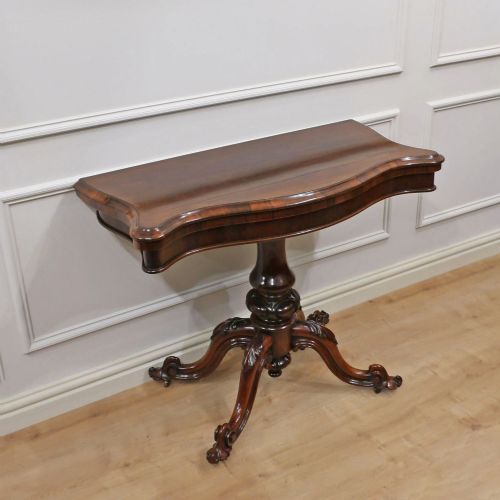
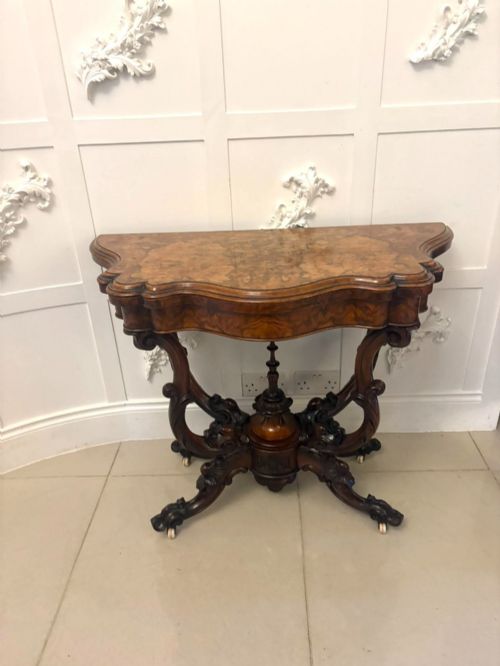
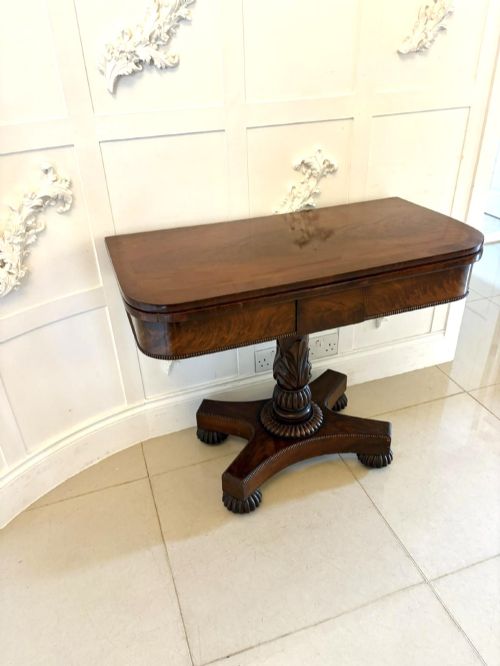
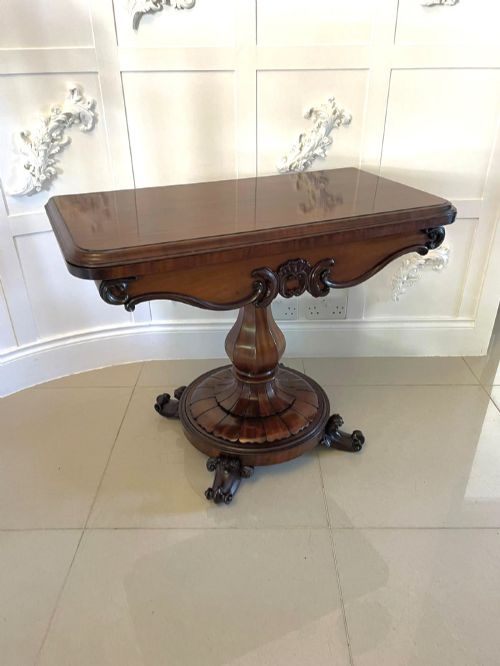
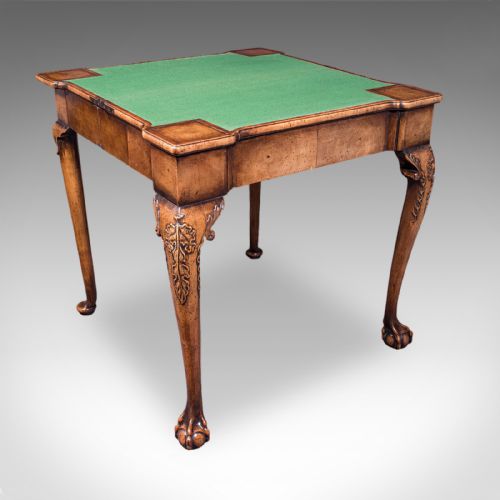
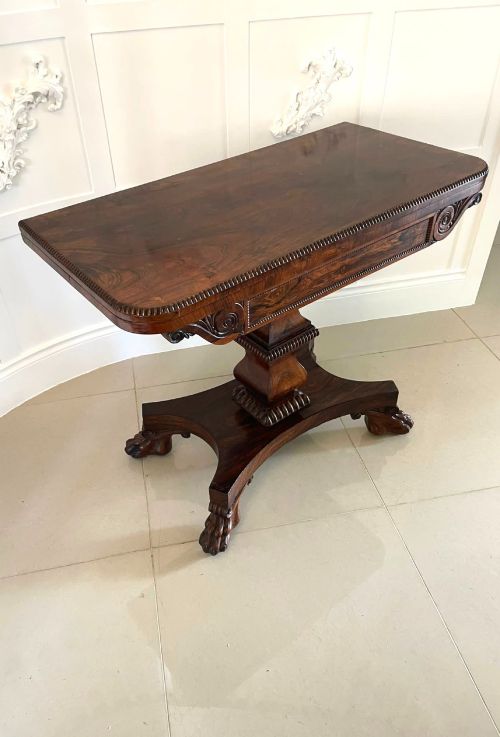
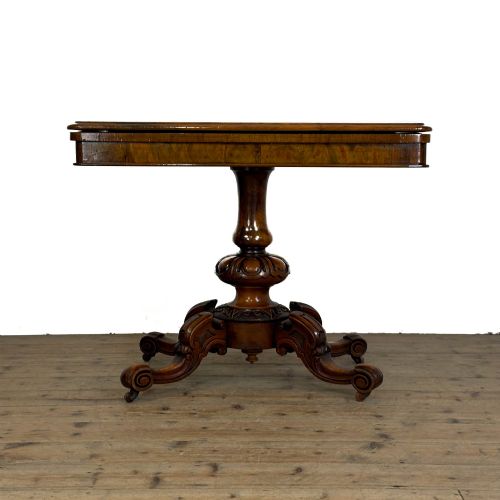
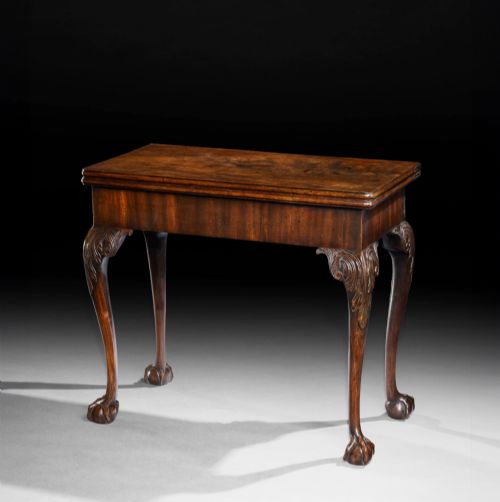
A carved games table is typically encountered as a Victorian burr walnut or 19th-century mahogany folding card table featuring a swivel top, concertina action or fold-over design. These pieces often incorporate dedicated playing surfaces lined with baize or inlaid with chess and backgammon boards.
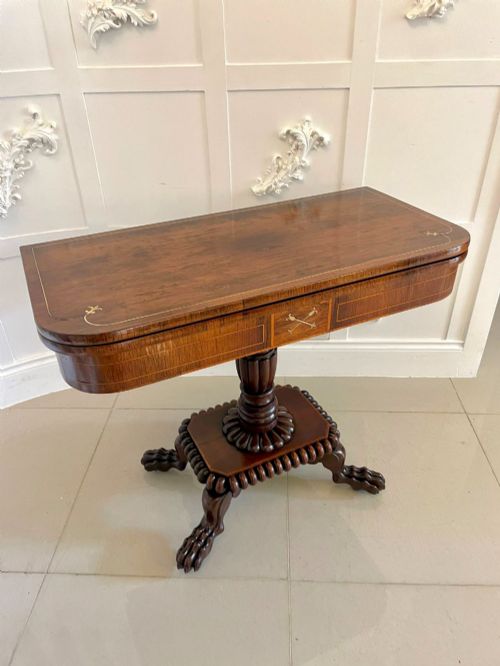
The selection ranges from Georgian mahogany examples through William IV and Regency rosewood designs to Edwardian and later walnut pieces. Alongside standard card tables, the records show tea tables, work tables and occasional tables functioning as versatile domestic furniture.
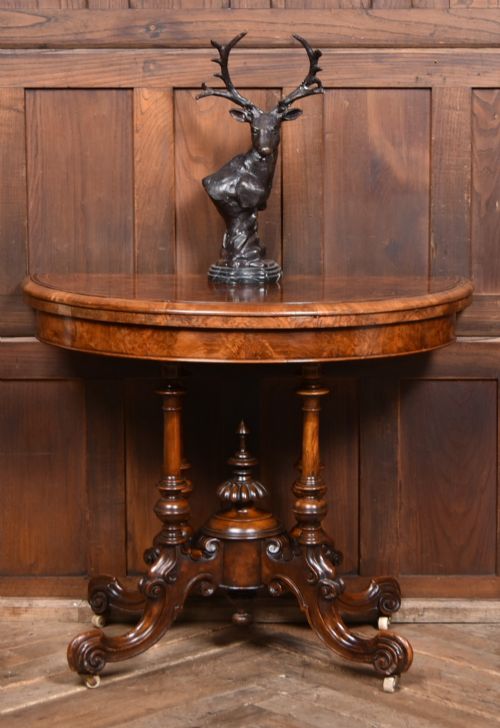
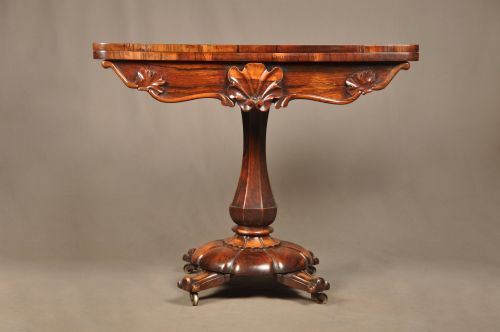
Origins span English workshops alongside Irish productions and Anglo-Indian items, revealing diverse regional cabinet-making traditions. Buyers frequently find pieces supported on carved pedestals, basket bases or pillar supports rather than simple straight legs.
Materials and construction methods
Cabinet-makers relied on figured woods like mahogany, rosewood, walnut and burr walnut to form the structural carcasses and decorative table tops. Timber veneers and solid planks were carefully selected to showcase natural grain patterns across the folding leaves.
Intricate surface detail was achieved through hand-carving timber, wood inlay, brass stringing and ormolu mounts. Interior compartments often utilised baize linings for card play alongside specialised spaces for sewing equipment or game pieces.
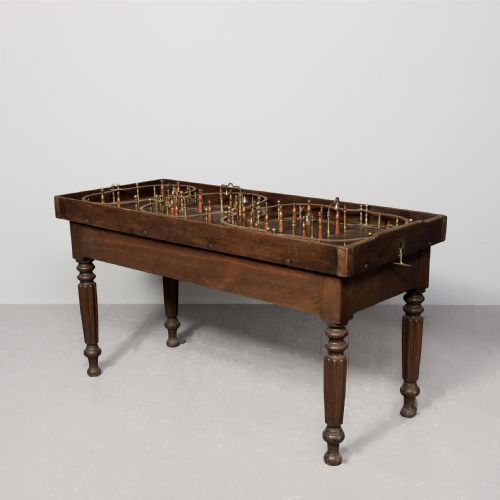
Skittles tables allowed parlour dwellers to bowl miniature indoor frames directly on the mahogany tabletop.
Distinctions in craftsmanship
Quality rests in the precision of the concertina action or swivel hinge mechanism, ensuring the fold-over top operates smoothly without strain on the timber. Superior pieces exhibit crisp, deep hand-carving on the pedestal bases and supports rather than soft or shallow moulding.
The choice of figured timber veneer and the intact condition of original baize or wood inlaid chess boards dictate the upper tier of execution. Attribution to notable makers or documented workshops further elevates the standing of individual tables.
James Shoolbred and Co·Giles Grendey·François Linke·Gillows
The Carved Games Table Glossary
- Baize
- A coarse woollen fabric, typically green, used to line the playing surface of card and games tables.
- Concertina action
- An expanding frame mechanism that allows a card table to open evenly on all four sides while supported on extended legs.
- Burr walnut
- Timber taken from the warted growths of walnut trees, prized for its swirling, highly figured grain patterns on table tops.
- Fold-over top
- A hinged table top that doubles the surface area when unfolded for play or dining.
Carved Games Table: Frequently Asked Questions
How do I use a fold-over games table?
The hinged top swivels or folds open to reveal a baize-lined playing surface supported by the extended frame or a concertina mechanism.
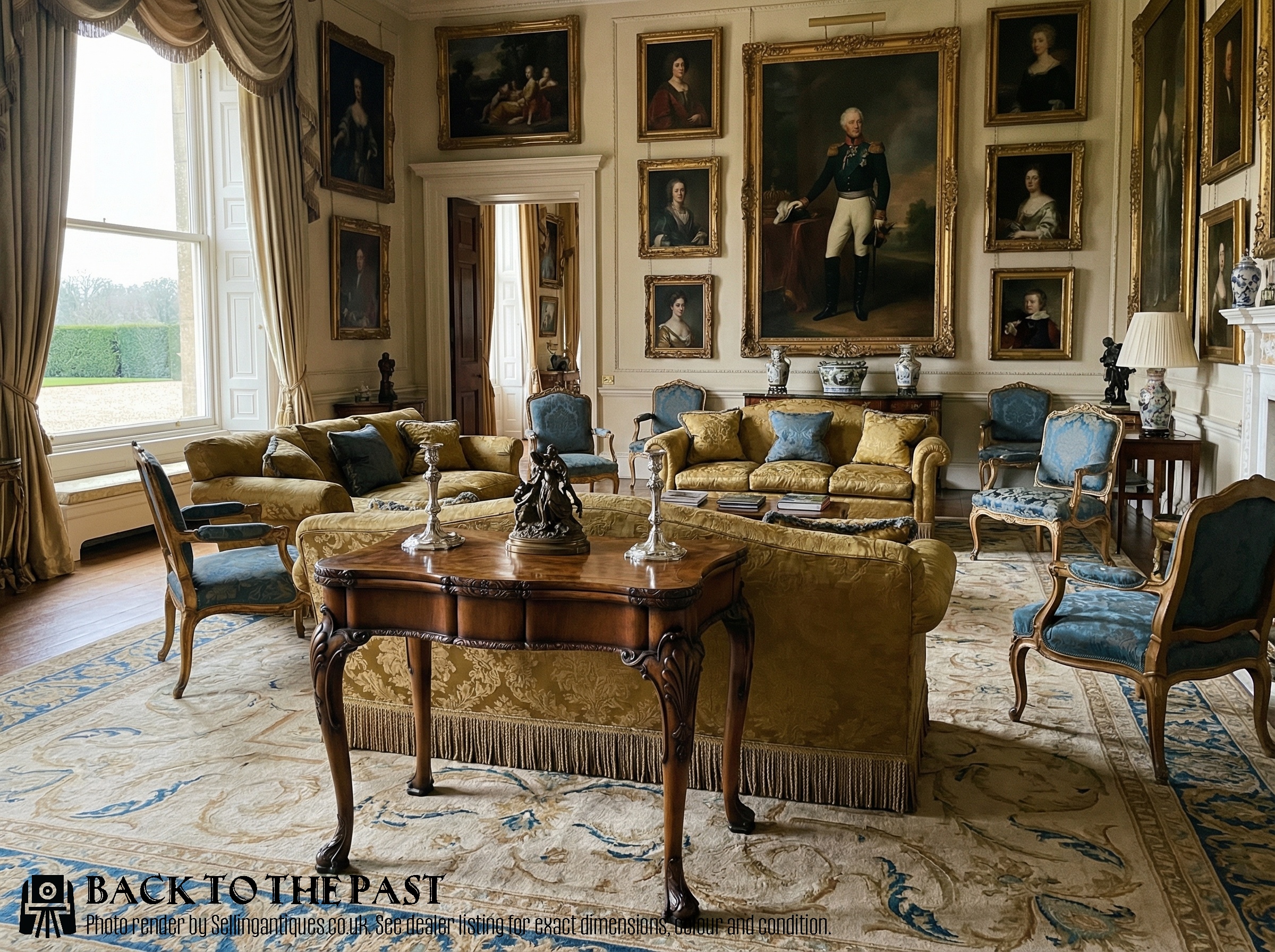
When closed, the table functions as a standard console, side or occasional piece against a wall.
What games were played on these tables?
Surviving surfaces indicate they accommodated card games, bridge, chess and backgammon.
Some examples include integrated chess boards or storage wells for pieces and sewing accessories.
How do I tell Victorian from Georgian pieces?
Georgian tables from the 18th century often feature simpler mahogany frames with concertina actions and crisp carving.
Victorian pieces from the 19th century frequently utilise burr walnut, elaborate pedestal bases and applied ormolu mounts.
Can I use a games table daily?
These pieces were built for regular domestic use in 19th-century parlours and function well for everyday placement.
Care should be taken with moisture and direct sunlight to protect the polished wood veneer and baize.