
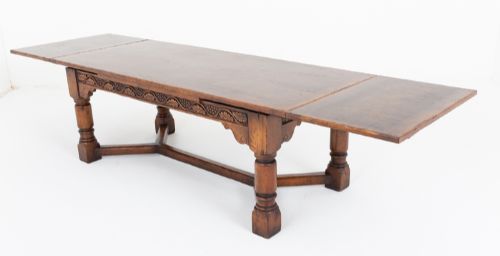
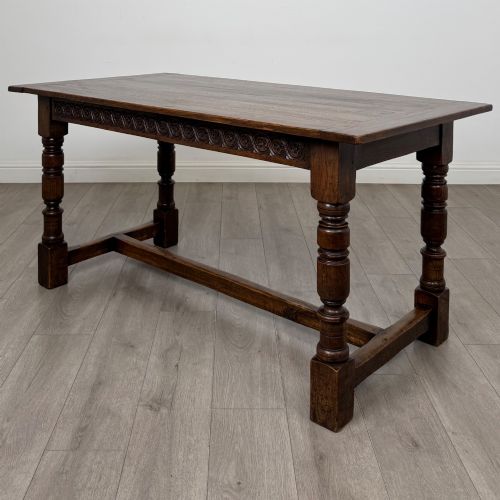
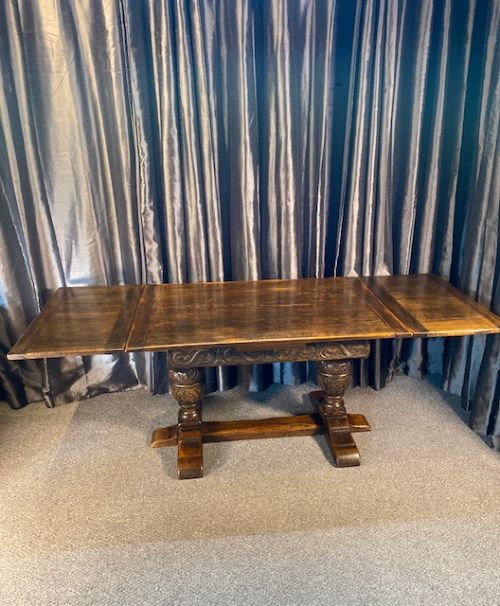
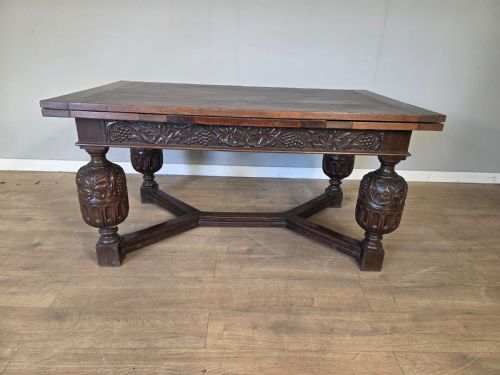
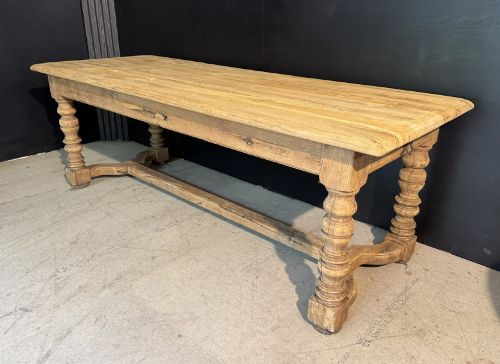


Carved Frieze Refectory Table
A carved frieze refectory table anchors a room with solid timbers and historic detail, built for long communal meals and daily use.
Carved Frieze Refectory Table
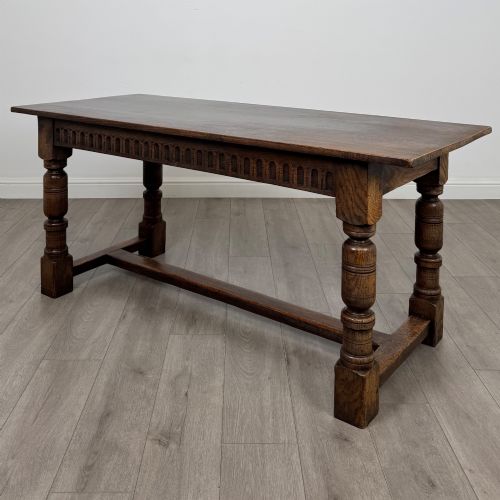
When you search for a carved frieze refectory table, you examine long dining tables, serving tables, and coffee tables that draw on centuries of traditional British and European design. The selection includes authentic seventeenth-century examples alongside later revival pieces from the nineteenth and early twentieth centuries.
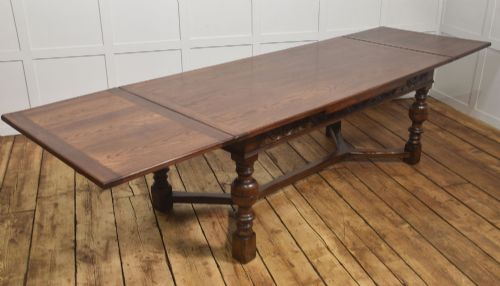
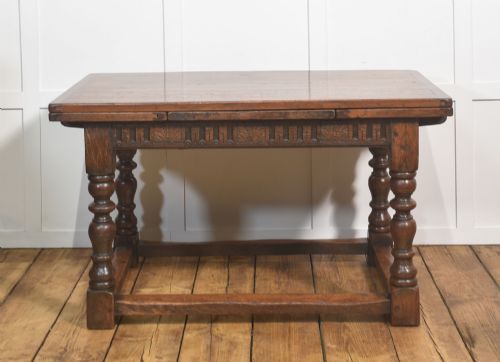
Jacobean and Elizabethan revival styles dominate the inventory, bringing heavy proportions and distinct architectural decoration to dining spaces. You will also find draw-leaf mechanisms and drawer additions that adapt these long boards for modern domestic practicality.
Oak is the defining material for these forms, appearing as solid timber across dining and serving formats. Occasional variants in pine or iron appear among the wider selection of tables on this page.
Construction and materials
Makers built these tables primarily from solid oak, selecting heavy timbers capable of supporting substantial daily use. Iron hardware occasionally reinforces the structural joints beneath the main boards.
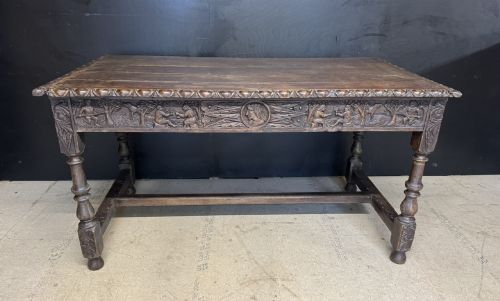
Carpenters carved the wooden friezes by hand, applying Jacobean and Elizabethan motifs directly into the solid framing beneath the top boards. Draw-leaf extensions and integrated side drawers required precise joinery to ensure smooth movement within the heavy wooden frames.
Listings span the seventeenth century through the Edwardian era, constructed primarily in solid oak with occasional pine and iron elements.
Grading quality and proportion
The distinction between standard and superior pieces rests on the depth and crispness of the carved frieze work. Finer examples display deeply undercut motifs and well-balanced proportions that respect seventeenth-century precedents.
The integrity of the timber and the smoothness of any extension mechanisms further separate everyday examples from exceptional pieces. Original seventeenth-century construction carries a different historical weight compared to later revival items from the Edwardian era.
The Carved Frieze Refectory Table Glossary
- Refectory table
- A long dining table traditionally used in monasteries and large halls for communal dining. These pieces feature elongated proportions and sturdy undercarraments.
- Draw-leaf
- An extension system where two hidden leaves slide out from beneath the main top board to lengthen the surface. This mechanism appears frequently in early twentieth-century revival formats.
- Jacobean style
- A decorative aesthetic spanning the early seventeenth century characterised by heavy rectilinear forms and geometric carving. Revival versions recreate these motifs with later machinery and hand tools.
- Frieze
- The horizontal band beneath the tabletop edge that often carries the characteristic carved decoration. On certain tables, this section incorporates functional storage drawers.
Carved Frieze Refectory Table: Frequently Asked Questions
How do I spot a true seventeenth-century table?
Authentic seventeenth-century pieces show period tool marks, pegged joinery, and natural timber shrinkage consistent with age. Look closely at the construction methods beneath the tabletop.
Revival pieces from the Edwardian period or nineteen-twenty tend to use more uniform machining while copying the older Jacobean and Elizabethan styles.
Can I use an oak refectory table daily?
These tables were originally built for heavy communal dining and kitchen use, making them naturally durable for modern households. Solid oak surfaces tolerate regular family meals well.
Maintenance involves simple dusting and occasional waxing to protect the timber grain without building up heavy chemical residues.
What is a draw leaf dining table?
A draw leaf mechanism allows the main surface of the table to extend by pulling out hidden leaves stored beneath the ends. This offers flexibility when hosting larger gatherings.
Many twentieth-century revival tables incorporate this feature to combine historical appearance with practical everyday utility.
Where should I place a refectory serving table?
Serving tables and side variants suit hallways, dining rooms, or large kitchens where extra surface space is necessary. Their narrower proportions fit well against walls.
Ensure you measure the available floor space carefully, as the solid oak framing and carved friezes demand generous clearance around them.