


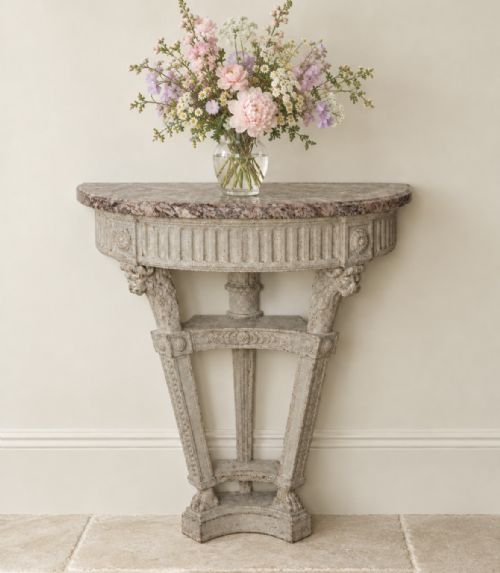

Carved French Wall Table
A carved french wall table brings architectural presence and surface utility to a room through its wall-fixed console form.
Carved French Wall Table
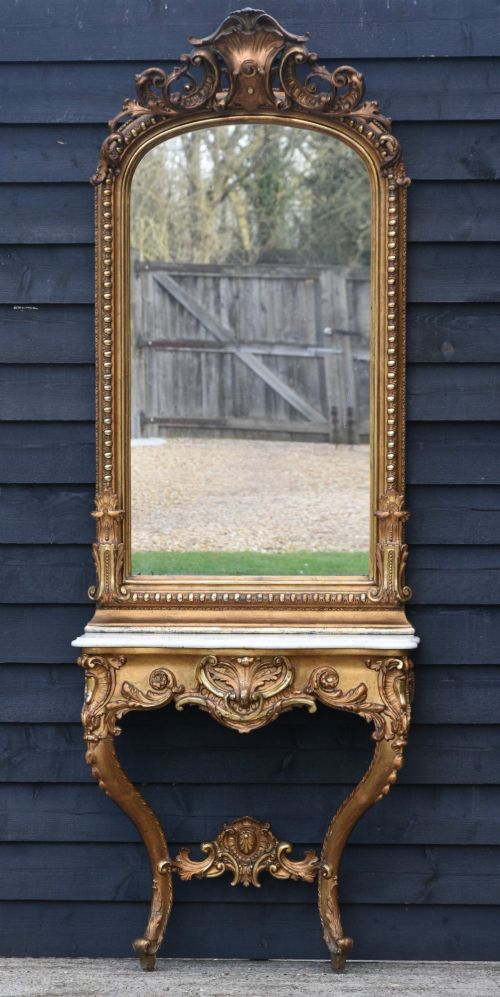
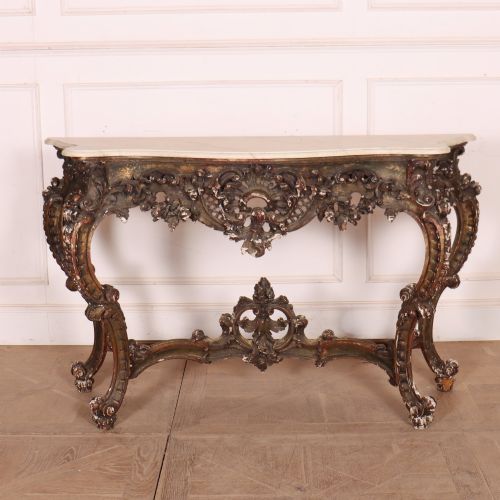
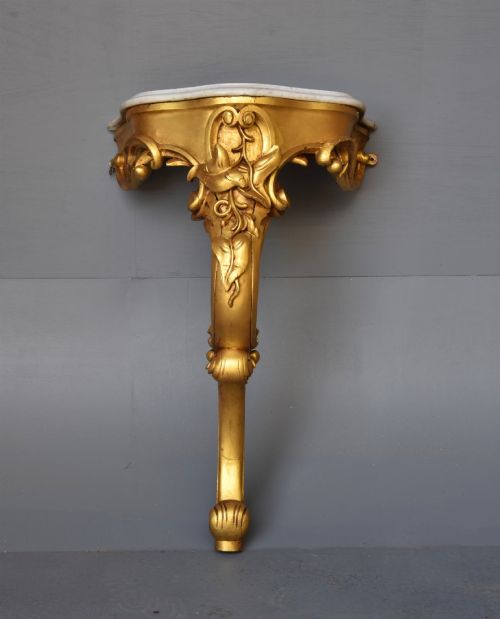
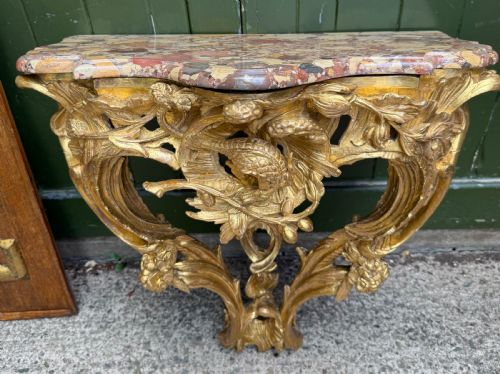
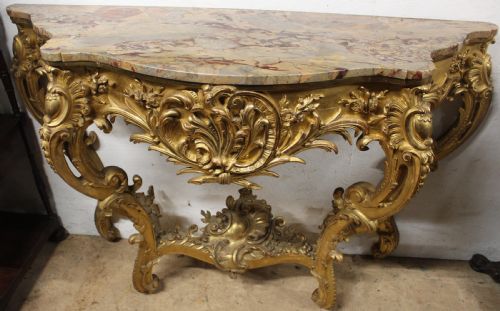
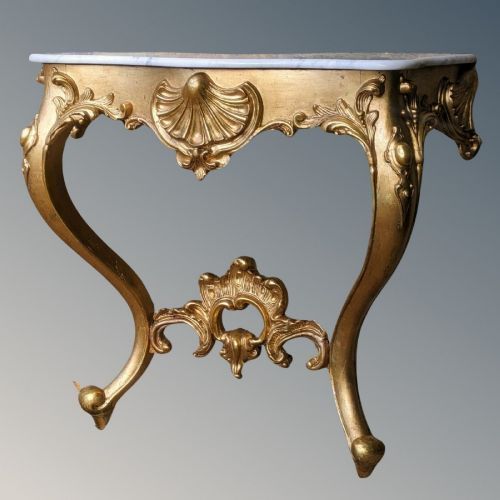
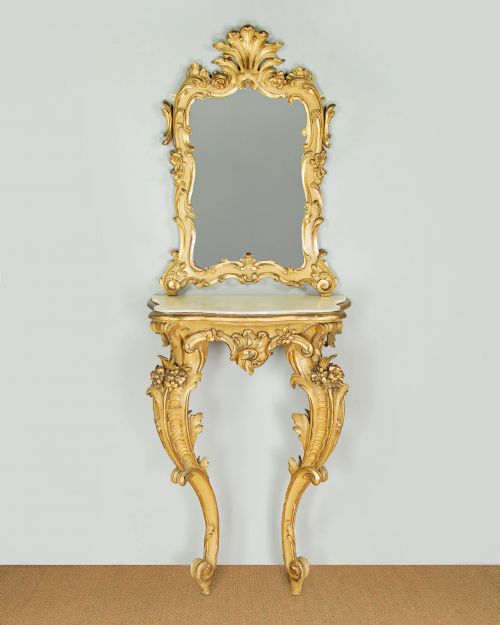
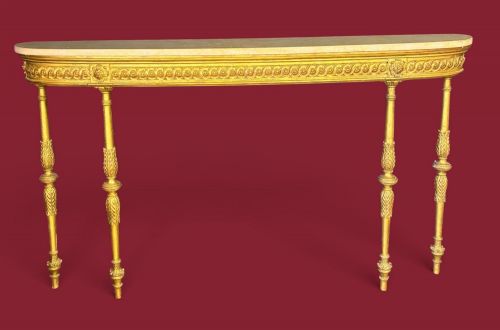
A carved french wall table primarily manifests as a console table designed to anchor against a wall, frequently accompanied by a matching pier mirror. The selection ranges from compact demi-lune shapes to large serpentine fronts spanning several decades of production.
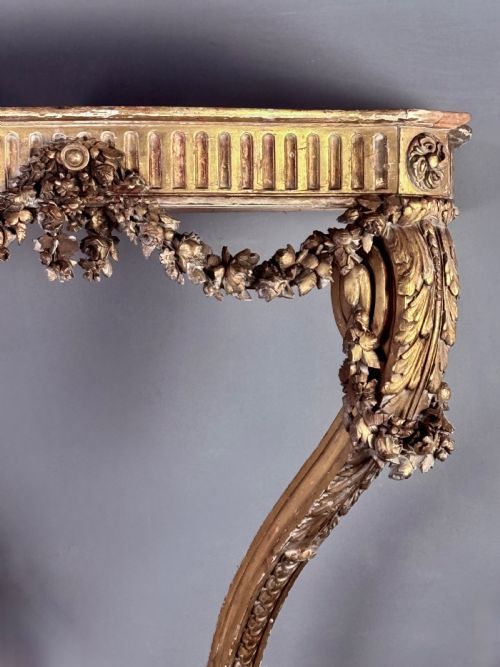
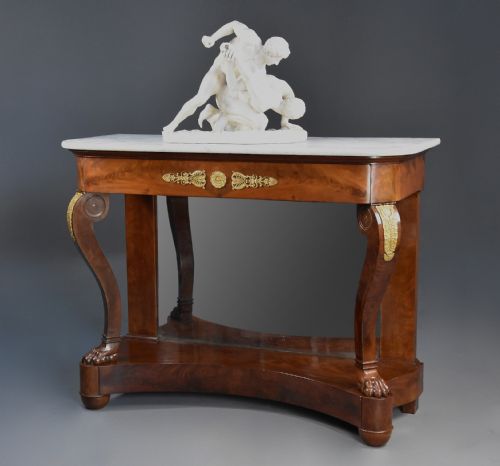
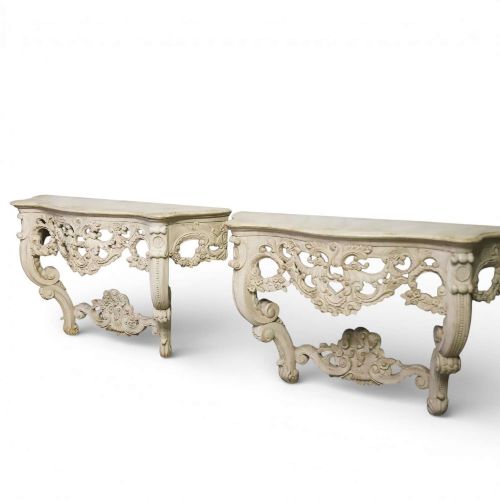
Makers and workshops produced these forms across the eighteenth, nineteenth, and early twentieth centuries, adopting styles that reference Louis XVI, French Rococo, and Neoclassical design. Examples often appear paired as matching console sets or integrated with wall-mounted mirror furniture.
Originating for formal interiors, these tables combine wall-fixing supports with flat tops suited for display. Buyers encounter both carved wooden frames and painted finishes designed to sit flush against domestic walls.
How they were made
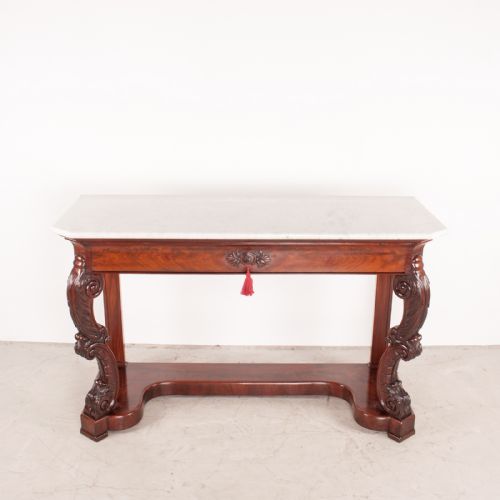
Carpenters and artisans shaped the structural frames from solid woods including mahogany, oak, walnut, and satinwood, applying carved detail directly to the timber. Many surfaces received layers of gesso before gilding with gold leaf or finishing in antique white and parcel gilt schemes.
Heavy stone slabs, particularly figured marble and white Carrara marble, form the upper surfaces, resting directly upon the wooden console bases. Glass appears primarily in the matching wall mirrors associated with these console tables.
Some console tables arrive with ghostly paint layers whispering of past drawing rooms.
What varies in quality
The depth and crispness of the hand-carved detail separate standard production from exceptional work, particularly in the rendering of scrolling foliage and floral motifs on giltwood and gesso frames. The choice of upper surface also dictates tier, with figured or breche d'alep marble slabs reflecting higher original expenditure than plain timber tops.
Proportional harmony and structural integrity define the upper echelon of these tables, especially on serpentine or demi-lune forms that require precise joinery to meet wall fixings securely. Signed pieces by recorded makers demonstrate superior cabinet-making standards compared to anonymous workshop output.
Felix-Alfred Ternisien·Jean Joseph Chapuis
The Carved French Wall Table Glossary
- Console table
- A table designed to be fixed against a wall, often supported by front legs or wall brackets while relying on the vertical surface for stability.
- Giltwood
- Wood that has been coated with a thin layer of gold leaf over a prepared gesso and bole ground.
- Demi-lune
- Half-moon shape, describing tables constructed with a semicircular front and a flat back edge for wall placement.
- Breche d'alep
- A distinctive type of multi-coloured figured marble quarried in France and used for tabletops.
- Pier mirror
- A tall mirror designed to hang on the wall space between windows, frequently paired directly above a console table.
Carved French Wall Table: Frequently Asked Questions
How do I secure a wall table?
These console tables are designed to anchor directly to the wall structure for stability, often utilising concealed brackets or fixings at the rear frame.
Professional installation ensures the heavy marble top remains secure against the vertical support.
Were these tables made to match mirrors?
Many nineteenth-century examples were conceived as a unified set comprising both the wall console and a matching pier mirror.
The shared carving style and finish connect the vertical glass frame to the table base below.
What is a serpentine front?
A serpentine front describes a tabletop and frame shaped with alternating concave and convex curves.
This fluid silhouette requires skilled carpentry and adds decorative movement to the piece.
How do I identify a Neoclassical style?
Neoclassical pieces draw inspiration from classical Greek and Roman architecture, featuring restrained symmetry and straight tapered legs.
Carvings on these tables typically include classical motifs like fluting and acanthus leaves rather than asymmetrical Rococo curves.