






Carved French Wall Cupboard
A carved french wall cupboard brings genuine regional character and practical storage to a room.
Carved French Wall Cupboard
When you search for a carved french wall cupboard, you encounter a selection of wall hanging cabinets, bread cages, corner cupboards, and architectural doors spanning the eighteenth to the twentieth centuries. The pieces originate from French provincial, country, chateau, and Gothic revival traditions, reflecting diverse regional workshops.
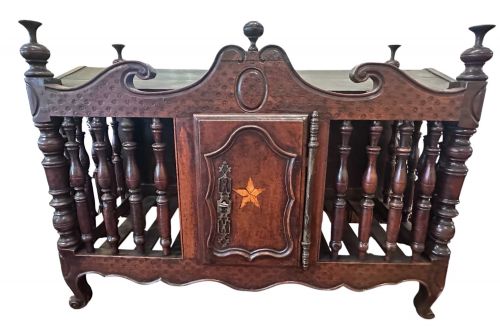
You are most likely to meet eighteenth-century walnut panetieres or nineteenth-century oak and fruitwood wall cabinets on this page. These forms often feature shaped shelves, turned finials, or serpentine fronts designed to display and store household items.
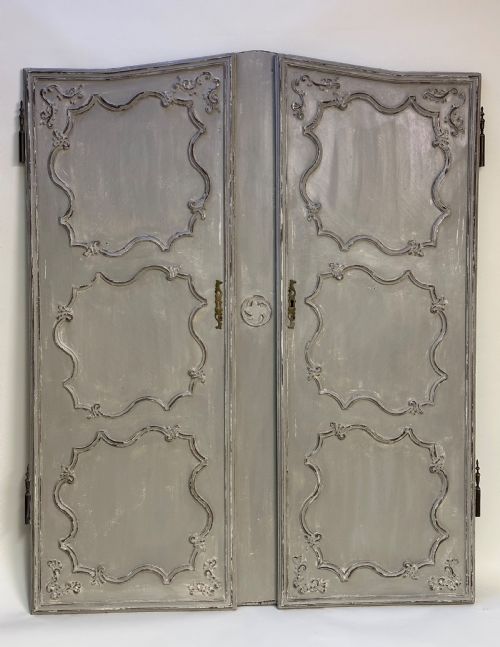
The inventory also includes painted wood finishes, glass panels, iron hardware, and fabric elements within pieces like display cabinets and washstands. Each object demonstrates the specific utility and decorative vernacular of its period of manufacture.
How they were made
Makers utilised solid timbers such as oak, walnut, chestnut, and fruitwood, shaping them with hand carved details and turned elements like barley twists. Iron and brass hardware, including hinges and latches, secured the doors and added functional strength to the wall mounted structures.
Surfaces often received painted finishes or bleaching treatments, while specialised forms like the panetiere incorporated open spindle work for ventilation. Joinery techniques relied on traditional framing methods suited to provincial workshops and chateau carpenters.
Bread cages were once the pride of the French farmhouse kitchen, keeping the daily loaf safe behind miniature turned prison bars.
What varies in quality
The depth and crispness of the hand carving separate simpler provincial items from finer chateau examples. Wood selection, grain figure, and the survival of original patination also dictate the distinction between ordinary and superior pieces.
Structural integrity, the retention of original hardware such as brass or iron hinges, and the condition of turned finials and shaped shelves determine the overall merit of an individual cabinet.
The Carved French Wall Cupboard Glossary
- Panetiere
- A traditional French bread cage or bread store, typically featuring spindle-turned sides for ventilation and a front door. These cabinets were designed to protect loaves from household pests.
- Serpentine front
- A cabinet front featuring a convex centre flanked by concave curves, or vice versa, creating a gentle wave shape. This contour requires precise woodworking skill.
- Barley twist
- A type of turning resembling a spiral rope or twisted barley sugar, commonly found on the uprights or supports of nineteenth-century furniture. It adds textural depth to the piece.
- Finial
- A decorative terminal ornament, often turned by hand, placed on the corners or top of a cabinet. These elements finish the architectural silhouette of the woodwork.
Carved French Wall Cupboard: Frequently Asked Questions
What is a panetiere?
A panetiere is a traditional French bread cage originally used in provincial households to store and air loaves of bread safely away from rodents.
These wall hanging or table-standing cabinets feature distinctive spindle-turned balusters around their sides and a carved access door at the front.
How do I hang a wall cupboard?
Historic wall cupboards require secure mounting directly into wall studs or solid masonry using appropriate weight-bearing brackets.
Given the substantial weight of dense timbers like oak and walnut, professional installation ensures the antique structure remains supported safely.
What is French provincial style?
French provincial style encompasses furniture made in the regions outside Paris during the seventeenth, eighteenth, and nineteenth centuries.
These pieces combine practical utility with local decorative motifs, hand carved details, and regional timbers like chestnut and fruitwood.
How do I date an antique cupboard?
Dating relies on examining the timber species, joinery methods, tool marks, and stylistic indicators such as Gothic revival or Louis XVI influences.
Hardware styles and the presence of original paint or bleached finishes also offer clear clues to the period of manufacture.