
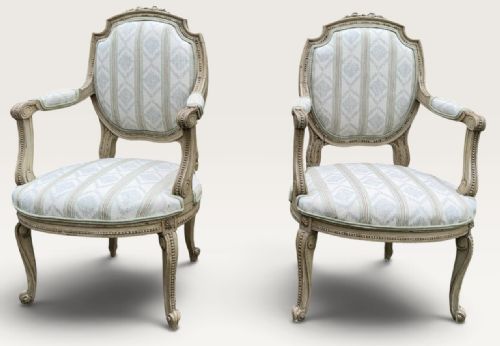
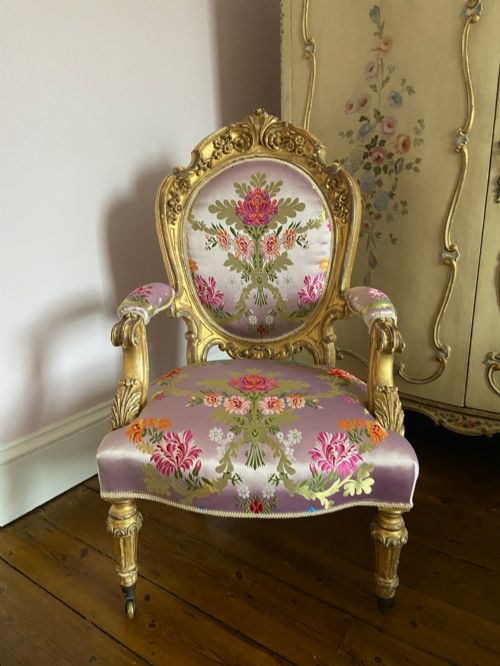
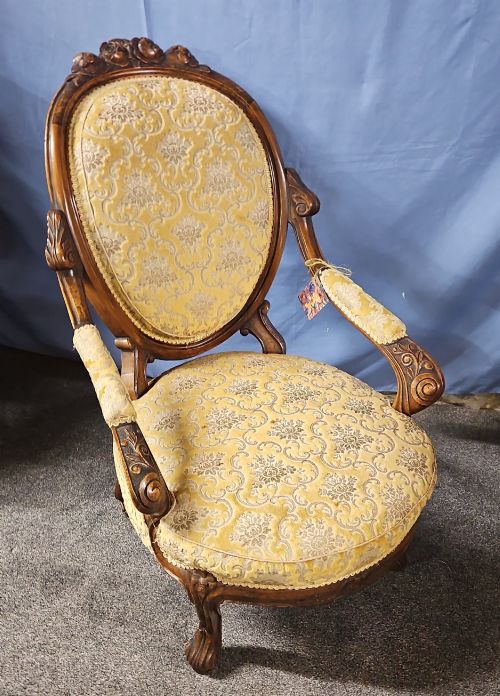
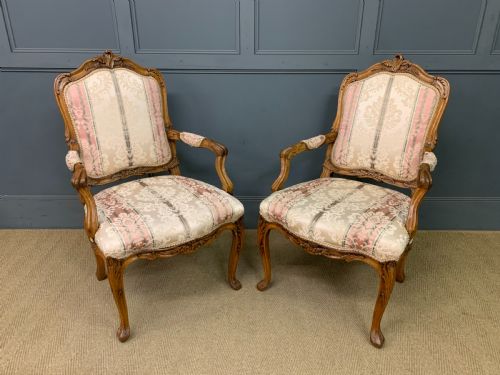
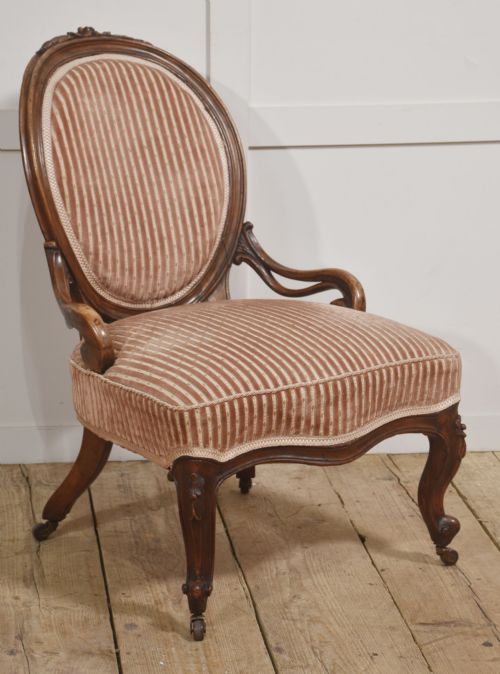


Carved Frame Fauteuil
A carved frame fauteuil offers open arms and classical French proportions, bringing centuries of seating tradition directly into a modern salon.
Carved Frame Fauteuil
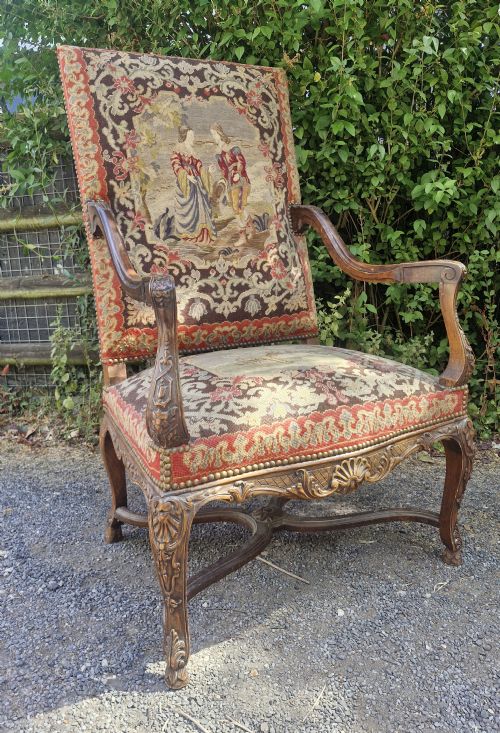
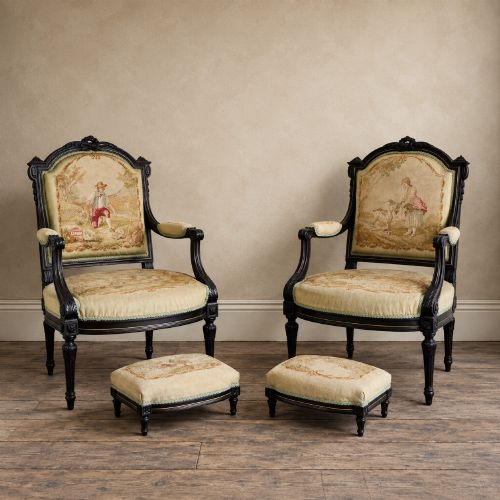
A carved frame fauteuil represents the classic open-armed seat designed for formal reception rooms, combining structural timber with padded upholstery. The pieces on this page span from the eighteenth century through the Victorian era and into the early twentieth century, reflecting enduring revival styles.
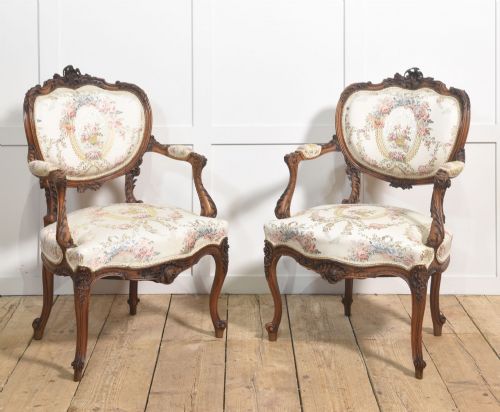
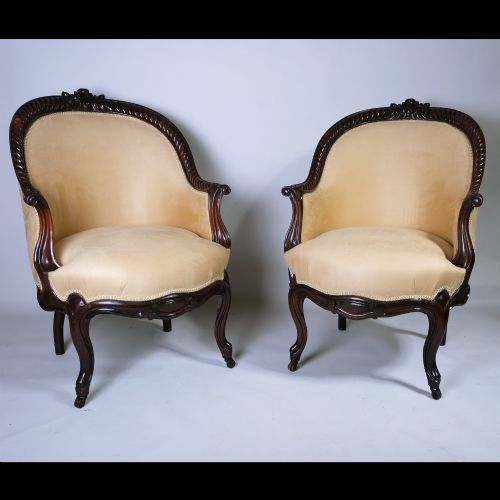
Most examples date to the nineteenth century, drawing heavily on Louis XV and Louis XVI aesthetics with curved cabriole legs or straight fluted supports. Walnut and beech frames predominate, often paired with needlework, velvet, or silk textiles that showcase period upholstery methods.
Materials and construction
Frames are shaped from hardwoods such as walnut, beech, and occasionally exotic timbers like goncalo alves, carved by hand to form flowing floral motifs and structural joints. Giltwood and original painted surfaces appear alongside polished timber, showing the range of finishes applied by period makers.
Upholstery techniques involve traditional stuffing secured within open arm structures, utilising textiles like velvet, needlework, and petit point. Brass tacks frequently secure the fabric edges to the carved wooden show frame.
Assessing quality and design
Quality rests in the crispness and depth of the hand carving on the wooden show frame, where fluid lines distinguish superior cabinetmaking from routine production. The choice of primary timber, such as dense walnut or gilded surfaces, directly influences the visual presence of the armchair.
The harmony between the exposed wooden frame and the selected textile, whether silk velvet or fine needlework, defines the success of the piece. Matching pairs and complete salon suites command particular attention for their decorative symmetry.
The Carved Frame Fauteuil Glossary
- Fauteuil
- An open-armed upholstered armchair originating in France, typically featuring an exposed wooden frame around the back and seat.
- Giltwood
- Timber coated with a thin layer of gold leaf, frequently applied to carved decorative frames in the French taste.
- Cabriole leg
- A furniture leg that curves outward and then tapers inward, common on pieces inspired by Louis XV designs.
- Petit point
- A very fine count needlepoint embroidery executed on canvas, often seen on period armchair seats and backs.
- Show frame
- The exposed structural woodwork of an upholstered chair that remains visible around the padded elements.
Carved Frame Fauteuil: Frequently Asked Questions
What is a fauteuil?
A fauteuil is an open-arm upholstered chair designed in the French style, featuring a wooden frame that remains visible around the cushioned back and seat.
These chairs served as formal seating in reception rooms and salons across various centuries, including revival periods.
How do I date a carved frame armchair?
Dating relies on stylistic clues such as cabriole legs, carved floral motifs, and the specific revival movement referenced by the maker, spanning eighteenth to early twentieth-century conventions.
Materials like walnut and beech, alongside upholstery types like needlework or velvet, also help place the piece within its historical context.
Where were these armchairs used?
These open armchairs were principally placed in drawing rooms, parlours, and formal salons where guests gathered for conversation.
Their decorative carved frames allowed them to function as ornamental furnishings as well as comfortable seats.
What woods are typical for these frames?
Makers frequently utilised walnut and beech for their strength and suitability for intricate hand carving.
Giltwood and painted finishes were also common methods for treating the exposed wooden elements of French-style seating.